Artwork
The Gout
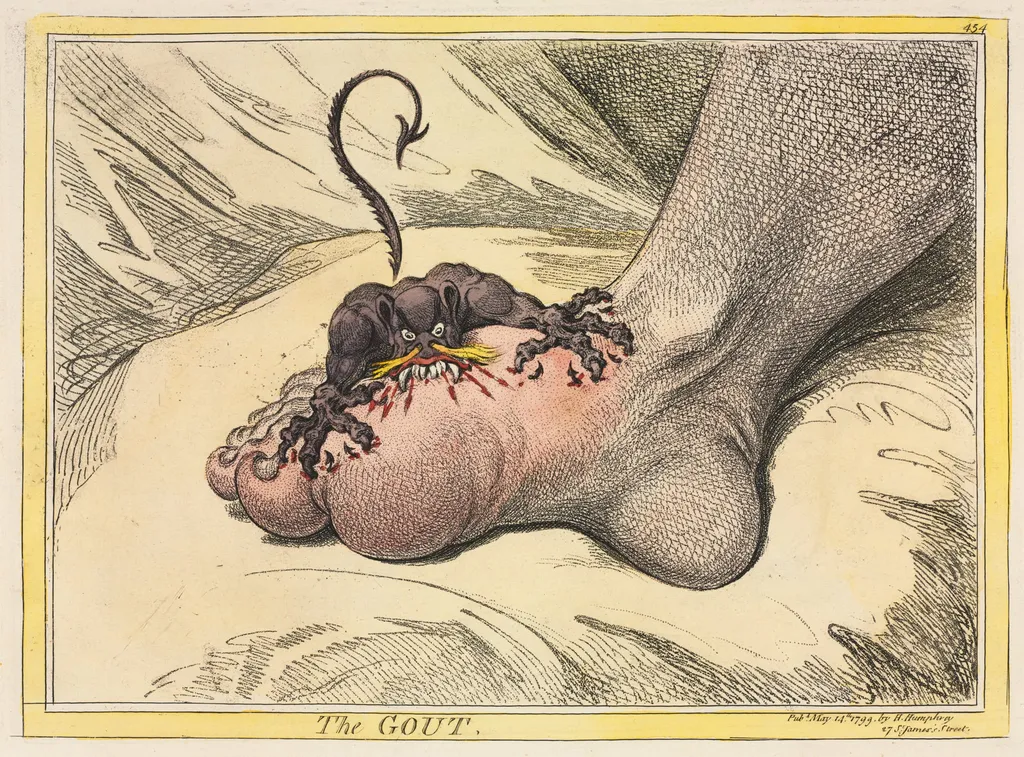
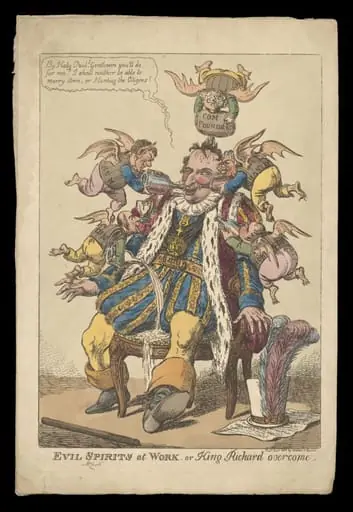
The Gout is a print by the Romanticist artist James Gillray. It dates from 1799 and is held in the collection of the Cleveland Museum of Art.
- Accession no.
- 2011.182
- Credit line
- Bequest of Dr. Paul J. Vignos Jr.
About this work
Overview
Created in 1799 by British caricaturist James Gillray, The Gout is a satirical print that depicts a swollen, inflamed toe being attacked by a snarling, beaked creature. The foot rests on a white cloth against a loosely rendered background of contrasting light and dark tones, emphasizing the scene’s discomfort and bodily distress.
Subject & Meaning
The image uses the grotesque animal to personify the painful inflammation of gout, a condition associated with excess and indulgence in the 18th‑century elite. By dramatizing the ailment as a vicious bite, Gillray lampoons the physical consequences of overindulgence, linking personal suffering to broader social critique.
Technique & Style
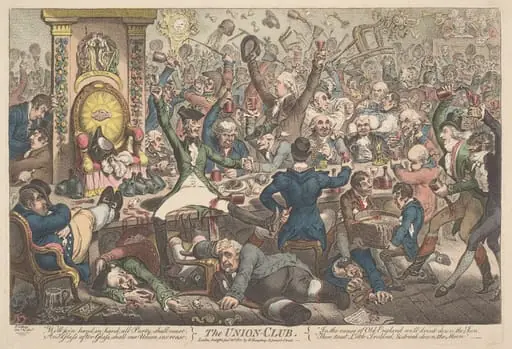
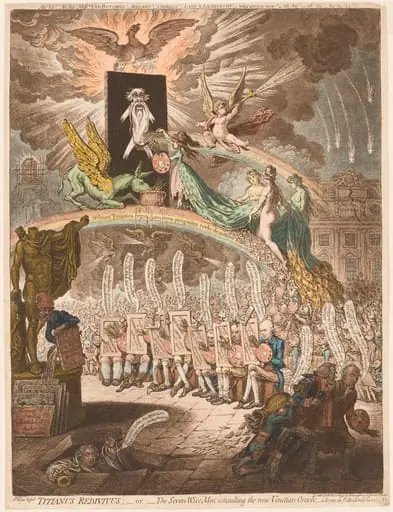
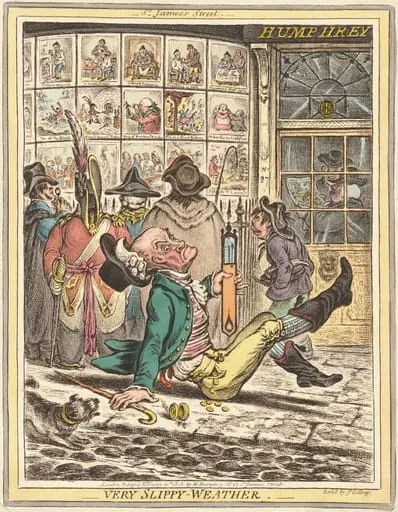
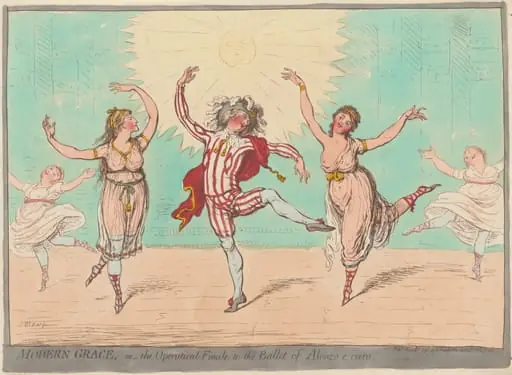
Executed in the dry‑point and etching techniques typical of Gillray’s workshop, the print combines fine line work with bold hatching to render texture, particularly the creature’s curly fur and the blood‑stained toe. The exaggerated anatomy and dynamic composition reflect the caricatural style that defined political and social satire of the period.
History & Provenance
The Gout entered the Cleveland Museum of Art’s collection as part of its holdings of late‑18th‑century British prints. Gillray, active from 1792 to 1810, produced a prolific series of satirical images targeting figures such as George III and Napoleon, cementing his reputation as a pioneer of modern cartooning.
Context
The print emerges at a time when gout was both a medical concern and a cultural symbol of wealth, often associated with the aristocracy’s rich diet. Gillray’s work engages this contemporary discourse, using humor to comment on the excesses of his society while employing the visual language of caricature that was gaining popularity across Europe.
Own this work as a print
Artist & collection
Artist
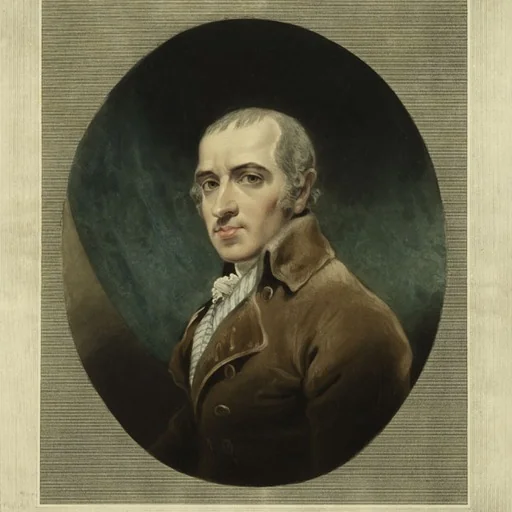
James Gillray (13 August 1756 – 1 June 1815) was an English caricaturist and printmaker famous for his etched political and social satires, mainly published between 1792 and 1810.