Artwork
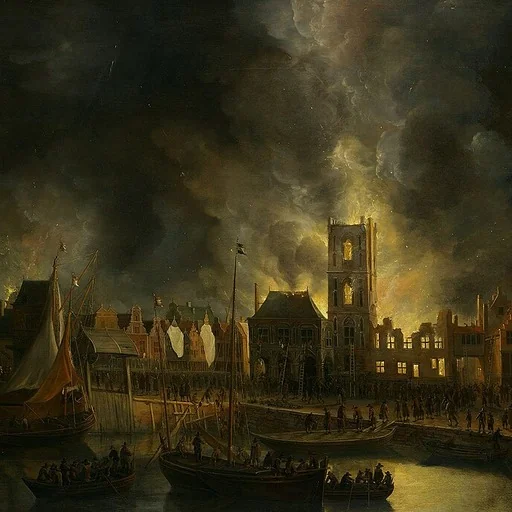
The ruins of the old town hall of Amsterdam after the fire of 7 July 1652
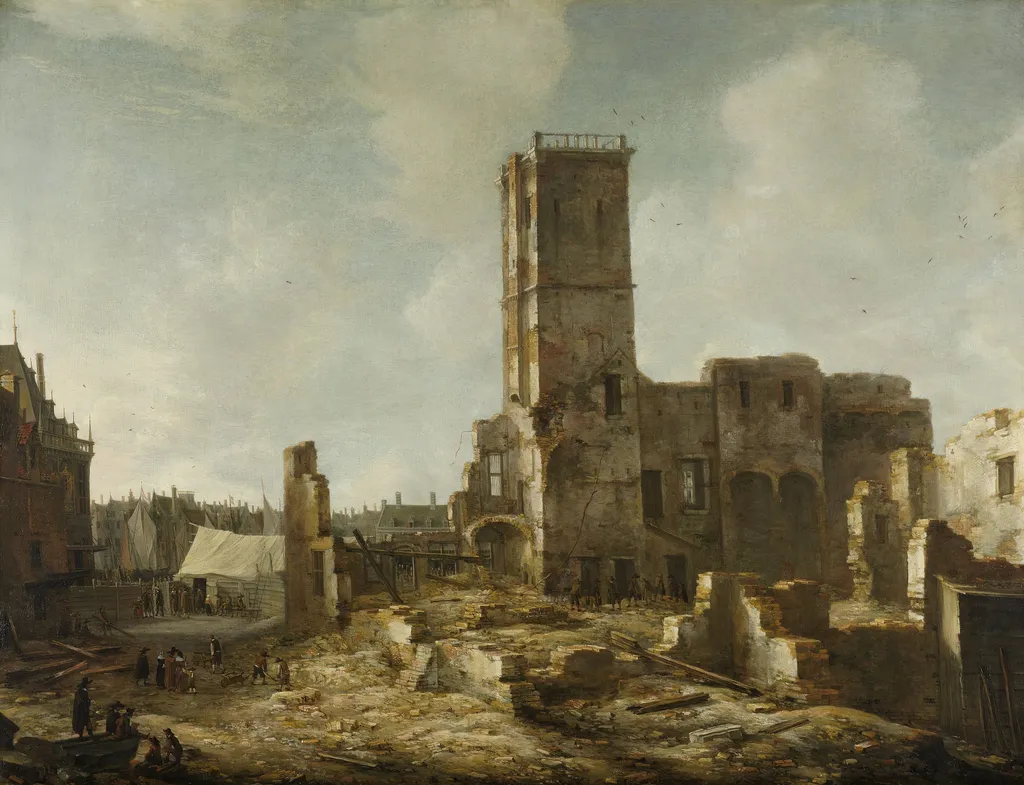
The ruins of the old town hall of Amsterdam after the fire of 7 July 1652 is an oil painting by the Dutch Golden Age artist Jan Abrahamsz Beerstraaten. It dates from 1659 and is held in the collection of the Rijksmuseum.
About this work
Subject & Meaning
Figures are shown clearing debris, retrieving archival materials, and a draftsman sketching on a stone, reflecting contemporary efforts to salvage records.
The painting shows the ruined medieval Amsterdam Town Hall after the fire of 7 July 1652, depicting the aftermath on the Dam with visible damage to the rear façade, including the Wisselbank front, town hall tower and surrounding buildings. Figures are shown clearing debris, retrieving archival materials, and a draftsman sketching on a stone, reflecting contemporary efforts to salvage records. The work is signed 'I. BEERSTRAATEN' in the lower left and entered the Rijksmuseum collection in 1818 after an auction in Amsterdam.
Technique & Style
The painting is an oil on canvas work depicting the ruins of Amsterdam’s Old Town Hall following the fire of 7 July 1652. Executed in 1659, it measures 110 cm by 145 cm and shows the structure from the rear, revealing the façade of the Exchange, the town hall tower, and surrounding buildings damaged by the blaze. The scene includes figures engaged in salvage operations, a sketcher on a stone, and soldiers near a temporary barrier linked to the construction of the new Amsterdam Town Hall. The work is signed in the lower left corner and entered the Rijksmuseum collection in 1818.
The composition combines precise architectural detail with a narrative of post‑fire activity, emphasizing the ruin’s immediacy and the ongoing efforts to recover its contents.
History & Provenance
Created in 1659, the oil painting depicts the aftermath of the fire that destroyed the Old City Hall of Amsterdam on July 7, 1652. The work is signed 'I. BEERSTRAATEN' on a stone in the lower left corner, confirming its attribution to Jan Abrahamsz Beerstraaten. It portrays the ruins from the Nieuwezijds Voorburgwal looking toward the Dam, capturing the scene immediately following the disaster before the tower was demolished two days later by order of the city council.
The provenance chain begins with an acquisition by the Rijksmuseum in 1818. The museum purchased the painting at an auction held in Amsterdam on August 17 of that year, though the specific name of the auction house remains unknown. The artwork has remained in the museum's collection since this purchase.
The painting is held in the collection of the Rijksmuseum in Amsterdam. The museum acquired the work in 1818, likely purchasing it at an anonymous auction held by an Amsterdam auction house on August 17 of that year.
While the artwork depicts the aftermath of the 1652 fire and was created in 1659, the provided sources do not list specific exhibitions where the piece has been displayed.
Legacy
The painting's legacy rests on its detailed visual documentation of Amsterdam's architectural transformation after the 1652 fire. It provided a rare contemporary record of the Old Town Hall's damaged rear façade and adjacent structures, including the Wisselbank and buildings later replaced by the Paleis op de Dam. The work influenced 19th-century historiography by shaping perceptions of Amsterdam's urban development, particularly through its depiction of post-fire reconstruction efforts and surviving elements like the damaged roof at the Dam-Vogelsteeg junction.
Its provenance at the Rijksmuseum since 1818 cemented its role in preserving this pivotal moment in Dutch civic history.
Overview
Jan Abrahamsz Beerstraaten’s 1659 oil painting records the aftermath of the July 7, 1652 fire that devastated Amsterdam’s Old City Hall. The work captures Dam Square surrounded by the charred remnants of the municipal building, its once‑grand tower now reduced to a skeletal frame.
Context
The Old City Hall, a central civic edifice on Dam Square, was a focal point of Amsterdam’s public life before its destruction. The fire’s impact prompted extensive reconstruction, and the painting situates the event within the broader narrative of 17th‑century urban development in the Netherlands.
Own this work as a print
Artist & collection
Artist
Jan Abrahamsz Beerstraaten or Johannes (Beerstrat or Bierstraten) (bapt. 1 March 1622 in Amsterdam – buried 1 July 1666) was a Dutch painter of marine art, particularly of events of the First Anglo-Dutch War and…