Artwork
De Handelskom in Brugge
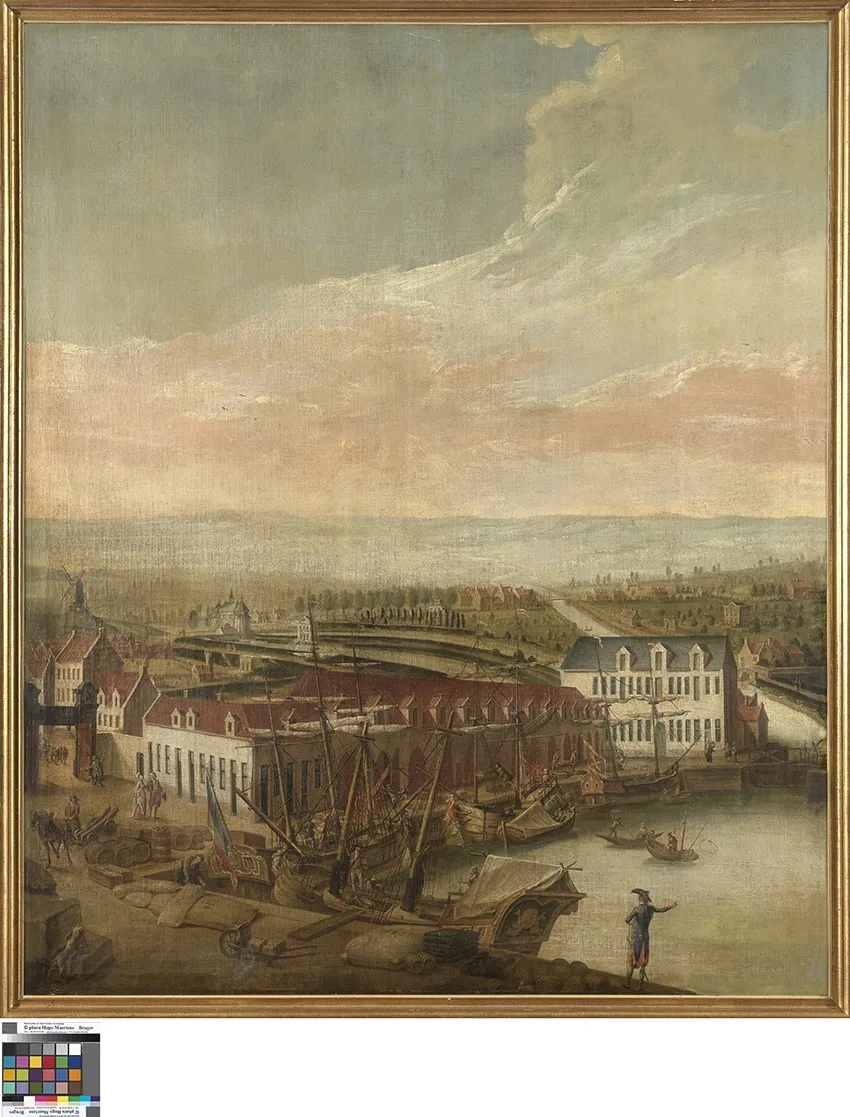
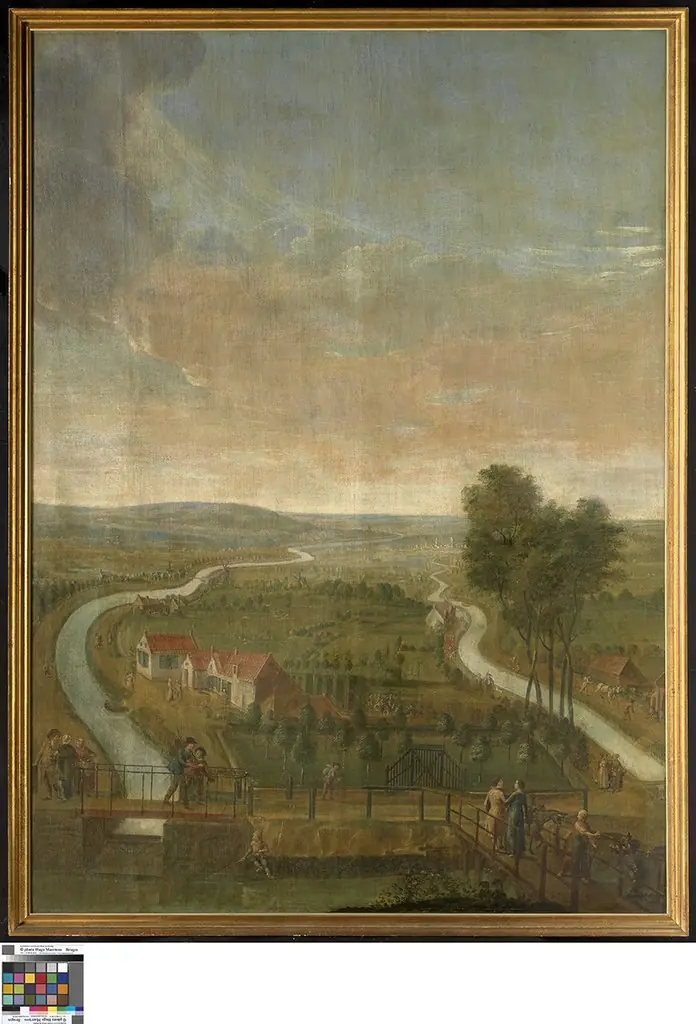
De Handelskom in Brugge is an oil painting by Jan Beerblock. It dates from 1804 and is held in the collection of the Groeningemuseum.
About this work
Subject & Meaning
These elements together symbolize the commercial activity of the Handelskom, reflecting its role as a center of trade in Bruges.
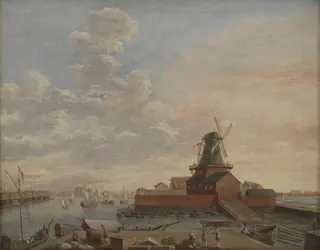
The painting shows a bustling urban port scene where a canal-side warehouse, a windmill, a horse-drawn cart and a barrel interact with a small boat on the waterway. These elements together symbolize the commercial activity of the Handelskom, reflecting its role as a center of trade in Bruges. The composition emphasizes the everyday economic life that defined the city’s identity in the early nineteenth century.
The work was created by Jan Beerblock in 1804 and is housed in the Groeningemuseum, where it remains on public display.
Technique & Style
The work is an oil painting executed on a wooden support, depicting the Handelskom in Bruges with architectural and maritime elements including a boat, house, windmill, dock, warehouse, cart, canal, barrel, and horse. The composition emphasizes precise architectural rendering and atmospheric perspective characteristic of early nineteenth-century cityscapes. The painting measures 180 cm in height and 152 cm in width, reflecting the standard scale used for formal cityscape works in the period.
The handling of light and color demonstrates a restrained tonal palette with subtle gradations, contributing to a realistic yet stylized representation of the urban environment. The brushwork exhibits controlled application, maintaining clarity in architectural details while allowing for expressive treatment in sky and water surfaces. This approach aligns with contemporary practices in European cityscape painting, where technical precision was balanced with compositional harmony.
History & Provenance
De Handelskom in Brugge was painted by Jan Beerblock in 1804, executed in oil paint as a cityscape view of the Bruges commercial dock. The work was created in the early nineteenth century, with its inception recorded as 1804-01-01.
The painting is held in the collection of the Groeningemuseum, where it remains located. No further details about its commission, prior ownership, or chain of custody prior to its acquisition by the museum are documented in the available sources.
The painting De Handelskom in Brugge is held in the collection of the Groeningemuseum. While the work is documented as part of this museum's holdings, the provided records do not specify a particular inventory or accession number for the piece. Furthermore, there is no information available in the current sources regarding any past or present exhibitions featuring this artwork.
Context
Jan Beerblock's 1804 oil painting De Handelskom in Brugge, depicting the bustling port of Bruges, is housed in the Groeningemuseum. The work's cityscape genre and meticulous detail reflect early 19th-century Flemish landscape traditions, situating it within the broader context of period urban vedute. Its precise documentation of commercial architecture and daily activity offers valuable insight into contemporary scholarly interpretations of Beerblock's role in the evolution of Belgian veduta painting.
Legacy
De Handelskom in Brugge by Jan Beerblock, painted in 1804, has been recognized as an influential cityscape that shaped later depictions of Bruges urban scenes. Its detailed portrayal of the harbor, including the Handelskom building, boat, house, windmill, dock, warehouse, cart, canal, barrel, and horse, established a visual template adopted by subsequent artists exploring Flemish townscapes. The work's composition and atmospheric rendering influenced 19th‑century cityscape painters who emphasized realistic architectural detail and lively market activity.
Today the painting is part of the Groeningemuseum's collection, where it continues to inform scholarly studies of early Belgian art and the evolution of urban genre painting.
Overview
Jan Beerblock’s 1804 oil painting captures a bustling harbor in Bruges, focusing on the area known as the Handelskom. The composition presents a quay crowded with vessels, modest warehouses, and a scattering of figures engaged in routine activities, all under a gently clouded sky that hints at the city’s maritime atmosphere.
Artist & collection

- De Handelskom in Brugge
 The Custom House of Copenhagen
 The Custom House of Copenhagen
 Village on the Bank of a River
 Coast in Scheveningen
 The Naval Dockyards at Christianshavn
 De Handelskom in Brugge
 The Siege and Capture of the City of Hulst from the Spaniards, November 5, 1645
 Schloß Temsch an der Schelde
 The Naval Dockyards at Christianshavn
 Dune Landscape with a Farmstead