Artwork
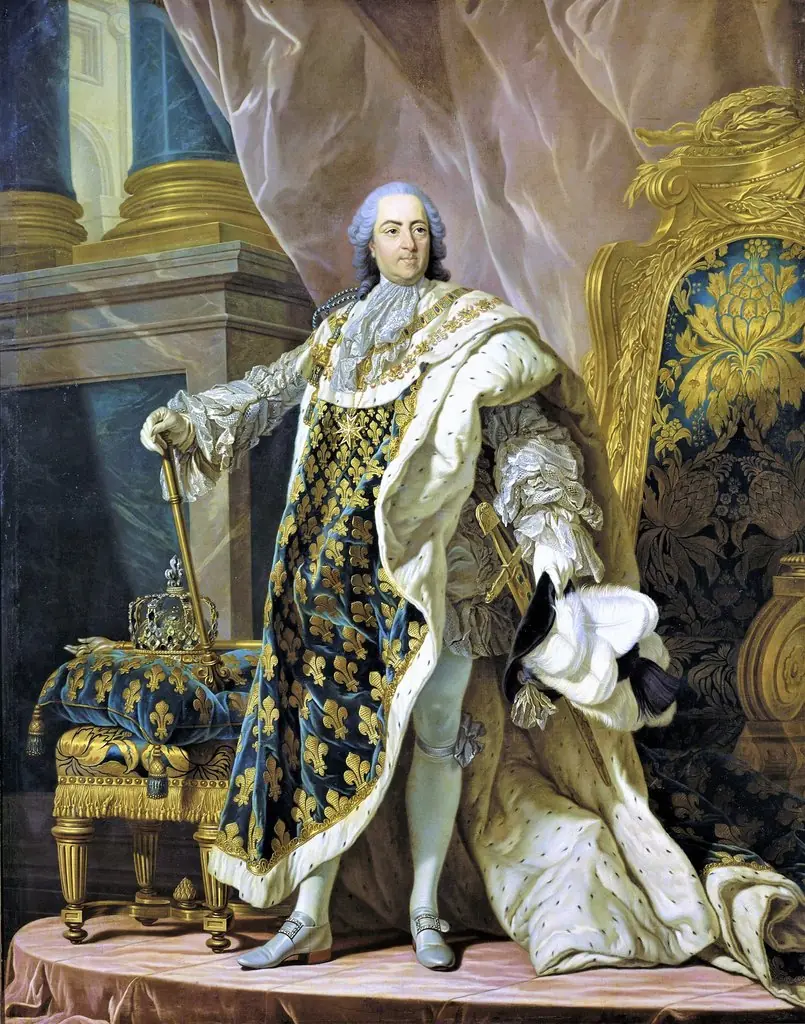
Louis XVIII of France in Coronation Robes
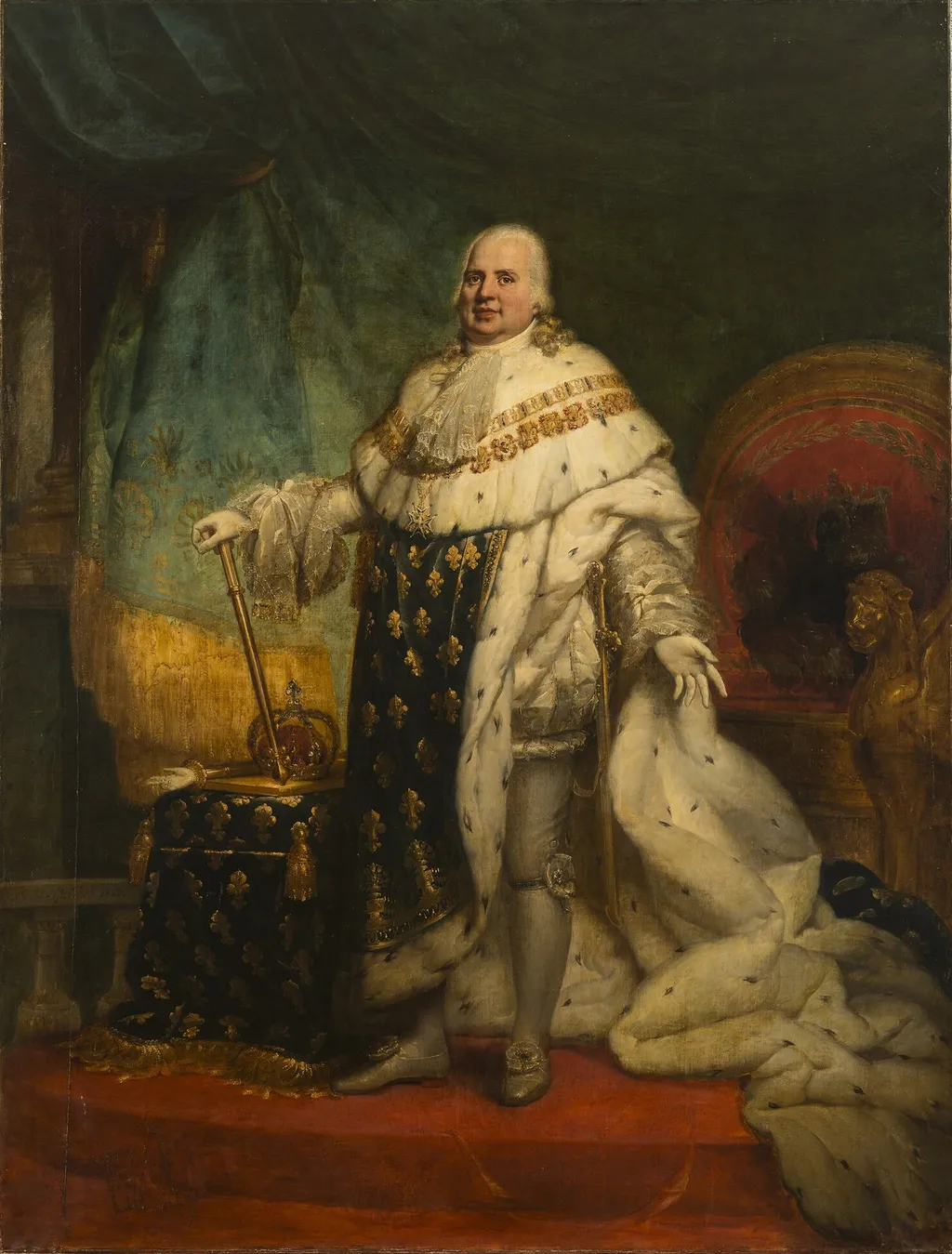
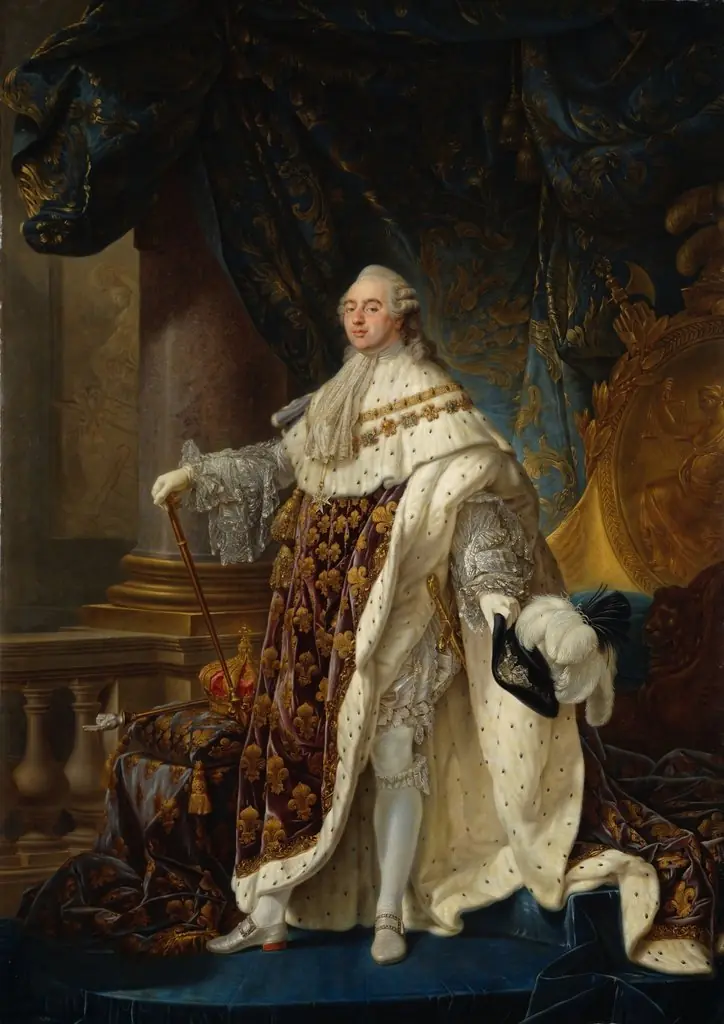
Louis XVIII of France in Coronation Robes is an oil painting by the Neoclassicist artist Jean-Baptiste Paulin Guérin. It dates from 1829 and is held in the collection of the Palace of Versailles.
About this work
Overview
Louis XVIII of France in Coronation Robes is an oil-on-canvas portrait by the French painter Jean-Baptiste Paulin Guérin, depicting the restored Bourbon monarch in full ceremonial regalia. The painting measures 269 by 204 centimeters and is held in the collection of the Museum of the History of France at the Palace of Versailles, where it is accessioned as MV 4793, INV 5229, and LP 3756. The work represents a significant example of official Restoration portraiture, produced during a period when the Bourbon monarchy sought to reassert its legitimacy through traditional iconography of kingship. While the original version was exhibited in 1819, the Versailles painting is a copy dated to 1820, made after an original that had been destined for the King of England.
Subject & Meaning
The portrait depicts Louis XVIII standing in full royal regalia, facing slightly toward the viewer with his head turned to his right.
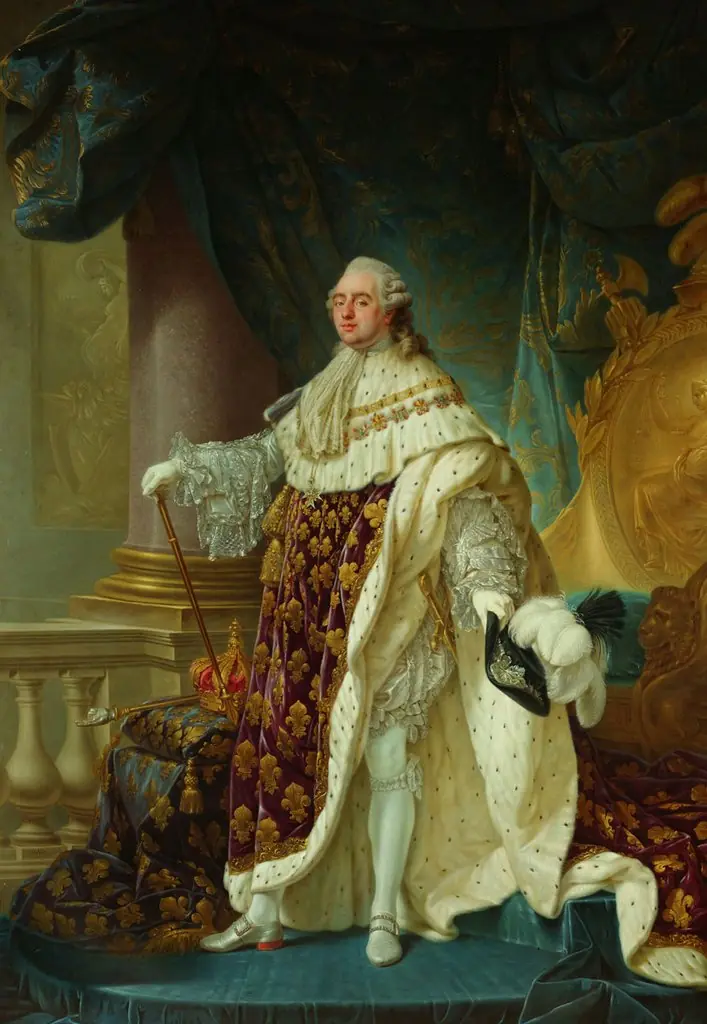
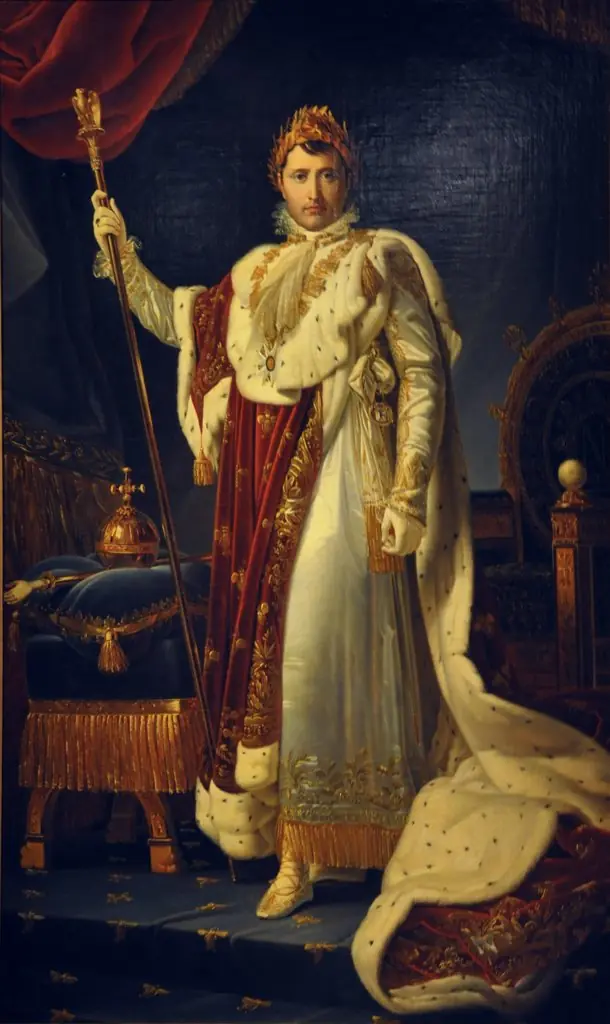
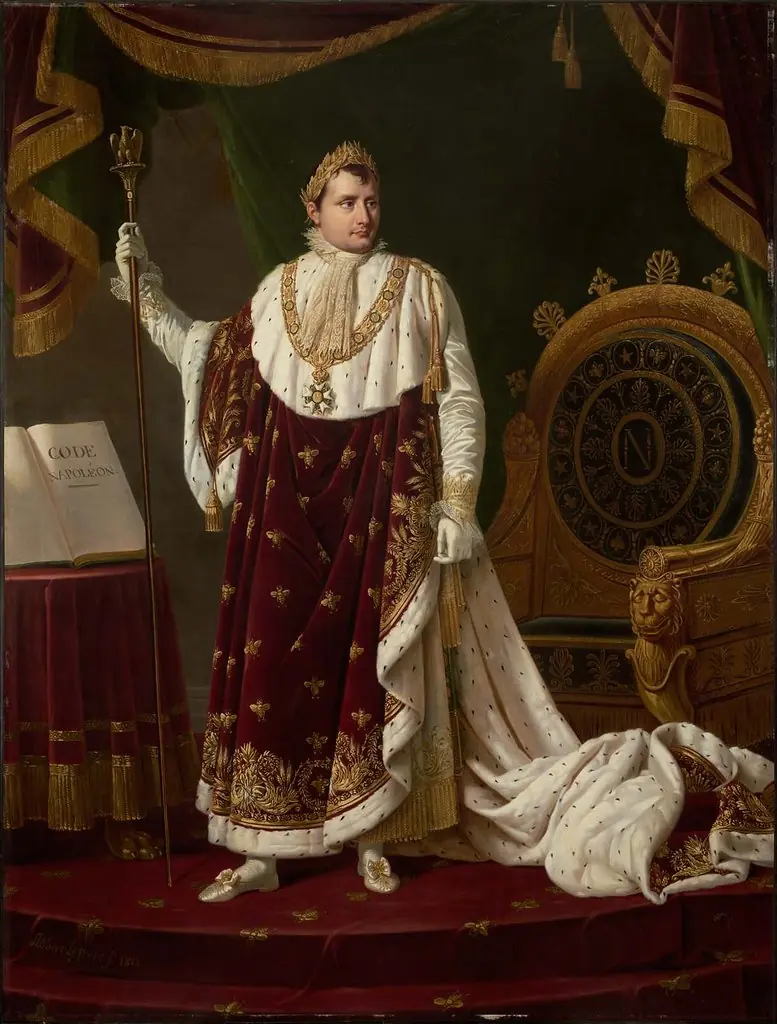
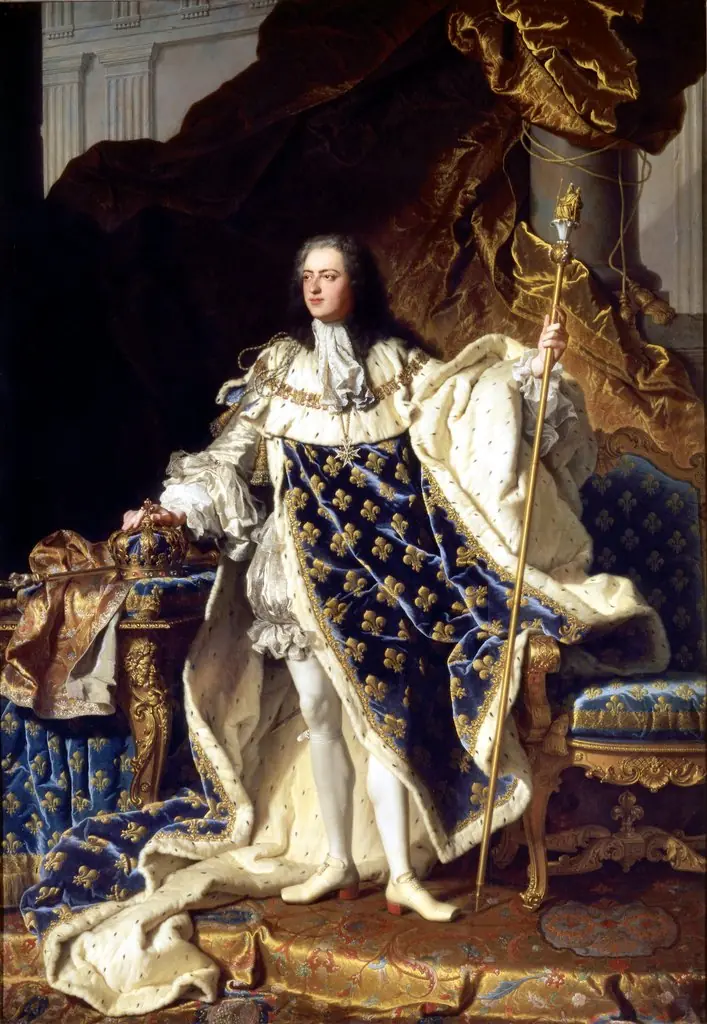
The portrait depicts Louis XVIII standing in full royal regalia, facing slightly toward the viewer with his head turned to his right. He wears an ermine-lined cape with black fleur-de-lis patterns over a dark blue robe similarly decorated with gold fleur-de-lis motifs, and a heavily embroidered gold collar across his chest. In his right hand he grips a tall golden scepter resting against a cushioned pedestal upon which sits a jeweled crown. To his left stands an ornate throne with carved golden armrests shaped like lion heads and a red upholstered backrest. The iconography deliberately invokes centuries of French royal tradition: the fleur-de-lis as the emblem of the Bourbon dynasty, the ermine as a symbol of purity and sovereignty, and the scepter and crown as attributes of legitimate kingship. The composition asserts the continuity of monarchical authority following the upheavals of the French Revolution and Napoleonic era, presenting Louis XVIII not merely as a ruler but as the embodiment of an ancient and unbroken line of French kings.
Technique & Style
Guérin executed the portrait in oil on canvas, working on a substantial scale of 269 by 204 centimeters that befits its function as an official state image. The technique demonstrates the smooth, polished finish characteristic of French academic portraiture of the period. The lighting falls strongly on the monarch's face and the white fur of his costume, leaving much of the background in shadow, a dramatic effect that focuses attention on the figure while creating spatial depth. The paint surface shows careful blending in the face and fabrics, with more visible brushwork reserved for the background drapery and darker areas. This differential handling, precise in the description of regalia and more painterly in peripheral elements, reflects the conventions of Neoclassical portraiture as practiced in the studios of François Gérard, where Guérin had trained. The heavy teal-green drapery with gold embroidery, the dark green wall, and the red carpet establish a rich but controlled palette that frames the monarch without competing with his presence.
History & Provenance
The original portrait was exhibited in 1819, with the Versailles copy dated to 1820. According to the Wikimedia Commons description, this copy was made after an original destined for the King of England. The painting entered the French national collections and is now held at the Museum of the History of France, Palace of Versailles, with multiple inventory numbers reflecting its complex institutional history: MV 4793, INV 5229, and LP 3756. The LP designation indicates acquisition during the reign of Louis-Philippe, suggesting the painting's continued political utility across different monarchical regimes. A related portrait of Louis XVIII by Guérin, also held at Versailles, is recorded under inventory numbers MV 6714, INV 5230, and C 65, indicating the artist's sustained engagement with royal portraiture and the demand for multiple versions of such images. The work's exhibition history includes its original showing in 1819 and its subsequent installation at Versailles as part of the museum's narrative of French monarchical history.
Context
Jean-Baptiste Paulin Guérin was a specialist portrait painter who had trained in the workshop of François Gérard, the leading portraitist of the Napoleonic and Restoration eras. Guérin's career trajectory illustrates the adaptability required of artists across the political upheavals of early nineteenth-century France: he had assisted in decorating the Tuileries Palace for Napoleon, helped renovate Versailles after the Bourbon Restoration, and in 1822 attracted the personal attention of Louis XVIII with his tableau Anchise et Vénus, an achievement that earned him the Légion d'honneur and, by 1824, the commission to paint the King's portrait. The coronation portrait thus belongs to a period of intense royal patronage for Guérin, who was subsequently appointed Director of drawing and painting at the Maison d'éducation de la Légion d'honneur in 1828. The work must be understood within the broader program of Restoration visual culture, in which artists were enlisted to reconstruct and propagate the image of legitimate monarchy after the revolutionary and imperial interlude. The existence of multiple versions and copies, including the one destined for England, speaks to the diplomatic and political functions such images served.
Legacy
The portrait occupies a significant place in the corpus of French official portraiture, representing the Bourbon Restoration's deliberate revival of pre-revolutionary visual conventions. Its afterlife is partly documented through its digital presence: the image has been widely disseminated through platforms including Wikimedia Commons, where it serves as a standard illustration of Louis XVIII, and through commercial image libraries such as Alamy. The existence of a dedicated Commons category containing twenty-one files related to portraits of Louis XVIII in coronation robes indicates the proliferation of versions, copies, and reproductions that extended the image's reach. The painting's current location at Versailles, within the Museum of the History of France, ensures its integration into the institutional narrative of French national heritage. While Guérin's reputation has been somewhat obscured by the greater fame of his teacher Gérard and by occasional confusion with the unrelated painters Pierre-Narcisse Guérin and Jean-Urbain Guérin, this portrait remains a key document of Restoration political culture and of the role of academic portraiture in constructing monarchical authority.
Own this work as a print
Artist & collection
Artist
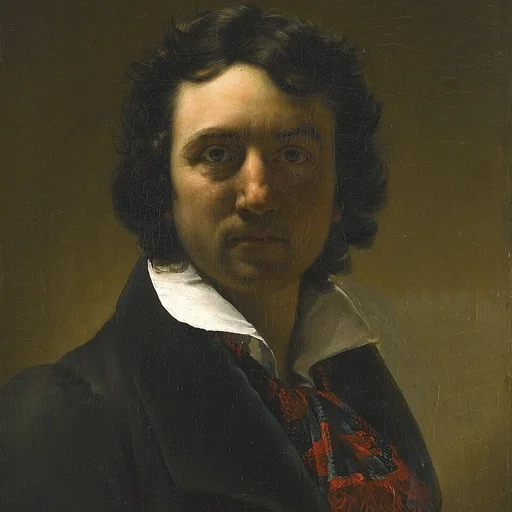
Jean-Baptiste Paulin Guérin (25 March 1783 – 19 January 1855) was a French painter who specialised in portrait painting.