Artwork
Napoleon I receives the Queen of Prussia in Tilsitt
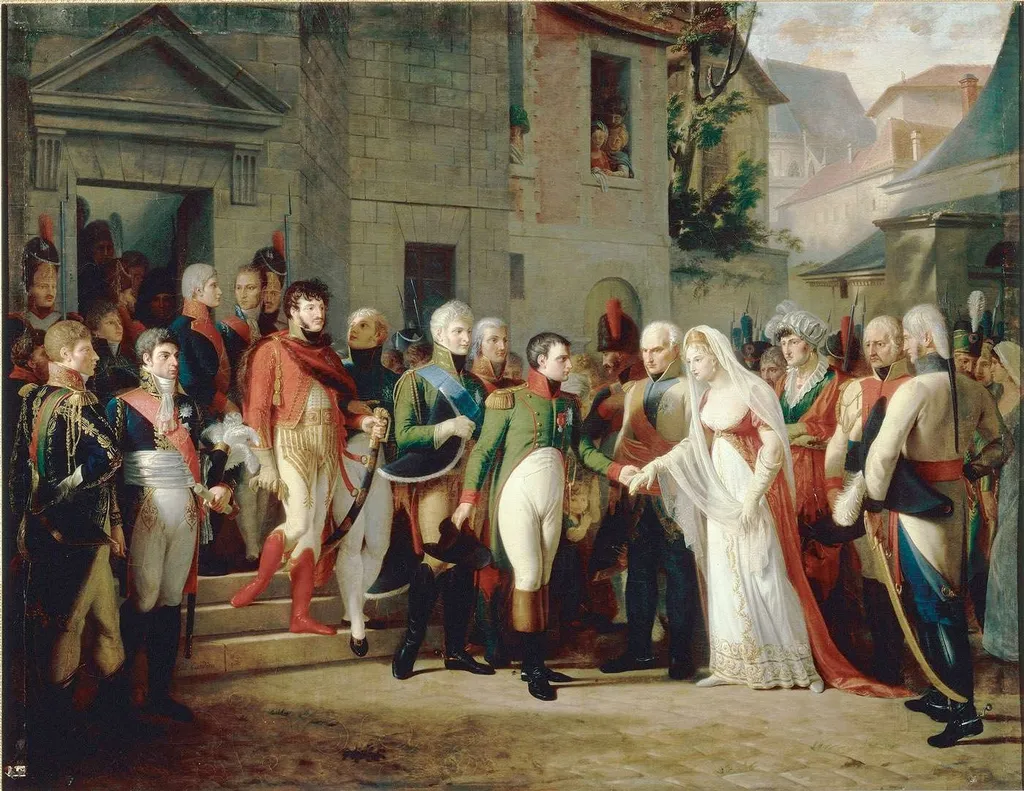
Napoleon I receives the Queen of Prussia in Tilsitt is an oil painting by Jean-Charles Tardieu. It dates from 1808 and is held in the collection of the Museum of the History of France.
About this work
Subject & Meaning
The composition serves to document the aftermath of the Napoleonic Wars and the subsequent negotiations between France and Prussia.
The painting depicts the historical encounter on July 6, 1807, in Tilsitt (modern-day Sovetsk), where Napoleon I receives Queen Louise of Mecklenburg-Strelitz of Prussia. As a work of history painting, the scene captures a specific diplomatic moment involving the French Emperor, the Prussian monarch, and their respective entourages of soldiers and courtiers. The composition serves to document the aftermath of the Napoleonic Wars and the subsequent negotiations between France and Prussia.
By portraying this meeting, the artwork functions as a visual record of the political realignments in Europe following the defeat of Prussia, highlighting the personal interaction between the two leaders amidst the presence of military figures.
Technique & Style
Jean-Charles Tardieu executed Napoleon I receives the Queen of Prussia in Tilsitt using oil paint on a canvas support. The painting measures 112 by 152 centimeters. As a work of history painting, the composition incorporates multiple figural elements, depicting Napoleon, Louise of Mecklenburg-Strelitz, a man, a woman, and a soldier within the setting of Sovetsk (Tilsit).
History & Provenance
The work titled Napoleon I receives the Queen of Prussia in Tilsitt was painted by Jean-Charles Tardieu in 1808. It was created to commemorate Napoleon's reception of Queen Louise of Mecklenburg-Strelitz following the Treaty of Tilsit in July 1807, reflecting the political significance of the encounter. The painting was exhibited at the Salon of 1808 and later entered the collection of the Museum of the History of France at the Palace of Versailles, where it remains on display.
Its dimensions are 112.0 cm in height and 152.0 cm in width, and it is executed in oil paint on canvas.
The painting is housed in the Museum of the History of France at the Palace of Versailles. It bears the inventory numbers MV 1730, INV 8105, and MR 2504. The work was exhibited at the Salon of 1808 and later featured in Dominique-Vivant Denon's description of the Emperor's eye.
Context
Critical reception of the painting was positive, highlighting its dramatic composition and historical significance, as noted in contemporary salon reviews. Scholarship emphasizes its role within the neoclassical tradition and its depiction of diplomatic ceremony during the Napoleonic era, situating it in the broader context of early 19th-century French historical painting. The work reflects the artist's engagement with political subjects and contributes to the visual narrative of Napoleon's consolidation of power, making it a pivotal piece in understanding the intersection of art and statecraft in post-revolutionary France.
Overview
Jean‑Charles Tardieu’s 1808 oil painting, Napoleon I receives the Queen of Prussia in Tilsitt, records a diplomatic meeting between Emperor Napoleon and Queen Louise of Mecklenburg‑Strelitz. Executed as a history canvas for the royal collection at Versailles, the work presents a crowded outdoor tableau set in the town of Tilsit (now Sovetsk, Russia), where the two figures are surrounded by uniformed officers.
Artist & collection
Artist
Jean-Charles Tardieu, also called "Tardieu-Cochin" (3 September 1765 – 3 April 1830) was a successful French painter during the ages of Napoleon and of the Bourbon Restoration.

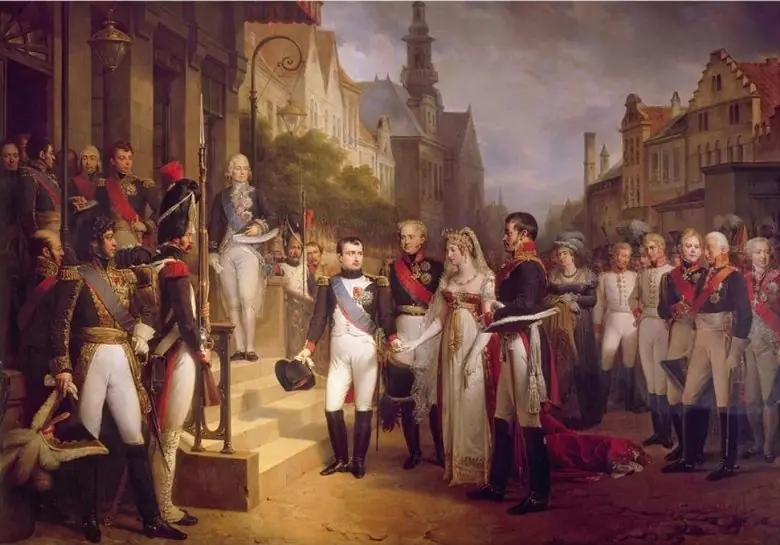
- Napoleon Receiving the Queen of Prussia at Tilsit
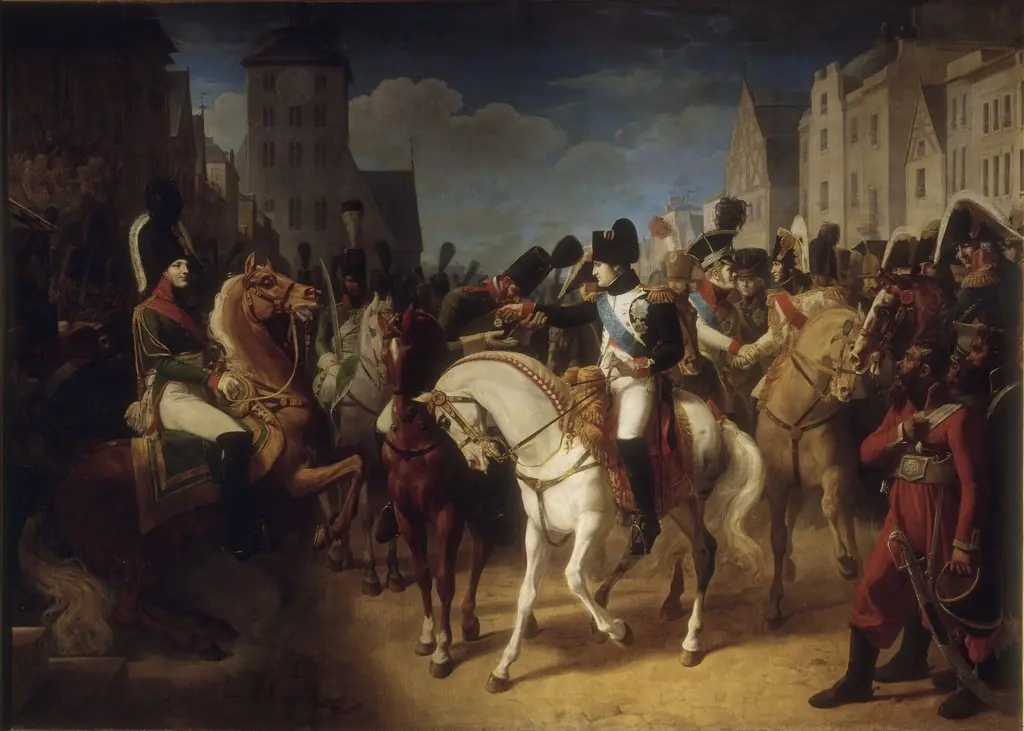 Napoleon I decorated a soldier of the Russian army in Tilsitt with the cross of the Legion of Honor
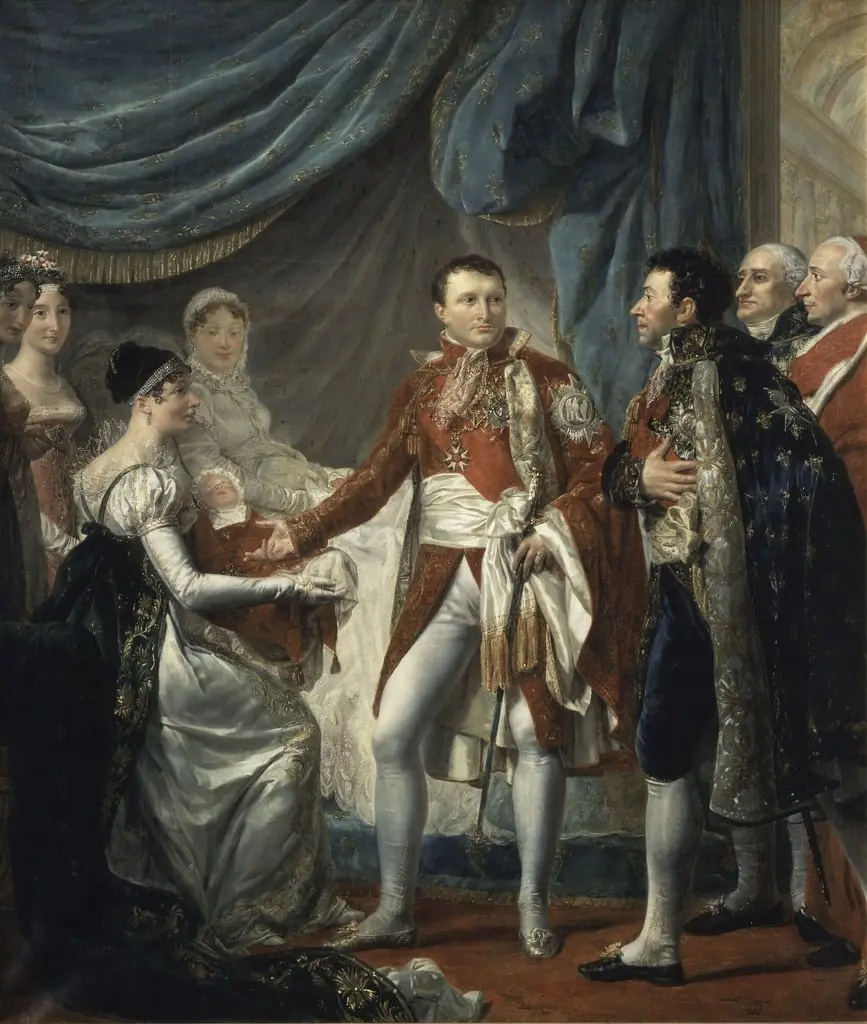 Napoleon I presents the King of Rome to the dignitaries of the Empire, March 20, 1811
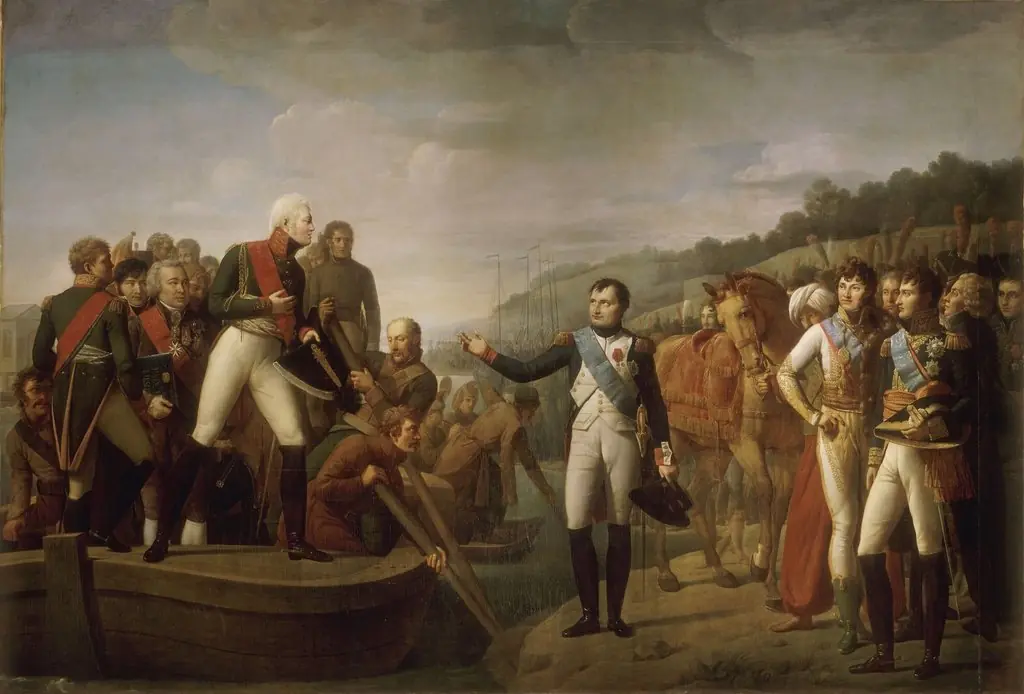 Farewell of Napoleon I and Alexander after the peace of Tilsitt, July 9, 1807
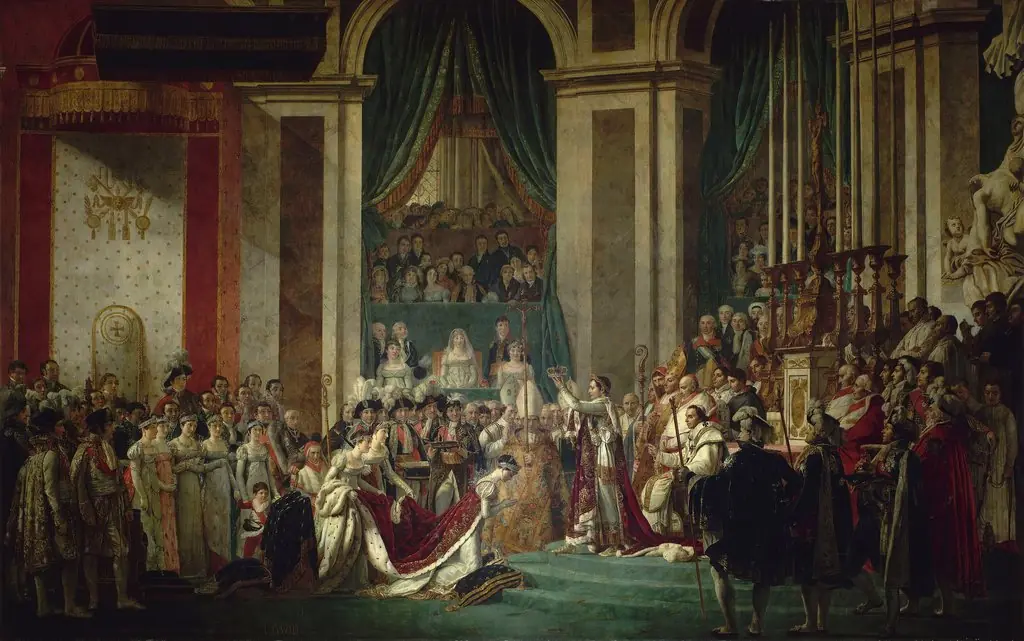 Coronation of Emperor Napoleon I and Coronation of the Empress Josephine
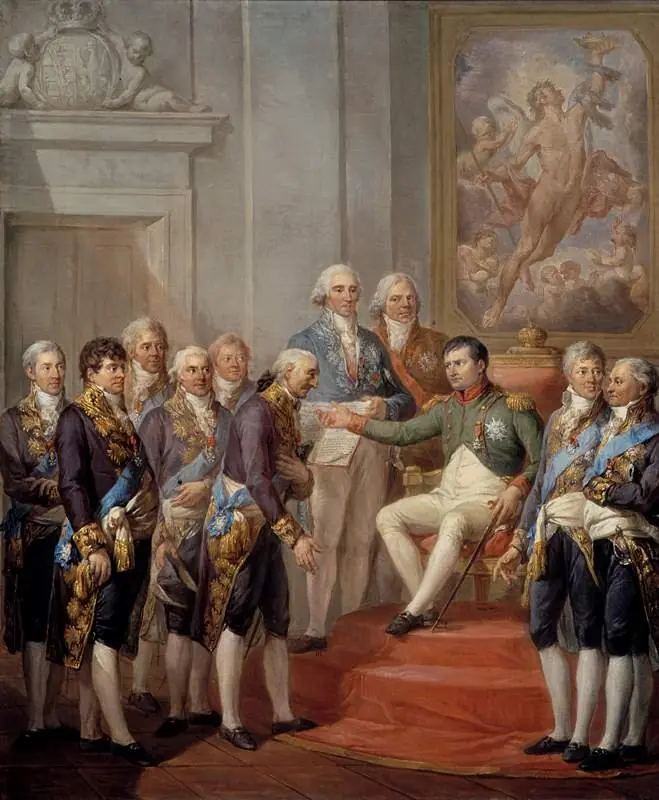 Granting of the Constitution of the Duchy of Warsaw by Napoleon
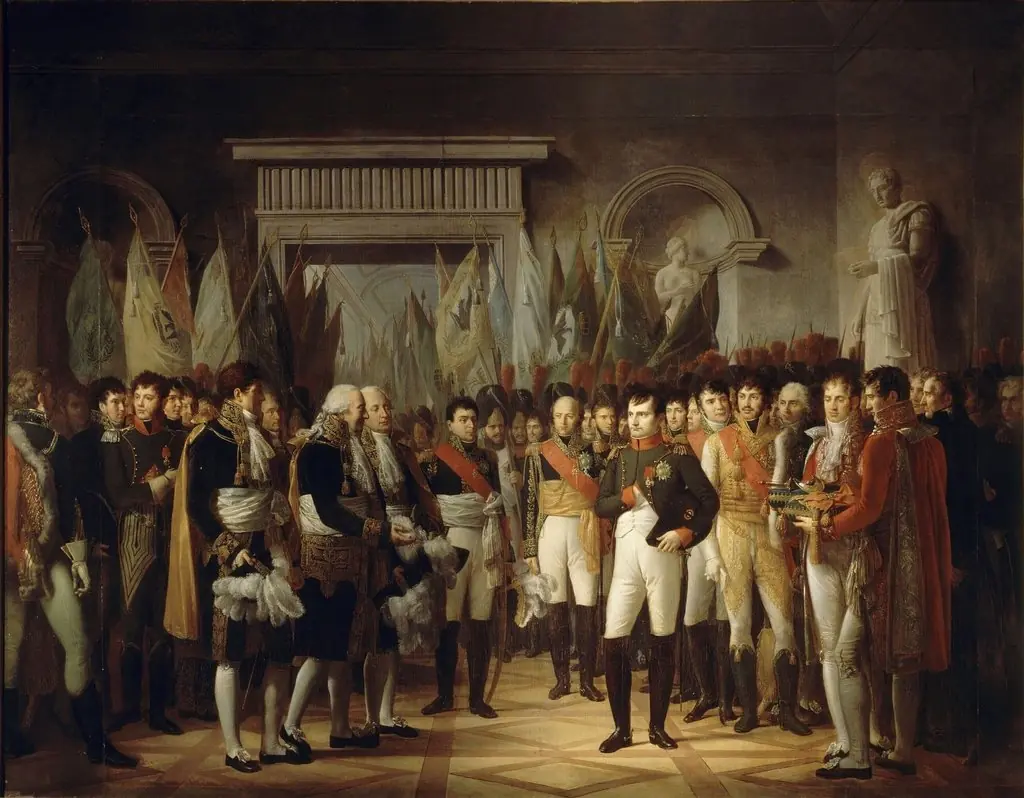 The Emperor receiving the deputies of the Conservative Senate in Berlin at the royal palace, 19 November 1806
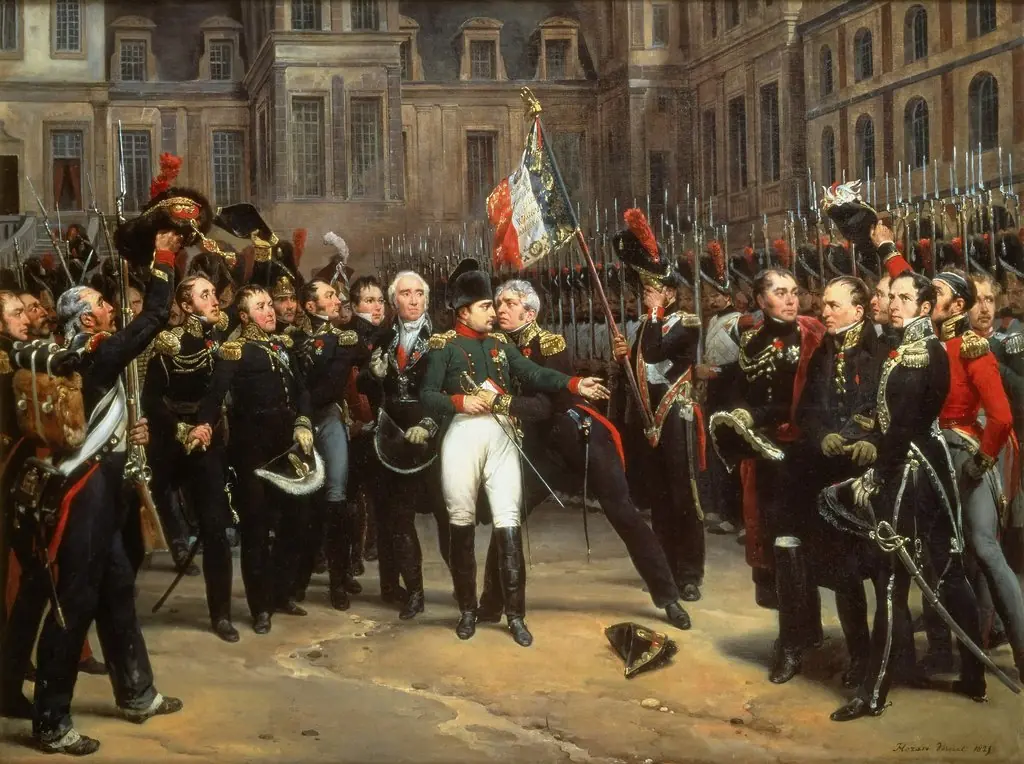 Napoleon bids farewell to his Guard at Fontainebleau on 20 April 1814
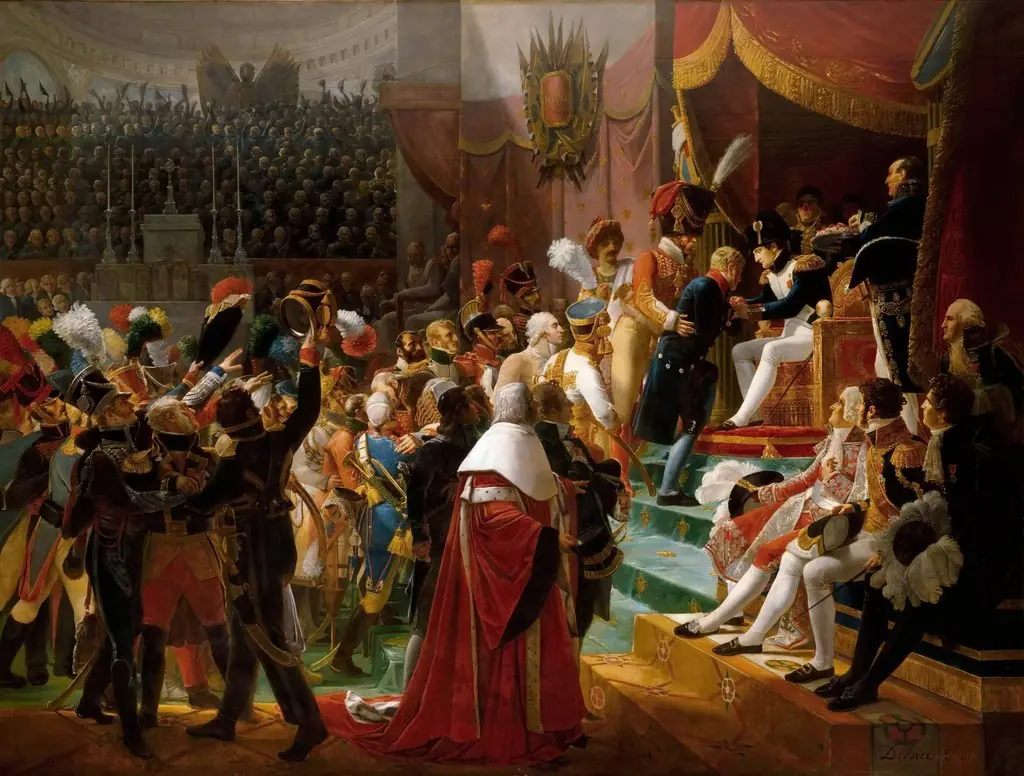 First distribution of the decorations of the Legion of Honor, made by Bonaparte, in the church of the imperial hotel of Invalides, July 14, 1804
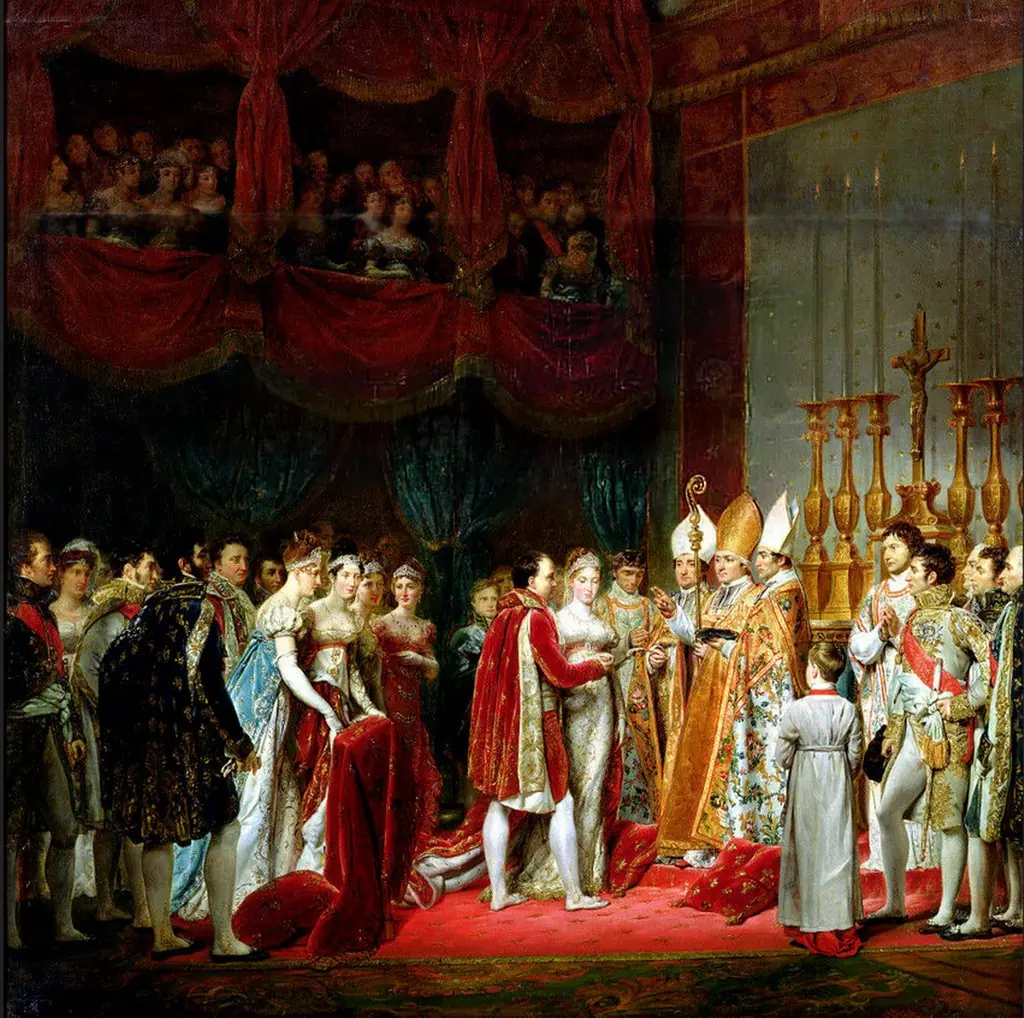 Marriage of Napoleon I and Marie Louise, 2 April 1810
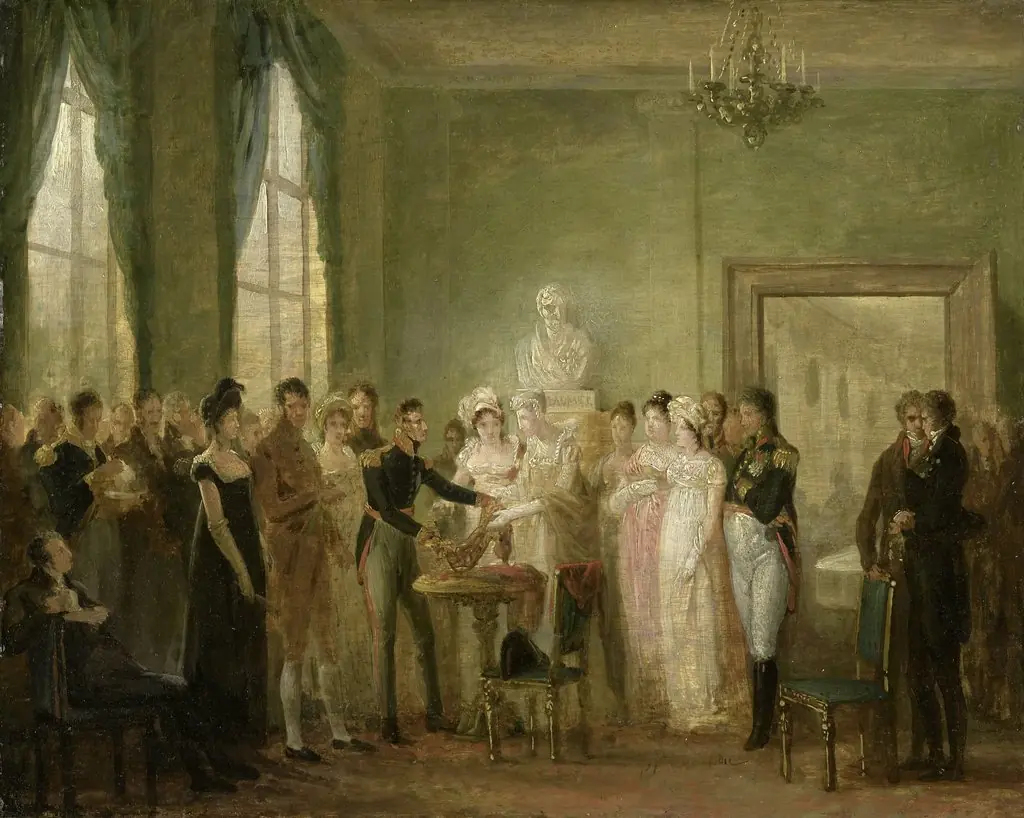 An Unidentified Historical Subject
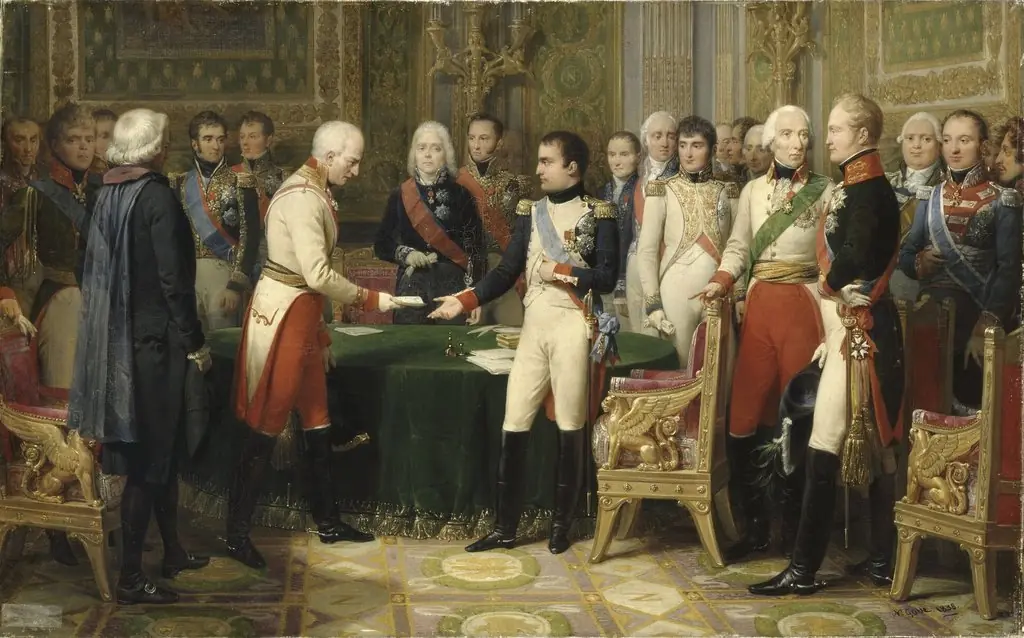 Napoleon I receiving Baron Vincent, the Austrian Ambassador, at Erfurt, 1808