Artwork
Napoleon I presents the King of Rome to the dignitaries of the Empire, March 20, 1811
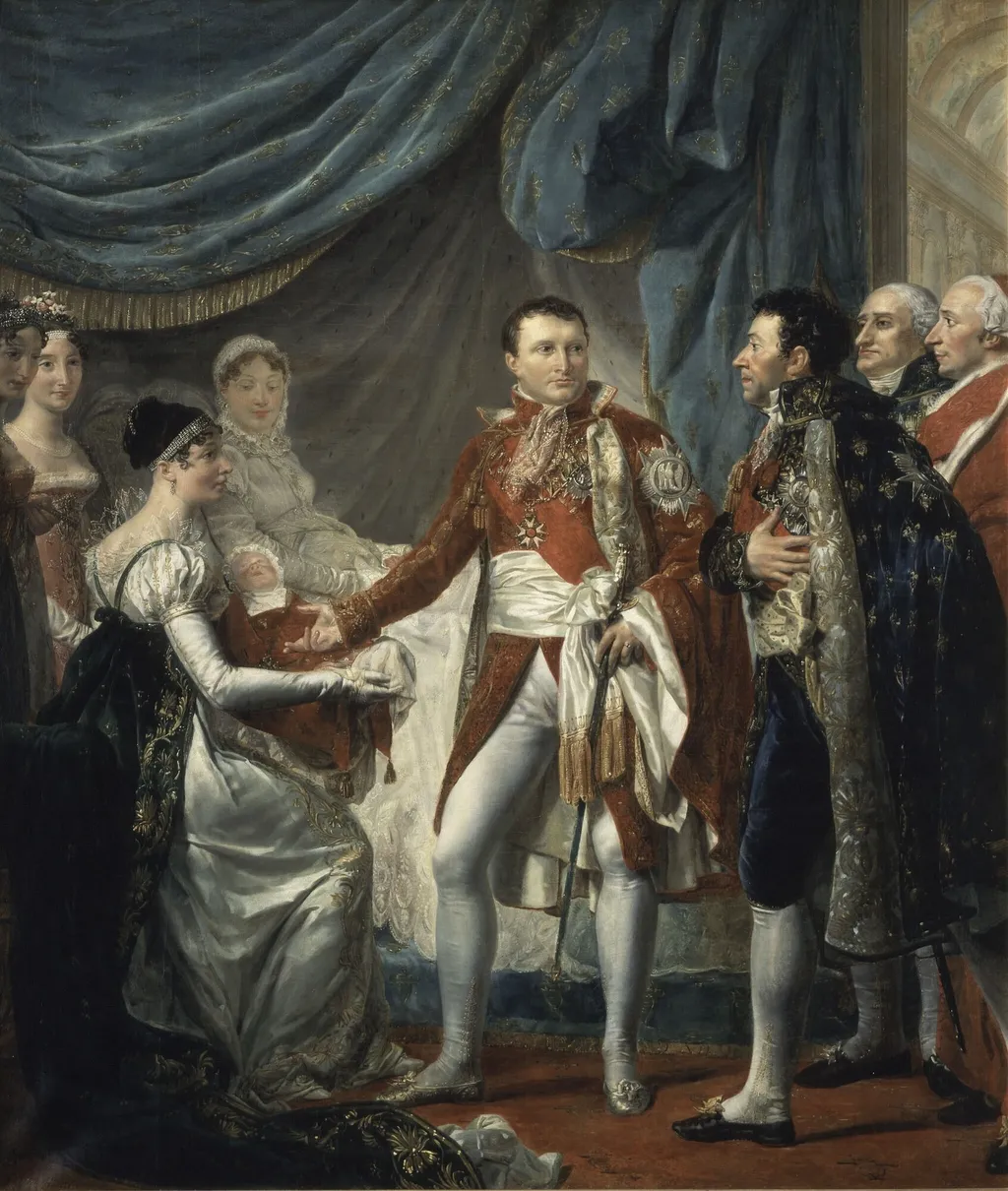
Napoleon I presents the King of Rome to the dignitaries of the Empire, March 20, 1811 is an oil painting by Georges Rouget. It dates from 1812 and is held in the collection of the Palace of Versailles.
About this work
Subject & Meaning
The composition conveys political stability and continuity after the tumult of the Napoleonic Wars, reinforcing the Empire’s ideological claim to permanence.
The painting depicts Napoleon I presenting his infant son, the King of Rome, to the dignitaries of the French Empire on March 20, 1811. The scene centers on Napoleon holding the swaddled heir, symbolizing the continuity of imperial rule and the dynastic future of the Bonaparte line. Surrounding figures include high-ranking officials, military officers, and members of the imperial court, whose reverent poses and gestures emphasize loyalty and allegiance to the regime.
The infant’s presence underscores the legitimacy of Napoleon’s power, framed as a divine mandate through the succession of a male heir.
The composition conveys political stability and continuity after the tumult of the Napoleonic Wars, reinforcing the Empire’s ideological claim to permanence. The inclusion of the King of Rome, born in 1811, aligns with propaganda celebrating imperial prosperity and the fulfillment of Napoleon’s vision for France.
Technique & Style
Georges Rouget executed this work as an oil painting on canvas in 1812. The piece is classified as a history painting, a genre characterized by grand narratives and formal composition. Measuring 2.6 meters in height and 2.2 meters in width, the large-scale format accommodates the depiction of numerous dignitaries and the imperial family. The work was created for the Palace of Versailles and exhibited at the Salon of 1812.
History & Provenance
Georges Rouget executed this history painting in 1812, depicting the presentation of the King of Rome to imperial dignitaries on March 20, 1811. The work was created for public exhibition and was shown at the Salon of 1812. It is currently held in the collection of the Museum of the History of France, located within the Palace of Versailles in France.
The painting is cataloged under multiple inventory numbers, including MV 4706, INV 7747, and AC 2456, reflecting its status within the national French museum system.
The painting is held at the Musée national des châteaux de Versailles et de Trianon, specifically within the Museum of the History of France at the Palace of Versailles. Its inventory numbers are MV 4706, INV 7747, and AC 2456, as recorded in the French national collections database Joconde.
The work was exhibited publicly at the Salon of 1812.
Legacy
The painting shaped academic historical art in 19th‑century France, influencing Salon historiography through its grand narrative of imperial succession. Contemporary critics praised its theatrical composition and symbolic portrayal of legitimacy, a view that persisted in later historiographical assessments of the era. Its display at the 1812 Salon cemented its status as a visual reference for the Napoleonic legacy, inspiring later depictions of imperial ceremony in European museums.
Overview
Georges Rouget’s oil on canvas, completed in 1812, portrays a ceremonial presentation that took place on 20 March 1811. The composition centers on a man in a red coat offering a baby to an assembly of imperial dignitaries, with Marie Louise, Duchess of Parma, and Napoleon himself among the onlookers. The work is part of the collection at the Palace of Versailles.
Own this work as a print
Artist & collection

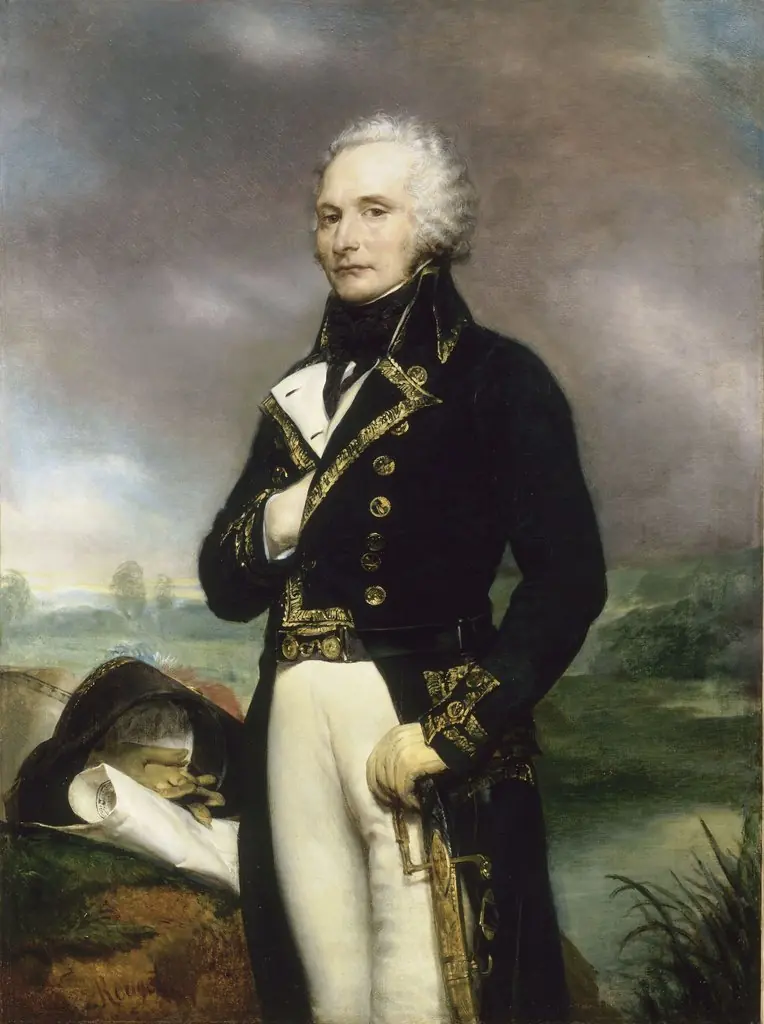 Alexandre-François Marie, viscount of Beauharnais, general-in-chief of the army of the Rhine
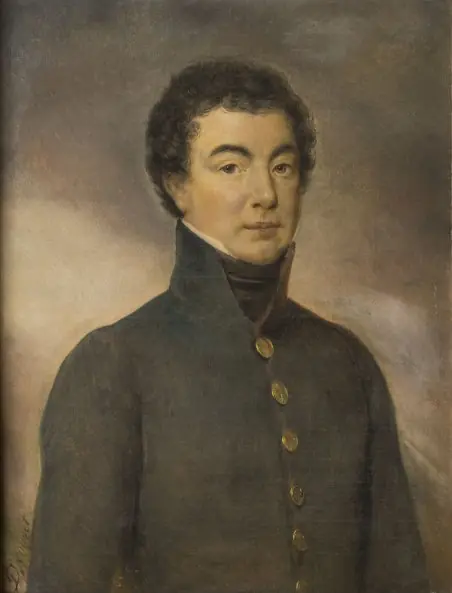 Victor-Guy, admiral-baron Duperré
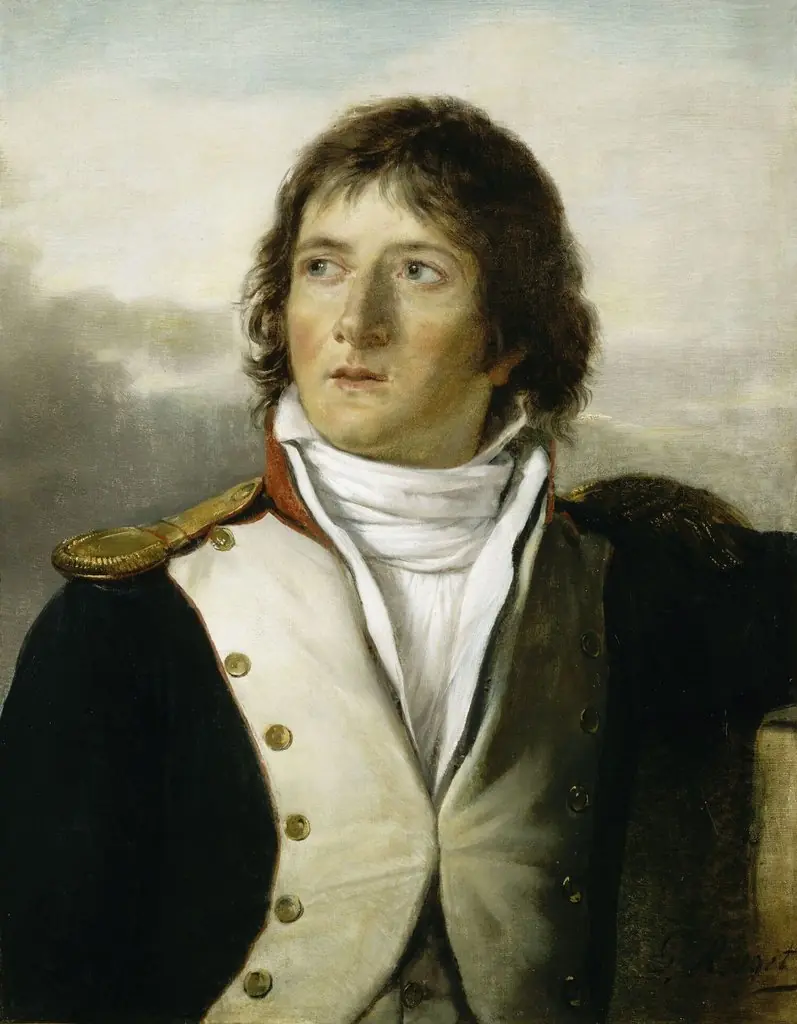 Laurent Gouvion Saint-Cyr, later Marshal and Marquis of Empire
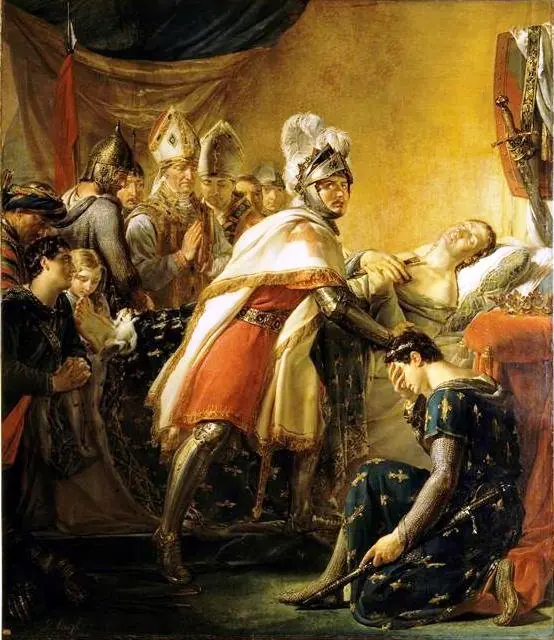 Mort de Saint Louis devant Tunis, 25 août 1270
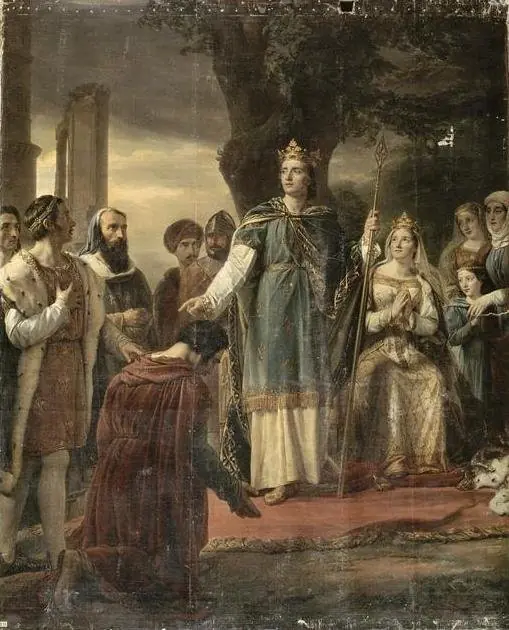 Saint Louis rendant la justice sous le chêne de Vincennes, 1260
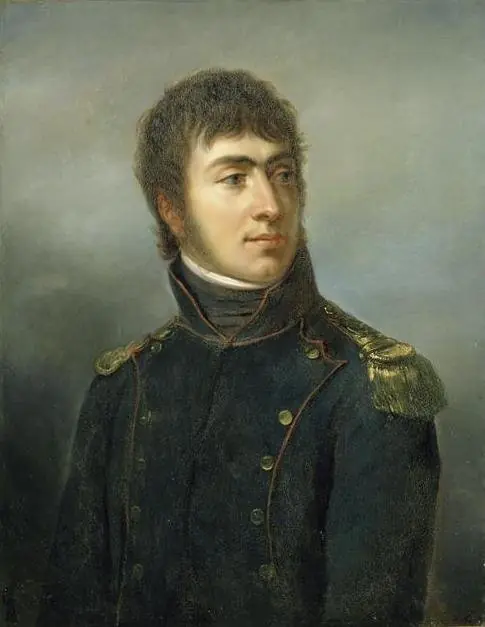 Auguste Frédéric Louis Viesse de Marmont, lieutenant d'état-major d'artillerie en 1792 (1774-1852)
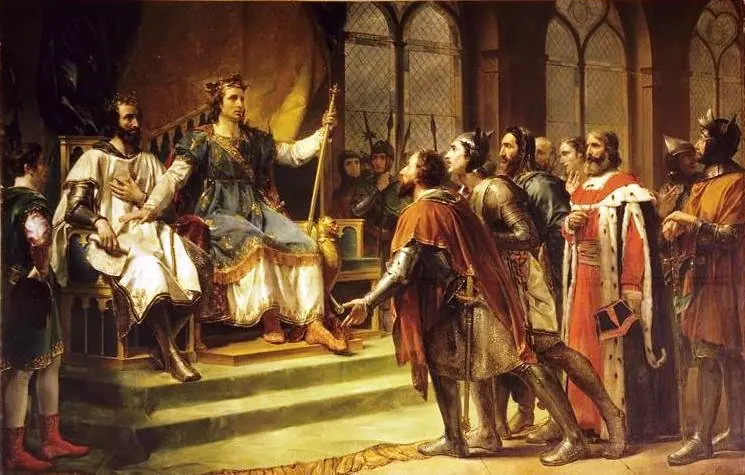 Mise of Amiens, 1264
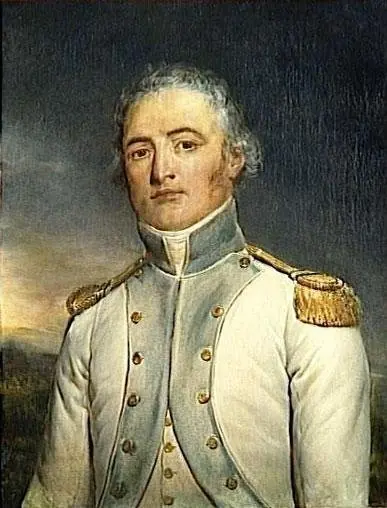 Bertrand Clauzel (1772-1842)
- Coronation of Emperor Napoleon I and Coronation of the Empress Josephine
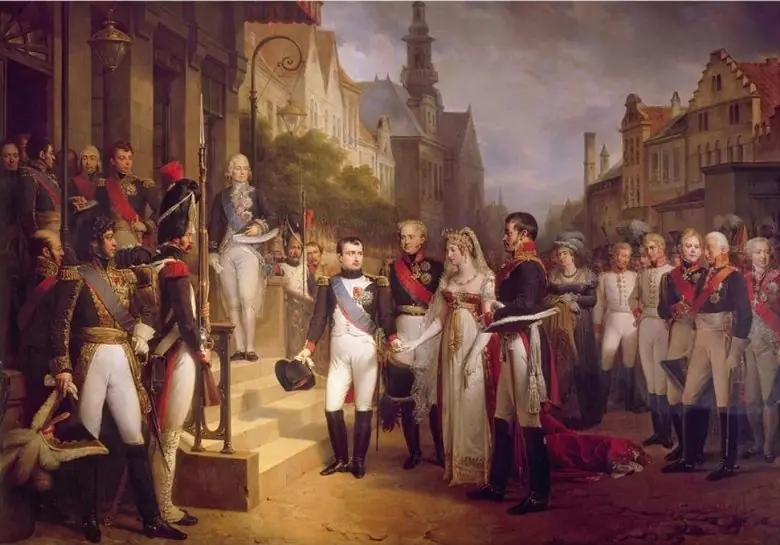 Napoleon Receiving the Queen of Prussia at Tilsit
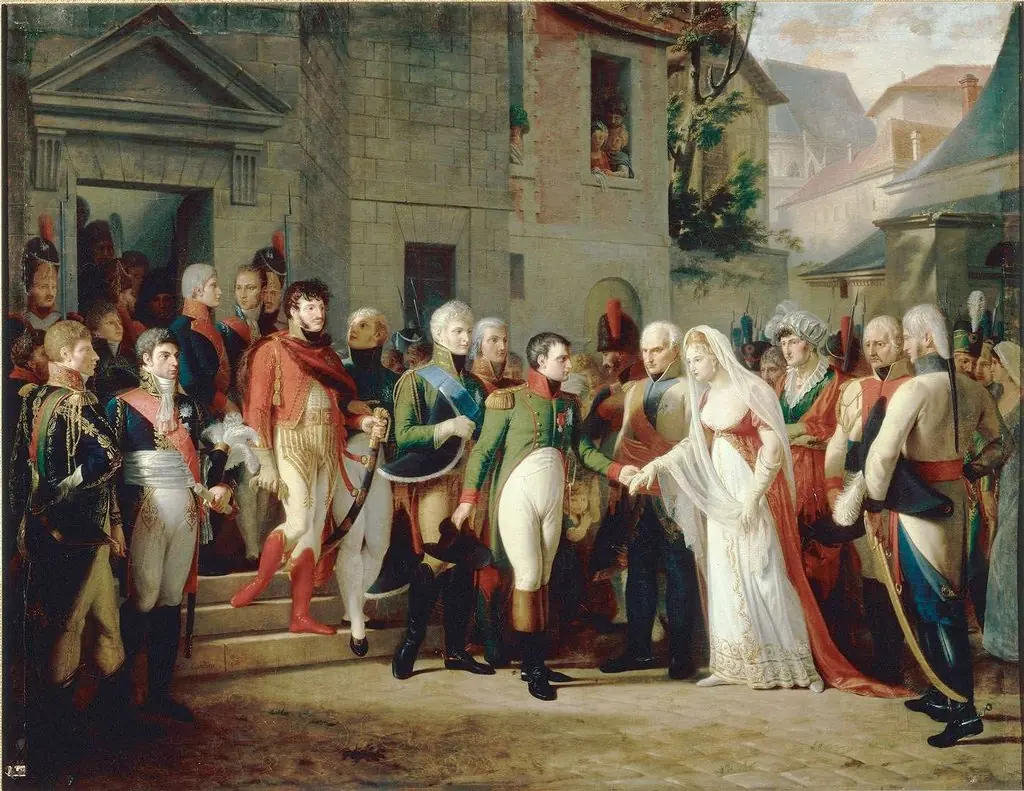 Napoleon I receives the Queen of Prussia in Tilsitt
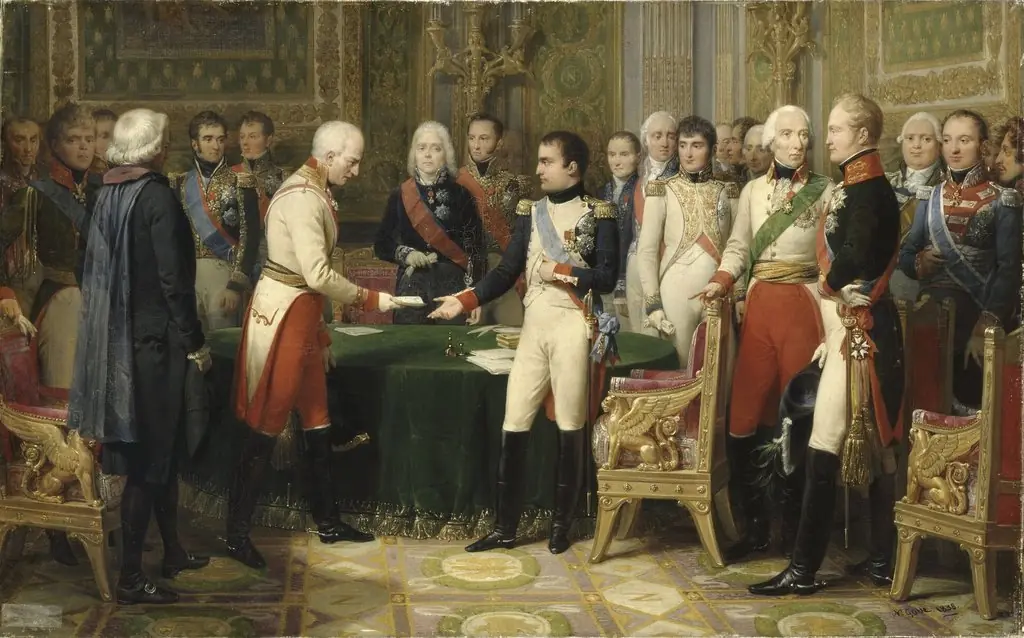 Napoleon I receiving Baron Vincent, the Austrian Ambassador, at Erfurt, 1808
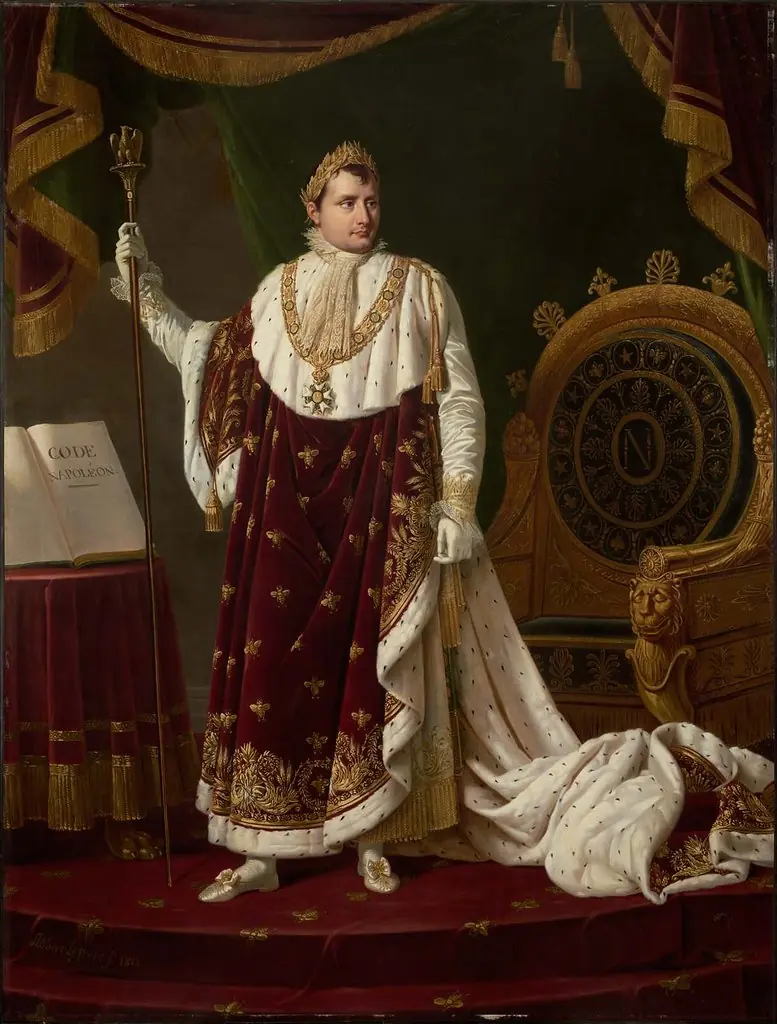 Portrait of Napoleon I in His Coronation Robes
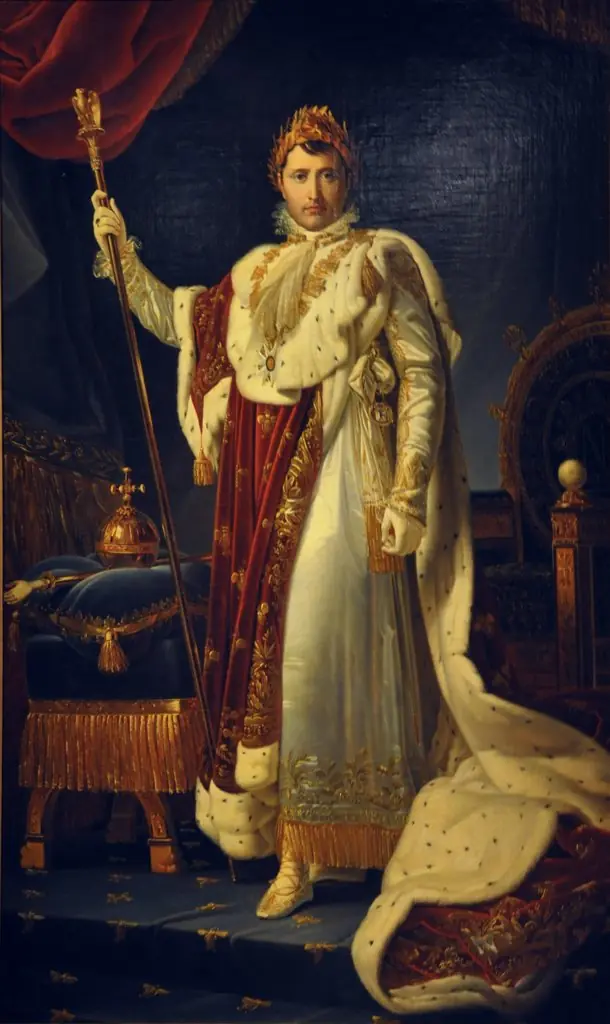 Napoleon in Coronation Robes