Artwork
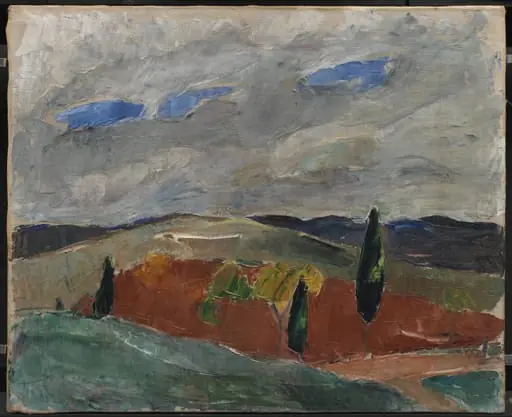
The Road to the Churchyard in Toledo
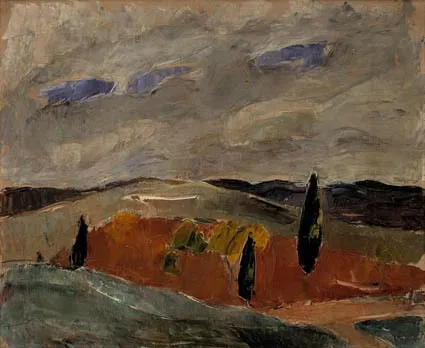
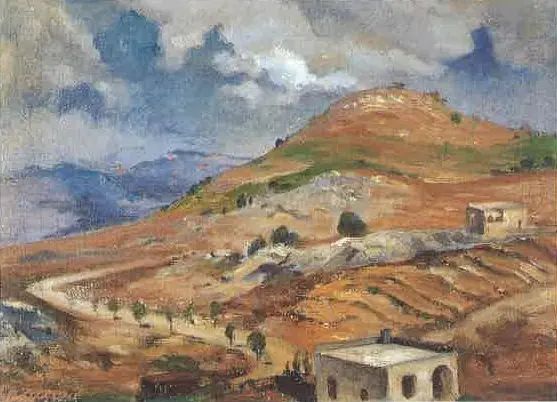
The Road to the Churchyard in Toledo is an oil painting by the Orientalist artist Jens Adolf Jerichau. It is held in the collection of the Statens Museum for Kunst.
About this work
Overview
Painted in 1915, The Road to the Churchyard in Toledo is an oil work by Danish artist Jens Adolf Jerichau, best known for his sculpture.
Painted in 1915, The Road to the Churchyard in Toledo is an oil work by Danish artist Jens Adolf Jerichau, best known for his sculpture. In his later years, Jerichau turned to painting, producing this landscape during a period of interest in foreign locales. Though not a professional painter, he captured a quiet Spanish scene with deliberate restraint, aligning with broader European trends of observing non-Northern European environments through a contemplative lens.
Subject & Meaning
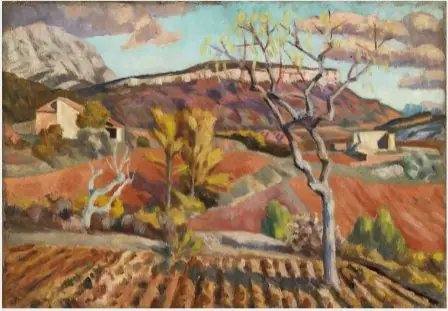
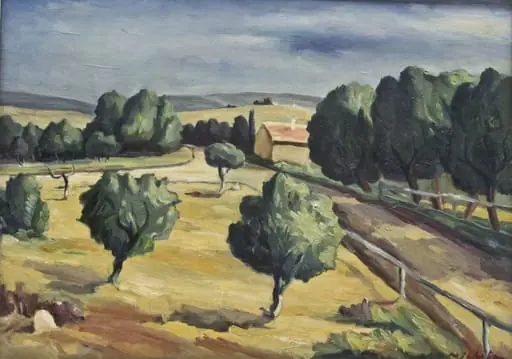
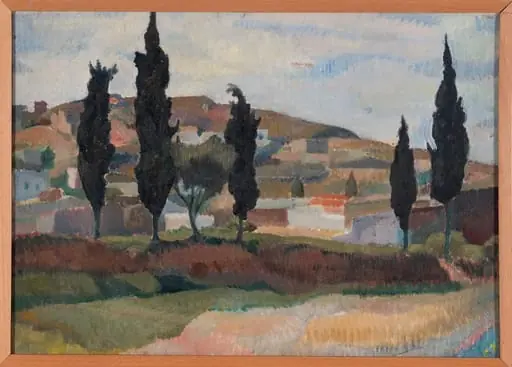
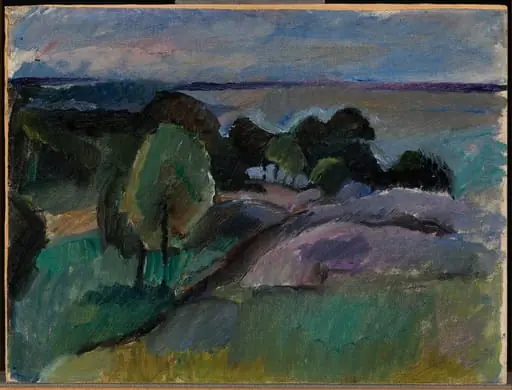
The painting portrays a solitary path winding toward a churchyard nestled in the hills near Toledo. The absence of figures and the muted tones suggest a meditation on mortality, solitude, and the passage of time. The churchyard, framed by distant hills and a soft sky, functions less as a specific location and more as a symbolic endpoint, a quiet, universal representation of rest and memory within a foreign landscape.
Technique & Style
Jerichau employed soft, blended brushwork and a restrained palette of earth tones and pale blues to evoke stillness. The composition relies on the road’s gentle curve to lead the eye toward the churchyard, creating a sense of quiet progression. Unlike the dramatic lighting of some Orientalist works, this piece favors atmospheric subtlety, emphasizing mood over detail, reflecting a personal shift from sculptural form to painterly tranquility.
History & Provenance
The painting entered the collection of Statens Museum for Kunst in Denmark, where it remains today. Its acquisition reflects institutional interest in Danish artists’ engagement with international subjects during the early 20th century. Though not widely exhibited, the work is recognized as part of Jerichau’s late artistic evolution, a rare example of his painted output, distinct from his more prominent sculptural legacy.
Context
Created during the waning years of Orientalism, the painting reflects a European fascination with Spain’s perceived antiquity and spiritual atmosphere. Unlike overtly exoticized depictions, Jerichau’s approach is subdued, aligning more with introspective landscape traditions. His choice of Toledo, a city rich in religious history, suggests an interest in cultural resonance rather than spectacle, placing the work within a quieter, more reflective current of travel-inspired art.
Legacy
Though Jerichau’s reputation rests primarily on sculpture, this painting offers insight into his later artistic curiosity. It stands as a quiet testament to an artist exploring new mediums and themes in old age. The work contributes to the understanding of Danish artists’ engagement with Southern Europe, and its preservation in a national collection underscores its value as a personal, rather than public, artistic statement.
Artist & collection
Artist
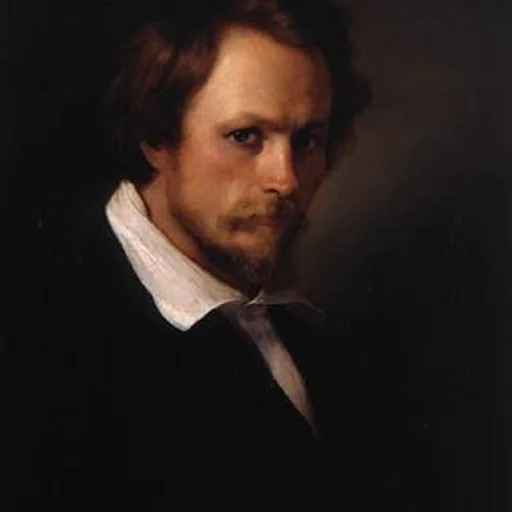
Emil Jens Baumann Adolf Jerichau (17 April 1816 – 25 July 1883) was a Danish sculptor.