Artwork
A Study for 'Queen Margaret's Defiance of the Scottish Parliament' (NG 2527)
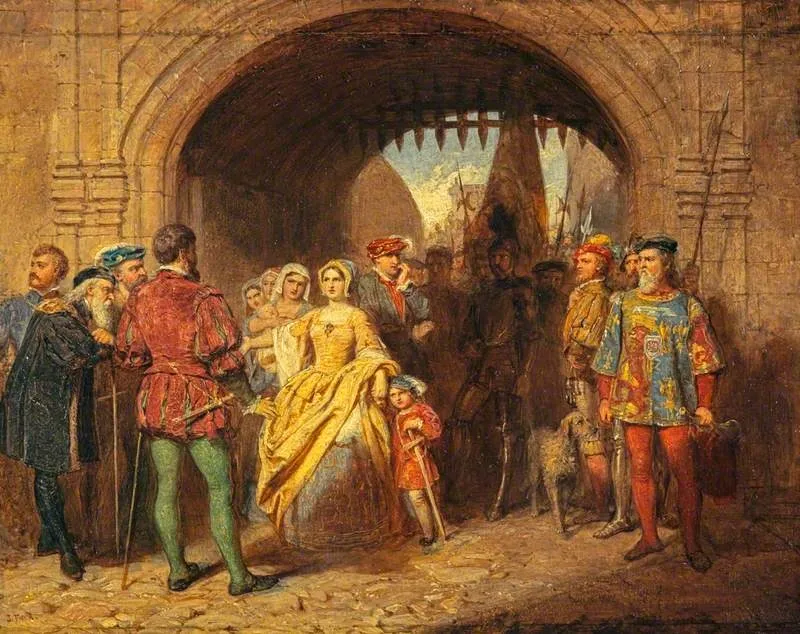
A Study for 'Queen Margaret's Defiance of the Scottish Parliament' (NG 2527) is an unspecified painting by John Faed. It dates from 1861 and is held in the collection of the National Galleries Scotland.
About this work
Overview
This study captures the artist's process of refining the figures and lighting before executing the final, more elaborate canvas.
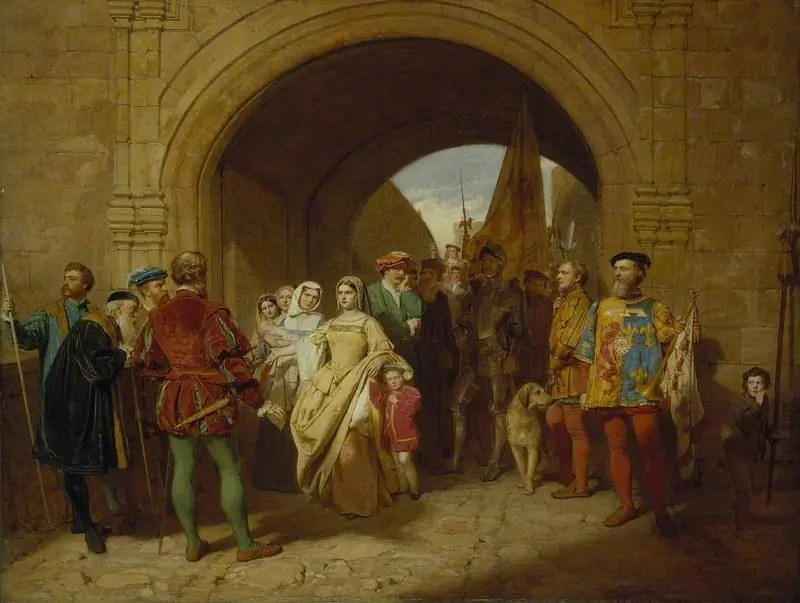
Painted in 1861, John Faed's 'A Study for Queen Margaret's Defiance of the Scottish Parliament' serves as a preparatory work for his larger historical narrative depicting the 13th-century confrontation between Queen Margaret of Scotland and the Scottish Parliament. The composition centers on the Queen, distinguished by a yellow gown and white shawl, standing resolutely before a gathering of nobles within a stone-arched hall. She holds a small child, likely her son, emphasizing the stakes of her political stance.
Faed renders the scene with the meticulous detail characteristic of mid-Victorian academic history painting, focusing on the dramatic tension between the solitary figure and the surrounding assembly. This study captures the artist's process of refining the figures and lighting before executing the final, more elaborate canvas. The work reflects Faed's specialization in Scottish historical subjects and his adherence to the narrative traditions of the Royal Academy during the Victorian era.
Subject & Meaning
The composition focuses on Margaret Tudor, daughter of Henry VII of England and queen consort of James IV of Scotland, portrayed in a bright yellow gown with a white shawl. She stands protectively beside a small child, evoking her role as mother and political actor. The surrounding figures, dressed in contemporary attire, imply a council or parliamentary setting, underscoring the narrative of her resistance to parliamentary authority.
Technique & Style
Faed employs a restrained palette, allowing the luminous yellow of the queen’s dress to dominate the visual field. Loose, gestural brushwork defines the architectural arch and the surrounding crowd, while finer detailing renders the fabrics and facial expressions. The study’s compositional balance, central figure framed by the arch and flanked by onlookers, reveals Faed’s method of arranging narrative drama before committing to the final, larger canvas.
History & Provenance
Created in 1861 as a preparatory work, the sketch remained in the artist’s studio before entering the Scottish National Gallery’s holdings, where it is catalogued under reference NG 2527. Its presence in the gallery provides insight into Faed’s creative process and the 19th‑century interest in historic Scottish subjects.
Artist & collection

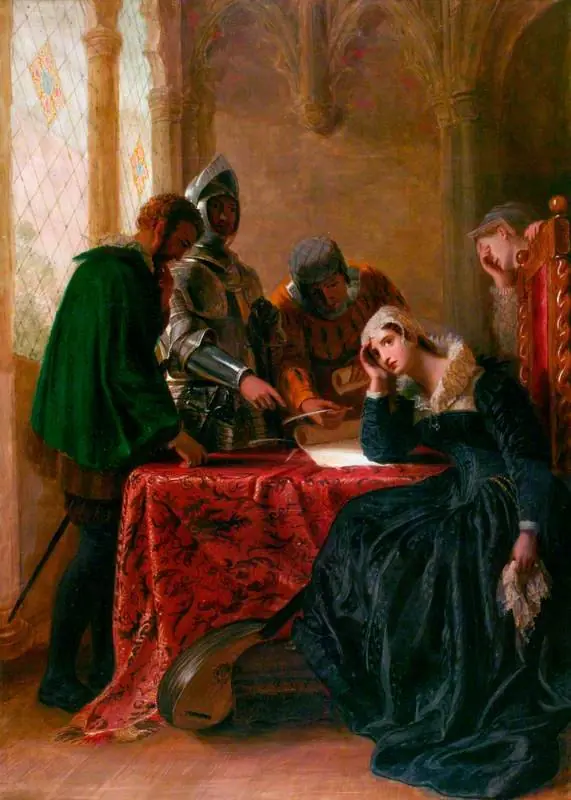 The Abdication of Mary, Queen of Scots
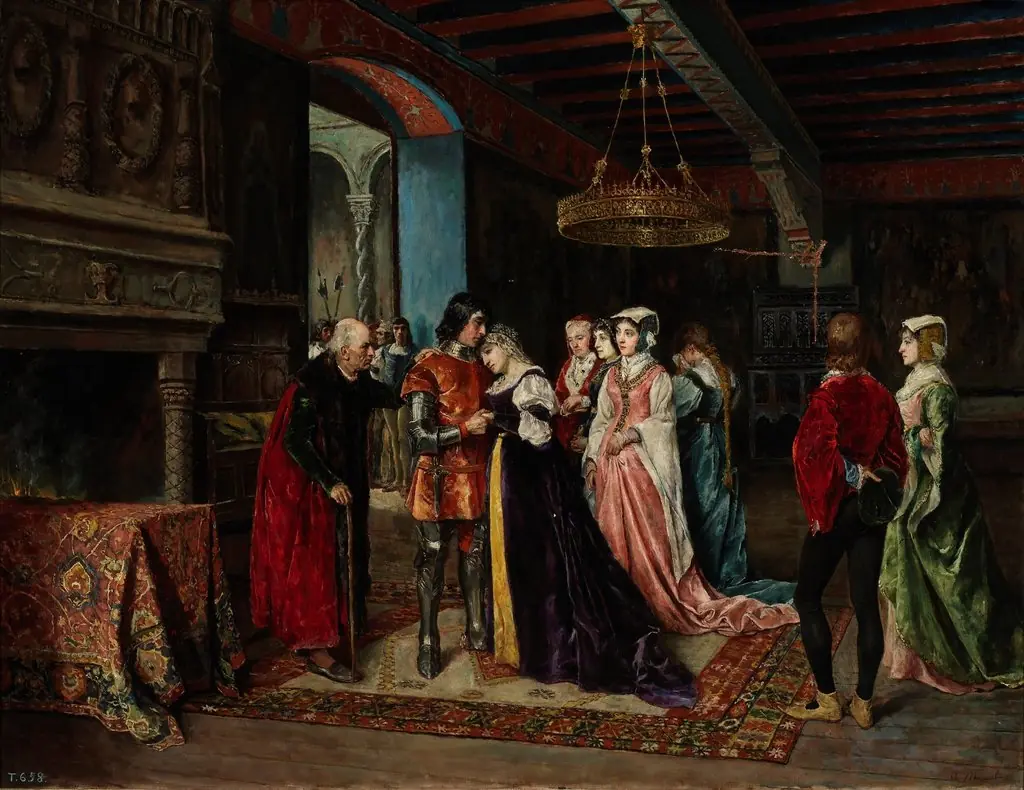 La despedida
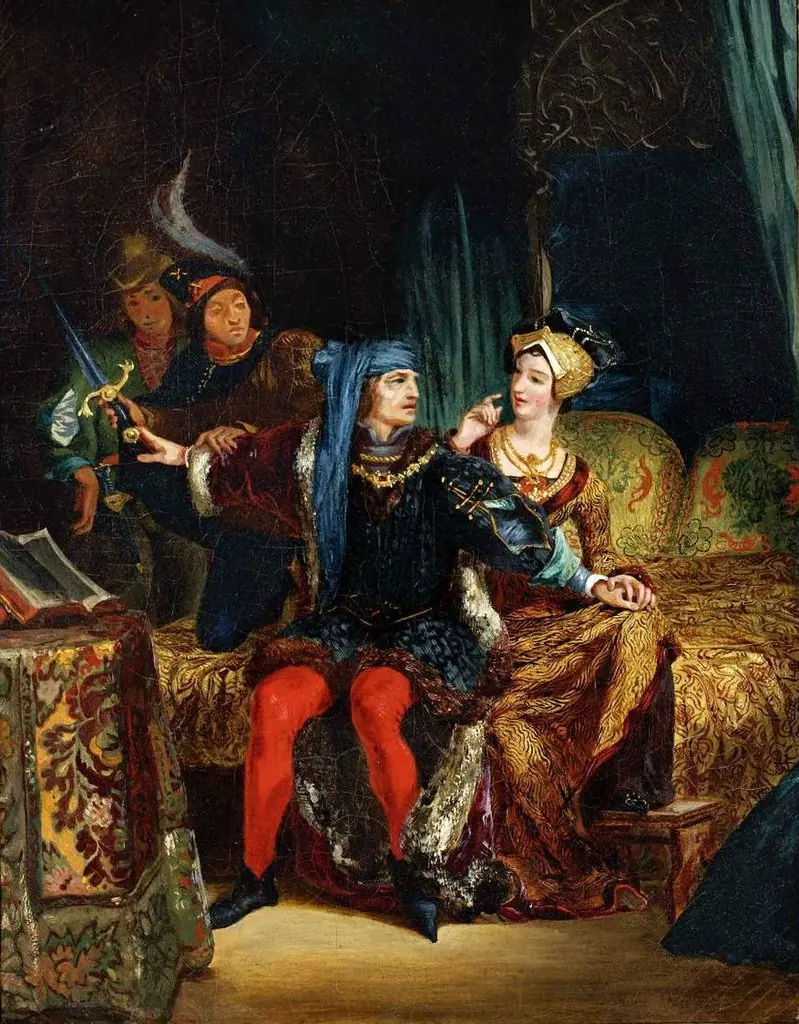 Charles VI et Odette de Champdivers
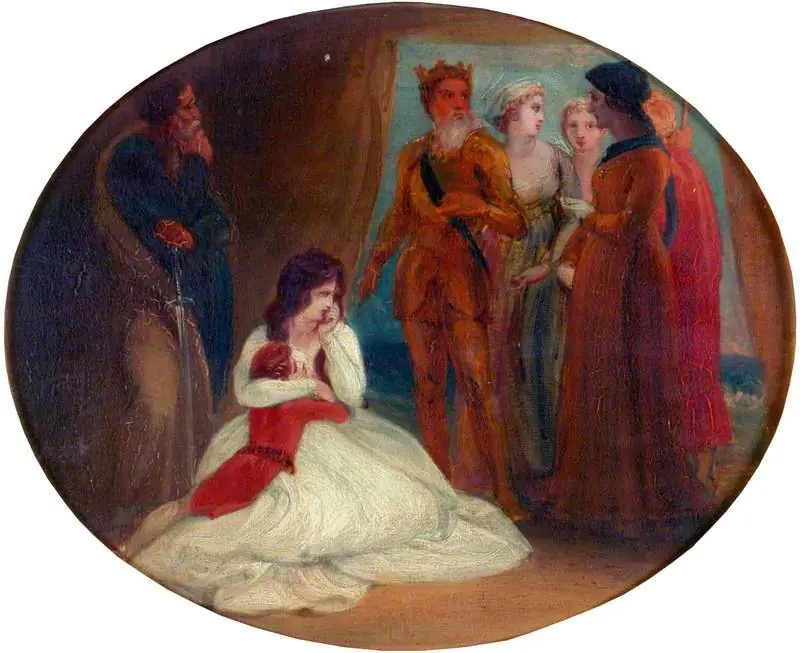 Constance and Arthur (from William Shakespeare's 'King John', Act III, Scene 1)
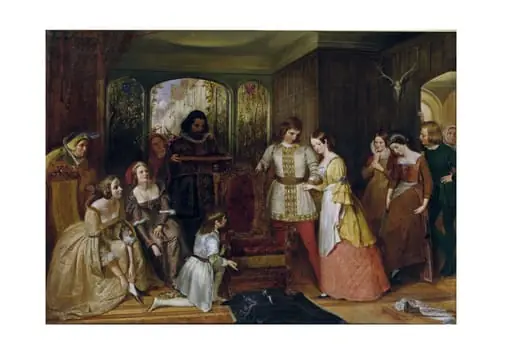 Cinderella About to Try on the Glass Slipper
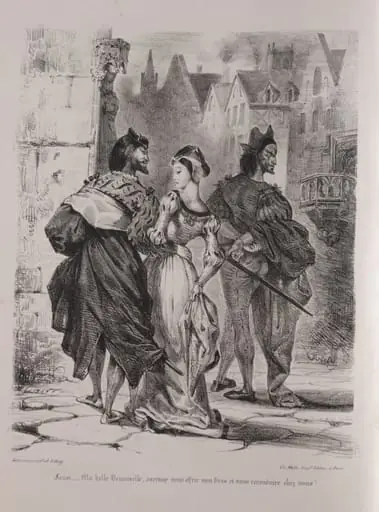 Illustrations for Faust: Faust seeks to allure Marguerite
 Leopold the Glorious as patron of the arts and sciences
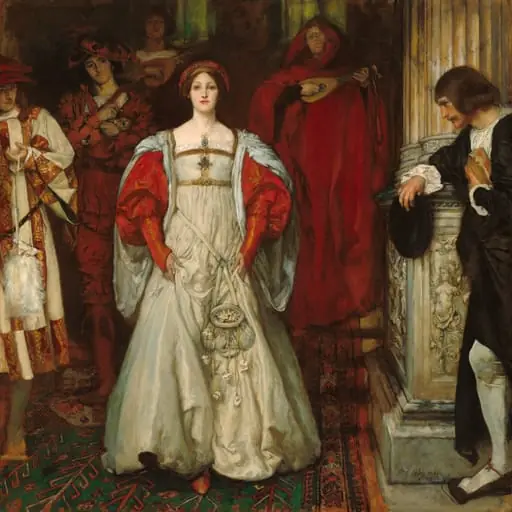 "Who Is Sylvia? What Is She, That All the Swains Commend Her?"
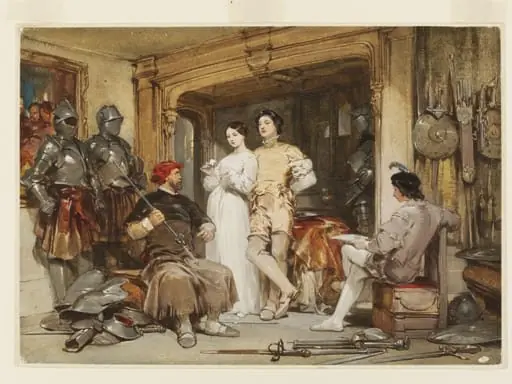 The Armourer's Tale