Artwork
The valley of Slaughter, Skye
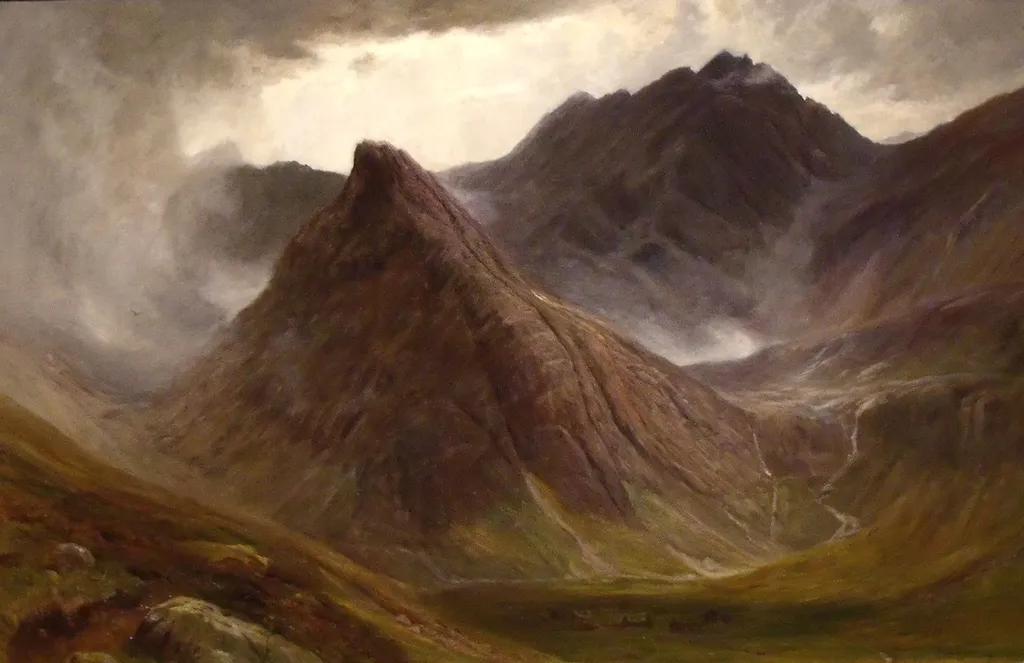
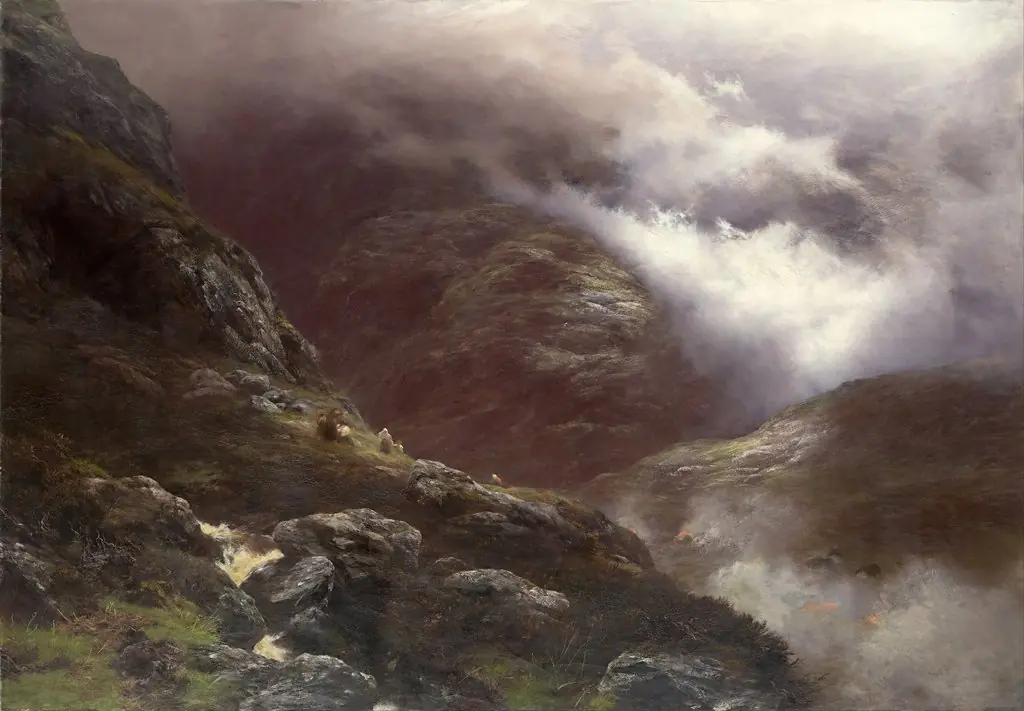
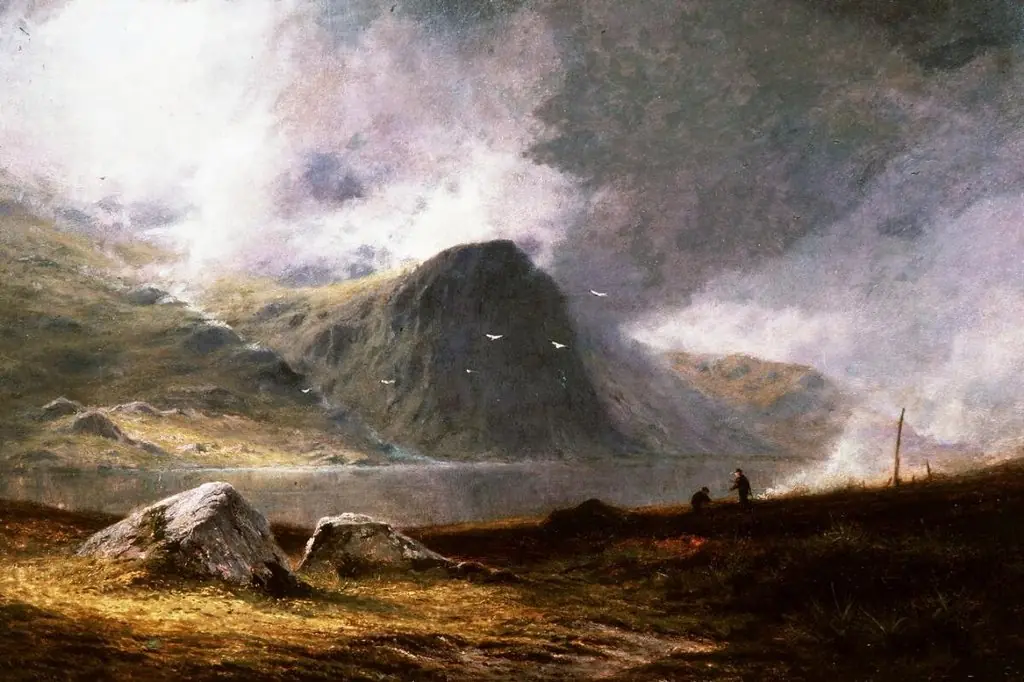
The valley of Slaughter, Skye is an oil painting by the Plein Air artist John MacWhirter. It dates from 1888 and is held in the collection of the Montreal Museum of Fine Arts.
About this work
Overview
It captures a dramatic Highland scene on the Isle of Skye, emphasizing the raw, untamed character of the terrain.
Painted in 1888, The Valley of Slaughter, Skye is an oil landscape by Scottish artist John MacWhirter. It captures a dramatic Highland scene on the Isle of Skye, emphasizing the raw, untamed character of the terrain. The work is part of the collection at the Montreal Museum of Fine Arts, where it remains as a representative example of late 19th-century British landscape painting rooted in natural observation.
Subject & Meaning
The painting portrays a deep, shadowed valley flanked by steep, dark rock formations. Wisps of mist or smoke curl around the mountain bases, suggesting atmospheric disturbance or weather change. The title evokes a sense of violence or upheaval, though no human or animal figures appear.
The scene’s mood is one of elemental power, reflecting the sublime tradition in landscape art that finds awe in nature’s indifference.
Technique & Style
MacWhirter employs bold, textured brushwork to convey the ruggedness of the landscape. Strong contrasts between light and dark, chiaroscuro, model the forms of the peaks and deepen the sense of spatial recession. The foreground’s scattered rocks and sparse vegetation are rendered with deliberate, energetic strokes, while the sky and mist are handled more loosely, enhancing the feeling of movement and transient weather.
History & Provenance
Created during MacWhirter’s mature period, the painting was likely made after extended sketching trips in the Scottish Highlands. It entered the Montreal Museum of Fine Arts’ collection in the early 20th century, possibly through a private donation or acquisition. Its presence in Canada reflects the international circulation of British landscape works during a time when Scottish scenery was widely admired abroad.
Context
In the late 1800s, British artists increasingly turned to remote natural sites like Skye as subjects, drawn by Romantic ideals of wilderness and the sublime. MacWhirter’s work aligns with this trend, though his approach is less idealized than earlier Romantic landscapes. His focus on atmospheric effects and geological weight reflects contemporary scientific interest in geology and meteorology, as well as evolving landscape aesthetics.
Legacy
The Valley of Slaughter, Skye remains a notable example of MacWhirter’s commitment to capturing the physical presence of nature. While not widely reproduced, it contributes to the understanding of how 19th-century painters translated the Scottish landscape into visual form. Its preservation in Montreal underscores the transatlantic appreciation for British landscape art beyond its origin.
Own this work as a print
Artist & collection