Artwork
Looking down on the Harbour of Toulon
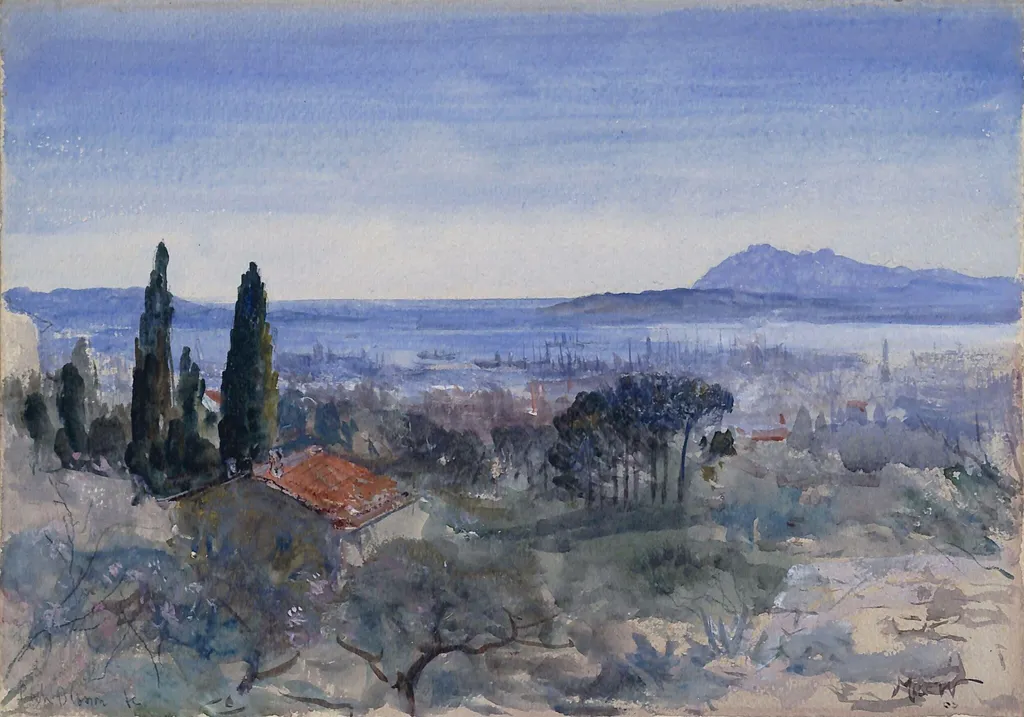
Looking down on the Harbour of Toulon is a watercolor work on paper by the Impressionist artist John MacWhirter. It dates from 1860 and is held in the collection of the Victoria and Albert Museum.
About this work
Overview
Rendered in transparent washes, the composition emphasizes horizontal planes, water, land, and sky, arranged to suggest depth without heavy detail.
John MacWhirter created this watercolour in 1860, capturing a bird’s-eye perspective of Toulon’s harbour. The work is signed and inscribed, confirming its authorship and date. Rendered in transparent washes, the composition emphasizes horizontal planes, water, land, and sky, arranged to suggest depth without heavy detail. The medium’s fluidity supports a quiet, observational tone, typical of MacWhirter’s travel sketches from this period.
Subject & Meaning
The scene portrays Toulon’s working harbour with modest vessels moored near low buildings and scattered trees. No human figures are present, and the absence of activity enhances a sense of stillness. The distant mountain anchors the view, framing the harbour as a quiet node within a larger landscape.
The image conveys observation rather than narrative, reflecting a 19th-century interest in place as a quiet, enduring entity.
Technique & Style
MacWhirter employed loose, fluid brushwork and layered washes to suggest form without definition. Light is implied through subtle shifts in hue rather than sharp contrasts, with warm tones suggesting late afternoon sun. The watercolour’s transparency allows the paper’s white to function as highlights, enhancing the luminosity of the scene. While not formally Impressionist, the technique anticipates the movement’s emphasis on atmosphere and immediacy.
History & Provenance
Created during MacWhirter’s early career, the work likely originated from a sketching trip to southern France. It remained in private hands for much of the 20th century before entering a public collection. The inscription and signature suggest it was intended as a personal record rather than a commercial piece, aligning with the artist’s habit of documenting landscapes during his travels.
Context
In the 1860s, British artists increasingly traveled to continental Europe, producing topographical watercolours for private audiences. MacWhirter, trained in Edinburgh and influenced by the Scottish watercolour tradition, contributed to this trend. His focus on unidealized, everyday harbours reflected a broader shift away from romanticized landscapes toward direct, modest observation of real places.
Legacy
This watercolour exemplifies MacWhirter’s role as a quiet chronicler of European ports during a period of expanding travel and artistic documentation. Though not widely exhibited in his lifetime, his works like this one contributed to a growing archive of 19th-century visual records. Today, they offer insight into how artists engaged with place through intimate, unembellished observation.
Own this work as a print
Artist & collection


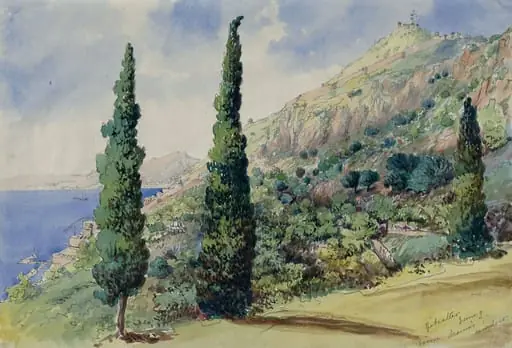 From a window, Gibraltar
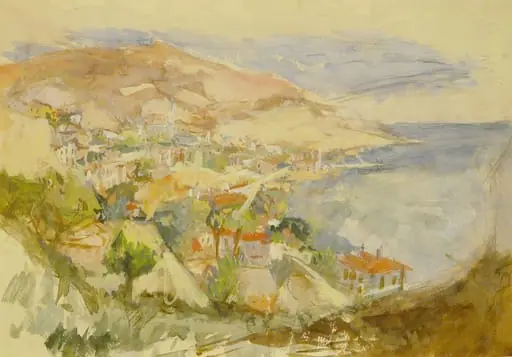 Contraste de culoare la Balcic
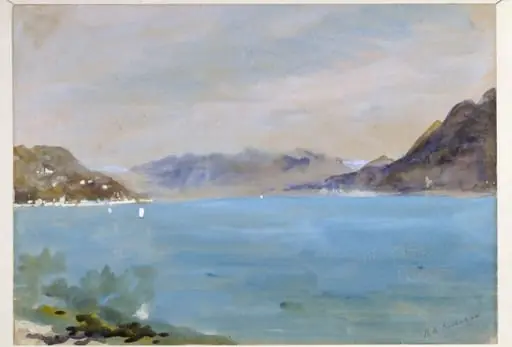 Lago Maggiore
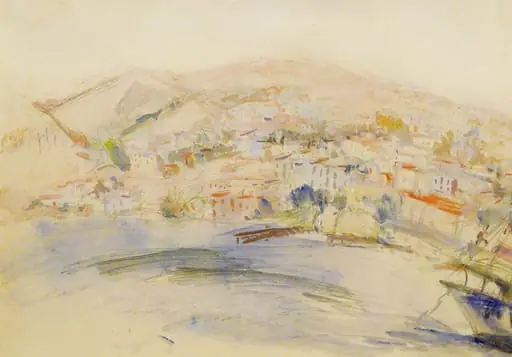 Balcicul văzut din față
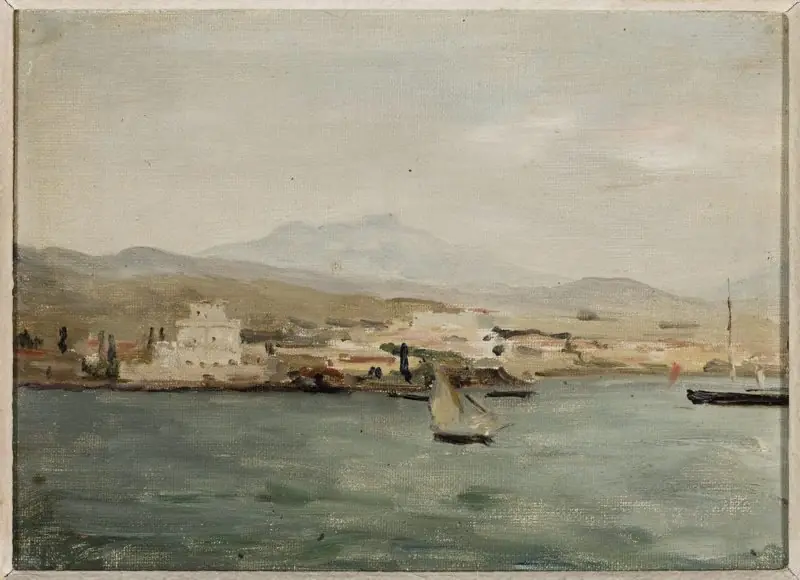 View of the port in Saloniki. From the journey to Palestine
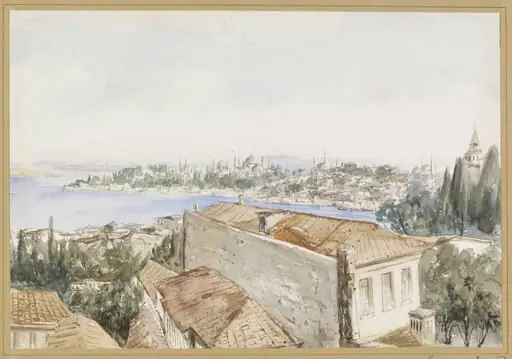 La Pointe du serail, Constantinople
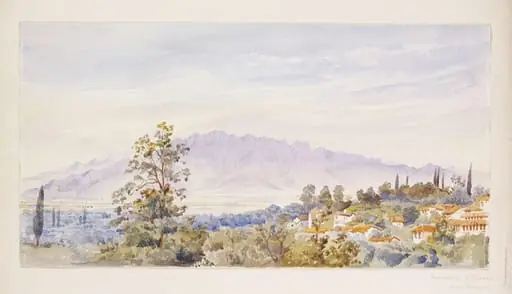 Mountains of Nicaea from Broussa
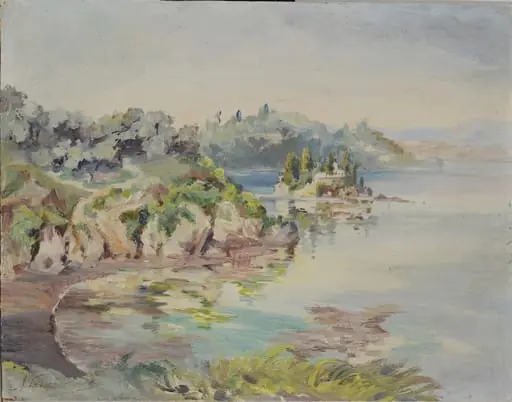 Το Ποντικονήσι στην Κέρκυρα
 Cannes from Le Cannet: sketch from nature
 Spalato
- The Bay of Marseilles, Seen from L'Estaque