Artwork
Portrait of a Woman
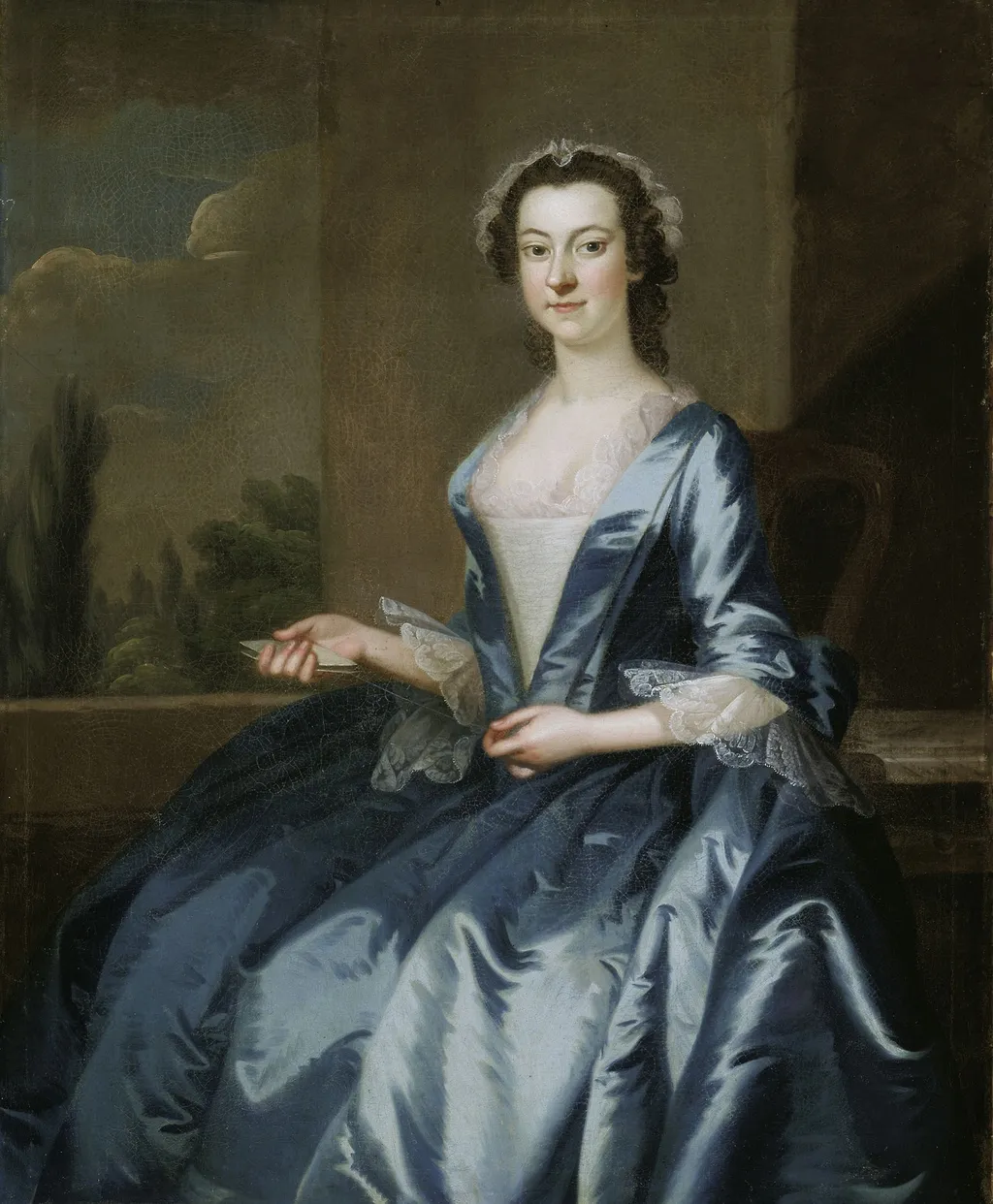
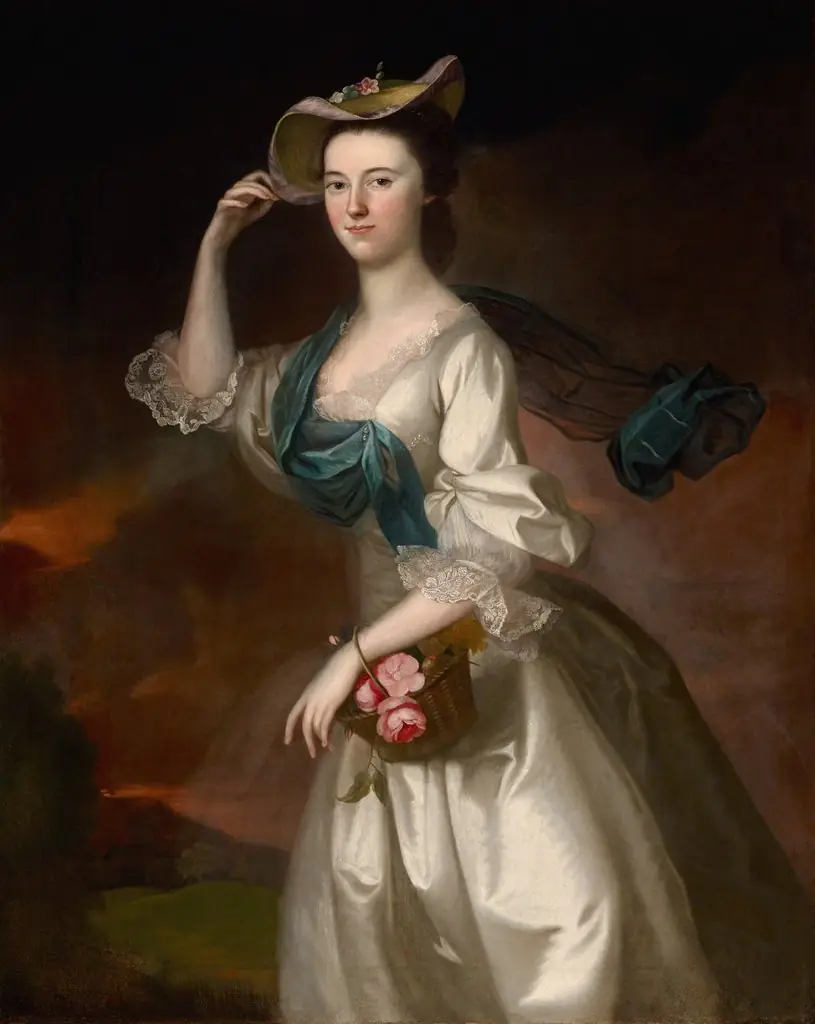
Portrait of a Woman is an oil painting by the Rococo painting artist John Wollaston the Younger. It dates from 1750 and is held in the collection of the Art Institute of Chicago. This oil painting, created around 1750, is a representative work of the Rococo style in British North America.
About this work
Overview
The painting is held in the collection of the Art Institute of Chicago, where it entered as a gift of the Goodman Fund in 1953 under accession number 1953.
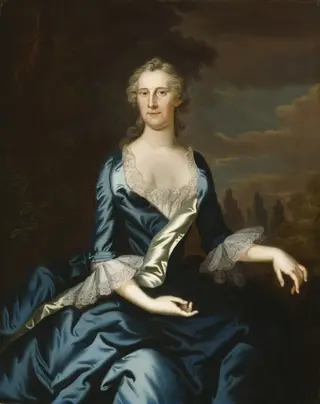
Portrait of a Woman is an oil on canvas painting by the English artist John Wollaston the Younger, dated to approximately 1749-1752. Measuring 132.6 × 107.2 cm (52 3/16 × 42 3/16 in.), the work depicts an unidentified woman in a three-quarter pose, wearing a voluminous blue satin gown. The painting is held in the collection of the Art Institute of Chicago, where it entered as a gift of the Goodman Fund in 1953 under accession number 1953.462. The portrait is significant as a product of Wollaston's brief but influential American period, during which he introduced English Rococo portraiture conventions to colonial patrons eager for European-trained artistic skill.
Subject & Meaning
The sitter faces slightly toward the viewer, her dark, curled hair covered by a translucent lace cap. She wears a voluminous blue satin gown with wide skirts and a fitted bodice, over a pale pink chemise with lace trim at the neckline and sleeves. In her right hand she holds a folded fan or letter, a conventional accessory in eighteenth-century female portraiture that signaled social status and refinement. The background is divided between a dark interior with architectural elements on the right and a hazy, indistinct landscape visible through an opening on the left, rendered in muted greens and browns. A handwritten inscription on the stretcher identifies the sitter as "MRS. REBECCA BEEKMAN AFTERWARD THE WIFE OF GENERAL SPRY," though this attribution has not been independently verified. The pose, costume, and setting follow formulaic English portraiture conventions that Wollaston employed repeatedly during his American sojourn.
Technique & Style
Wollaston executed the portrait in oil on canvas, working with smooth, blended brushwork in the flesh tones and broader, more visible strokes in the shimmering blue satin. Light falls from the left, illuminating the sitter's face, chest, and the lustrous folds of her dress, while shadows pool in the background and beneath the drapery. The palette is dominated by deep blues, soft pinks, and warm brown tones. The surface shows fine craquelure throughout, consistent with its age. The artist's handling of the satin demonstrates his particular strength in depicting colorful draperies, a skill noted by contemporaries and later scholars. The composition relies on conventions Wollaston had absorbed in London, bearing stylistic affinities to the work of Thomas Hudson and Allan Ramsay, and possibly reflecting training with Joseph van Aken, who specialized in drapery painting.
History & Provenance
Wollaston arrived in the American colonies in 1749 and worked in New York for approximately three years before traveling south through Pennsylvania, Maryland, Virginia, and South Carolina. The painting's date of c. 1749-1752 places it within this New York period. The Art Institute of Chicago acquired the work through the Goodman Fund, with accession number 1953.462. The painting is currently off view.
Context
Wollaston was among the few painters to introduce the English Rococo style to the American colonies, bringing fashionable London portraiture to patrons who had limited access to European-trained artists. His formulaic poses and dress, drawn from English sources, allowed him to meet numerous commission requests efficiently. Charles Willson Peale noted in an 1812 letter that Wollaston had trained in London with a painter of drapery, and the artist himself described himself on a 1751 label as "Johnannes Wollaston Londoniensis," underscoring his English identity. While his compositions were somewhat outmoded by London standards of the 1750s, they remained impressive to colonial audiences and established a visual standard for American portraiture.
Legacy
Wollaston's American portraits, including Portrait of a Woman, represent a key moment in colonial visual culture, when English artistic conventions were transplanted and adapted for a new audience. The Art Institute's classification of the work under Arts of the Americas reflects its significance within this transatlantic exchange. After leaving America in 1767, Wollaston disappeared from the historical record; the final mention of him came in 1775, when he was encountered in England by chance. His colonial portraits remain important documents of mid-eighteenth-century American society and the cultural aspirations of its elite patrons.
Own this work as a print
Artist & collection

Artist
John Wollaston (fl. 1742 – 1775) was an English painter who specialised in portrait painting and was active mostly in British North America. He was one of a handful of painters to introduce English Rococo styles of…

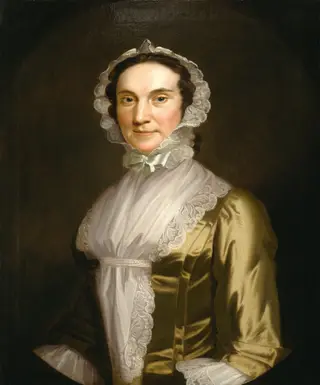
- Portrait of Mrs. Samuel McCall, Sr. (Anne McCall, 1720–1785)
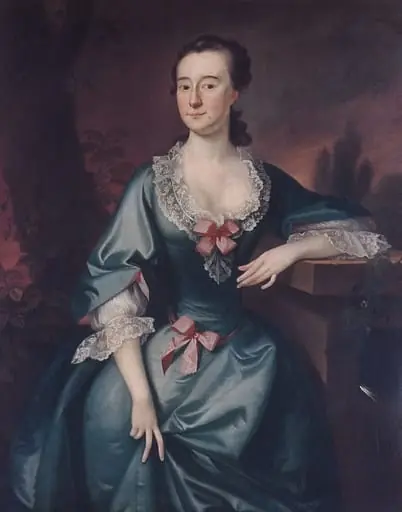 Mrs. David Chesebrough
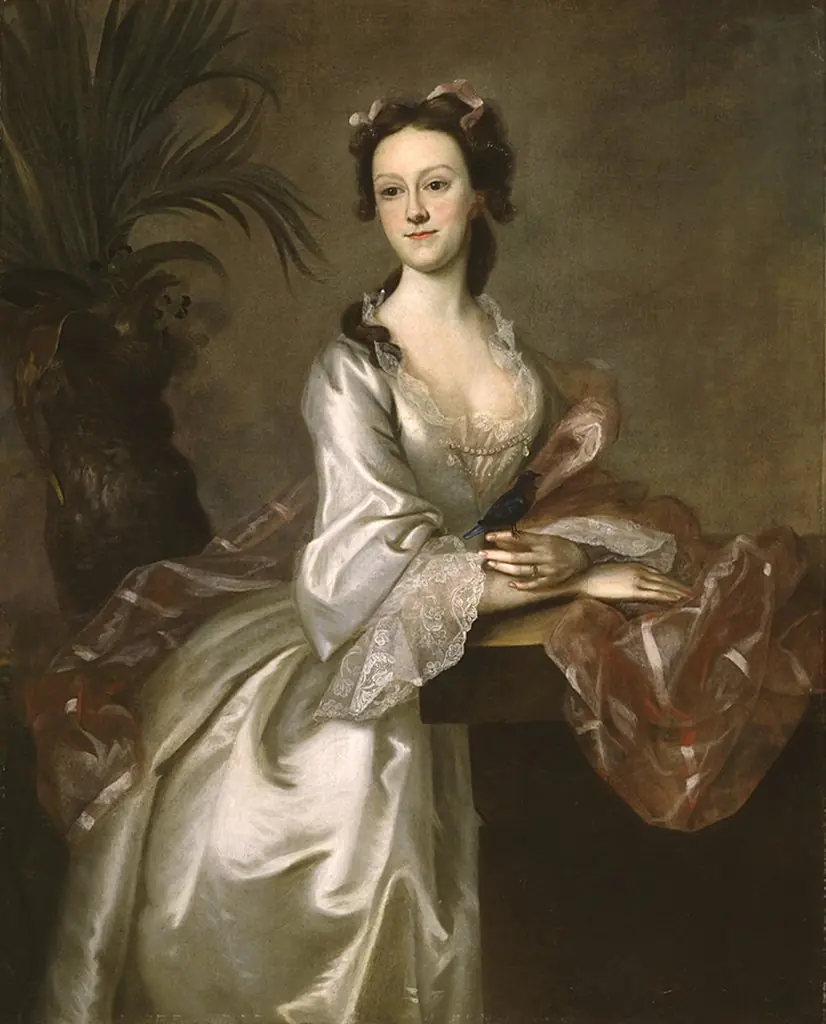 Portrait of Mrs. John Pigott
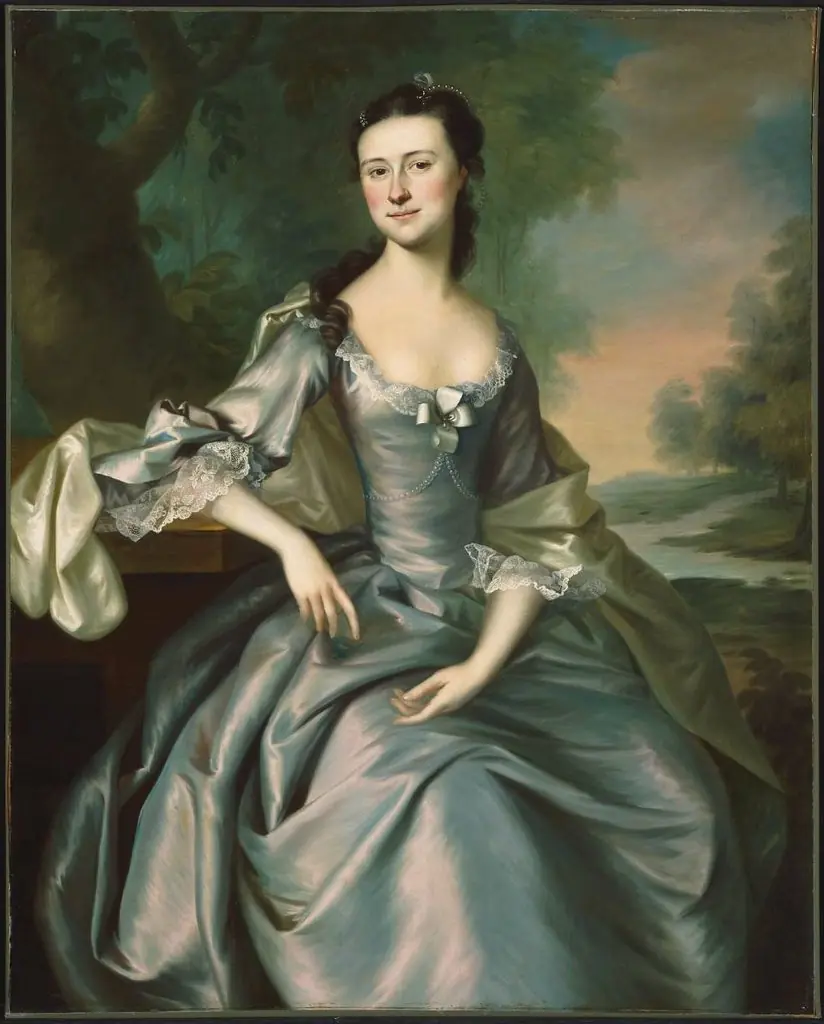 Susan Apthorp (Mrs. Thomas Bulfinch)
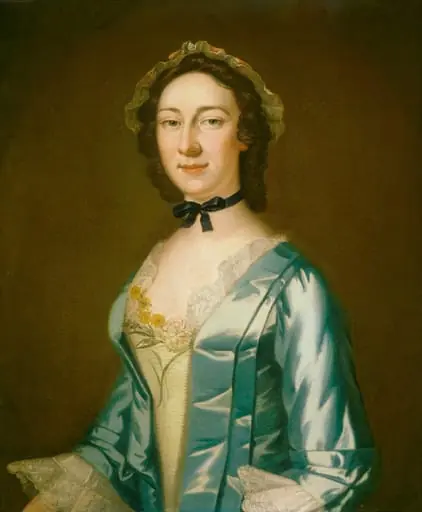 Mary Walton Morris
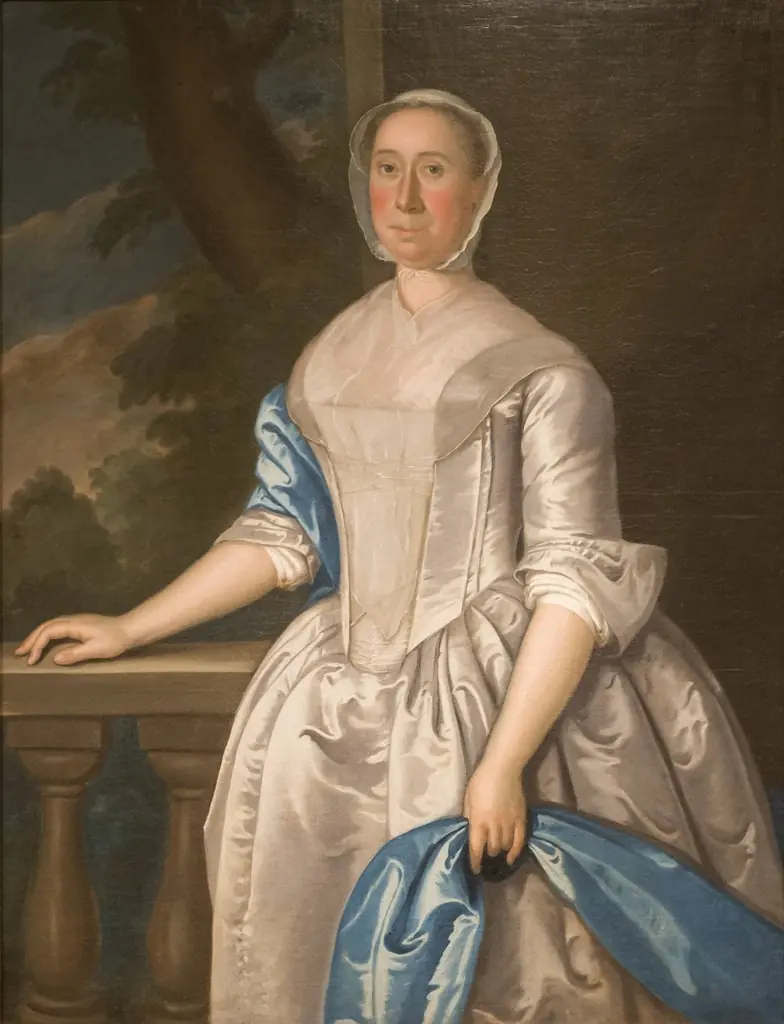 Mrs. Thomas Sprigg
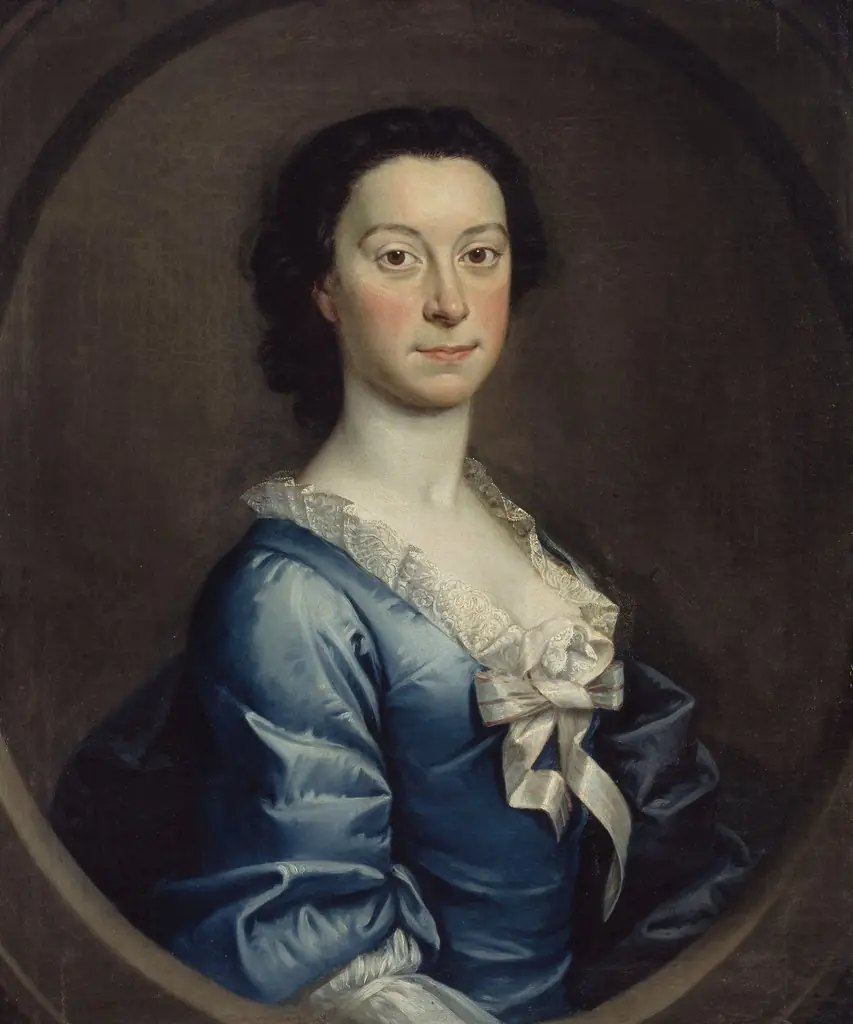 Possible Portrait of Hester Vanhomrigh ('Vanessa') (1690-1723)
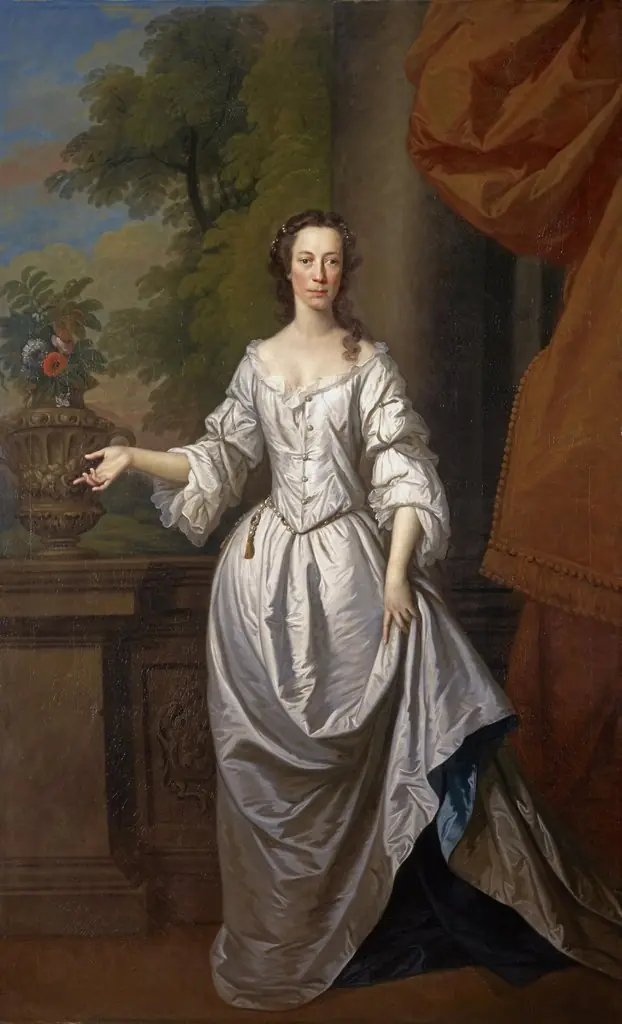 Elizabeth Cunyngham, Mrs Daniel Cunyngham
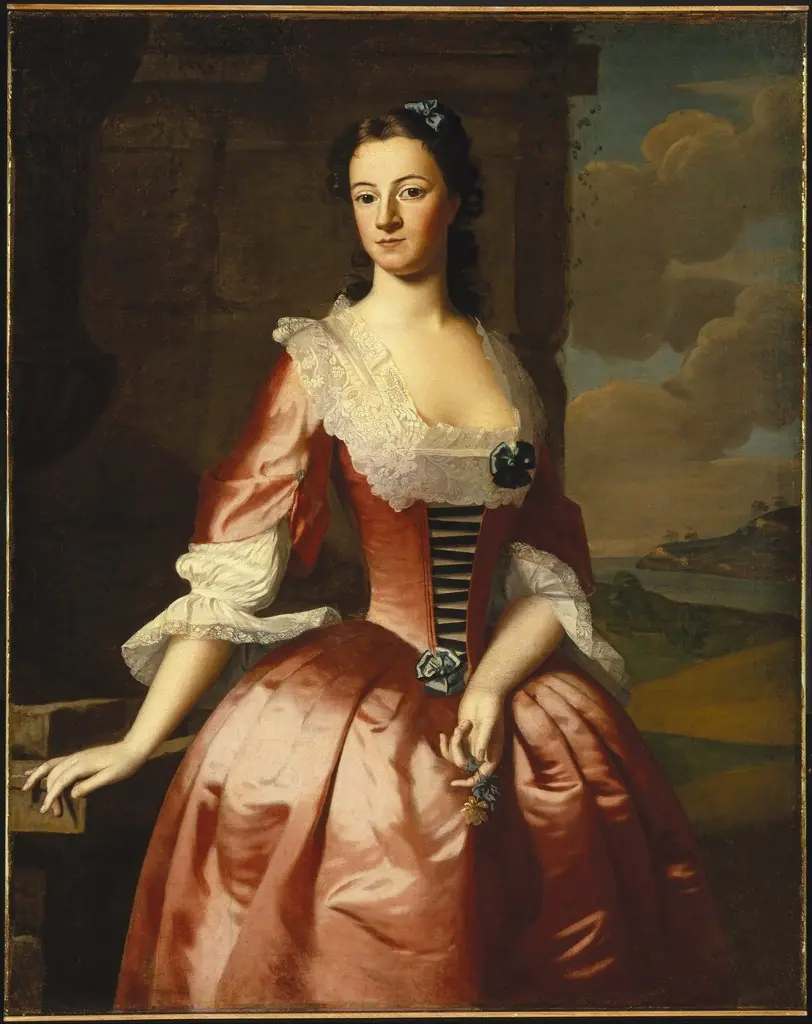 Portrait of a Woman
 Mrs. Charles Carroll of Annapolis
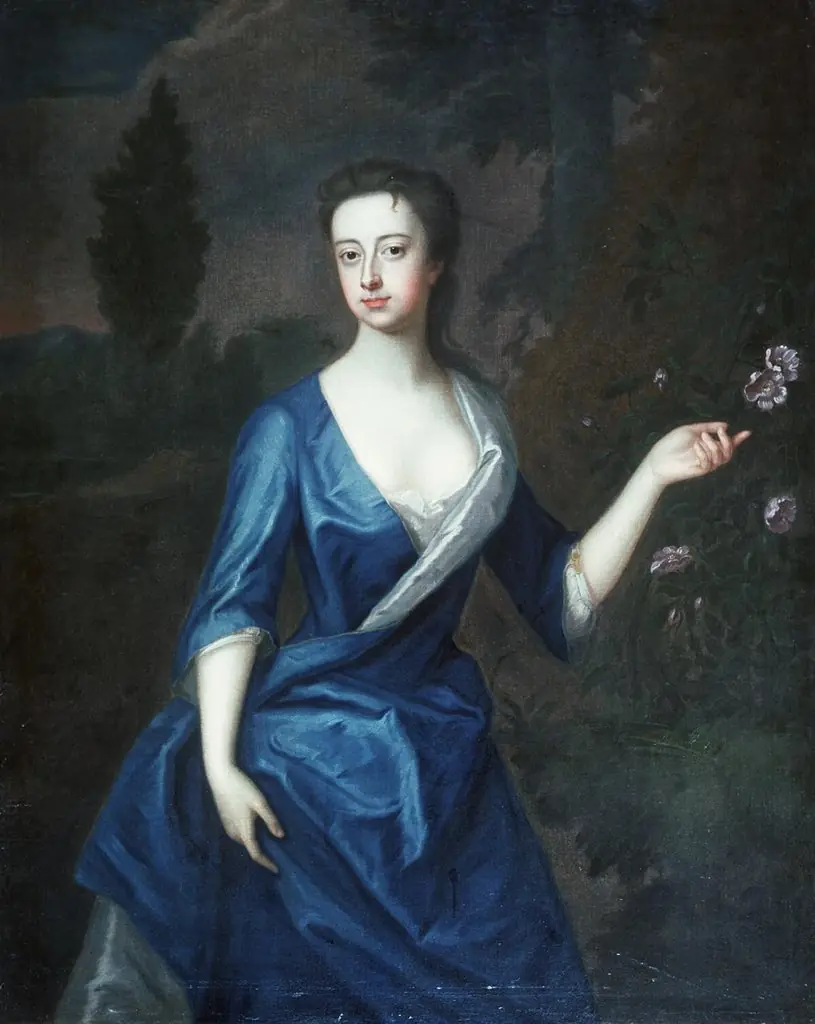 Miss Mary Middleton, Plas Newydd, Wrexham
 Portrait of Abigail Erving Scott