Artwork
La visione del Colosseo
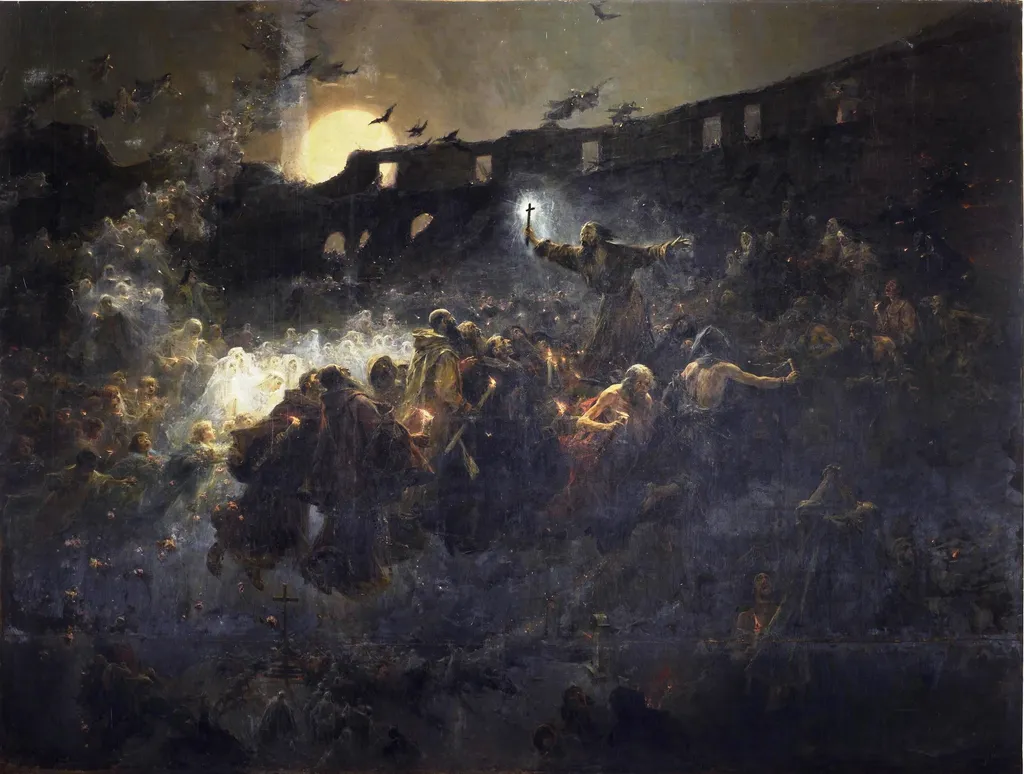
La visione del Colosseo is an oil painting by the Post-Impressionist artist José Benlliure y Gil. It dates from 1893 and is held in the collection of the Museo del Prado.
About this work
Subject & Meaning
The setting is a tragic, spectral night where the Colosseum appears symbolically in ruins, illuminated by a full moon against which black bat-like demons fly.
The painting depicts Saint Telemachus (also known as Almachius), an Anatolian monk martyred in the late fourth century for demanding an end to gladiatorial combat at the Colosseum. The central figure stands before an enraged crowd, raising a cross that emits a brilliant light. The setting is a tragic, spectral night where the Colosseum appears symbolically in ruins, illuminated by a full moon against which black bat-like demons fly.
Iconographically, the work contrasts spiritual forces: a procession of veiled female souls in white descends from the sky to support the saint, their pale blue-white glow opposing the dark tunics of the religious figures and the animal skins of the fleeing gladiators. This visual dichotomy represents the triumph of martyrdom and divine intervention over the brutality of the arena, with the chaotic flight of the gladiators signaling the end of the bloody spectacles.
Technique & Style
La visione del Colosseo is an oil painting on canvas, executed in 1885 by José Benlliure y Gil on an exceptionally large scale, measuring 561 cm in height by 728 cm in width, over 35 square meters of surface. The work belongs to the religious genre and is classified as a painting.
Stylistically, the composition is densely populated and characterized by horror vacui, an excess of decorative detail that weighs upon the structure of the scene. Benlliure organizes the canvas around stark symbolic contrasts: the luminous, bluish-white procession of veiled female souls descending from the sky toward the saint, set against the dark tunics of religious figures and scattered gladiators clad in animal skins fleeing in disarray up the steps of the Flavian Amphitheatre. The saint raises a cross that becomes a source of intense light, while the Colosseum is shown in symbolic ruin under a spectral, tragic night illuminated by the round disc of a full moon, against which a flight of black bat-like demons is silhouetted.
History & Provenance
La visione del Colosseo is an oil on canvas painting created in 1885 by José Benlliure y Gil. It measures 561 cm by 728 cm and depicts Saint Telemachus, a 4th-century monk who, according to tradition, attempted to halt gladiatorial games at the Colosseum and was subsequently martyred. The work was first exhibited at the 1887 National Exhibition of Fine Arts in Madrid, where it earned a first-class medal and was subsequently acquired by the Spanish state.
Following its acquisition, it entered the collections of the Museu de Belles Arts de València and the Museo del Prado, institutions that currently hold the painting. Benlliure y Gil, who studied at the School of Fine Arts in Valencia and later directed the Spanish Academy in Rome, was a prominent figure among Spanish artists in the late 19th century. The painting was presented under the alternative title L'ultimo martire and was noted for its dramatic composition and symbolic use of light and architecture.
La visione del Colosseo was first shown to the public at Madrid's Esposizione nazionale di belle arti in 1887, where it drew a wave of outraged criticism but received a first-class medal and was acquired by the State. According to Wikidata records, the painting is held jointly by the Museu de Belles Arts de València and the Museo del Prado. No specific inventory or accession numbers are documented in the available sources, and no further exhibition history beyond the 1887 national exhibition is recorded.
Context
Presented at the 1887 National Exhibition of Fine Arts in Madrid, La visione del Colosseo provoked a wave of indignant criticism despite being awarded a first-class medal and subsequently purchased by the Spanish State. The work exemplifies José Benlliure y Gil's tendency toward horror vacui, a stylistic trait characterized by excessive decoration that burdens the composition, also observed in his earlier Roman scenes.
Benlliure, who studied in Valencia under Francisco Domingo Marqués and later led the Spanish artistic colony in Rome, created this monumental canvas as part of his religious output. The painting's dramatic scale and complex iconography, featuring Saint Telemachus amidst spectral figures and a ruined Colosseum, mark it as a significant, albeit controversial, example of late 19th-century Spanish academic painting.
Overview
Created in 1893, this oil on canvas by Spanish painter José Benlliure y Gil portrays a tumultuous gathering before the ancient Colosseum. A luminous cross rises from the centre of the composition, illuminated against a dim, storm‑laden sky. The work is part of the collection of the Museo del Prado in Madrid.
Own this work as a print
Artist & collection
Artist
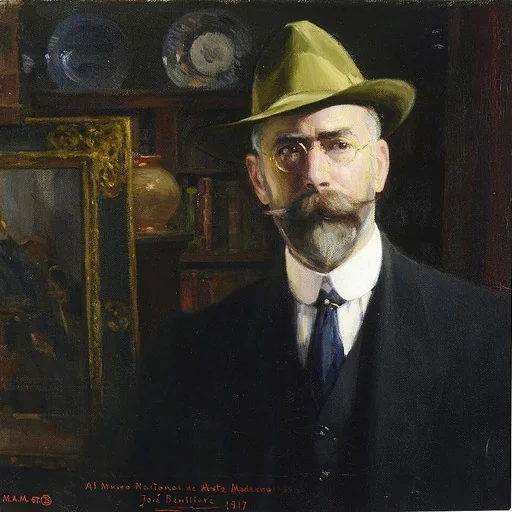
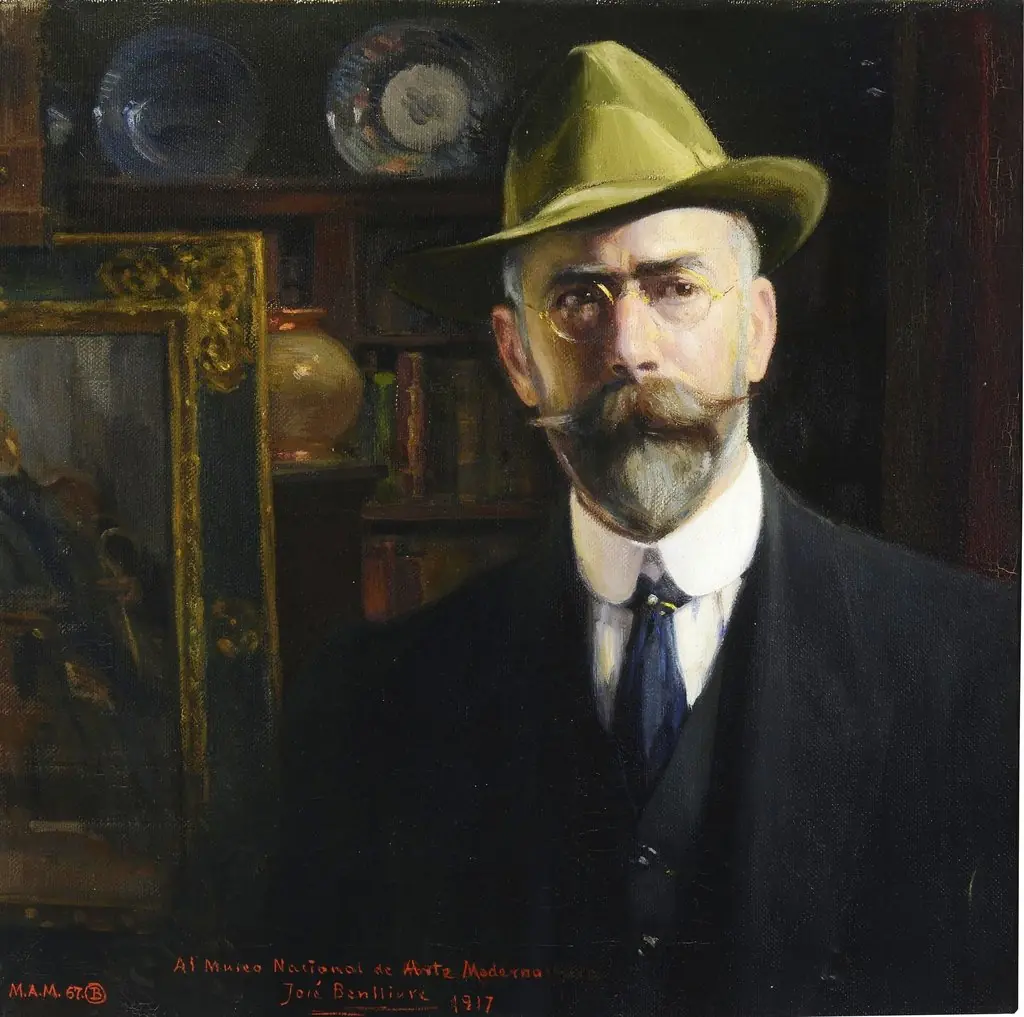
José Benlliure y Gil (1855–1937) was an artist, born in Cabanyal-Canyamelar.

- The vision of Fray Martín
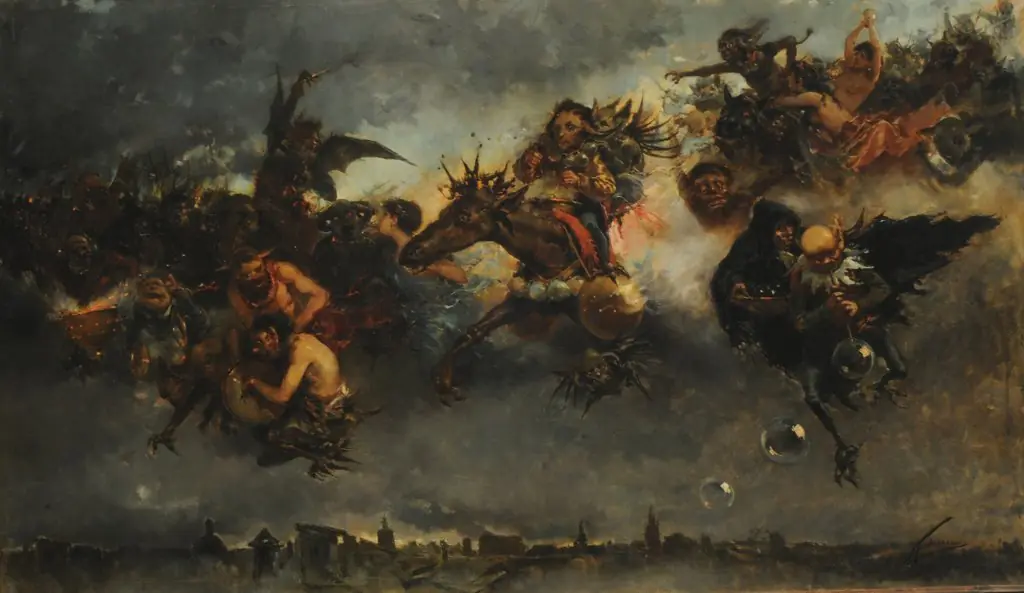 Walpurgis Night
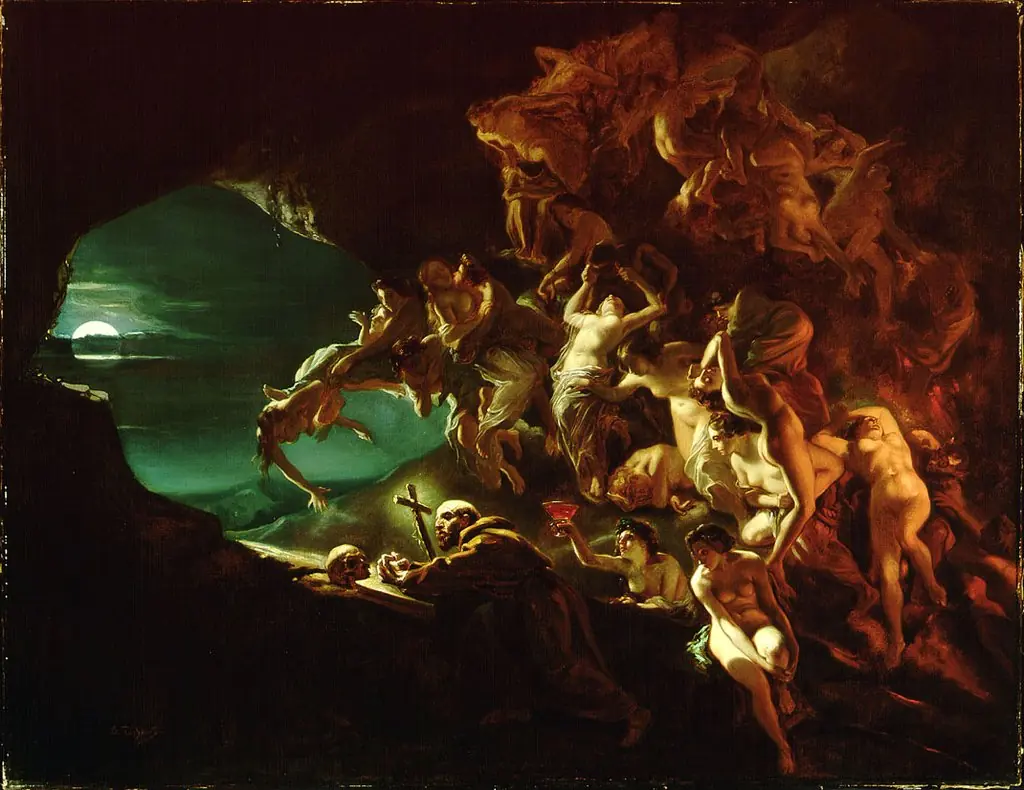 Temptation of Saint Hilarion
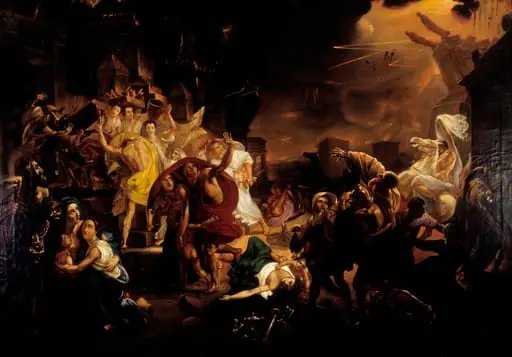 Pompejin viimeiset päivät, kopio
 Divine Providence and Virtues
 The Witches of the Bell Tower
 The Defeat of Sisera
 Mahl der Einsiedler in einer Höhle
 Liberty
 Assassination of the Bishop of Liège
 Zrínyi's Charge
 The removal of the cracked melting pot