Artwork
The Defeat of Sisera
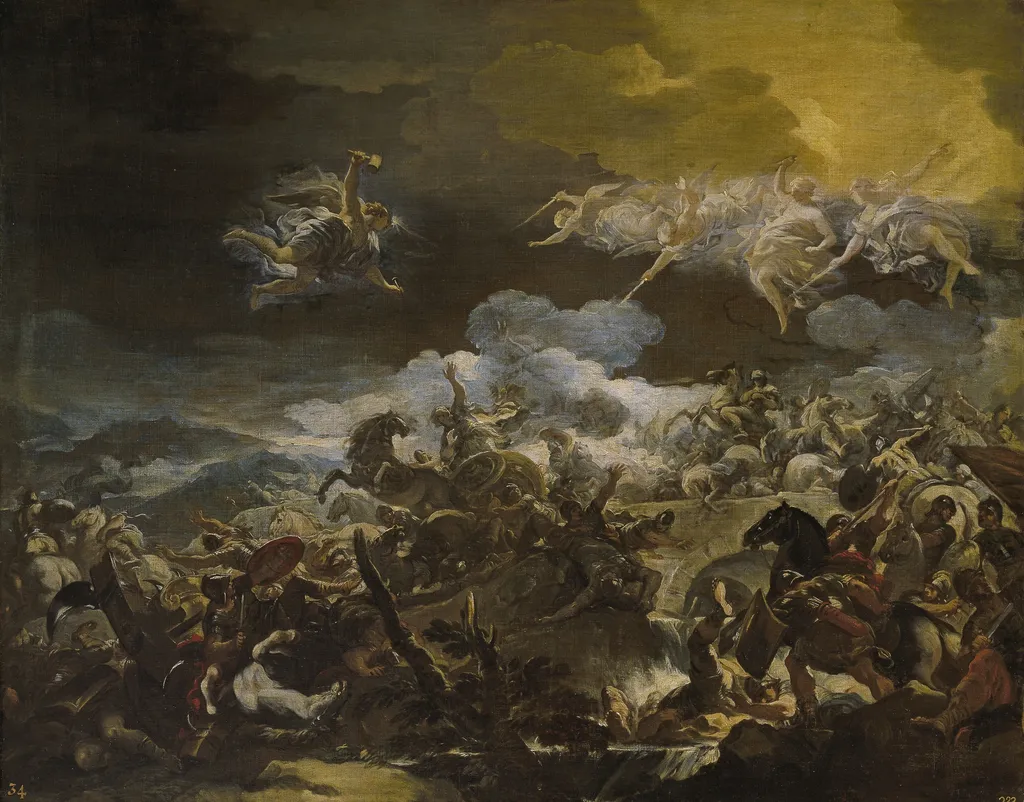
The Defeat of Sisera is an oil painting by the Early Baroque Italian artist Luca Giordano. It dates from 1696 and is held in the collection of the Museo del Prado.
About this work
Subject & Meaning
The composition emphasizes divine justice and the triumph of Israel through dramatic movement, celestial beings, and symbolic weaponry.
The work illustrates the biblical episode of Sisera's defeat found in the Book of Judges, showing the fleeing commander abandoning his chariot beside the river Kishon while angels urge on the Hebrews; a hammer and tent peg allude to Yael's killing of the general. The oil on canvas, measuring 102 × 130 cm, was among sketches intended for the church of Santa Maria Donnaromita in Naples; Luca Giordano left them unfinished on departing for Spain in 1692, and they were later completed by his pupils Simonelli and Cenatempio, the finished work being dated 1696. The composition emphasizes divine justice and the triumph of Israel through dramatic movement, celestial beings, and symbolic weaponry.
Technique & Style
The Defeat of Sisera is executed in oil paint on a canvas support, measuring 102 cm in height by 130 cm in width. Conceived as one of a pair of sketches intended for the decoration of the church of Santa Maria Donnaromita in Naples, the work was left incomplete when Luca Giordano departed for Spain in 1692; it was subsequently finished by two of his students, Simonelli and Cenatempio, the completed painting being dated 1696. The composition captures a dynamic moment of panic as the general Sisera leaps from his chariot near the Kishon River, while angels in the sky urge on the Hebrew forces. One angel prominently holds a hammer and tent peg, visually foreshadowing the general's imminent death.
History & Provenance
The Defeat of Sisera is an oil-on-canvas painting by Luca Giordano, the completed work dated 1696. It was originally conceived as one of a pair of sketches intended for the decoration of the Church of Santa Maria Donnaromita in Naples. Giordano left these commissions unfinished in 1692 upon departing for Spain to decorate vaults at the Monastery of El Escorial, after which the sketches were completed by two of his students, Simonelli and Cenatempio.
The painting is currently held in the collection of the Museo del Prado in Madrid. The available sources do not provide a specific inventory or accession number, nor do they list a history of public exhibitions for this work.
Overview
Luca Giordano's painting, The Defeat of Sisera, created in 1696, is an oil on canvas work depicting a dramatic biblical event. This large-scale composition captures a moment of intense conflict, featuring numerous figures and horses engaged in battle. The artwork is currently part of the collection at the Museo del Prado, where it represents a significant example of late 17th-century religious painting.
Own this work as a print
Artist & collection

Artist
Luca Giordano was an Italian late-Baroque painter and printmaker in etching. Giordano was one of the most celebrated artists of the Neapolitan Baroque, whose vast output included altarpieces, mythological paintings and…

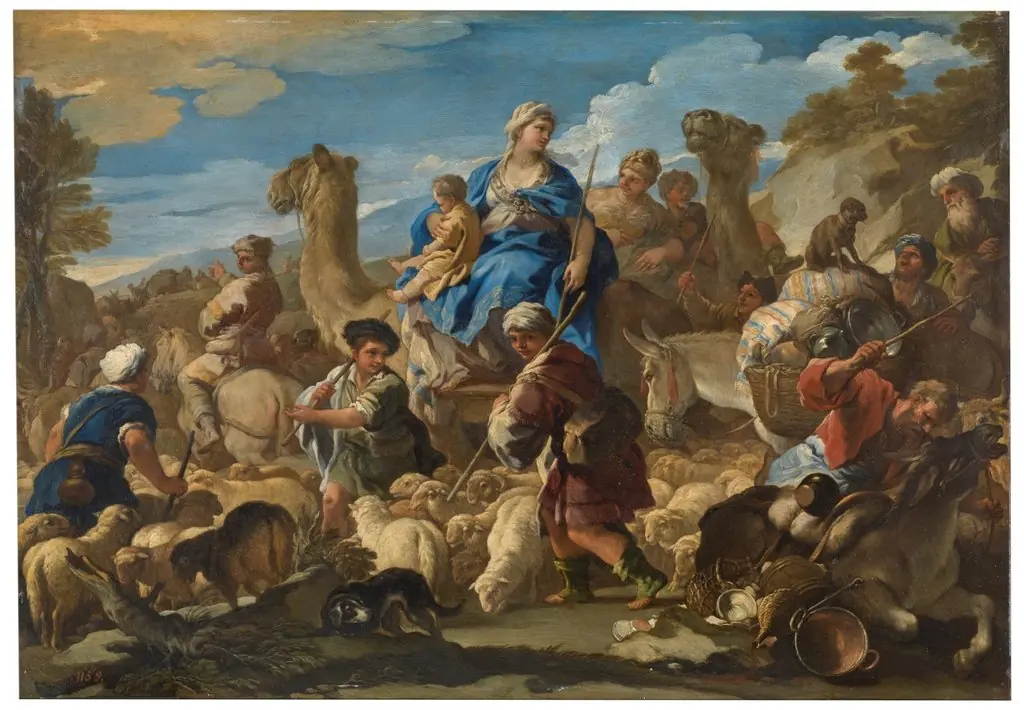

- The Battle of Israel and Amalek
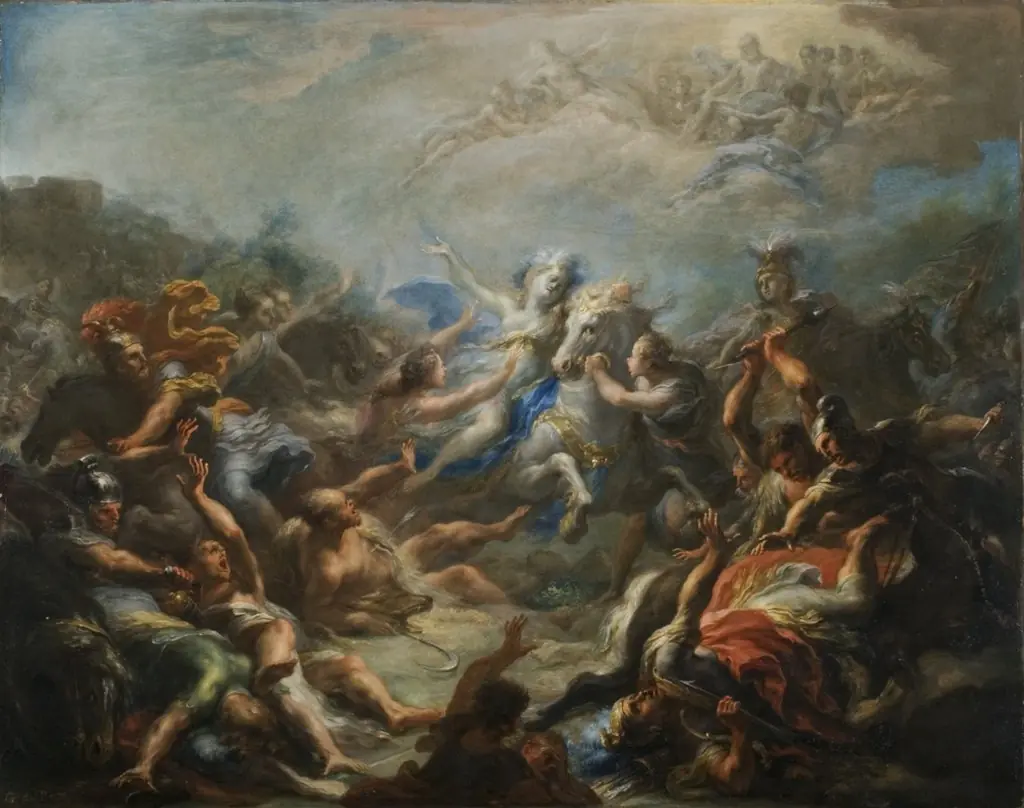 Camillia at War from Virgil's Aeneid
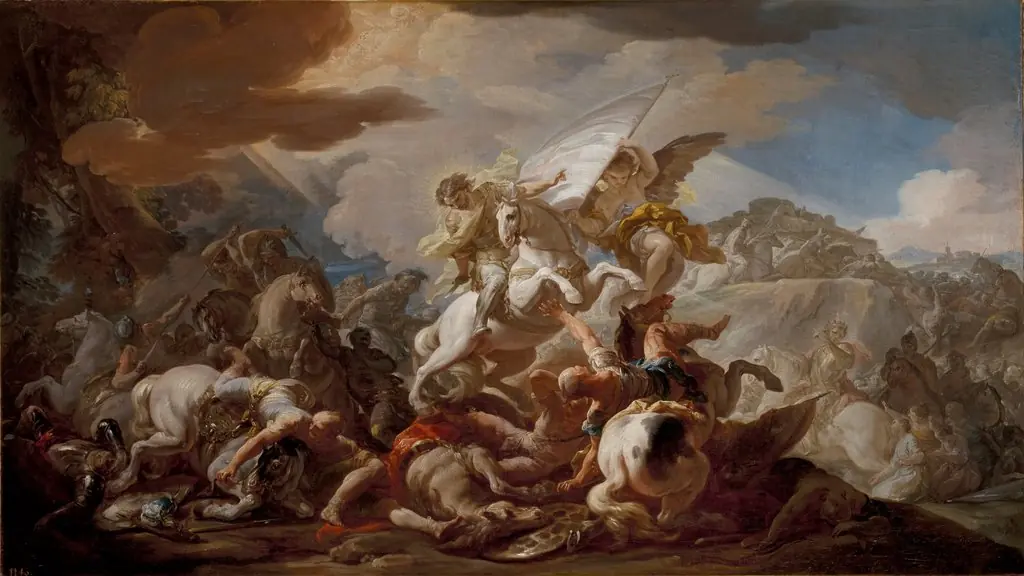 Battle of Clavijo
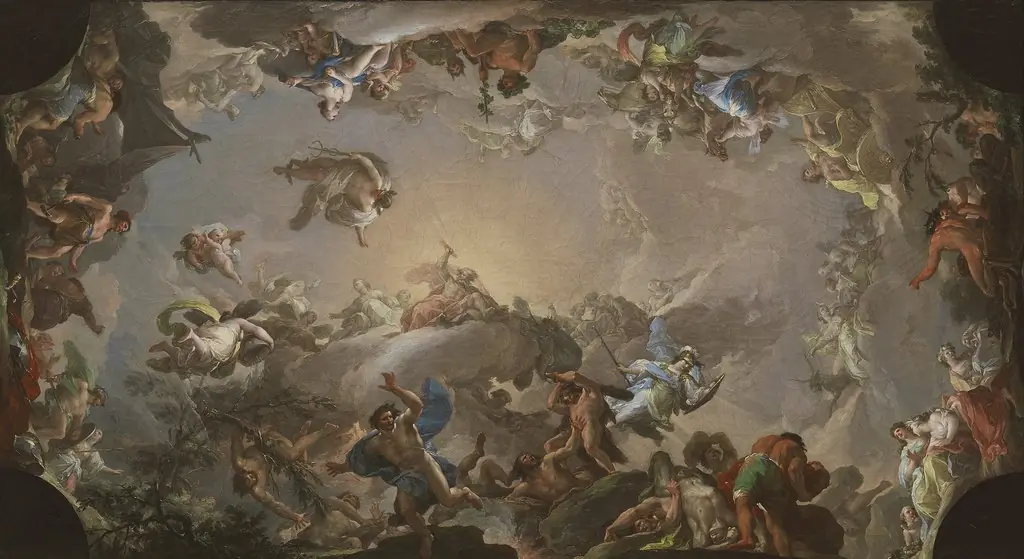 Olympus: The Fall of the Giants
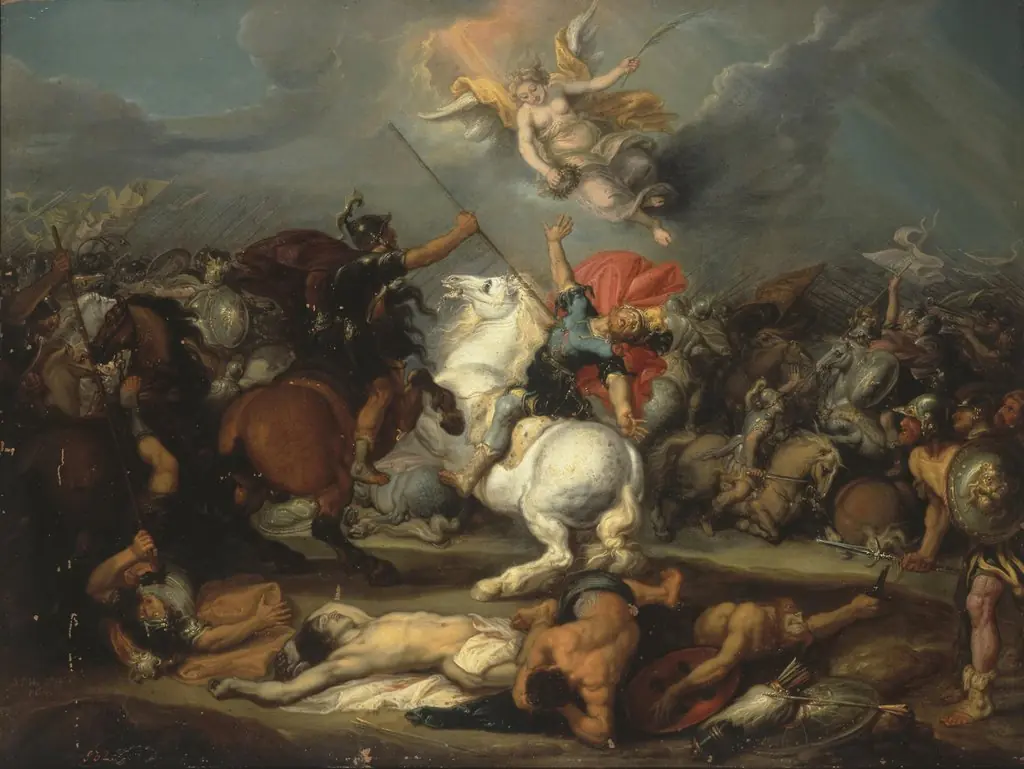 Death of Decius Mus
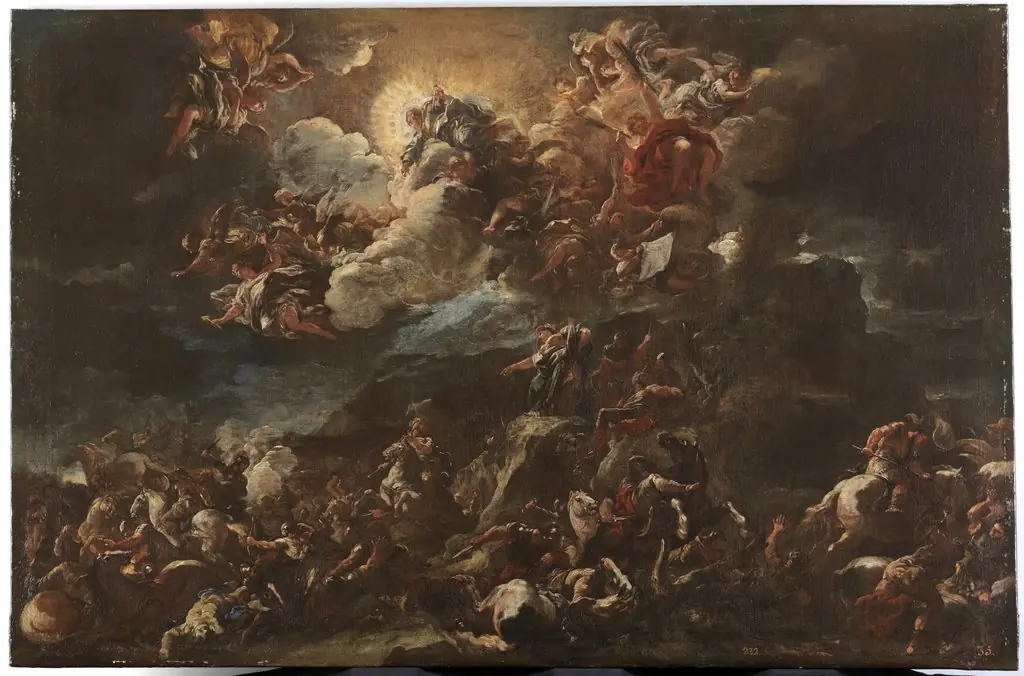 Victoria de los israelitas y cántico de Débora
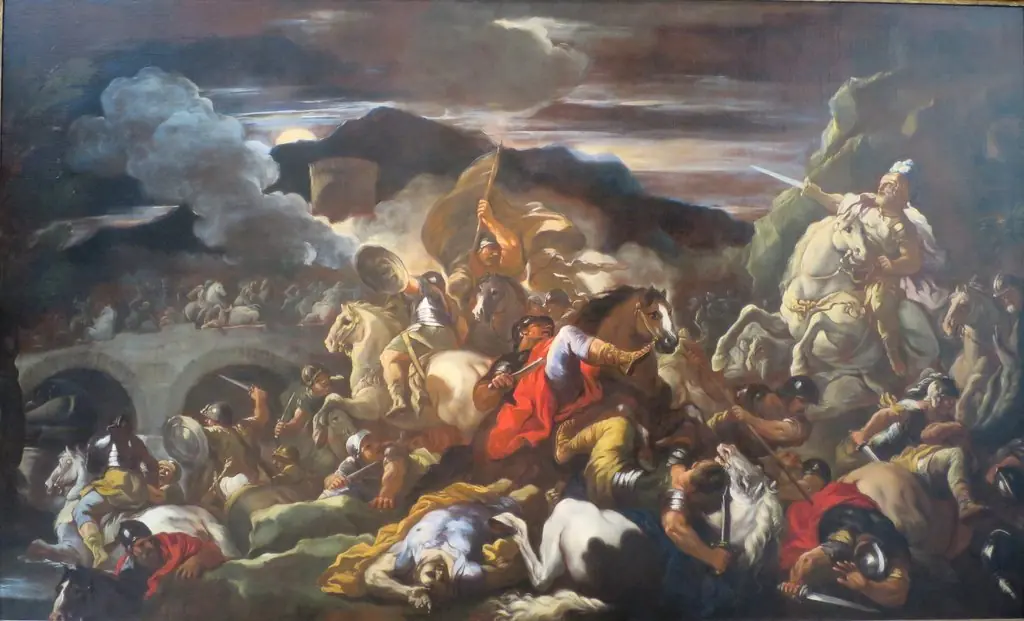 A Battle Scene
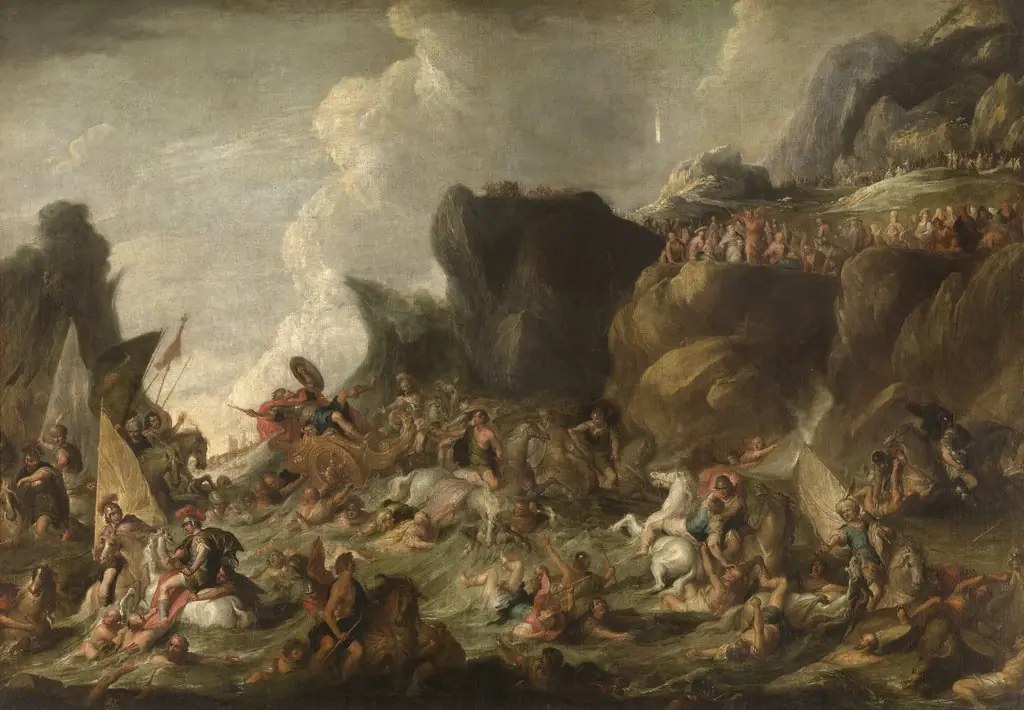 The Death of the Pharaoh
 Divine Providence and Virtues
 Hercules and Minerva Expelling Mars
 Draft for a ceiling painting
 Batalla