Artwork
Jesus in the House of Annas
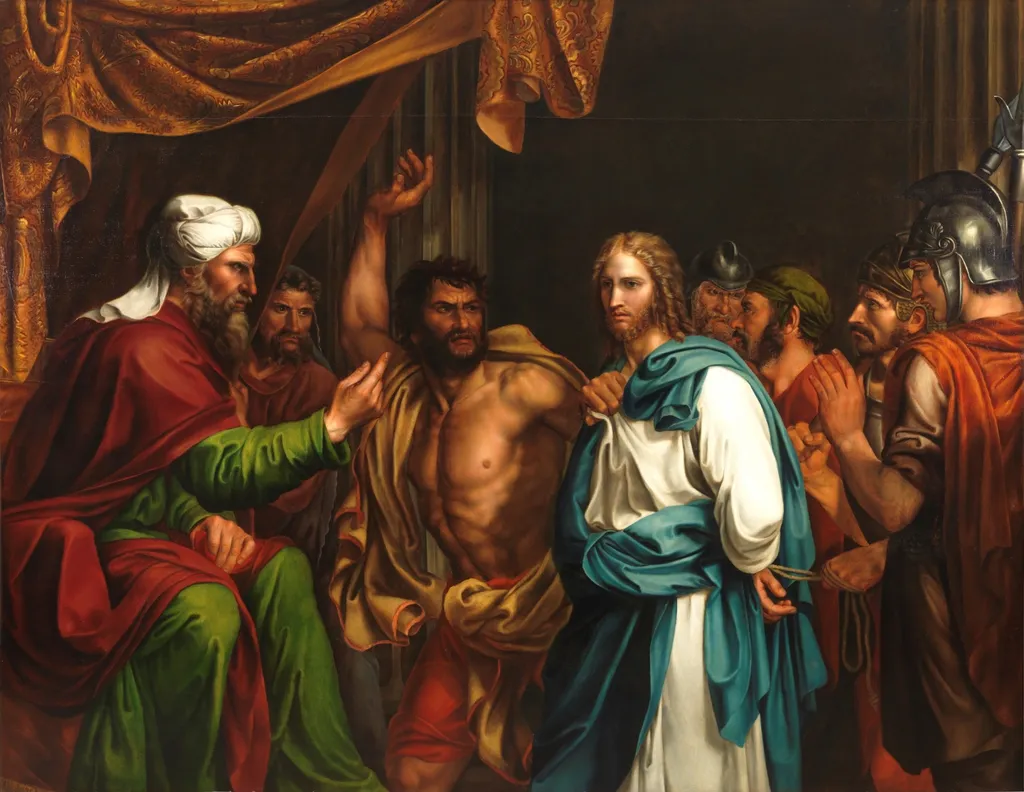
Jesus in the House of Annas is an oil painting by José de Madrazo y Agudo. It dates from 1803 and is held in the collection of the Museo del Prado.
About this work
Subject & Meaning
As a work of religious art, the piece visualizes this specific scriptural event, emphasizing the confrontation between the divine figure and the high priest.
José de Madrazo y Agudo's 1803 oil painting depicts the biblical episode of Jesus Christ in the house of Annas. The composition features the central figure of Christ alongside Annas, capturing a moment of religious significance. A combat helmet is included among the depicted elements, likely representing the military presence or the armor of the soldiers involved in the arrest and interrogation narrative.
As a work of religious art, the piece visualizes this specific scriptural event, emphasizing the confrontation between the divine figure and the high priest.
History & Provenance
José de Madrazo y Agudo executed the oil painting Jesus in the House of Annas in 1803. The work was created on canvas and depicts a religious scene featuring Jesus Christ and Annas. Historical records indicate that the painting was owned by Ferdinand VII of Spain.
It subsequently entered the collection of the Museo del Prado, where it is held as part of the institution's holdings, historically associated with the Royal Palace of Madrid.
Jesus in the House of Annas is held in the collection of the Museo del Prado in Madrid. The painting was originally owned by Ferdinand VII of Spain before entering the museum's holdings. While specific inventory or accession numbers are not provided in the available records, the work is identified as an oil on canvas measuring 176 cm in height and 226 cm in width. The sources do not contain information regarding any public exhibitions of the piece.
Overview
Completed in 1803, the oil painting Jesus in the House of Annas presents a dramatic biblical encounter rendered by Spanish artist José de Madrazo y Agudo. The work is part of the collection of Madrid’s Museo del Prado and exemplifies the compositional clarity and restrained palette typical of early nineteenth‑century Neoclassicism.
Technique & Style
Madrazo employs a smooth, almost sculptural handling of oil paint, emphasizing clear outlines and balanced forms. The figures are arranged in a staged tableau, with bright, historically inspired costumes and anachronistic armor that heighten the theatrical quality. A darkened backdrop and gilded drapery frame the action, reinforcing the Neoclassical focus on order and narrative clarity.
Context
The early 1800s saw Spanish artists adopting classical ideals to reinterpret religious subjects, and Madrazo’s Jesus in the House of Annas illustrates this trend. By inserting contemporary military elements such as a combat helmet, the artist links the ancient narrative to the political unrest of his own era, offering a subtle commentary on power and persecution.
Own this work as a print
Artist & collection
Artist
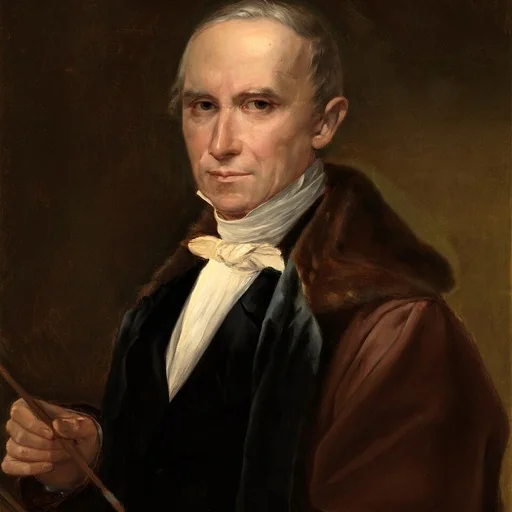
José de Madrazo y Agudo (22 April 1781 – 8 May 1859) was a Spanish painter and engraver; one of the primary exponents of the Neoclassical style in Spain.

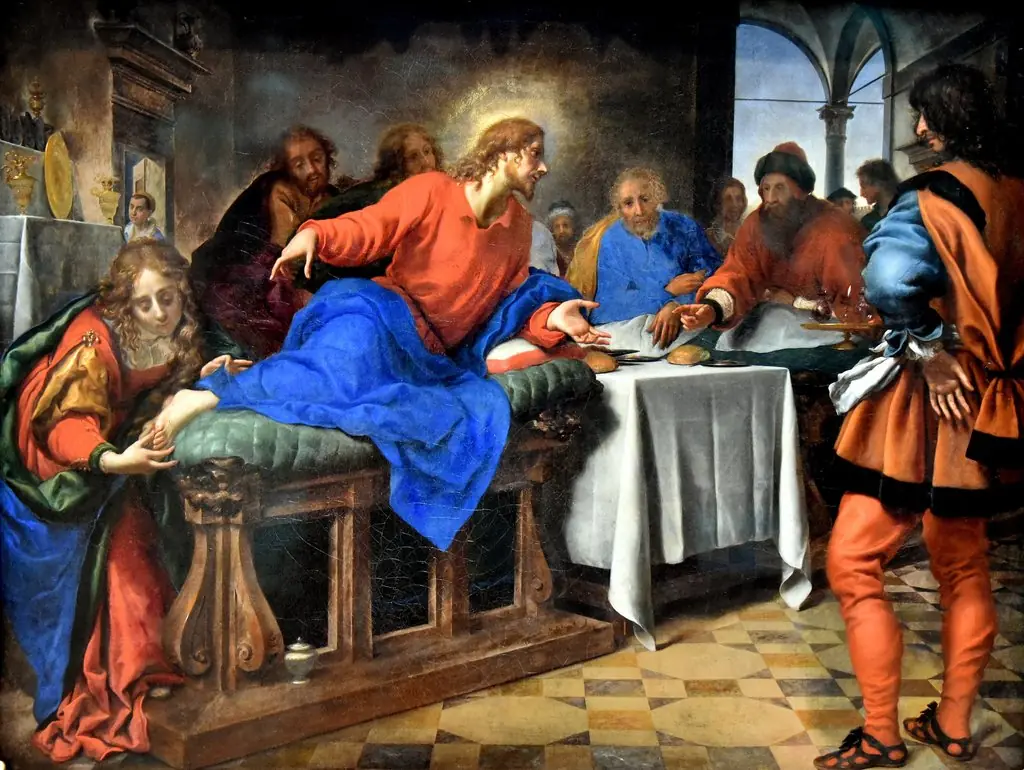
- Christ and Mary Magdalen in the House of Simon
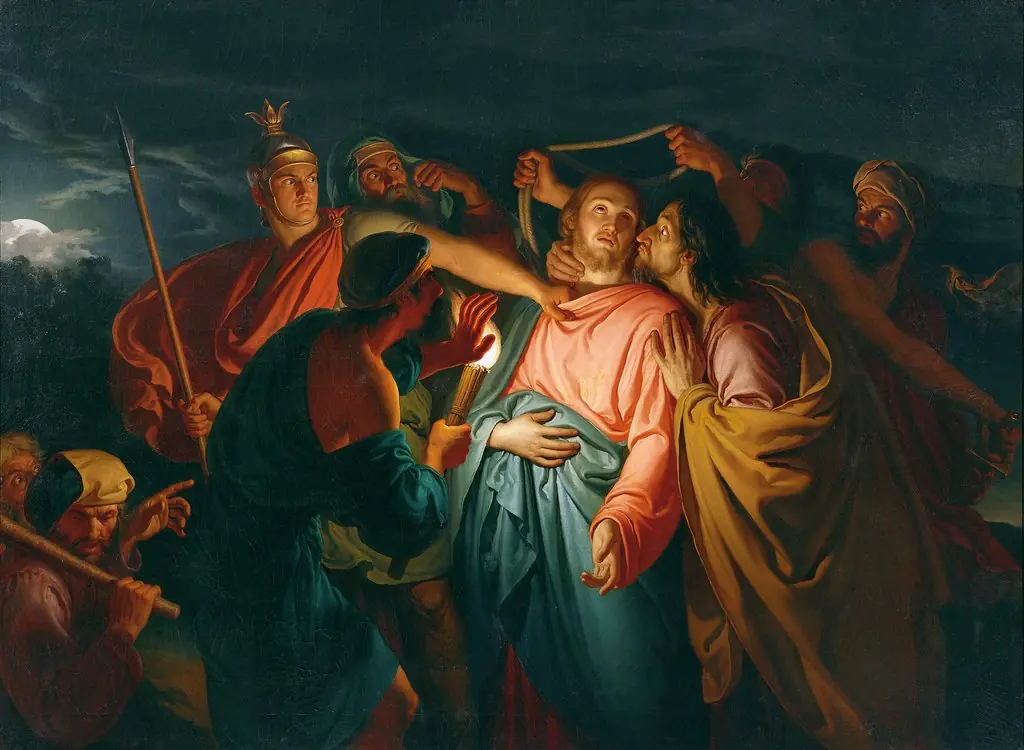 Der Judaskuss
 The Tribute Money
 Christ and the Centurion
 Tribute to Caesar
 Christ instructing Nicodemus
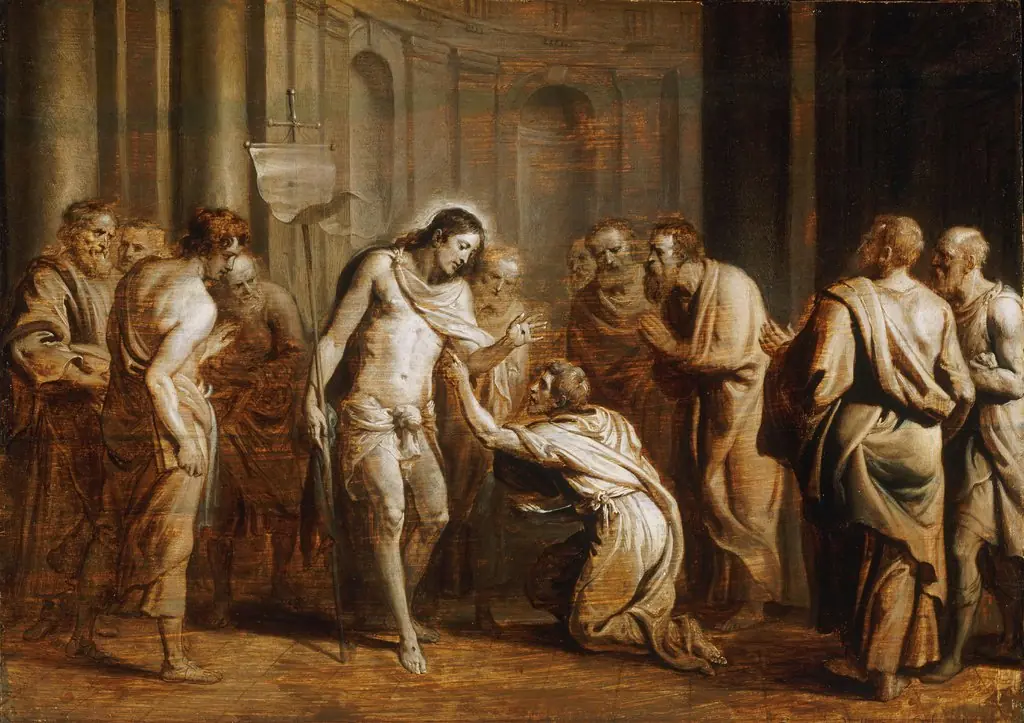 Saint Thomas Touching Christ's Wounds
 Tribute penny (Matthew 22:15–22; Mark 12:13–17; Luke 20:21–26)
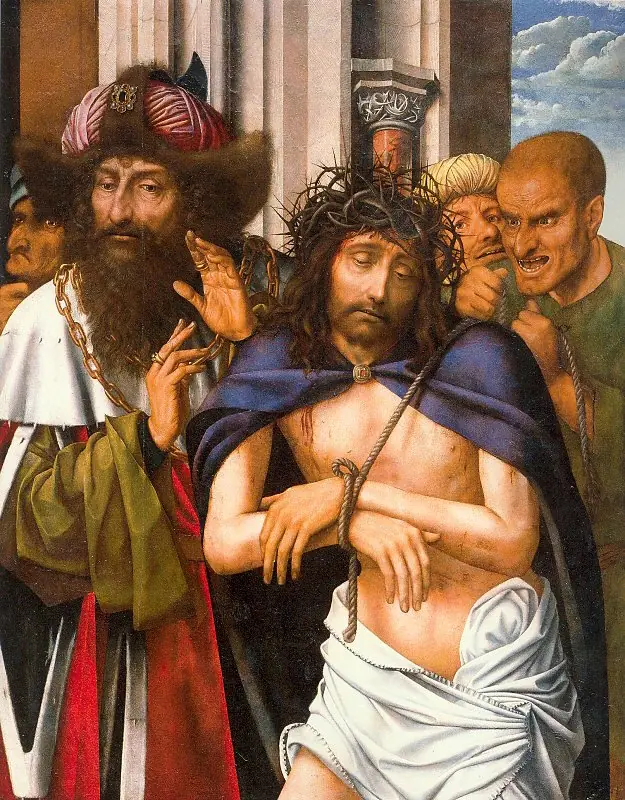 Ecce Homo
 The Last Supper
 The Incredulity of Saint Thomas
 The Supper at Emmaus