Artwork
Der Judaskuss
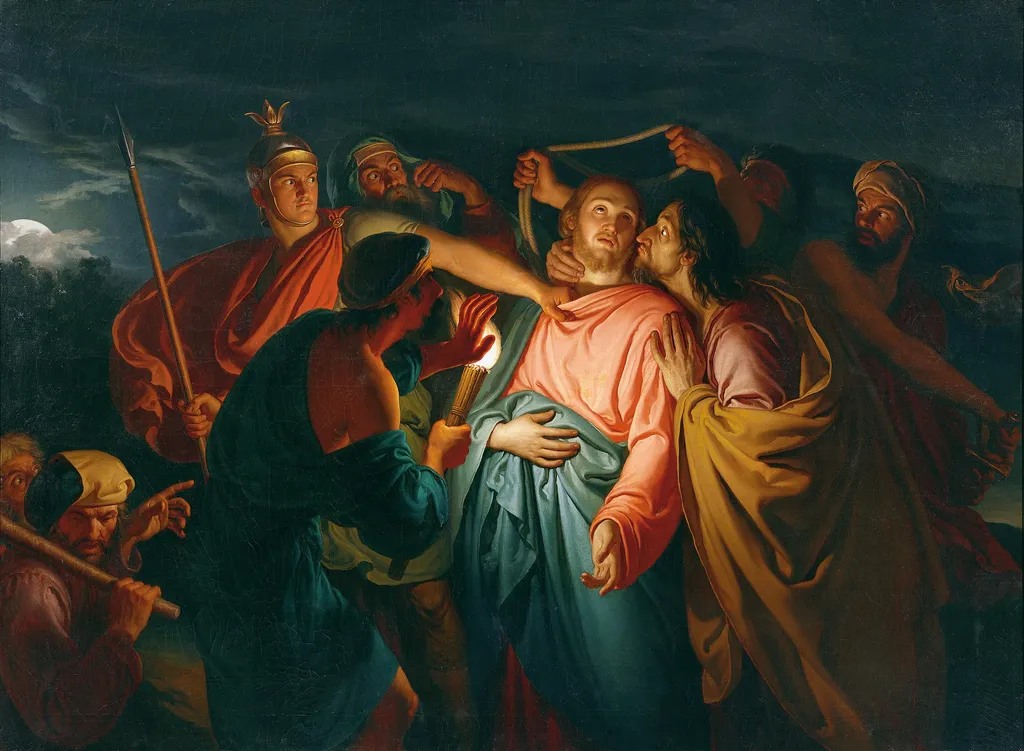
Der Judaskuss is an oil painting by Giuseppe Diotti. It dates from 1840 and is held in the collection of the Kunsthistorisches Museum.
About this work
Overview
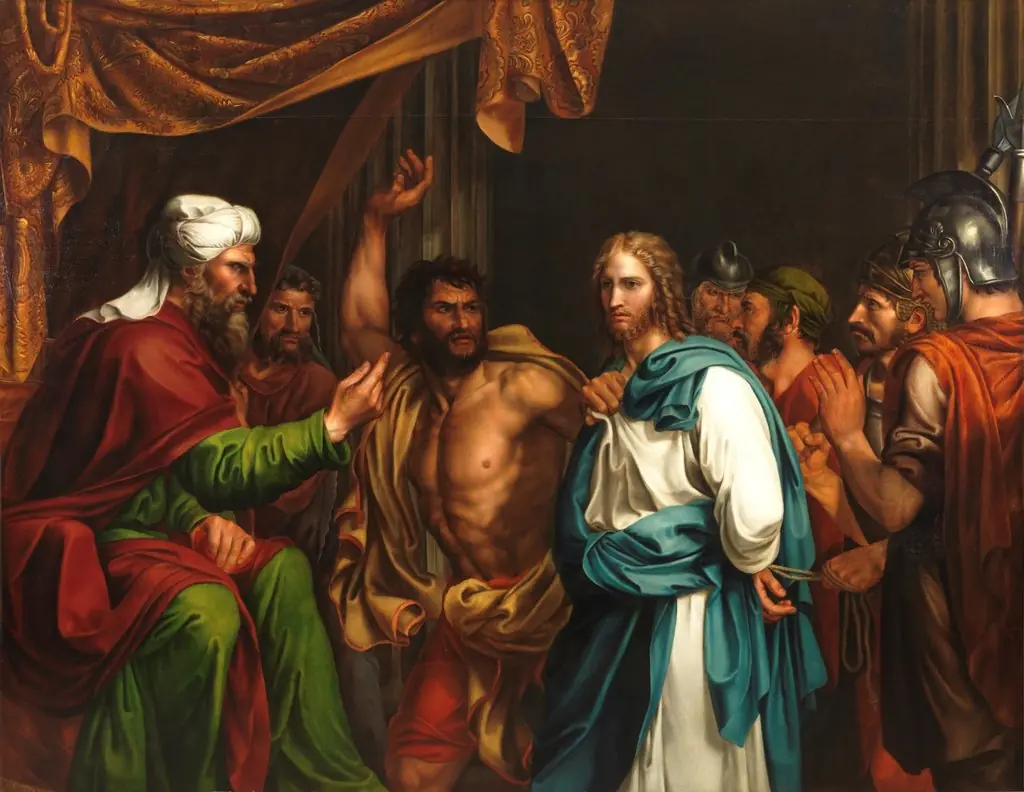
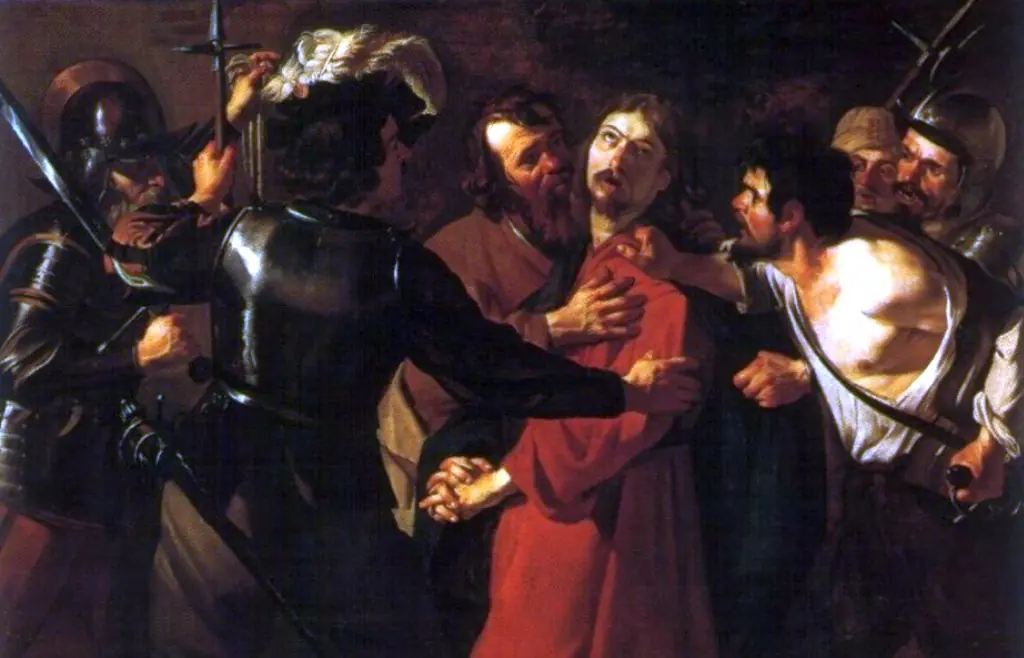
Executed in the Neoclassical idiom, the work portrays a moment of treachery drawn from the biblical narrative of Judas’s kiss.
Giuseppe Diotti’s oil painting Der Judaskuss, completed in 1840, is housed in the Kunsthistorisches Museum. Executed in the Neoclassical idiom, the work portrays a moment of treachery drawn from the biblical narrative of Judas’s kiss. The composition centers on a robed figure receiving a kiss while surrounded by armed men, set against a dimly lit backdrop that emphasizes the drama of the encounter.
Subject & Meaning
The scene captures the pivotal instant when Judas identifies Jesus to the arresting soldiers with a kiss, a gesture that juxtaposes affection and betrayal. Diotti emphasizes the moral tension by placing the betrayer’s kiss at the focal point, surrounded by armed guards whose varied attire and gestures suggest imminent violence, underscoring themes of loyalty, deception, and the consequences of treachery.
Technique & Style
Diotti employs chiaroscuro to model the figures, using strong contrasts of light and shadow to create depth and emotional intensity. The central figures are illuminated against a dark, almost theatrical background, while a faint landscape recedes in the distance. The precise rendering of drapery and the restrained palette reflect the academic Neoclassical training that Diotti inherited from his mentors, Gaspare Landi and Vincenzo Camuccini.
History & Provenance
Created in the early 1840s, Der Judaskuss entered the collection of the Kunsthistorisches Museum, where it remains on display. The painting exemplifies Diotti’s focus on historical and biblical subjects, a hallmark of his career, and represents one of the later works that solidified his reputation within the Austrian and Italian art circles of the period.
Context
During the mid‑19th century, Neoclassicism remained a dominant force in academic painting, emphasizing clarity, moral narrative, and classical composition. Diotti’s choice of a biblical betrayal aligns with contemporary interests in moralizing subjects, while his stylistic adherence to his teachers situates the work within the broader tradition of Italian academic art that sought to balance dramatic storytelling with formal rigor.
Own this work as a print
Artist & collection

Artist
Francesco Giuseppe Antonio Diotti (1 March 1779 – 30 January 1846) was an Italian painter of the Neoclassic style.