Artwork
The Grindelwald Glacier with Hunter and Peasant Girl in Foreground
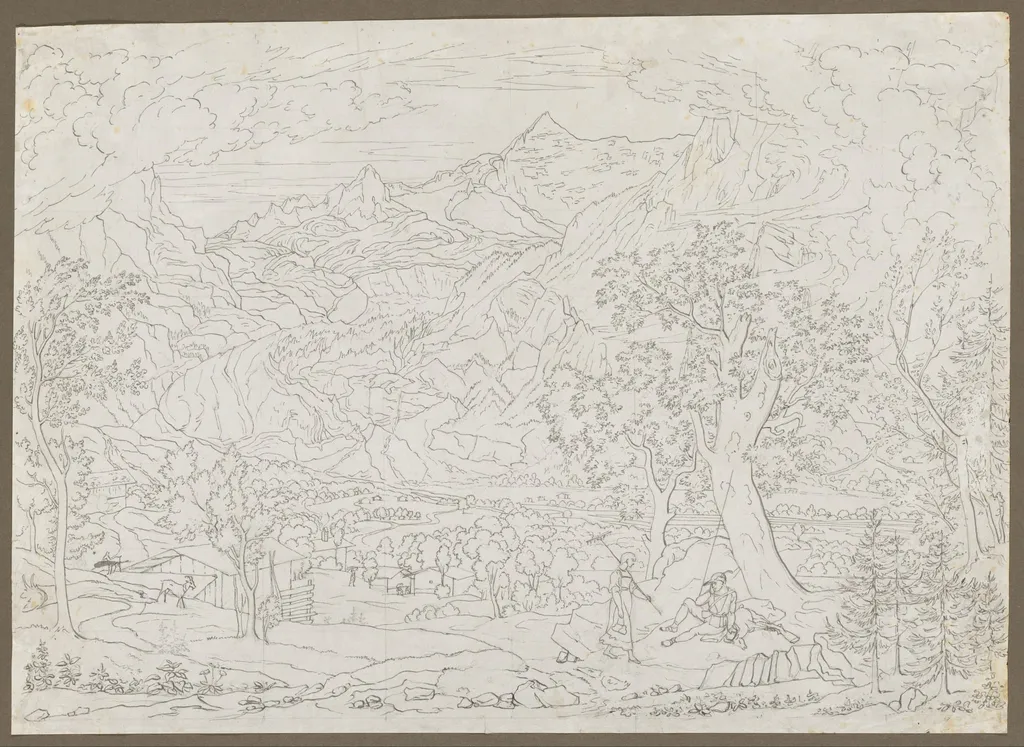
The Grindelwald Glacier with Hunter and Peasant Girl in Foreground is a drawing by the Romanticist artist Joseph Anton Koch. It dates from 1823 and is held in the collection of the Cleveland Museum of Art.
- Accession no.
- 1981.26
- Credit line
- Dudley P. Allen Fund
About this work
Overview
Created around 1823, this drawing by Austrian artist Joseph Anton Koch captures the Grindelwald Glacier in the Swiss Alps. Executed in ink and wash, it belongs to a series of alpine studies Koch produced during his later years. The work bridges his early Neoclassical training and the emerging Romantic sensibility, focusing on nature’s scale and raw presence rather than idealized form.
Subject & Meaning
Two small human figures, a hunter and a peasant girl, stand near the base of the glacier, their presence underscoring nature’s dominance. They are not the focus but serve as markers of scale and human transience. The scene suggests a quiet coexistence with the environment, reflecting Romantic themes of humility before the sublime forces of the natural world.
Technique & Style
Koch employed loose, energetic strokes to render the glacier’s jagged ridges and the uneven terrain. The drawing’s sketchlike quality, achieved through rapid ink lines and varied washes, conveys immediacy and movement. The contrast between the delicate, sparse figures and the dense, textured landscape emphasizes the wildness of the setting, avoiding polished finish in favor of expressive energy.
History & Provenance
This drawing was made during Koch’s mature period, following his years in Rome and his growing immersion in Alpine landscapes. It likely originated as a preparatory study or personal record, part of a broader body of work documenting his travels through the Swiss Alps. Its survival suggests it held personal significance, though its early ownership remains undocumented.
Context
In the early 1820s, European artists increasingly turned to remote natural sites as sources of emotional and spiritual resonance. Koch’s alpine drawings responded to this trend, aligning with broader Romantic interests in wilderness and the sublime. Unlike earlier Neoclassical landscapes, his work embraced irregularity and emotional weight over symmetry and order.
Legacy
Koch’s alpine drawings influenced later Romantic landscape traditions, particularly in Germany and Austria. His emphasis on untamed terrain and atmospheric immediacy helped shift landscape art away from idealization toward direct observation. Though less celebrated than his paintings, these sketches reveal a vital, evolving approach to nature that resonated with emerging Romantic sensibilities.
Own this work as a print
Artist & collection
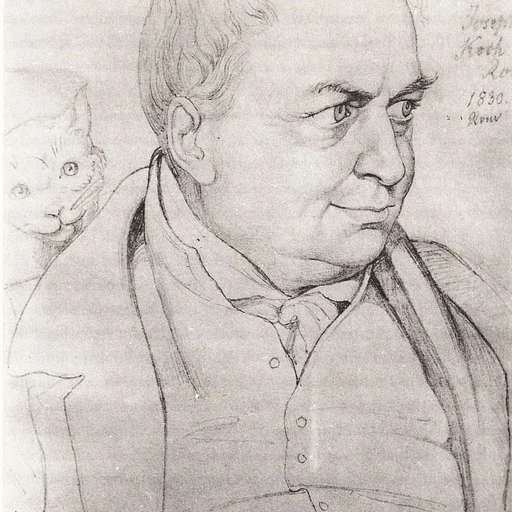
Artist
Joseph Anton Koch (27 July 1768 – 12 January 1839) was an Austrian painter of Neoclassicism and later the German Romantic movement; he is perhaps the most significant neoclassical landscape painter.

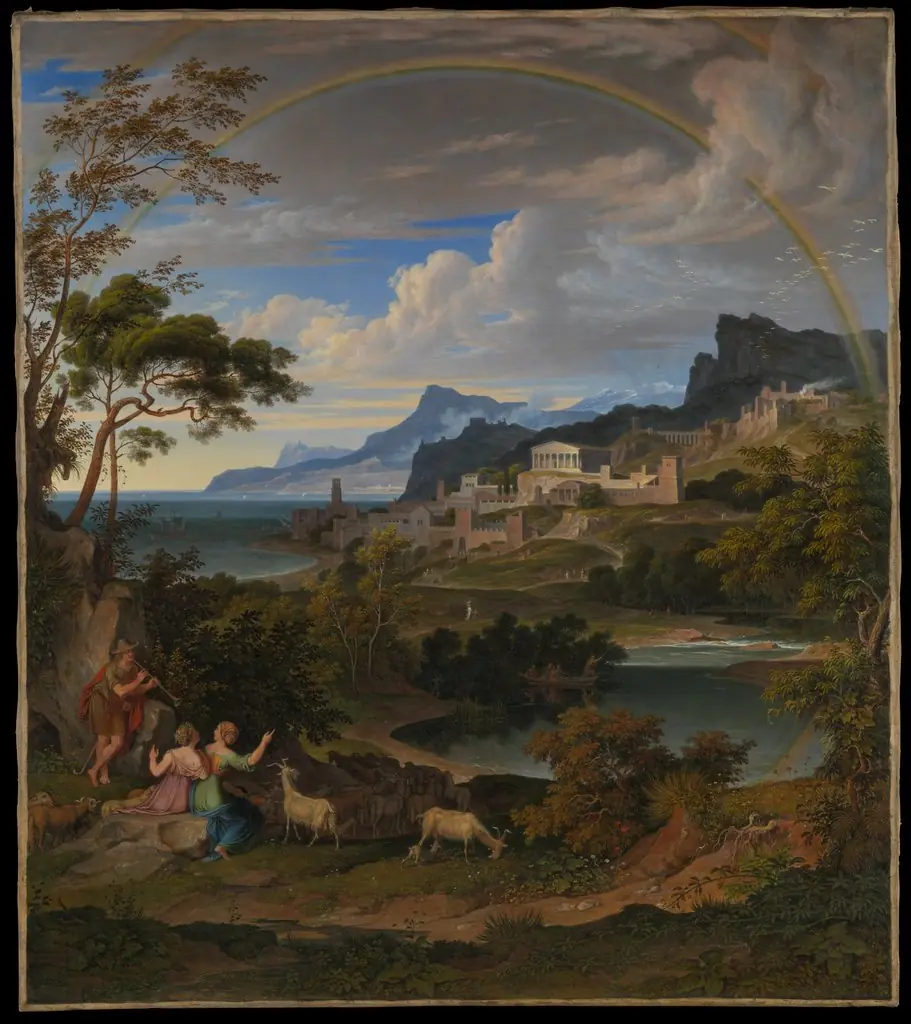 Heroic Landscape with Rainbow
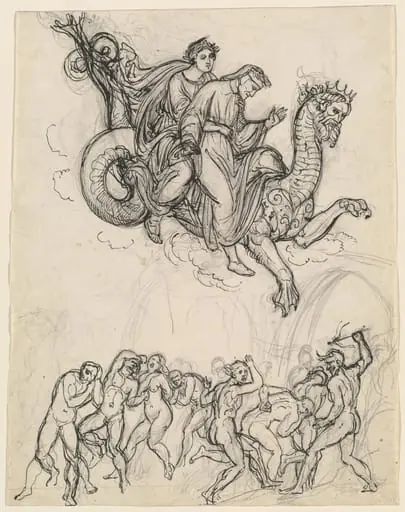 Dante and Virgil Riding on the Back of Geryon
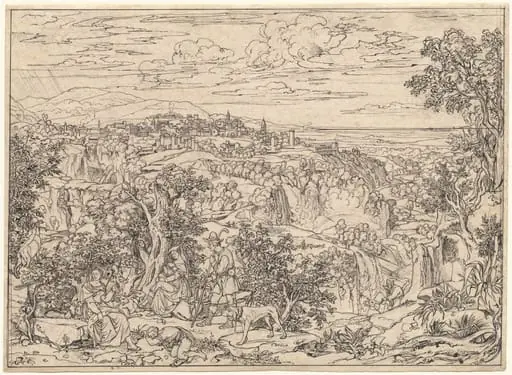 Tivoli and the Waterfalls with Shepherd Families
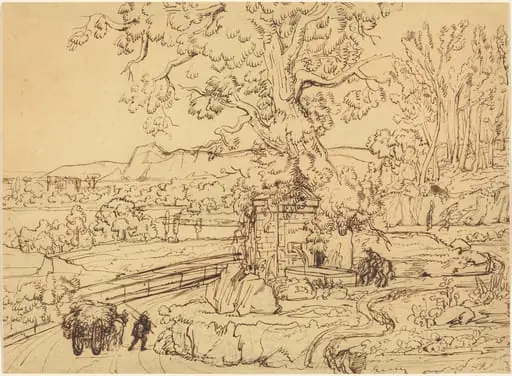 The Roman Campagna with an Ancient Fountain
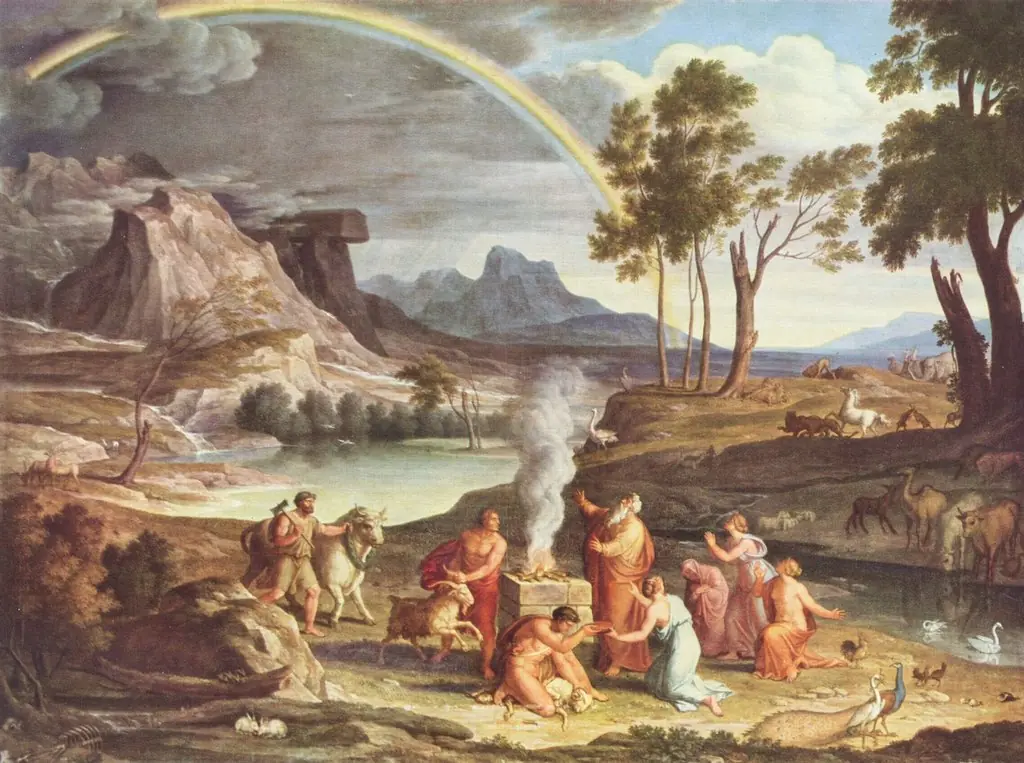 Landscape with Noah, Offering a Sacrifice of Gratitude
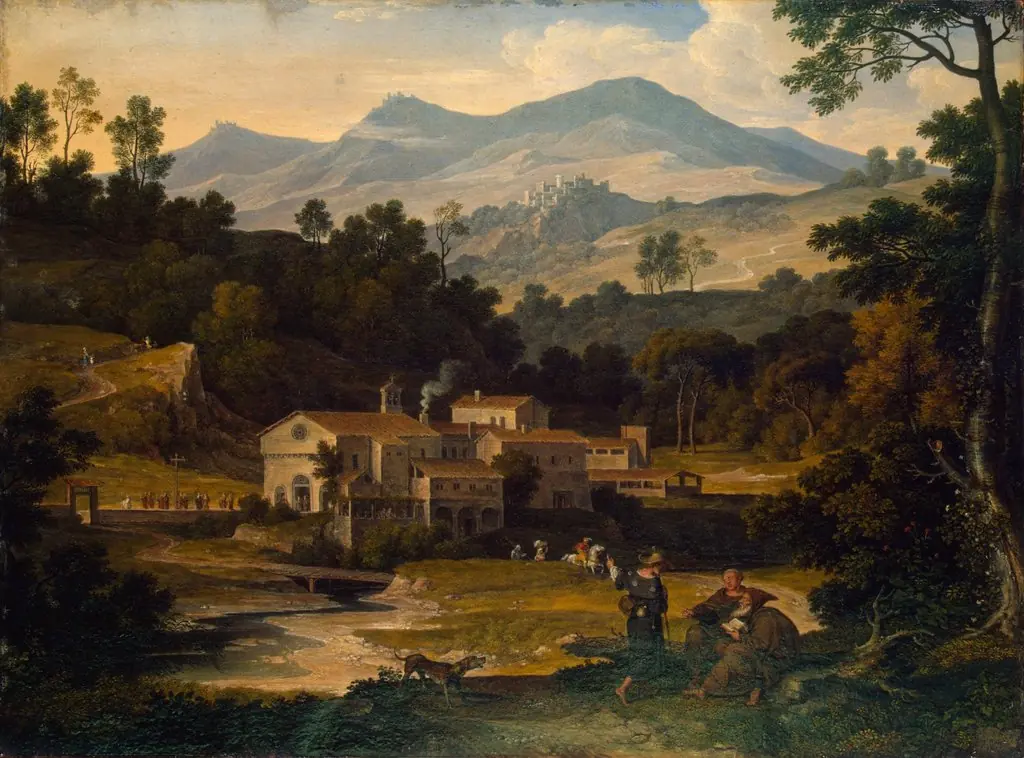 Monastery of San Francesco di Civitella in the Sabine Mountains
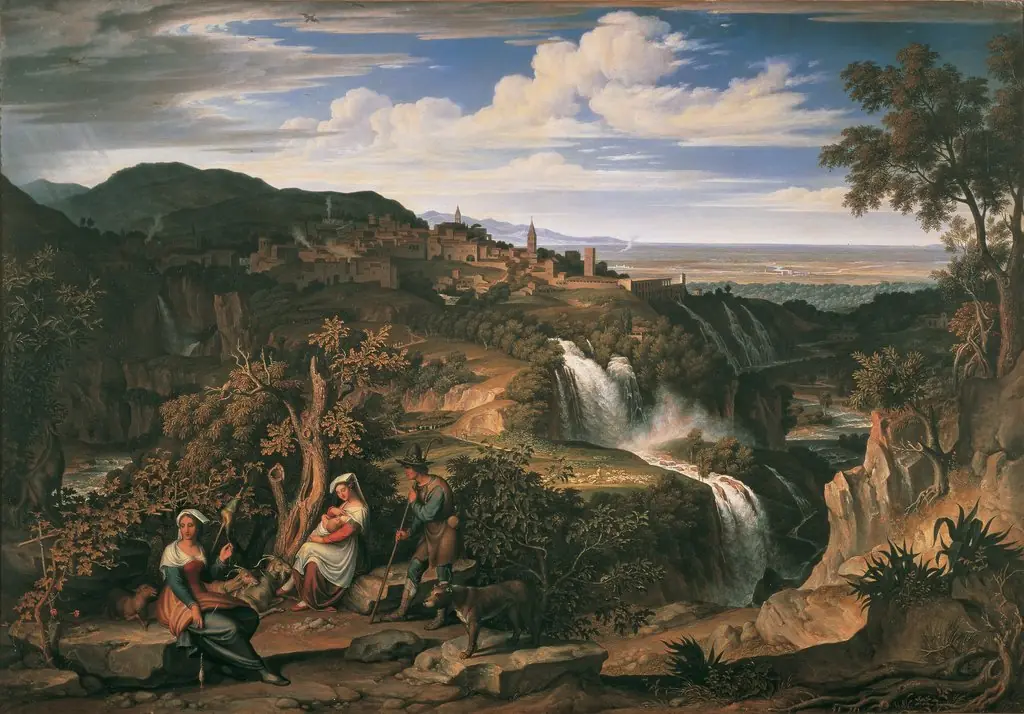 The Waterfalls of Tivoli near Rome
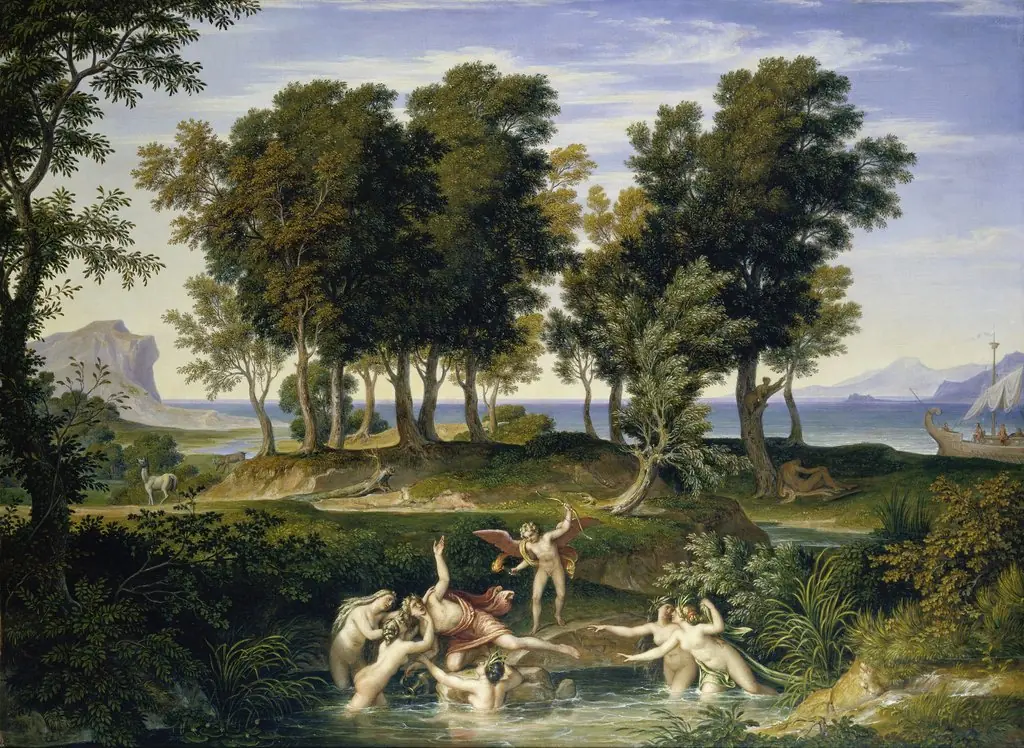 Landscape with the Rape of Hylas
- A Mountainous Landscape
 Fields and trees, with the city of Macau in the distance
 Macau, looking south-west along the peninsula
 Ben Nevis
 Eagle's Nest, Killarney
 Clear Creek Canyon, Rocky Mountains, Colorado
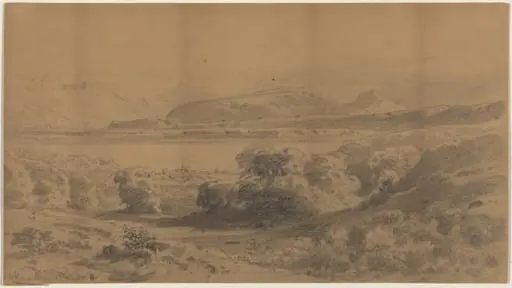 Panorama on a Mountain Lake
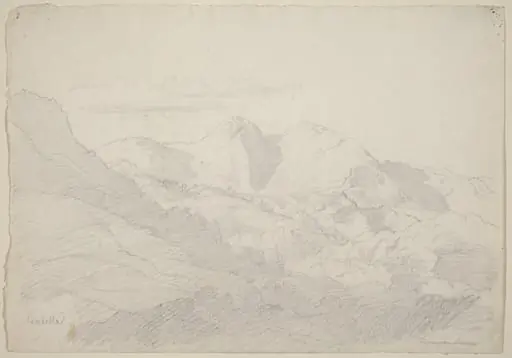 The Sabine Hills and Rocca Santo Stefano Seen from Civitella
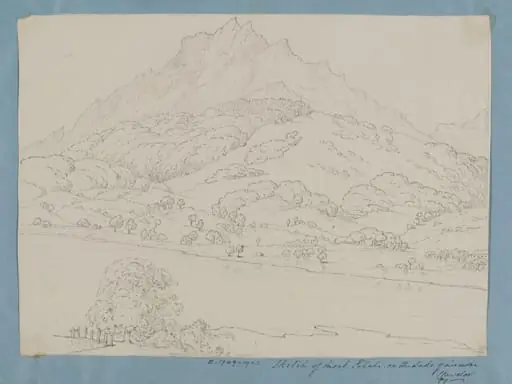 Sutherland Album
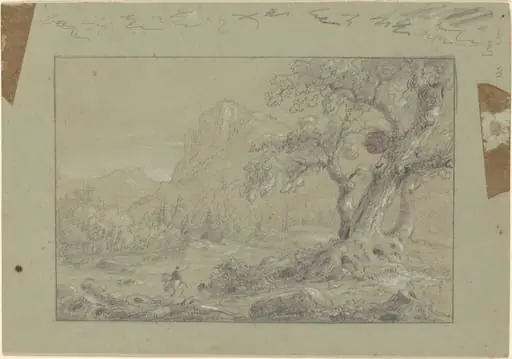 Study for "The Mountain Ford"
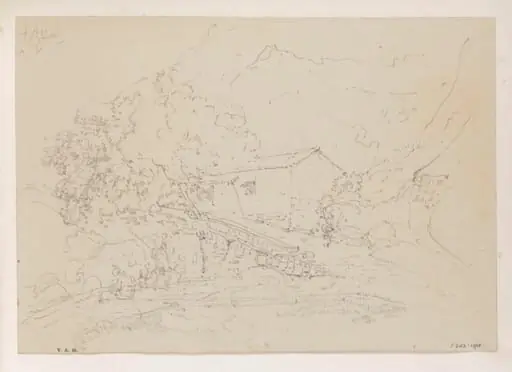 A small building and trees on a hillside, Macau
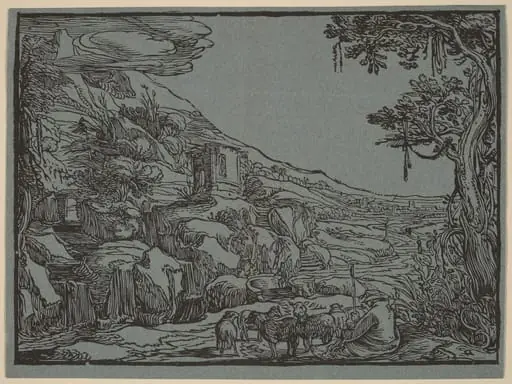 Arcadian Landscape