Artwork
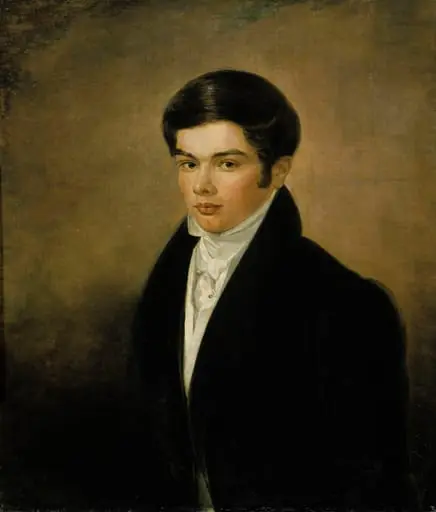
Portrait of a young man
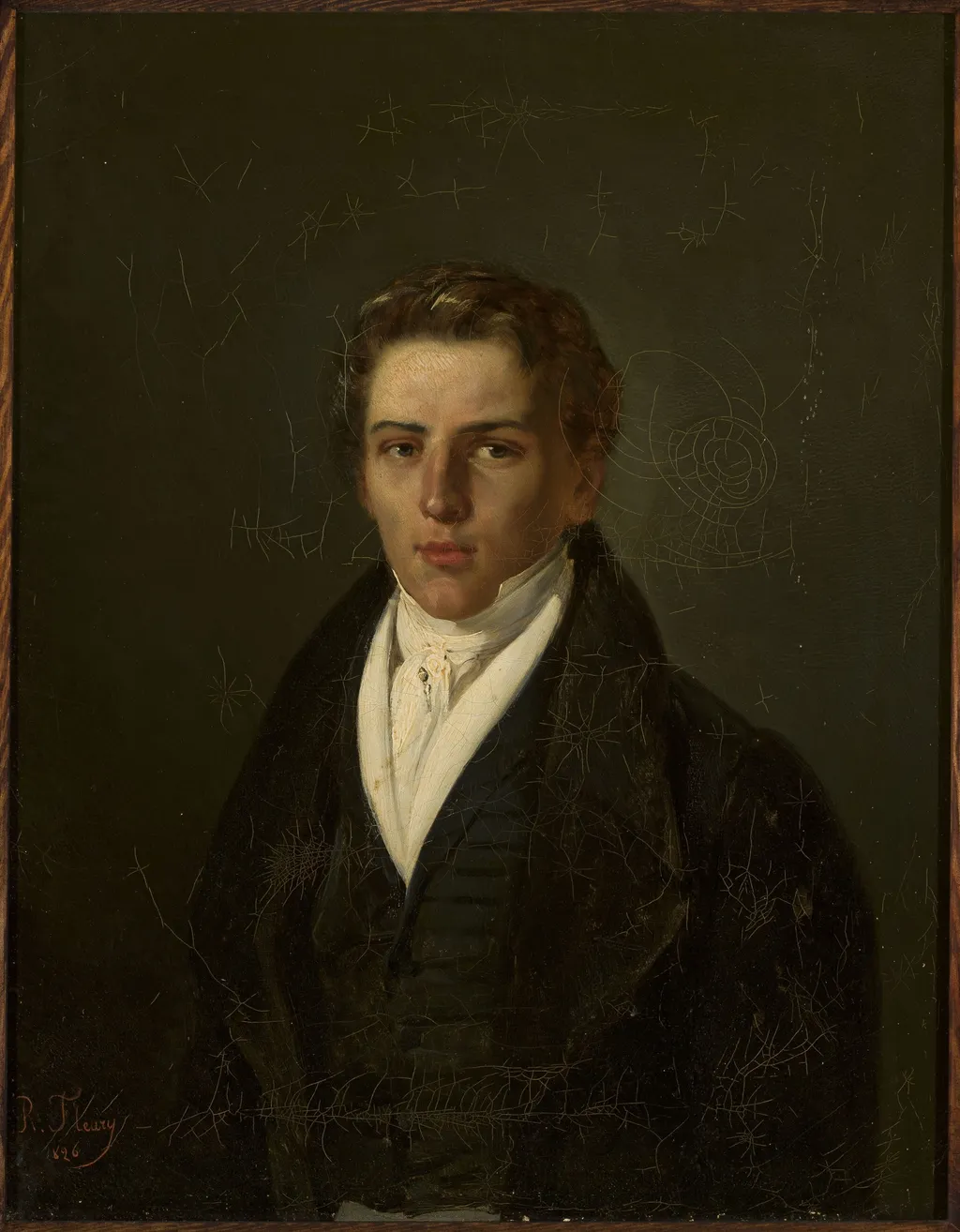
Portrait of a young man is an oil painting by the French Romanticist artist Joseph-Nicolas Robert-Fleury. It dates from 1826 and is held in the collection of the National Museum in Warsaw.
About this work
Overview
Portrait of a Young Man is an oil-on-canvas painting by the French artist Joseph-Nicolas Robert-Fleury, dated 1826.
Portrait of a Young Man is an oil-on-canvas painting by the French artist Joseph-Nicolas Robert-Fleury, dated 1826. Measuring 40.5 by 32 centimeters, this half-length portrait is held in the collection of the National Museum in Warsaw. The work exemplifies the polished, traditional portraiture of the French academic tradition in the early nineteenth century, representing a significant example of Robert-Fleury's early career output before he gained wider recognition for historical and genre subjects.
Subject & Meaning
The painting depicts an unidentified young man, presented frontally with his head turned slightly to his right, establishing direct eye contact with the viewer. His auburn hair is parted and combed back, and his pale complexion is enlivened by pinkish tones on the cheeks and lips. The sitter wears formal attire consisting of a black coat with a high collar over a dark waistcoat, and a crisp white cravat tied at the throat. This clothing signals bourgeois respectability and social standing within early nineteenth-century French society. The direct gaze and formal presentation suggest a conventional approach to masculine portraiture of the period, emphasizing the subject's composure and social identity rather than psychological interiority or narrative drama. The absence of identifying attributes or a detailed setting focuses attention entirely on the sitter's presence and sartorial presentation.
Technique & Style
The painting is executed in oil on canvas with a palette dominated by dark browns and blacks, contrasted with the white of the neckcloth and lighter flesh tones. Light falls from the left, illuminating the left side of the face and casting subtle shadows on the right, creating a restrained but effective modeling of form. The brushwork is smooth and blended in the facial areas, with more visible texture in the background and clothing. The overall finish is polished and traditional, consistent with Academic Art principles of precise rendering and classical ideals. The surface shows extensive craquelure throughout, with a particularly noticeable circular pattern of cracks to the right of the subject's head. The background is rendered in a muted greenish-brown tone that recedes quietly, allowing the figure to dominate the pictorial field. The handling demonstrates the controlled, finished technique expected of French academic painters of this generation.
History & Provenance
The painting is signed in the lower left corner in reddish-brown paint with "R. Fleury" and dated "1826" beneath it, providing clear evidence of its authorship and date of execution. The work entered the collection of the National Museum in Warsaw, where it remains today. The specific circumstances of its commission, its passage through private or dealer hands before acquisition by the museum, and its precise accession details are not documented in the available sources. Similarly, no exhibition history is recorded in the provided materials. The painting's presence in a major Polish national collection suggests it may have been acquired through post-war restitution processes, purchases on the international art market, or transfers from other Polish collections, though these specifics cannot be confirmed from the sources.
Context
Joseph-Nicolas Robert-Fleury (1797-1890) was a French painter who achieved success primarily through historical and genre subjects, though he also produced portraits throughout his career. In 1826, when this portrait was painted, he was still establishing his reputation; he would later become director of the French Academy in Rome and the Ecole des Beaux-Arts in Paris. The work belongs to a period when French portraiture was dominated by academic conventions, with artists striving for a balance between idealization and individual likeness that satisfied both sitters and salon audiences. The painting's polished technique and conventional composition align it with the broader tendencies of Restoration-era French art, which looked back to the established models of the eighteenth century while accommodating contemporary bourgeois tastes. The portrait's current location in the National Museum in Warsaw reflects the international circulation of French art in the nineteenth century and the subsequent formation of European museum collections through varied historical circumstances.
Legacy
The painting's afterlife is primarily marked by its reproduction and circulation as a commercial art print in the twenty-first century. It has been offered in various formats including framed and matted museum art prints in multiple sizes and frame styles, indicating its continued accessibility as a representative example of early nineteenth-century French academic portraiture. These commercial reproductions suggest a persistent, if modest, public interest in the image as a decorative object compatible with contemporary interior aesthetics. Within Robert-Fleury's oeuvre, the portrait stands as a document of his early technical accomplishment in a conventional genre, before his reputation became fixed on more ambitious historical compositions. The work has not, on the basis of available sources, been the subject of significant scholarly debate or extensive art historical analysis, though its place in a major national collection ensures its preservation and availability for study within the broader context of French painting of the 1820s.
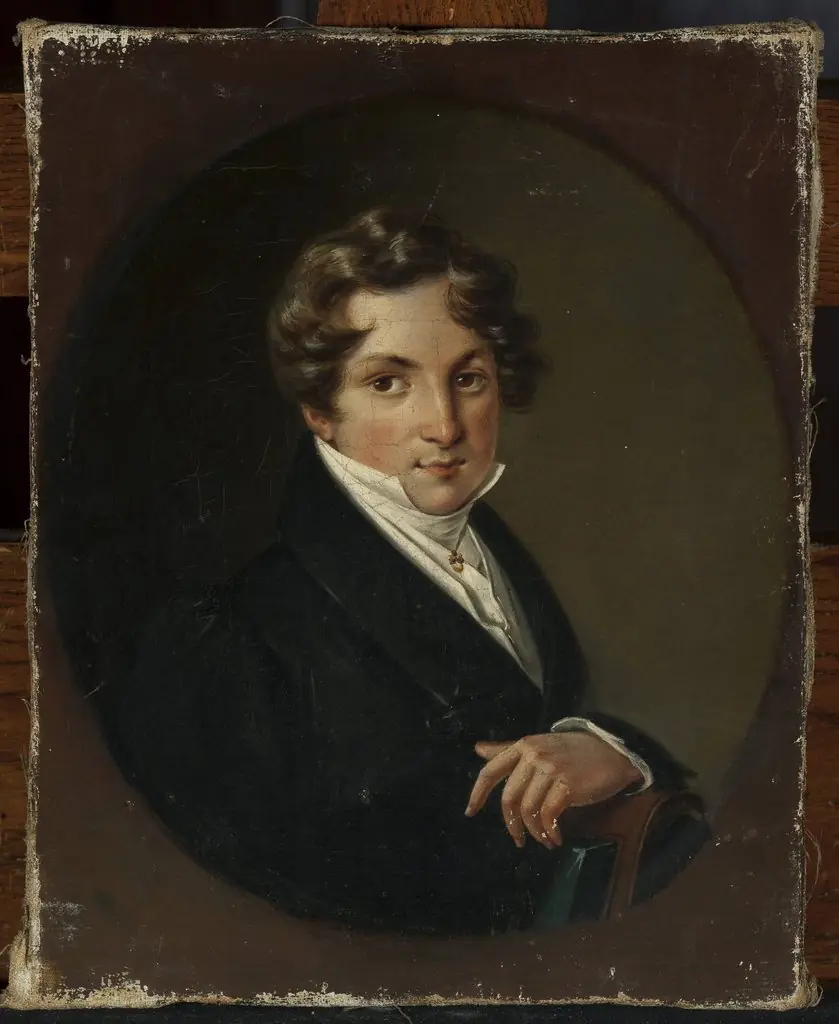
Own this work as a print
Artist & collection
Artist
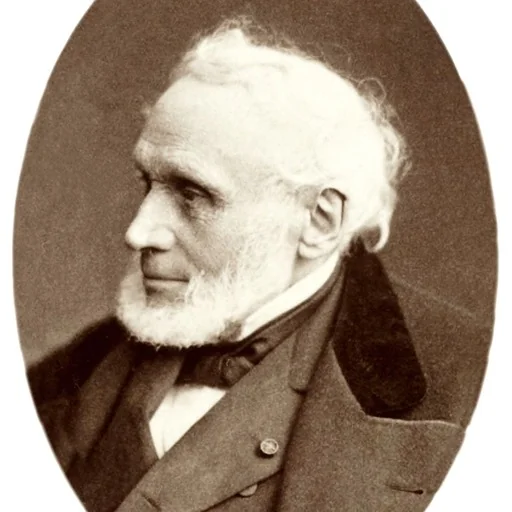
Joseph-Nicolas Robert-Fleury (1797–1890) was an artist, born in Cologne.

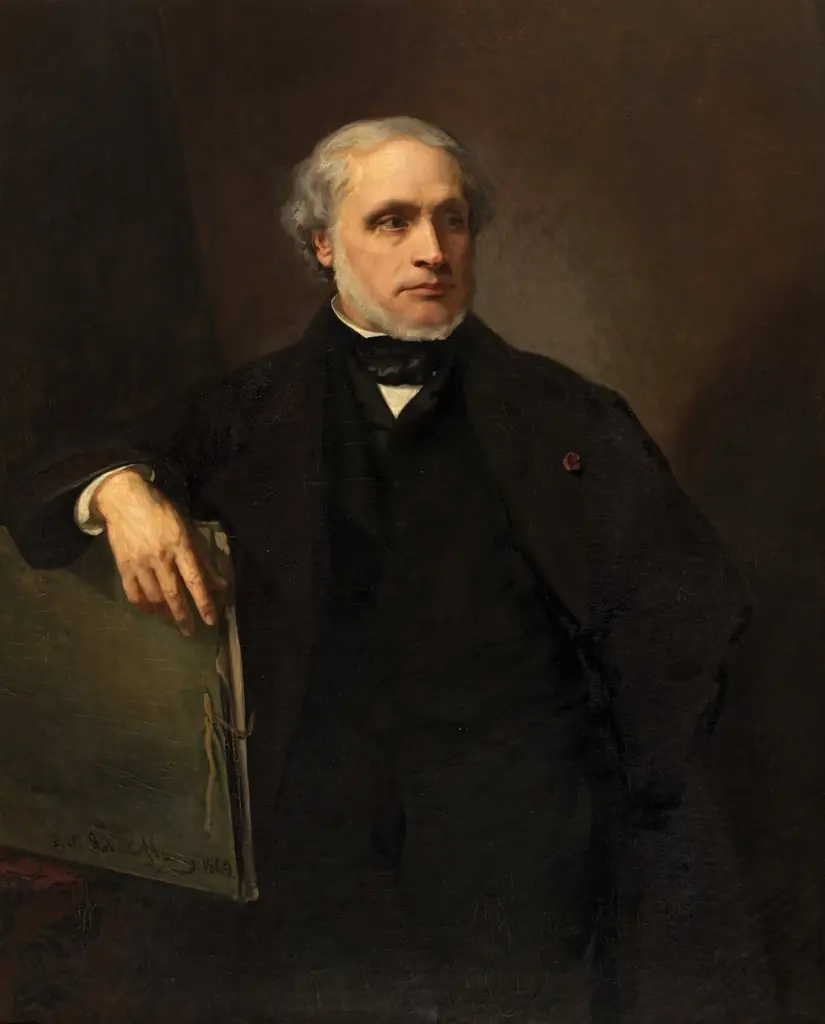
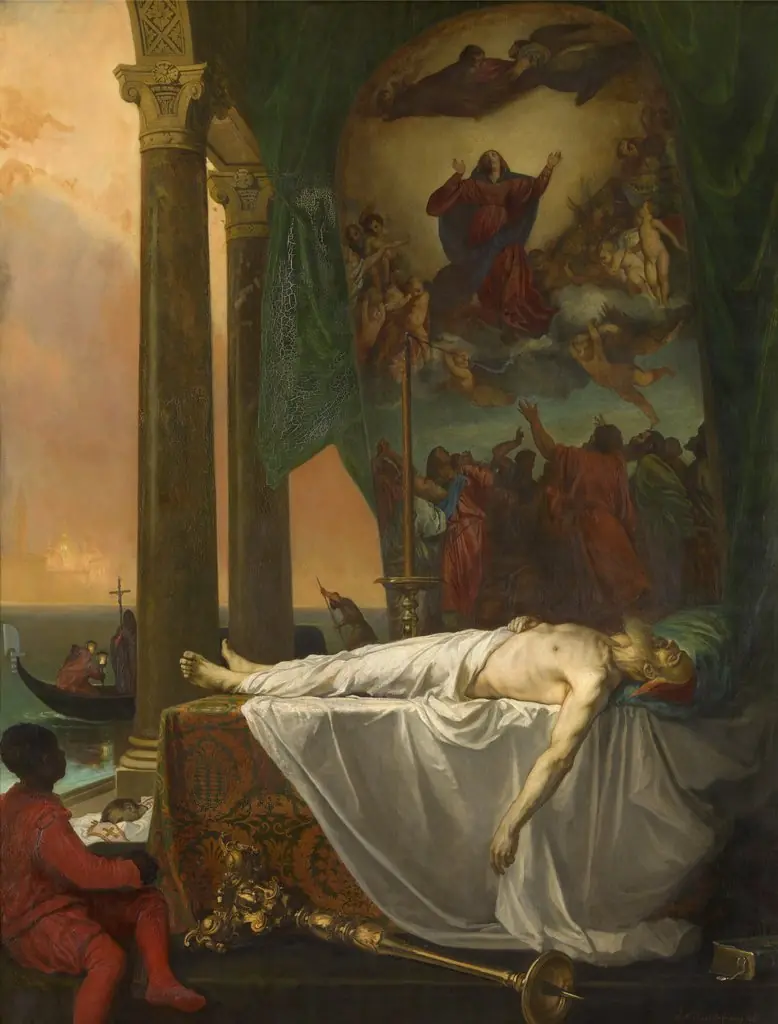
- Portrait of Władysław Brunwej
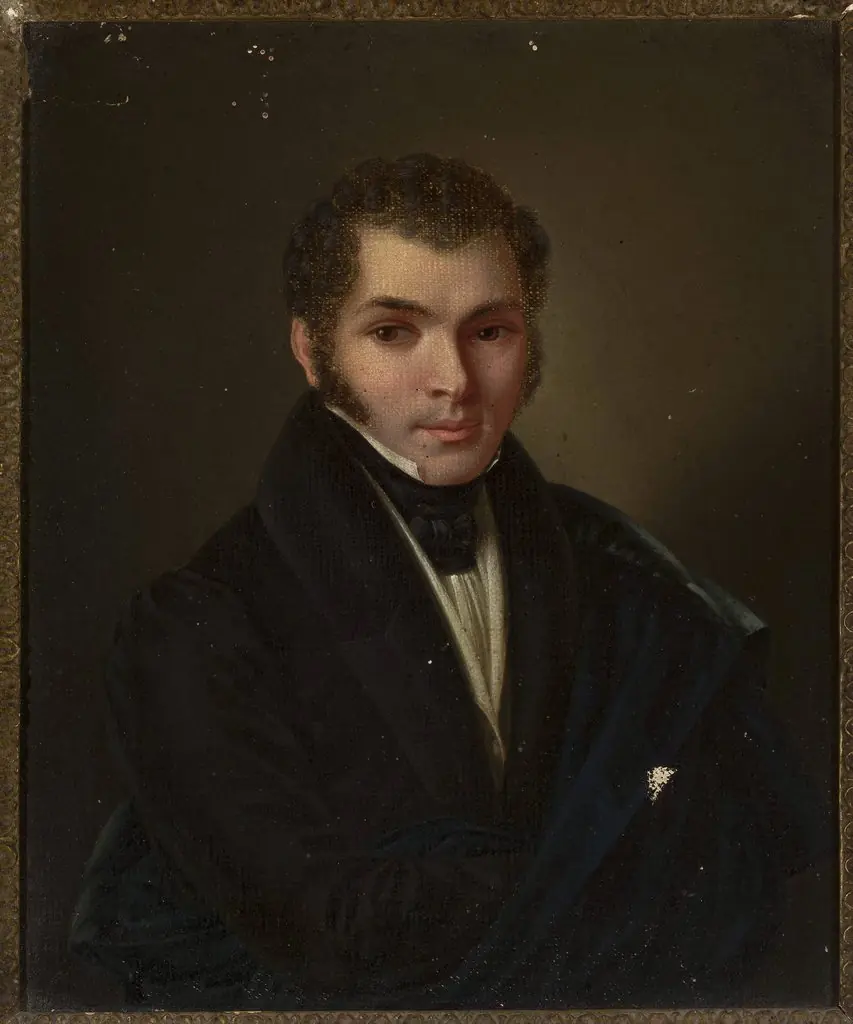 Portrait of Józef Szymanowski
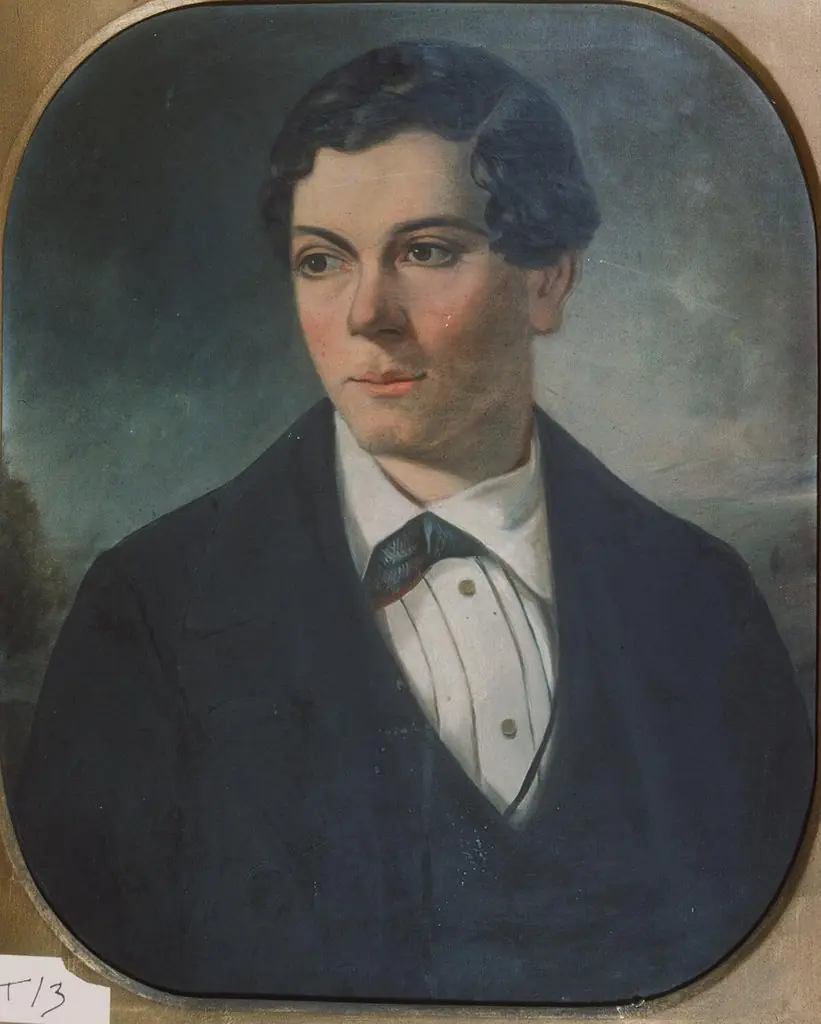 William John Thomas, farmer (died 1867)
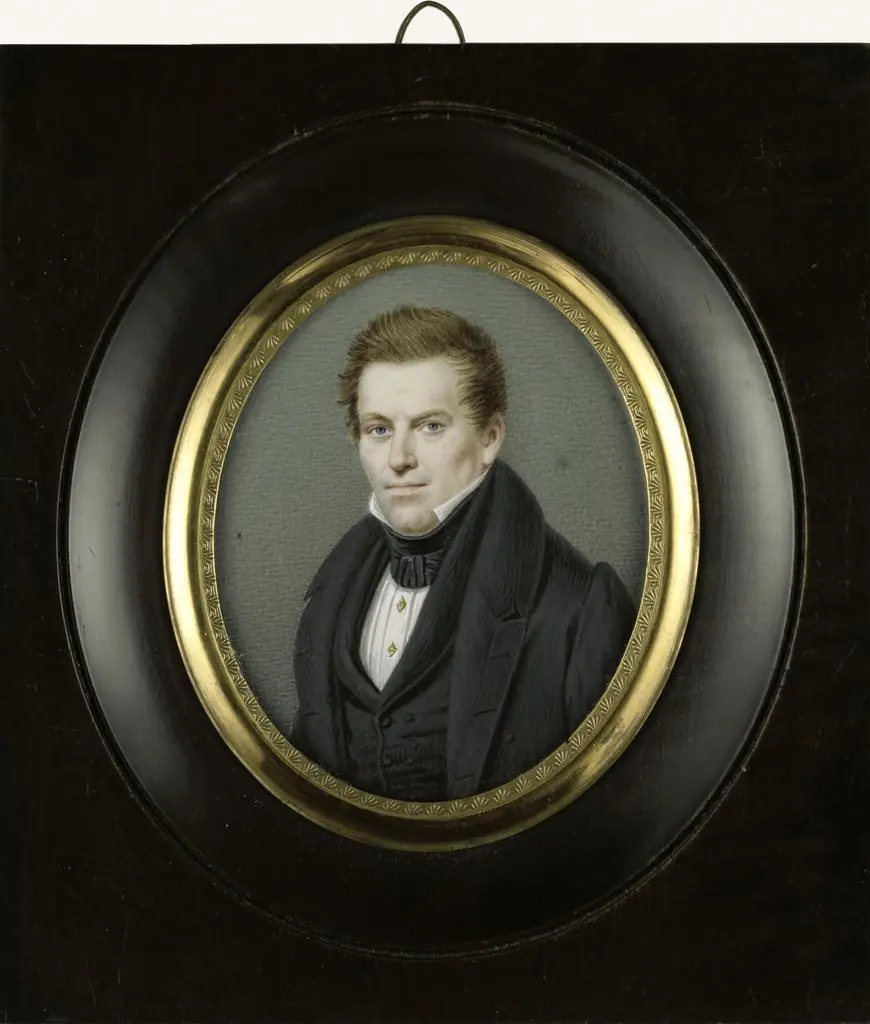 George Frederik Diederichs (1799–1862). Bookhandler of Amsterdam
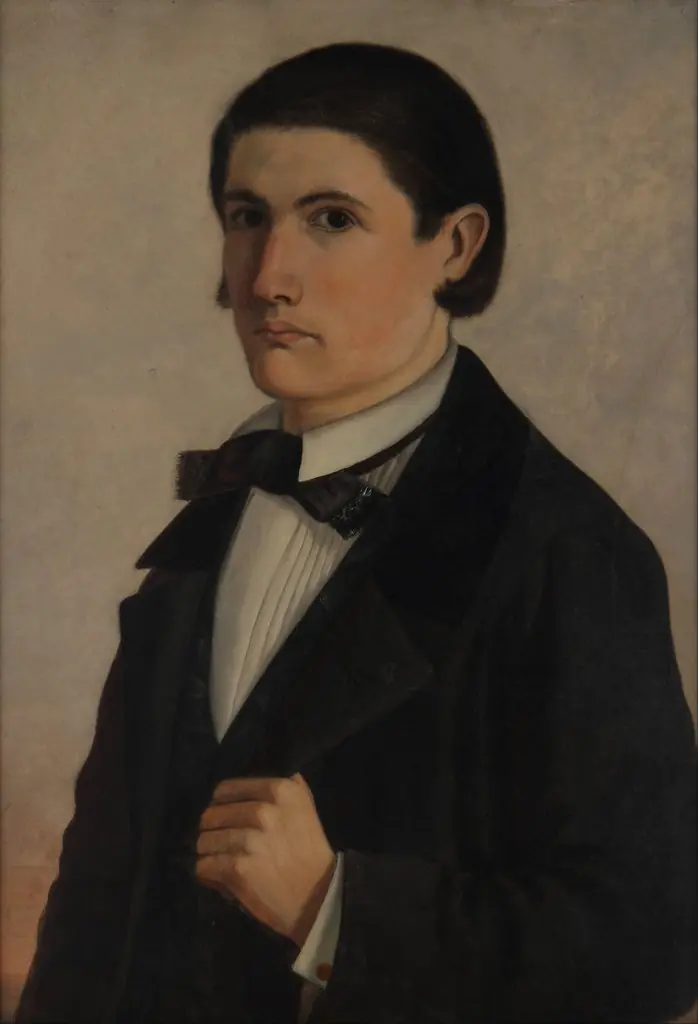 Autorretrato
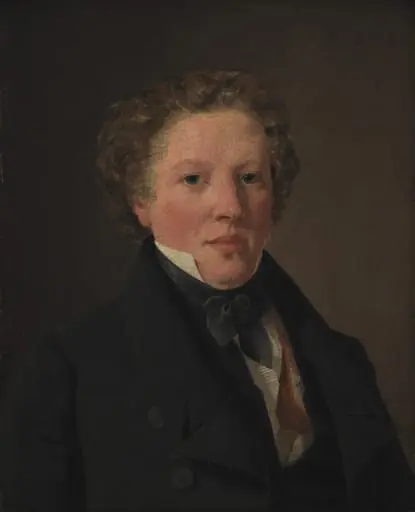 The Actor Christoffer Hvid
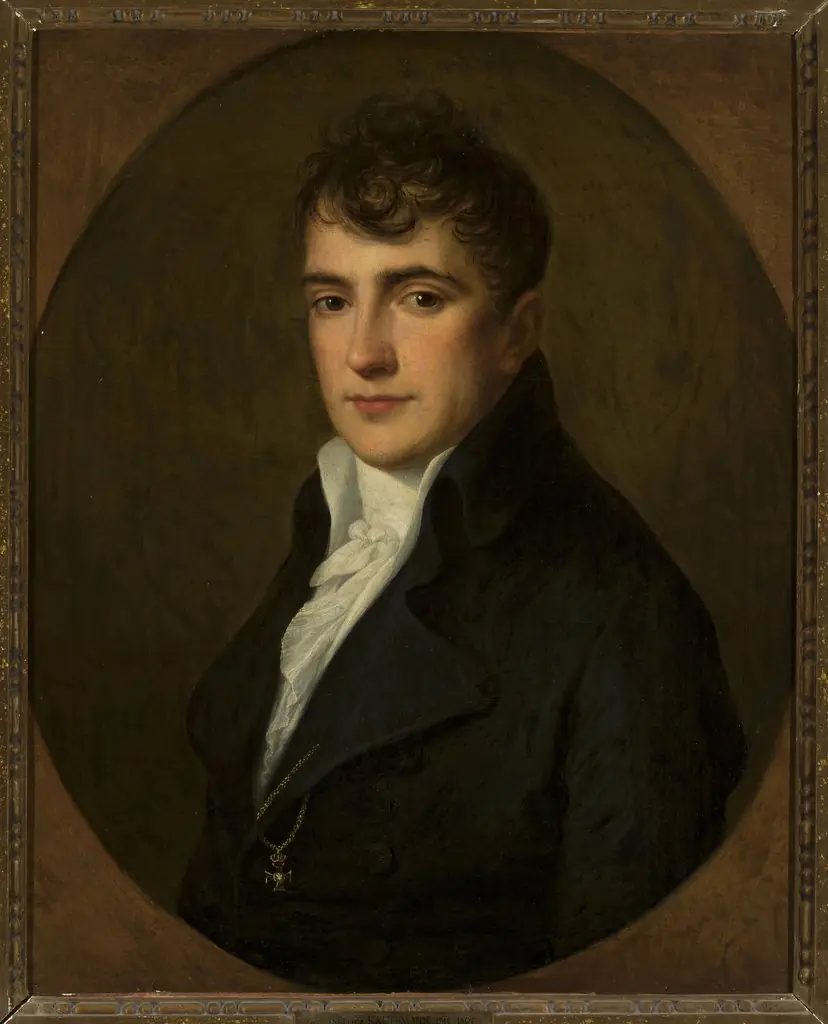 Portrait of Wojciech Męciński
 Self-portrait
 Portrait of count Karol Krasiński
 Portrait of Franciszek Ksawery Andrychewicz
 Portretul lui Iliuță Conta
 Silkkitehtailija Carl Edvin Lundgren