Artwork
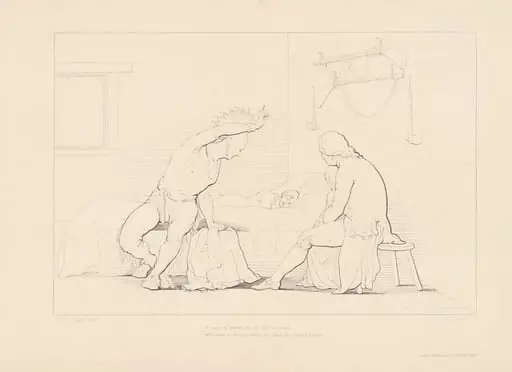
The Little Nurseling, Take Him to Thy Love
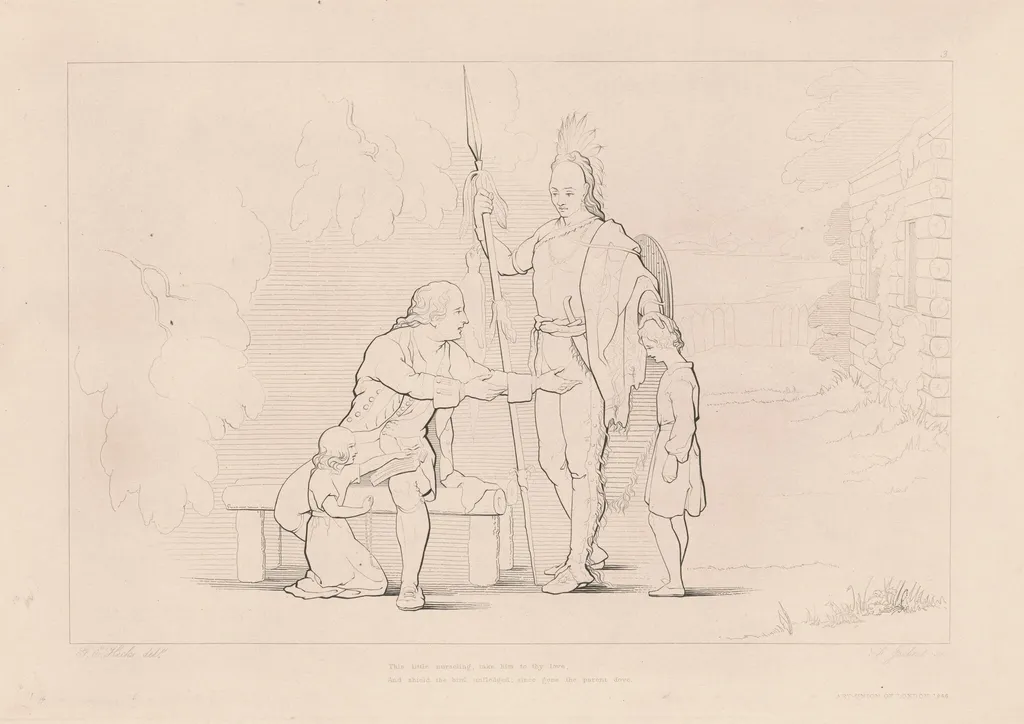
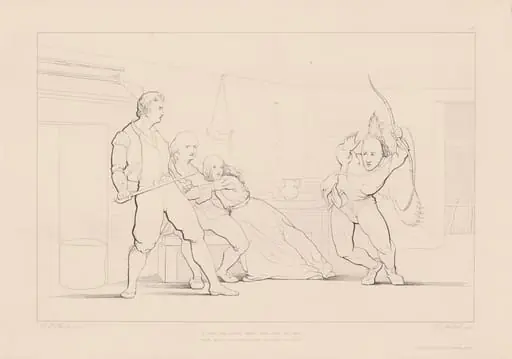
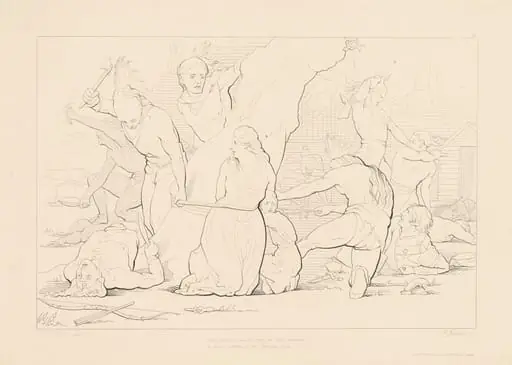
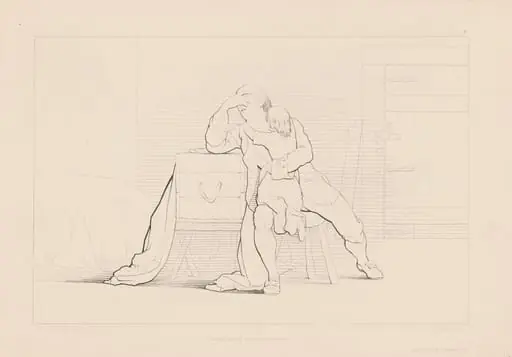
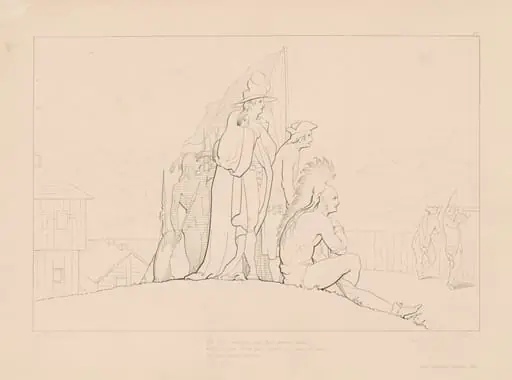
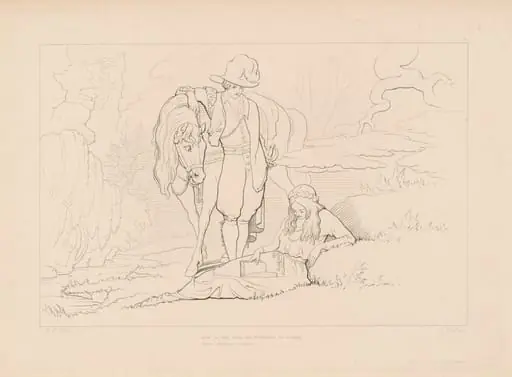
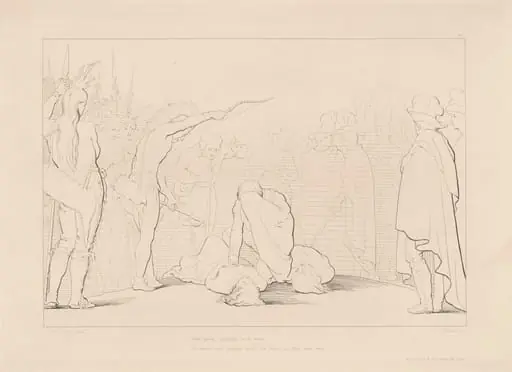
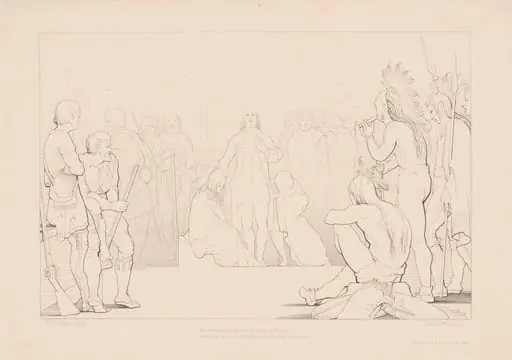
The Little Nurseling, Take Him to Thy Love is an ink print by the Romanticist artist Ferdinand Joubert. It dates from 1846 and is held in the collection of the National Gallery of Art.
- Inscription
- Inscribed:upper right in plate: 3.; at bottom in plate: G.E. Hicks delt. / F. Joubert, sc. / This little nurseling, take him to thy love, / And shield the bird unfledged, since gone the parent dove. / Art-Union of London, 1846.
- Markings
- Marked:stamped upper left verso in blue ink: Corcoran Gallery of Art. Washington. D.C. Jun 12 1882
About this work
Overview
Ferdinand Joubert’s 1846 engraving, titled The Little Nurseling, Take Him to Thy Love, presents a modest outdoor tableau rendered entirely in black on wove paper. The composition features four figures, a tall individual in a feathered headdress, a kneeling man offering an object to a child, a second child observing, and a background suggesting a fence, a house, and trees.
Subject & Meaning
The central action revolves around the kneeling man’s inscription, “This little nurseling, take him to thy love,” implying a moment of guardianship or adoption. The juxtaposition of the feathered figure, possibly a tribal or ceremonial presence, with the domestic scene invites contemplation of cultural exchange and the tender responsibilities of care.
Technique & Style
Executed as a black‑line engraving, Joubert employs varied hatching and cross‑hatching to model forms and suggest depth without any pigment. The crisp delineation of the figures contrasts with the softer, lightly rendered background, demonstrating the artist’s skill in manipulating line weight to convey spatial relationships on a flat surface.
History & Provenance
Created in 1846, the print belongs to the mid‑nineteenth‑century tradition of narrative engravings that circulated as affordable reproductions. While specific ownership records are scarce, the work is documented in catalogues of Joubert’s oeuvre and appears in collections focused on European printmaking of the period.
Own this work as a print
Artist & collection