Artwork
Saint John the Baptist and Saint Catherine Altar Piece
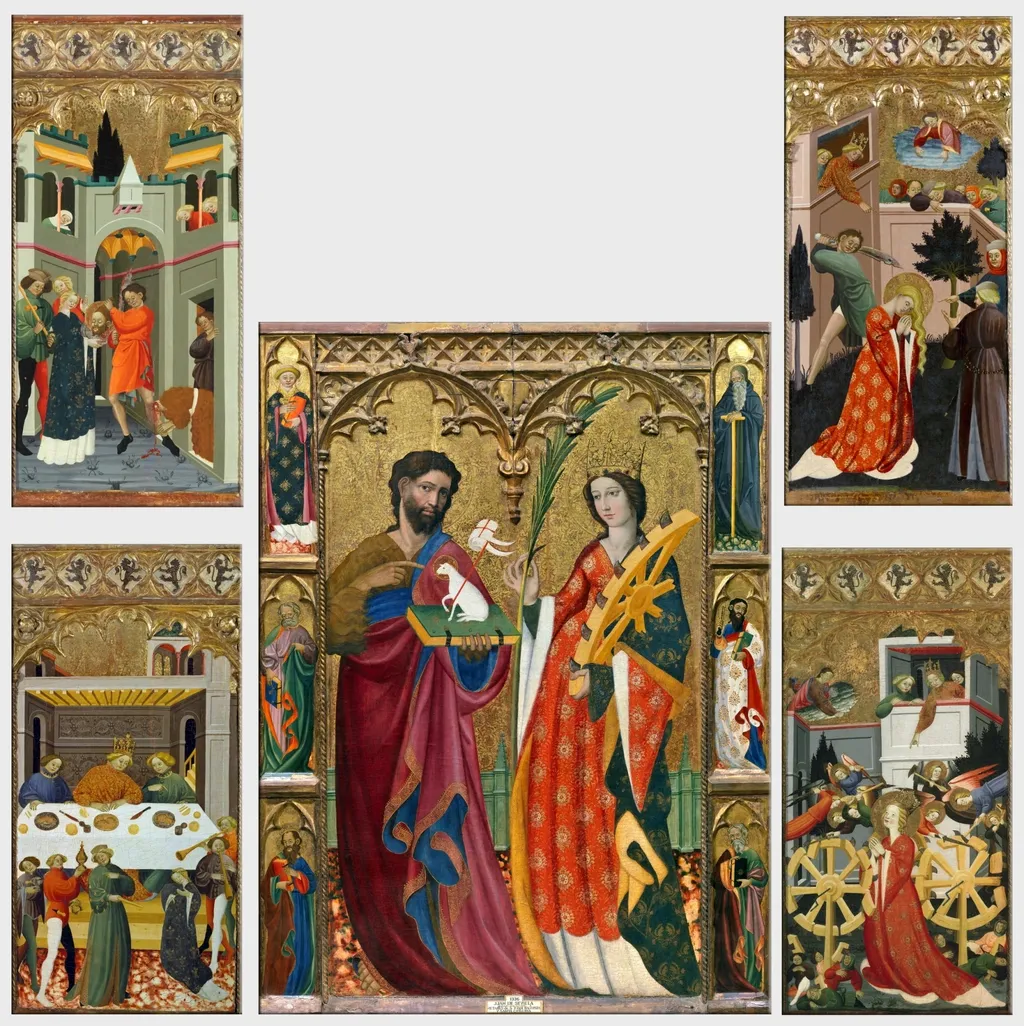
Saint John the Baptist and Saint Catherine Altar Piece is an unspecified painting by the Early Renaissance artist Juan de Sevilla. It dates from 1410 and is held in the collection of the Museo del Prado.
About this work
Subject & Meaning
The altarpiece by Juan de Sevilla is a religious work centered on the figures of John the Baptist and Catherine of Alexandria.
The altarpiece by Juan de Sevilla is a religious work centered on the figures of John the Baptist and Catherine of Alexandria. The composition includes additional saints such as Bartholomew the Apostle, Lawrence of Rome, and Anthony the Great. Visual symbolism is conveyed through specific attributes associated with each figure: Catherine is identified by a crown and a cogwheel, referencing her martyrdom, while John the Baptist is depicted alongside a book.
The narrative scope extends to include scenes involving Salome and Herod Antipas. These elements collectively establish the work's function as a devotional object within the religious art tradition, utilizing standard hagiographic iconography to represent the virtues and martyrdoms of the depicted saints.
History & Provenance
The altarpiece titled Saint John the Baptist and Saint Catherine was painted by Juan de Sevilla around 1410, as recorded in contemporary documentation. Its original purpose appears to have been an altar piece, though the specific patron who commissioned it is not identified in the surviving records. Following its creation, the work entered the collection of the Museo del Prado, where it has been preserved and displayed as part of the museum’s religious art holdings.
The painting measures 161 cm by 155 cm and depicts a group of saints including John the Baptist, Catherine of Alexandria, Bartholomew, Lawrence, Anthony the Great, Salome, Herod Antipas, alongside symbolic attributes such as a book, crown, and cogwheel. Its provenance is traced through the museum’s acquisition records to its current location.
The altarpiece known as Saint John the Baptist and Saint Catherine is currently held in the collection of the Museo del Prado in Madrid. While specific inventory or accession numbers are not detailed in the available records, the institution is confirmed as the work's location. The provided sources do not contain information regarding the painting's exhibition history, such as specific shows, dates, or venues where it has been displayed publicly.
Consequently, while the current custodial home is established, a record of its loan history or participation in temporary exhibitions cannot be constructed from the existing data.
Context
The altarpiece attributed to Juan de Sevilla and dated 1410 represents an early example of Iberian religious painting and is housed in the Museo del Prado, where its presence facilitates study of 15th‑century Spanish art. The work depicts Saint John the Baptist, Saint Catherine, and a suite of other saints including Bartholomew, Lawrence, Anthony, Salome, Herod Antipas, and others, illustrating the complex iconography typical of the period. Its dimensions of 161 × 155 cm and inclusion in the Prado’s collection underscore its relevance for understanding the evolution of devotional imagery in medieval Spain.
Overview
This altarpiece, painted by Juan de Sevilla in 1410, presents a complex religious narrative across multiple panels. Titled Saint John the Baptist and Saint Catherine Altar Piece, it is a significant example of early 15th-century Spanish devotional art. The work is currently housed in the collection of the Museo del Prado, where it offers insight into the artistic practices and spiritual concerns of its period.
Technique & Style
Juan de Sevilla's painting employs a multi-scene composition within a single frame, characteristic of altarpieces designed for public devotion. The central figures are rendered with an emphasis on their importance, dressed in opulent red and gold garments. The artist incorporated intricate details, visible in the small figures below the saints and the decorative gold borders.
This meticulous approach, combined with the use of bright colors and crowded scenes, creates a visually rich and ornate aesthetic.
Own this work as a print
Artist & collection

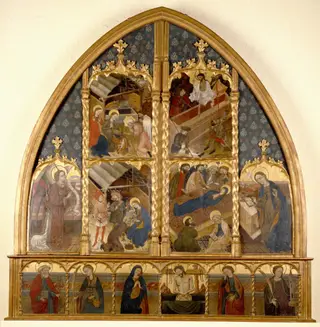 Nativity, Annunciatory Angel, Adoration of the Magi, Resurrection, Death of the Virgin, The Annunciate, Saints Peter and Lucy, Virgin Mary, Resurrected Christ, Saints John and Barbara
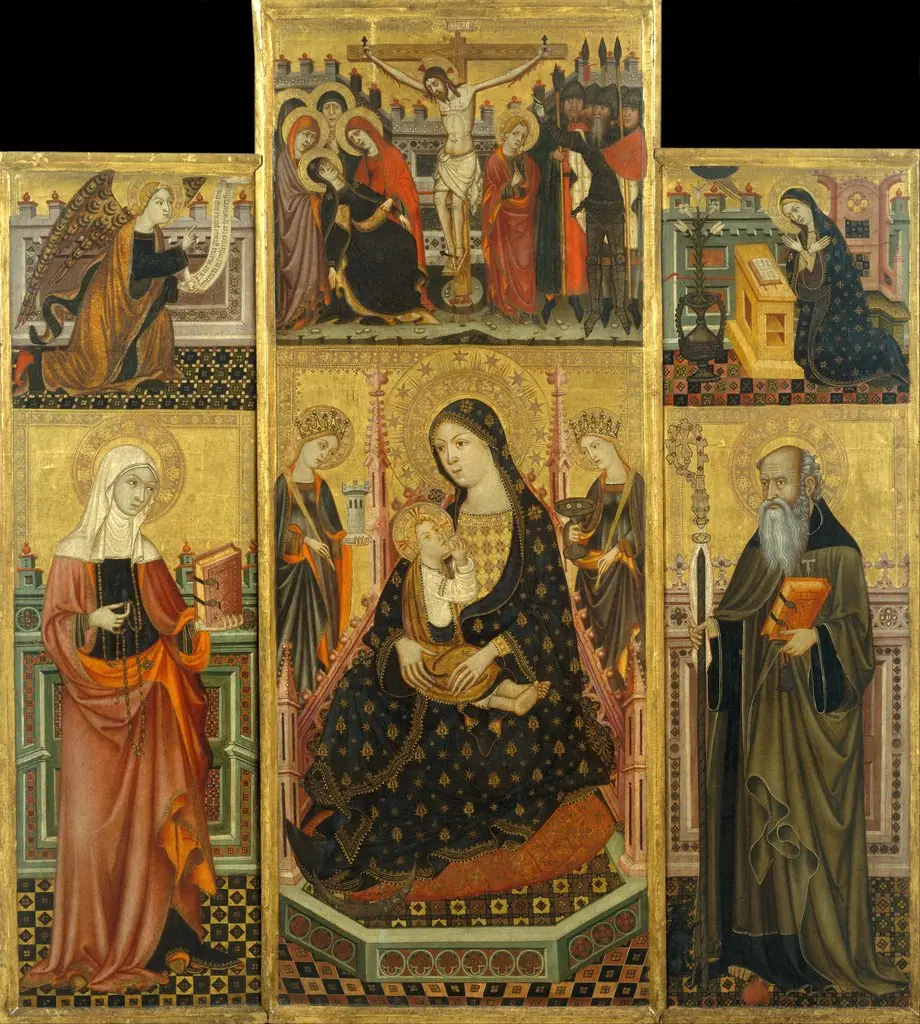 Altarpiece of the Virgin Suckling the Child, Saint Clare and Saint Anthony the Abbott
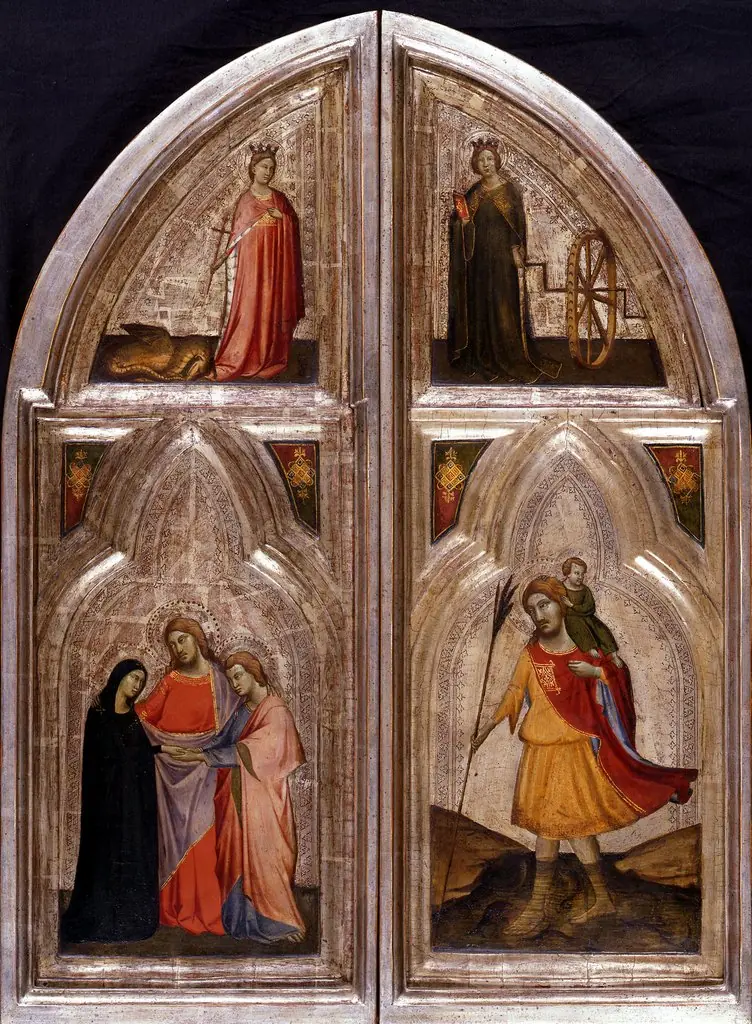 Exterior of the wings of the triptych
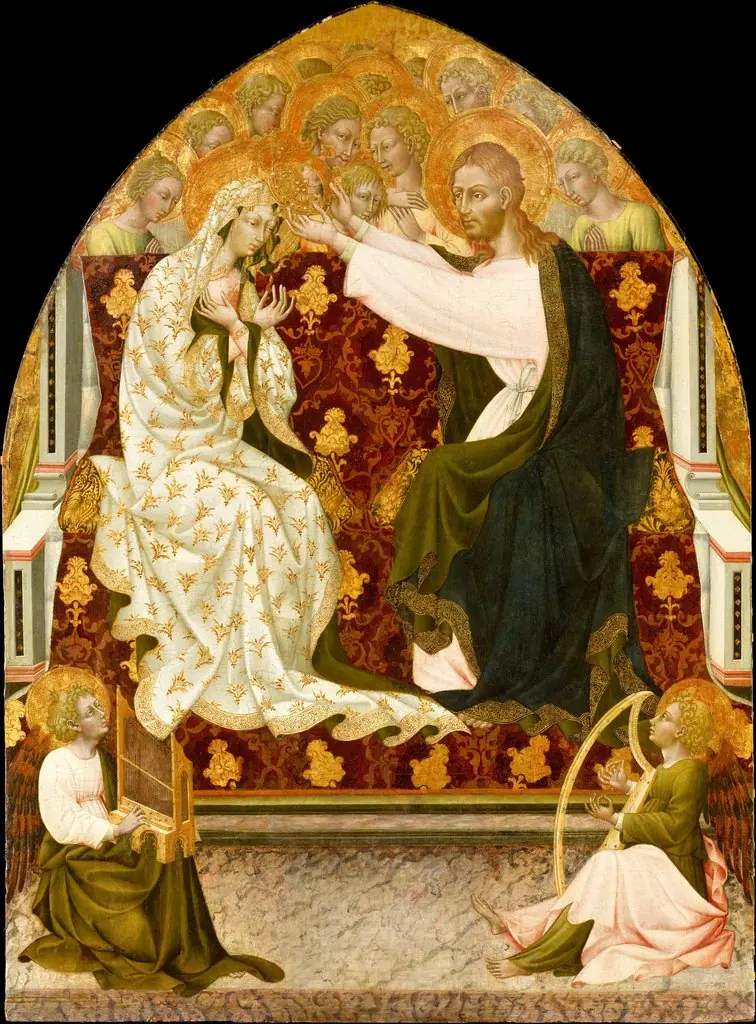 Coronation of the Virgin
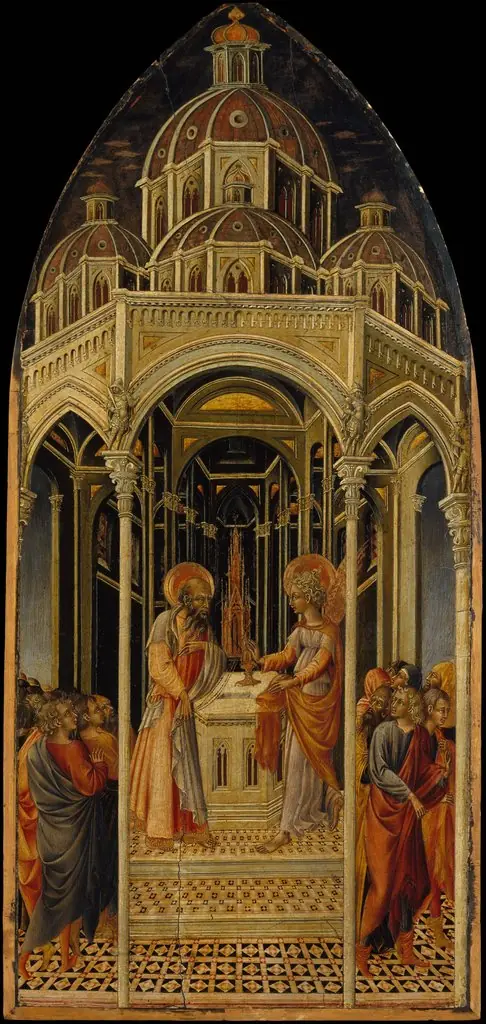 The Annunciation to Zacharias; (verso) The Angel of the Annunciation
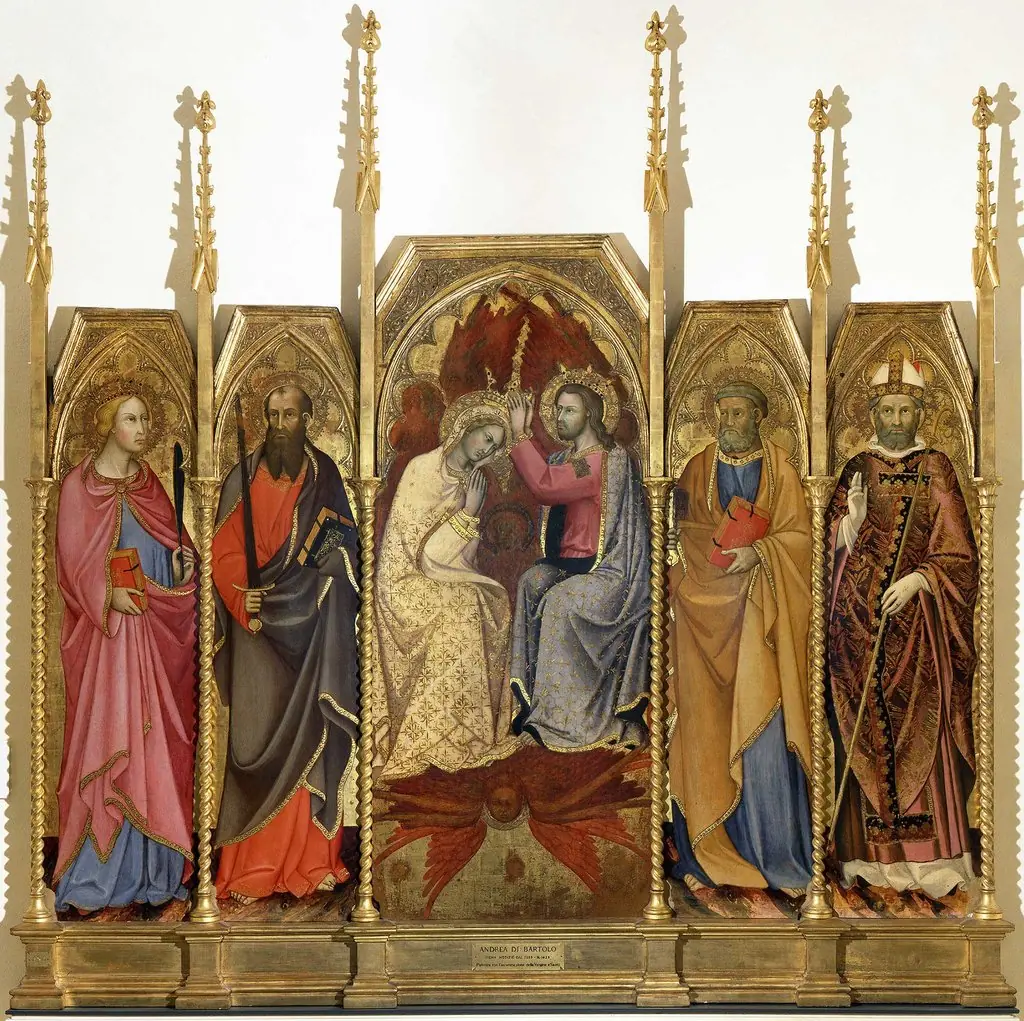 Coronation of the Virgin
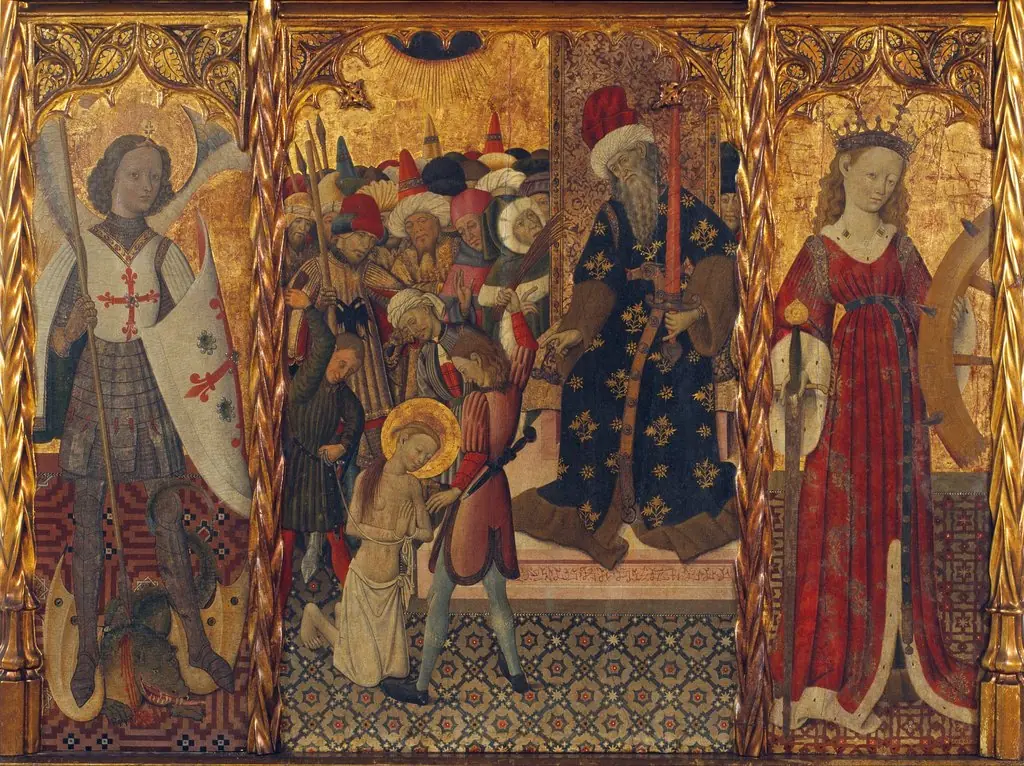 Saint Michael, Martyrdom of Saint Eulalia and Saint Catherine
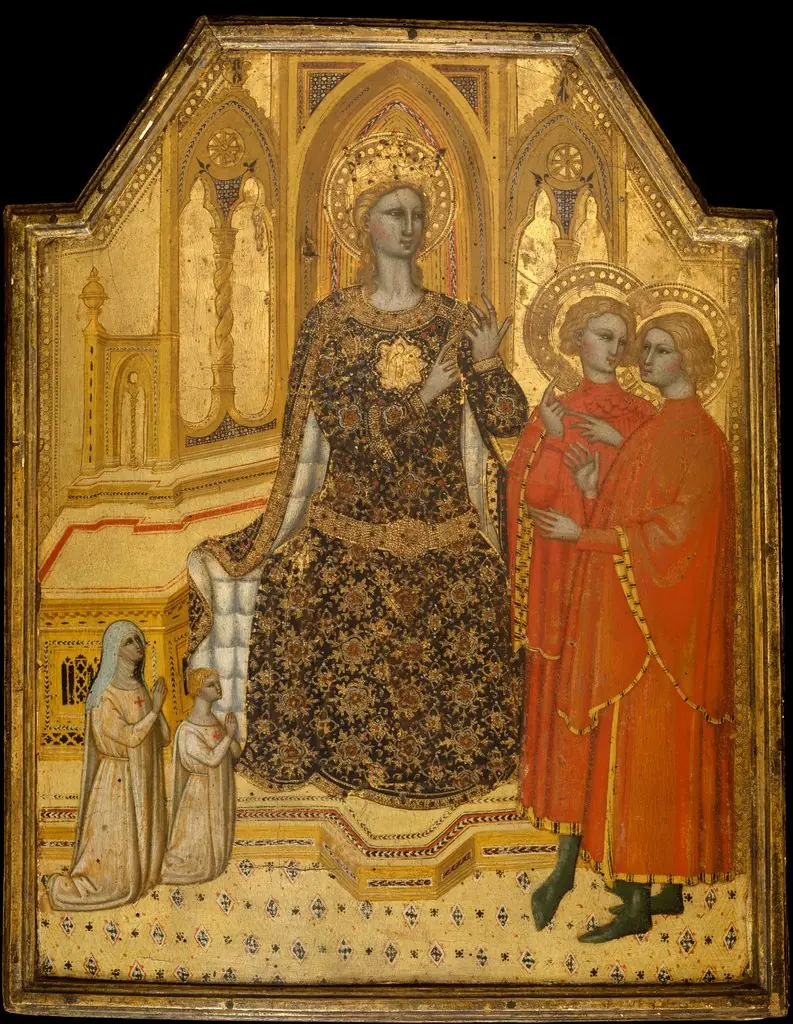 Saint Catherine Disputing and Two Donors
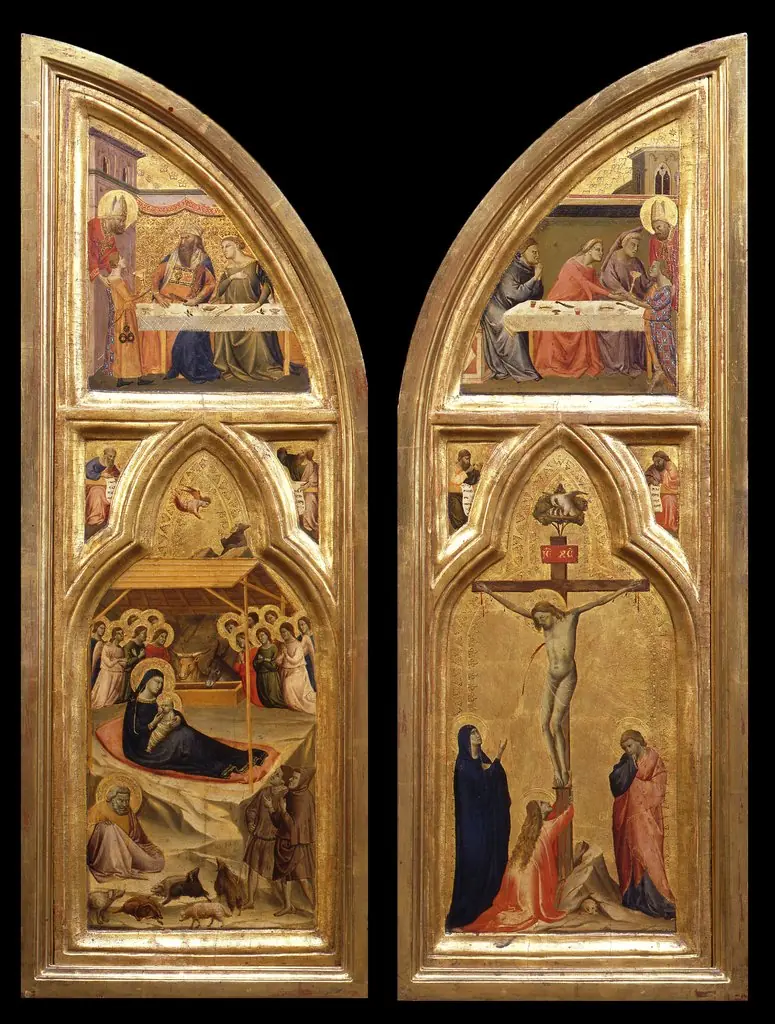 Interior view of wings of the triptych