Artwork
Coronation of the Virgin
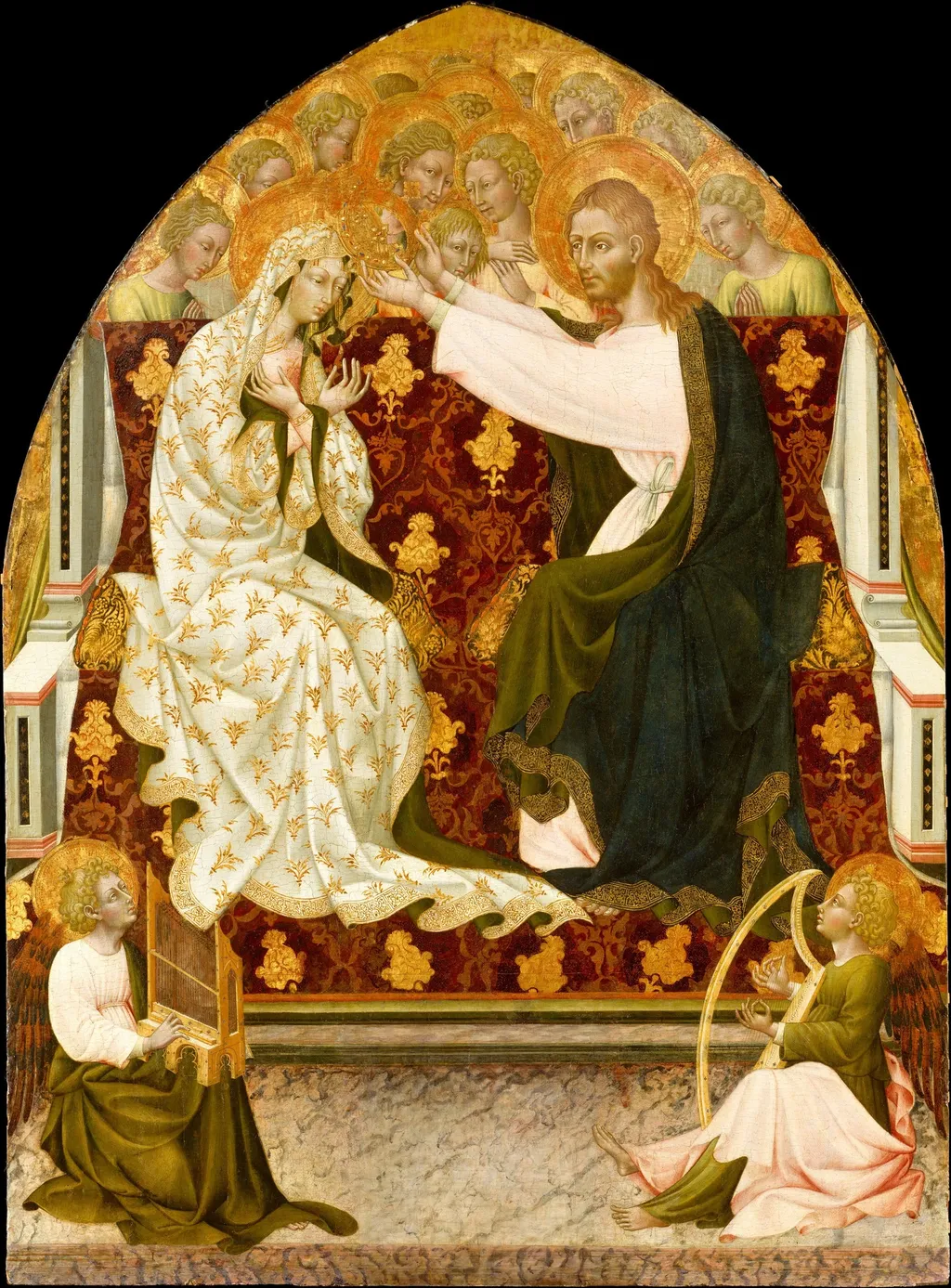
Coronation of the Virgin is a tempera painting by the Early Renaissance artist Giovanni di Paolo. It dates from 1455 and is held in the collection of the Metropolitan Museum of Art.
About this work
Subject & Meaning
The imagery serves as a visual testament to her unique role in salvation history, emphasizing themes of purity, redemption, and celestial honor.
Giovanni di Paolo's 1455 tempera panel depicts the Coronation of the Virgin, a central religious ceremony in Christian tradition. The composition features the Virgin Mary being crowned by Christ, accompanied by angels, illustrating her elevation to heaven and queenship. As a work of religious art, the scene symbolizes the culmination of Mary's earthly life and her assumption into divine glory.
The imagery serves as a visual testament to her unique role in salvation history, emphasizing themes of purity, redemption, and celestial honor.
Technique & Style
Executed in 1455 by Giovanni di Paolo, this religious work is a tempera painting applied to a wooden panel. The composition depicts the ceremonial coronation of the Virgin Mary by Christ, surrounded by angels. Physically, the artwork measures 179.4 centimeters in height and 131.4 centimeters in width.
The piece is currently held in the collection of the Metropolitan Museum of Art. The classification confirms its status as a panel painting utilizing traditional tempera techniques common to the mid-fifteenth century.
History & Provenance
The Coronation of the Virgin, painted by Giovanni di Paolo in 1455, is a tempera work on panel measuring 179.4 × 131.4 cm. Its creation is documented only by the date and medium, with no surviving record of a specific commission. The painting entered the art market through several collectors, Stefano Bardini, Alphonse Kann, Philip Lehman, Robert Lehman, and Pauline Lehman-Ickelheimer, before being acquired by the Metropolitan Museum of Art, where it remains on public view.
Overview
Giovanni di Paolo's Coronation of the Virgin, completed in 1455, is a tempera painting that captures a significant moment in Christian theology. This religious work depicts Christ bestowing a crown upon the Virgin Mary, an event symbolizing her exalted status in heaven. The composition is a vibrant and crowded celestial scene, characteristic of the artist's style, and is now part of the collection at The Metropolitan Museum of Art.
Own this work as a print
Artist & collection

Artist
Giovanni di Paolo di Grazia was an Italian painter, working primarily in Siena, becoming a prolific painter and illustrator of manuscripts, including Dante's texts.

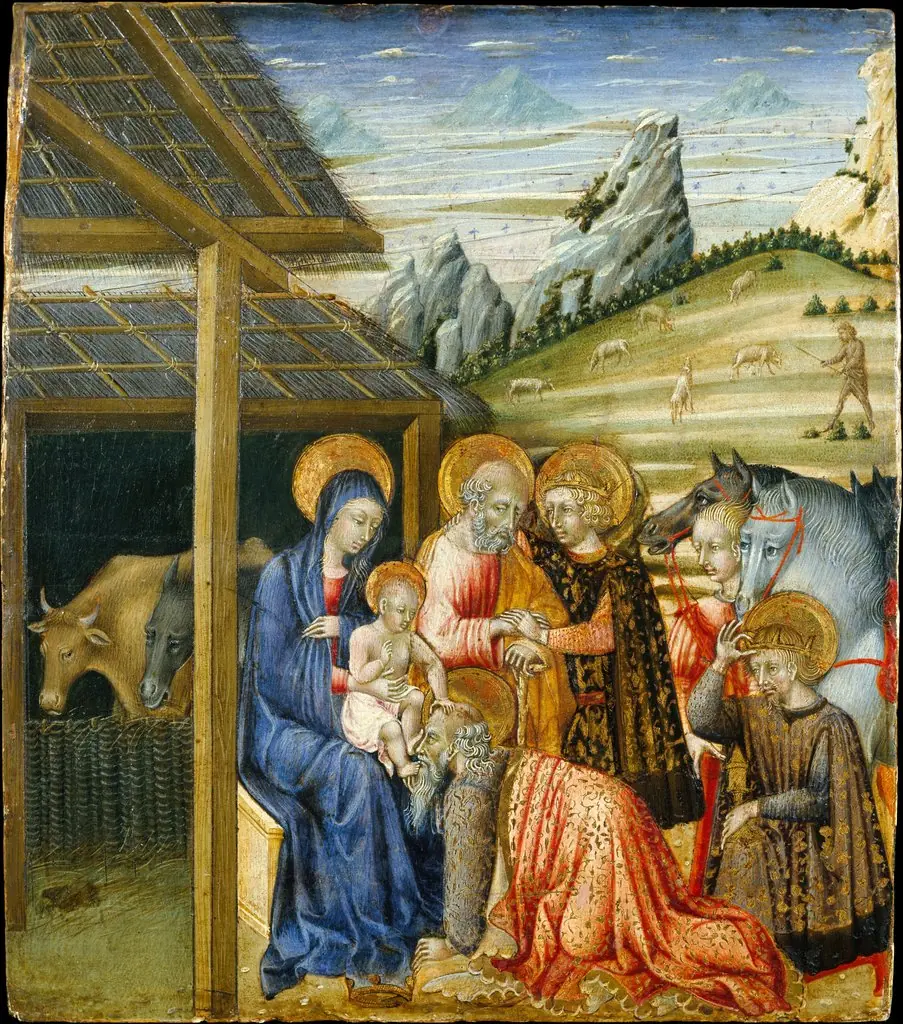 The Adoration of the Magi
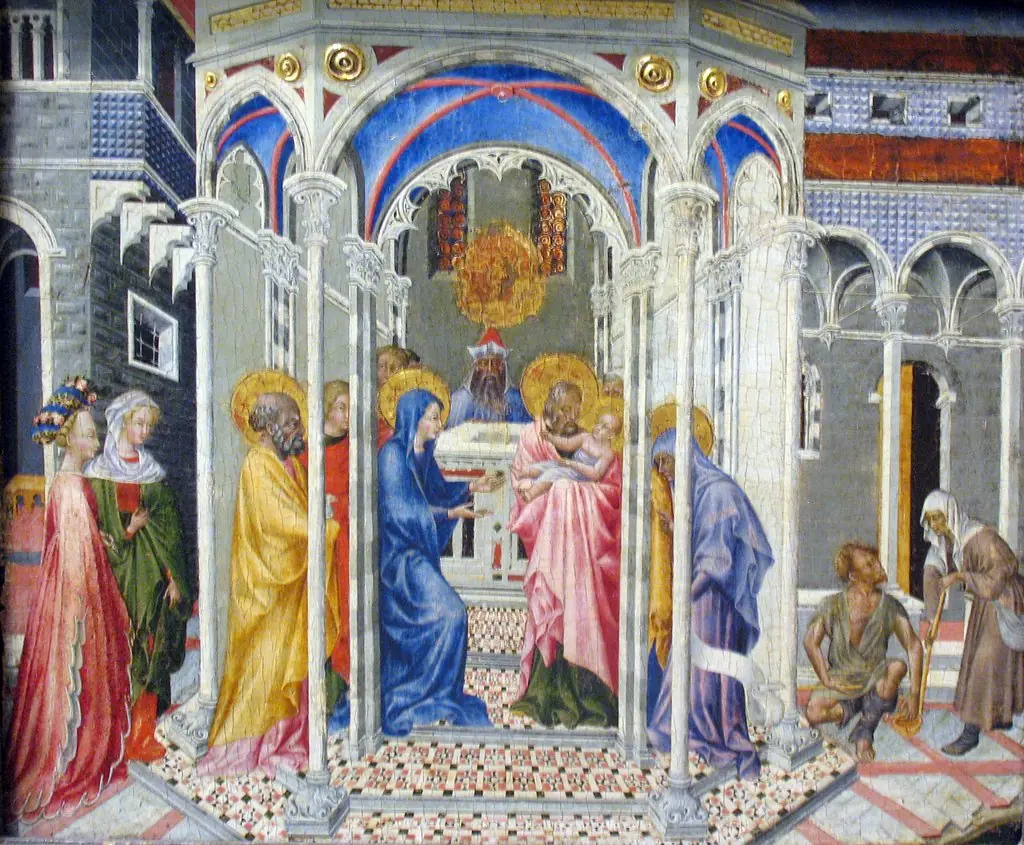 The Presentation of Christ in the Temple
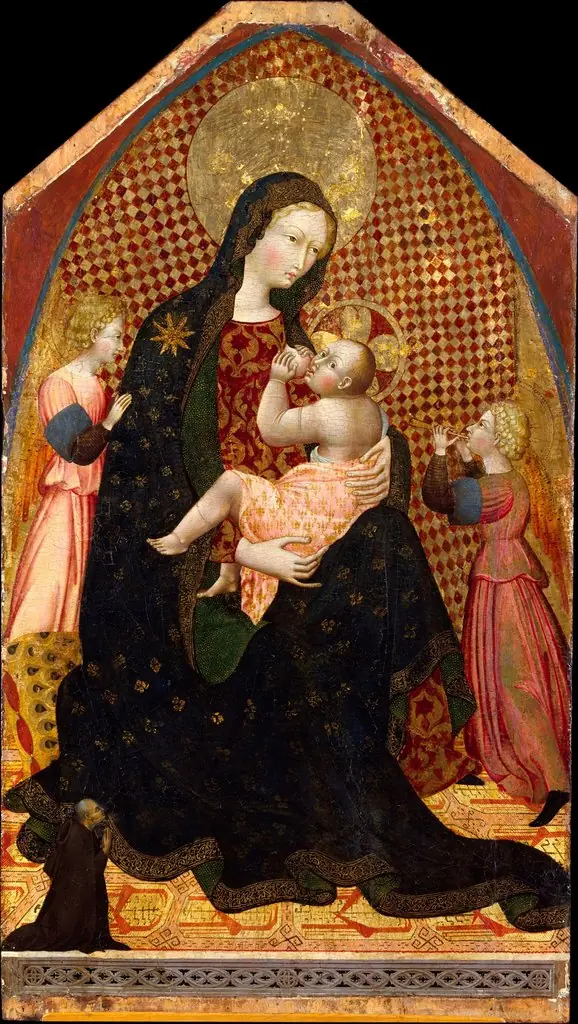 Madonna and Child with Two Angels and a Donor
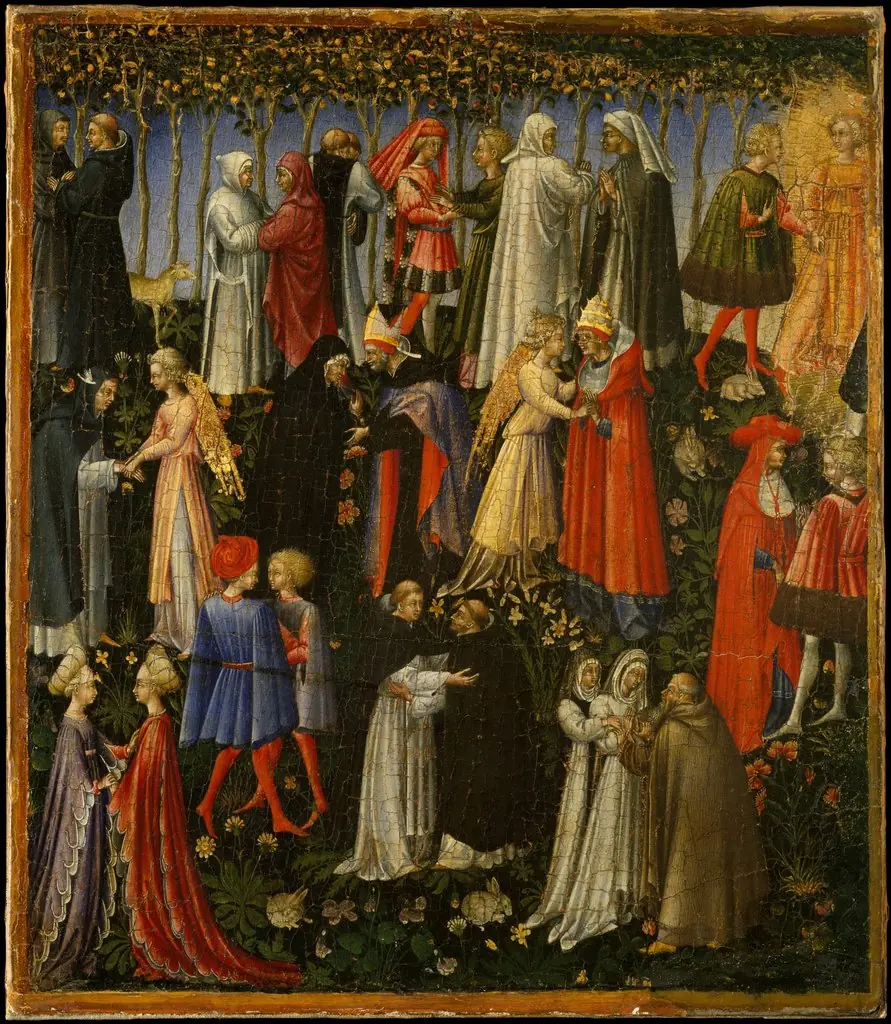 Paradise
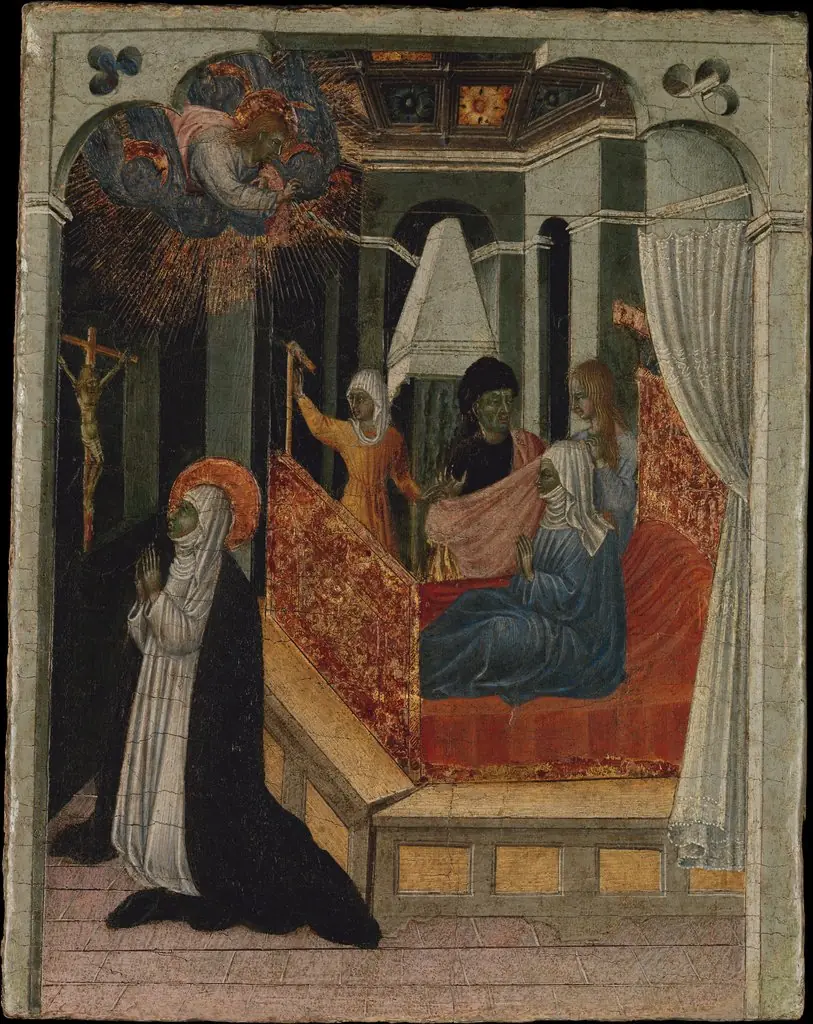 Saint Catherine of Siena Beseeching Christ to Resuscitate Her Mother
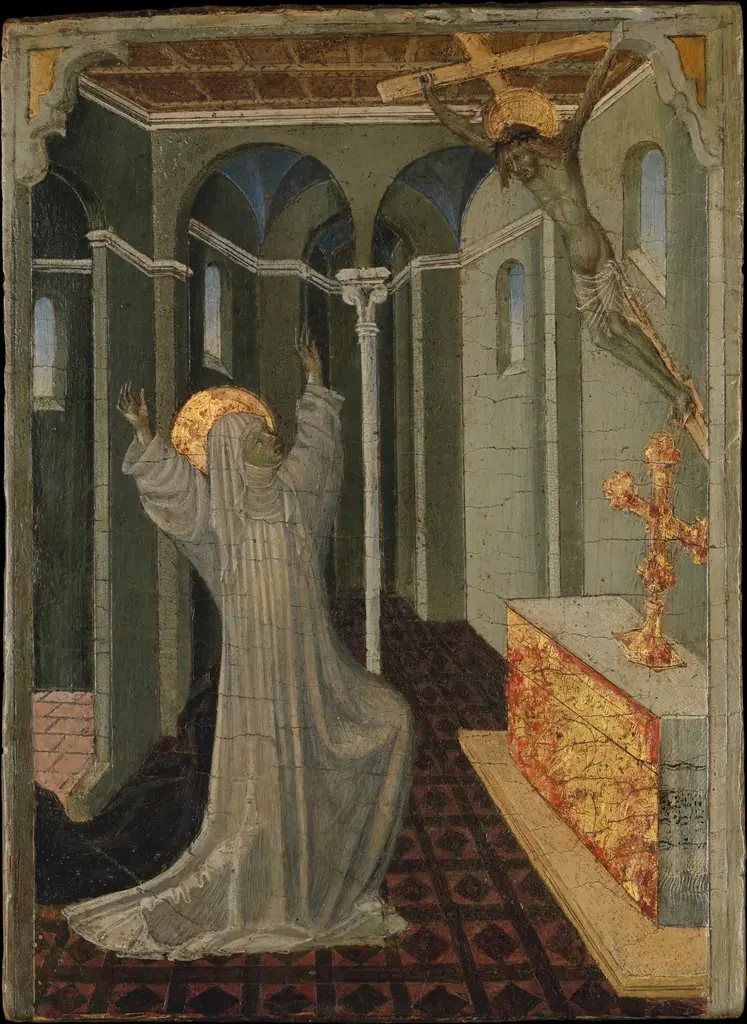 Saint Catherine of Siena Receiving the Stigmata
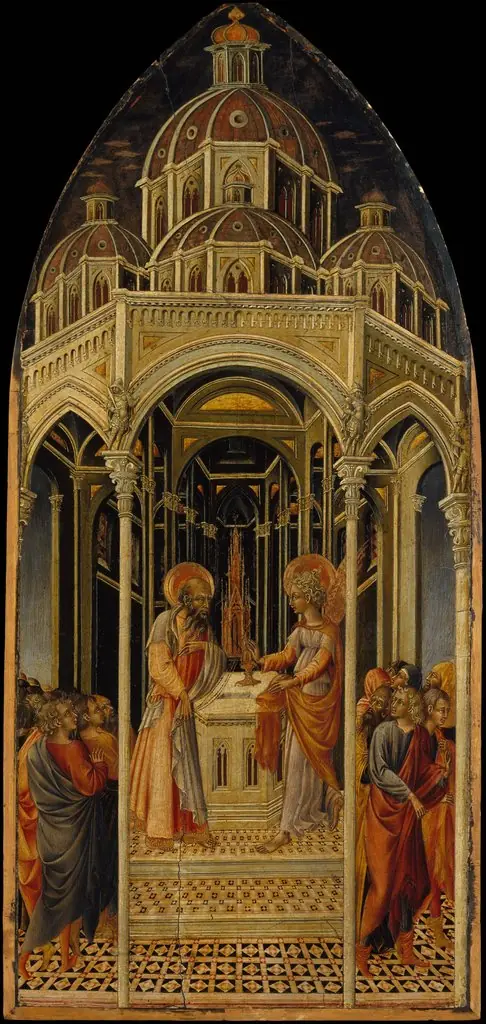 The Annunciation to Zacharias; (verso) The Angel of the Annunciation
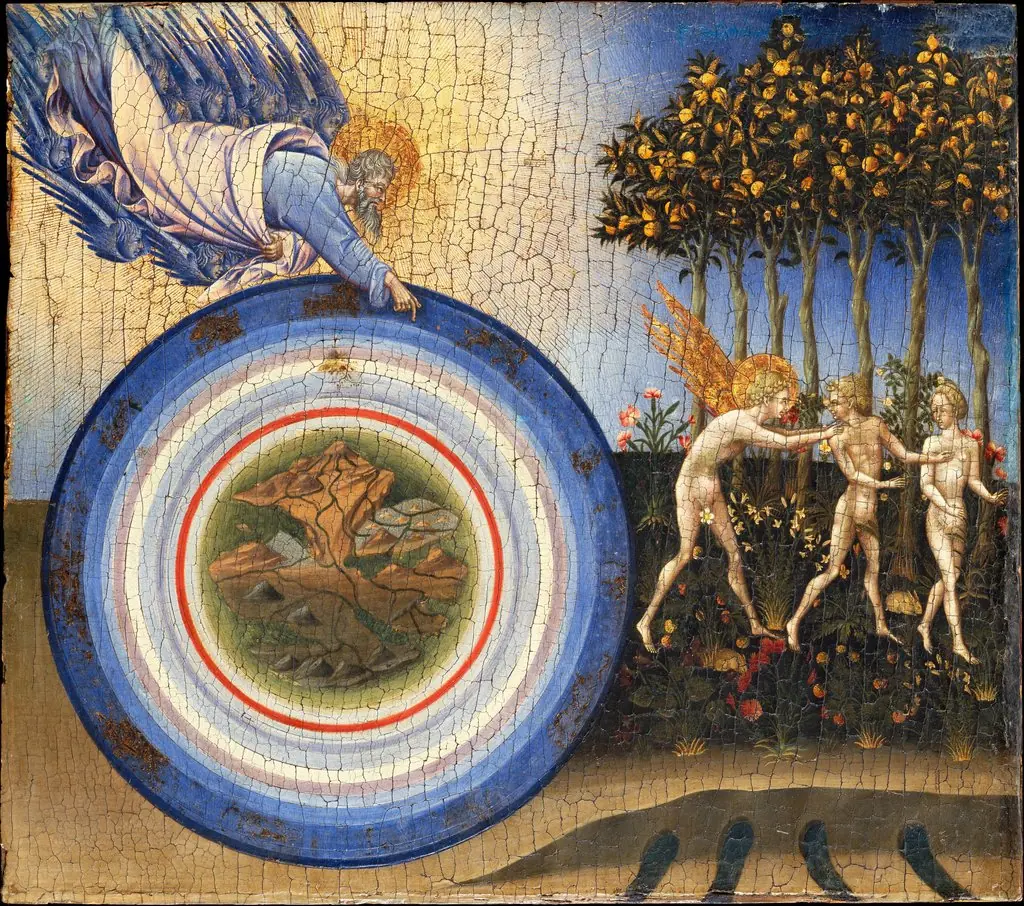 The Creation of the World and the Expulsion from Paradise
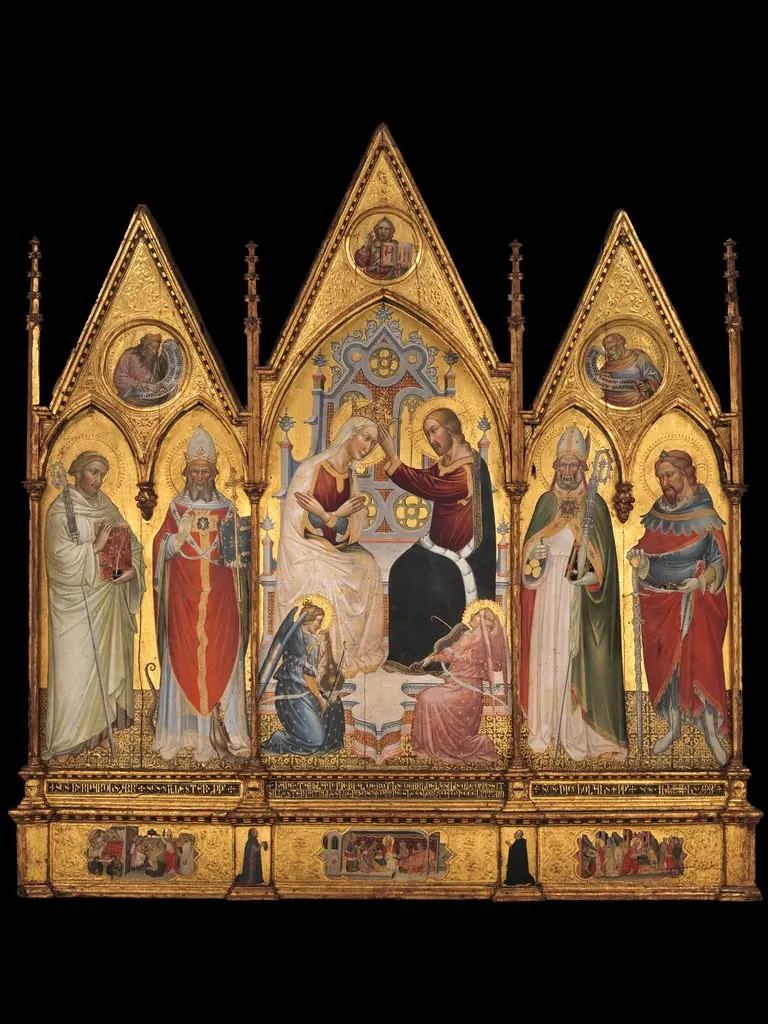 The Coronation of the Virgin, and Saints
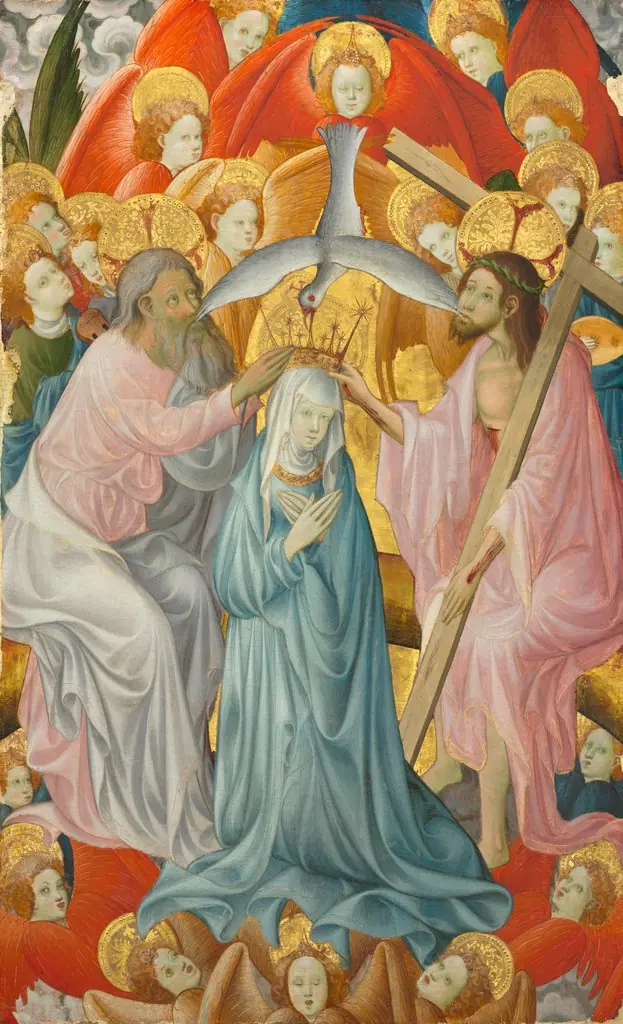 The Coronation of the Virgin with the Trinity
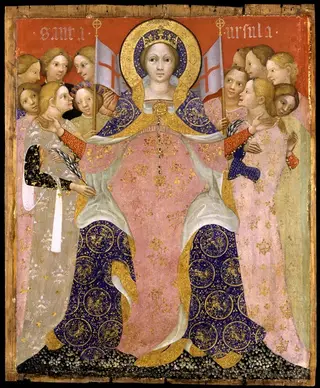 St Ursula
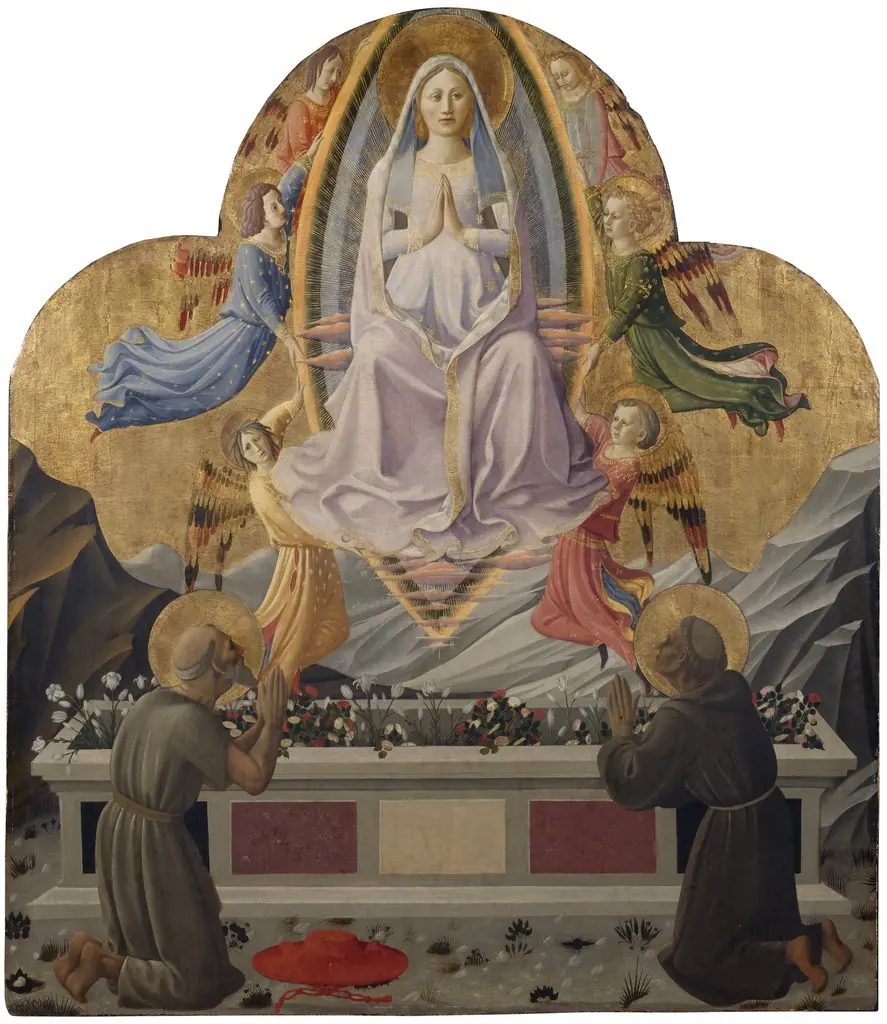 The Assumption of the Virgin with Saints Jerome and Francis
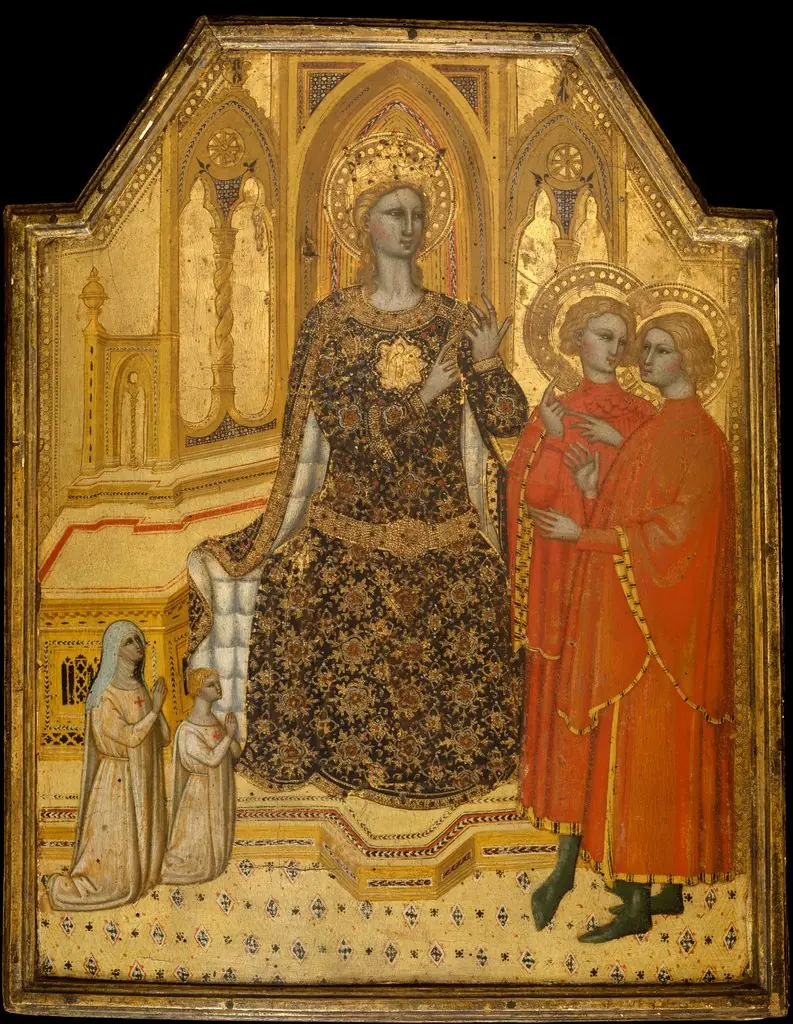 Saint Catherine Disputing and Two Donors
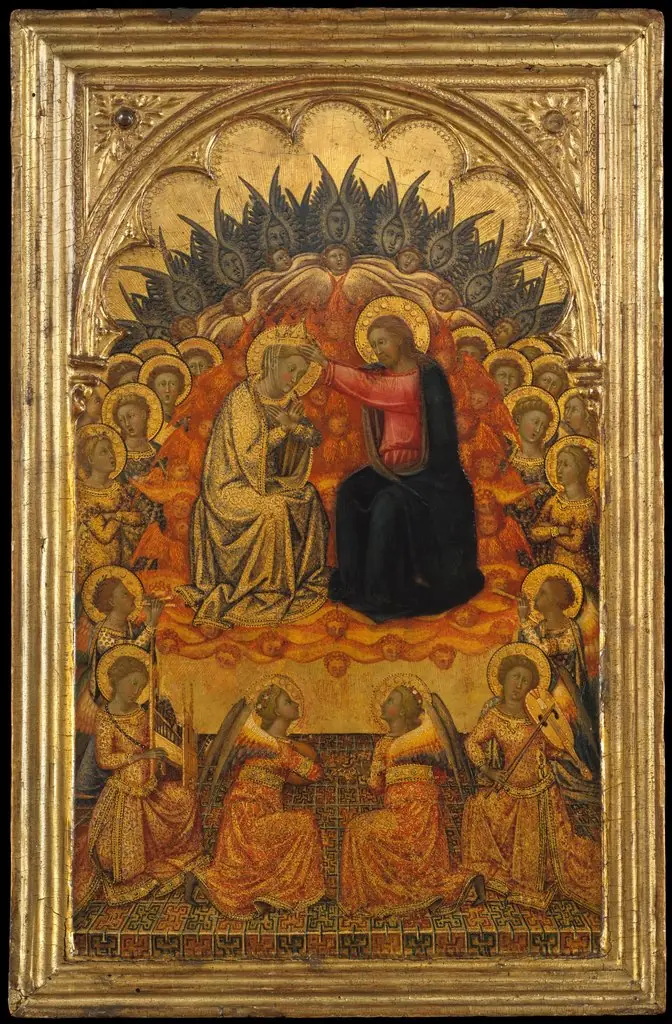 Engaged cassetta frame on a polyptych panel
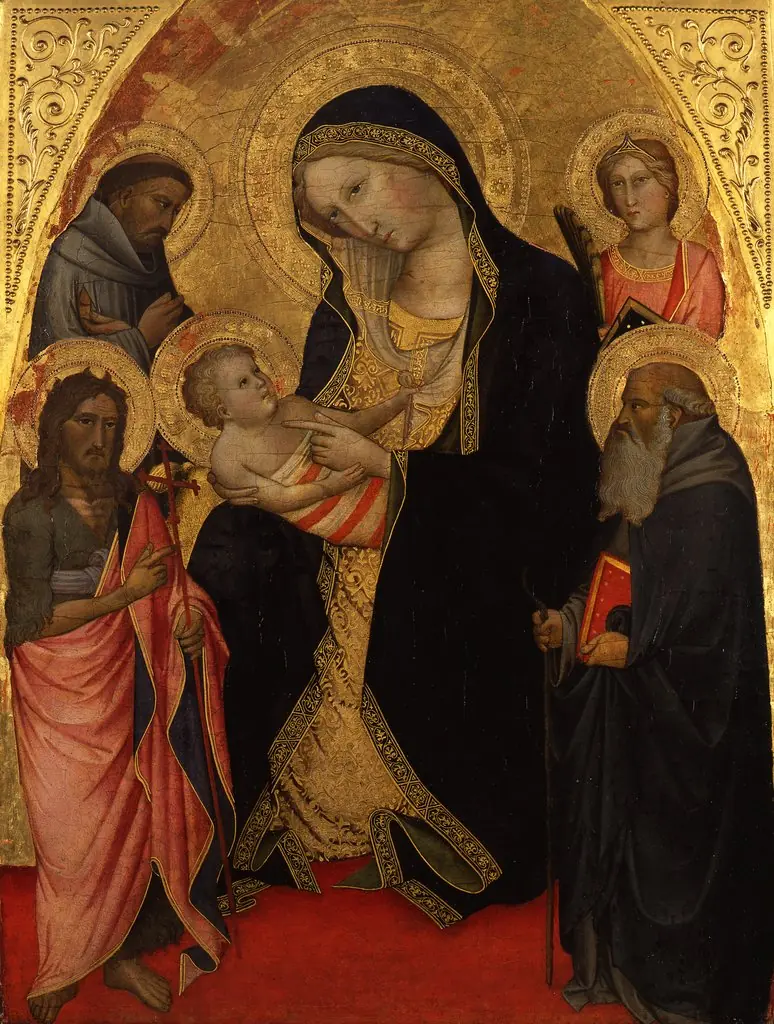 Madonna with the child, St. John the Baptist, St. Francis and St. Anthony and a martyr
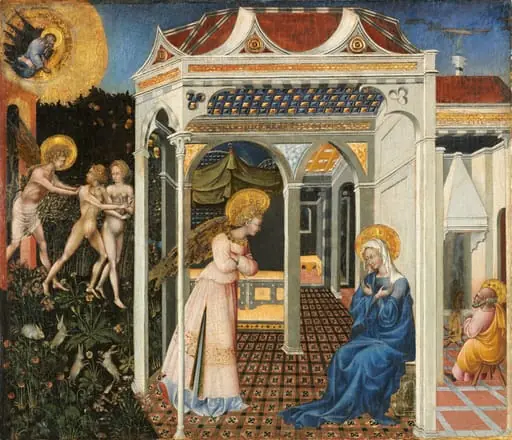 The Annunciation and Expulsion from Paradise