Artwork
Study after Nature
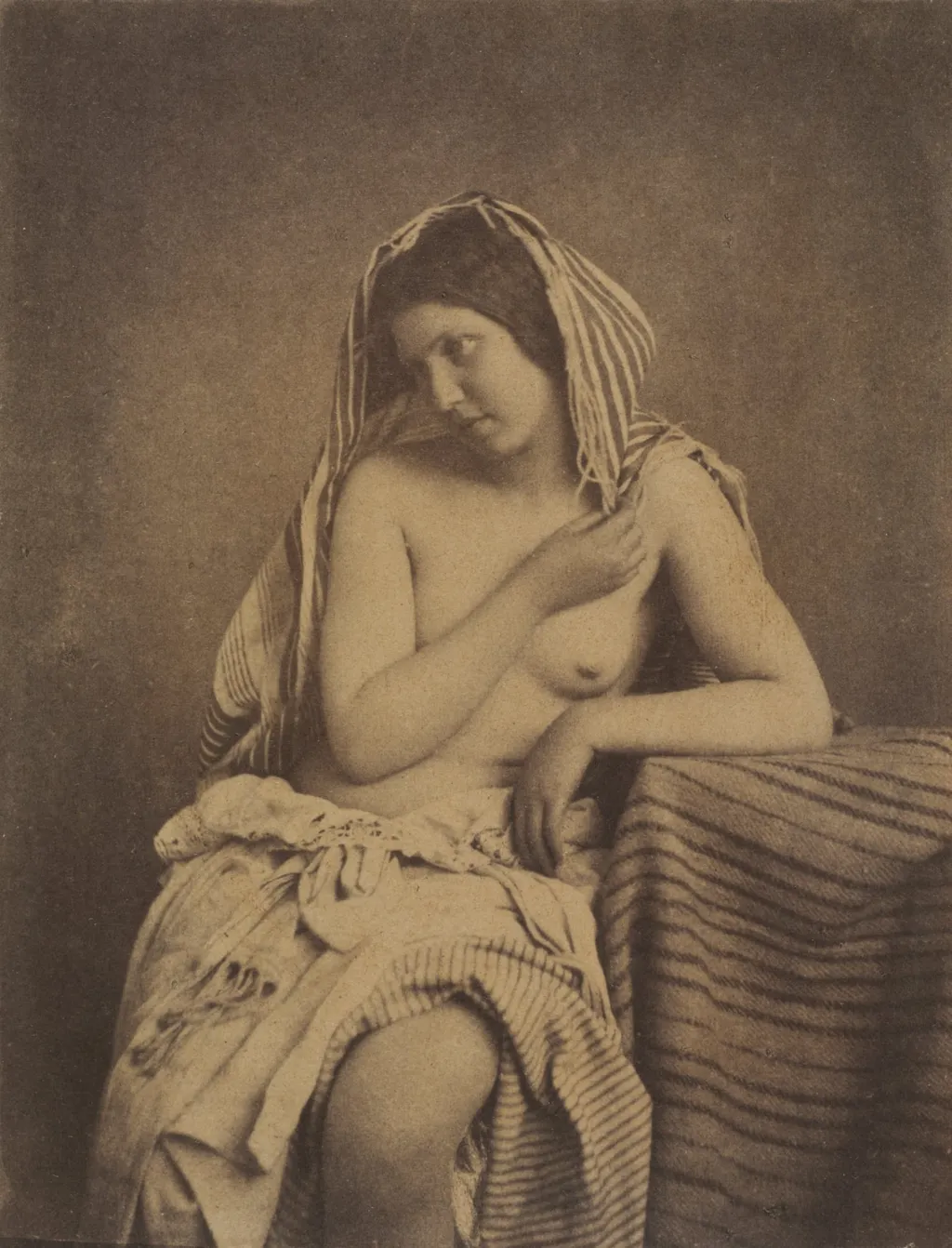
Study after Nature is a photography by the Romanticist artist Julien Vallou de Villeneuve. It dates from 1854 and is held in the collection of the Cleveland Museum of Art.
- Accession no.
- 1993.163
- Credit line
- Dudley P. Allen Fund
About this work
This painting is actually a copy of a photograph, one of the first times an artist used a photo as a reference.
You see a woman standing in soft light, her back turned, one arm resting on a draped table.
This painting is actually a copy of a photograph, one of the first times an artist used a photo as a reference. In the 1850s, photos of nudes were sold as "studies for artists," even though critics called them scandalous. The artist made these to help painters like Gustave Courbet find new poses.
Look up the subject france, 19th century to see how photography changed art.
Overview
In the early 1850s, despite protests from moralists, photographs of nudes (known as académies) were discreetly produced under the guise of "artist's studies." Among those most skilled at making such studies was Julien Vallou de Villeneuve. A successful painter and lithographer during the 1820s and 1830s before turning to photography in the early 1840s, he created a new repertoire of poses for artists to use as compositional aids. Among his clients was the French realist painter Gustave Courbet (1819–1877).
Artist & collection
Artist
Julien Vallou de Villeneuve (1795–1866) was a French artist, born in Boissy-Saint-Léger.