Artwork
Sanjo Kantaro II in the Role of Urashima Taro
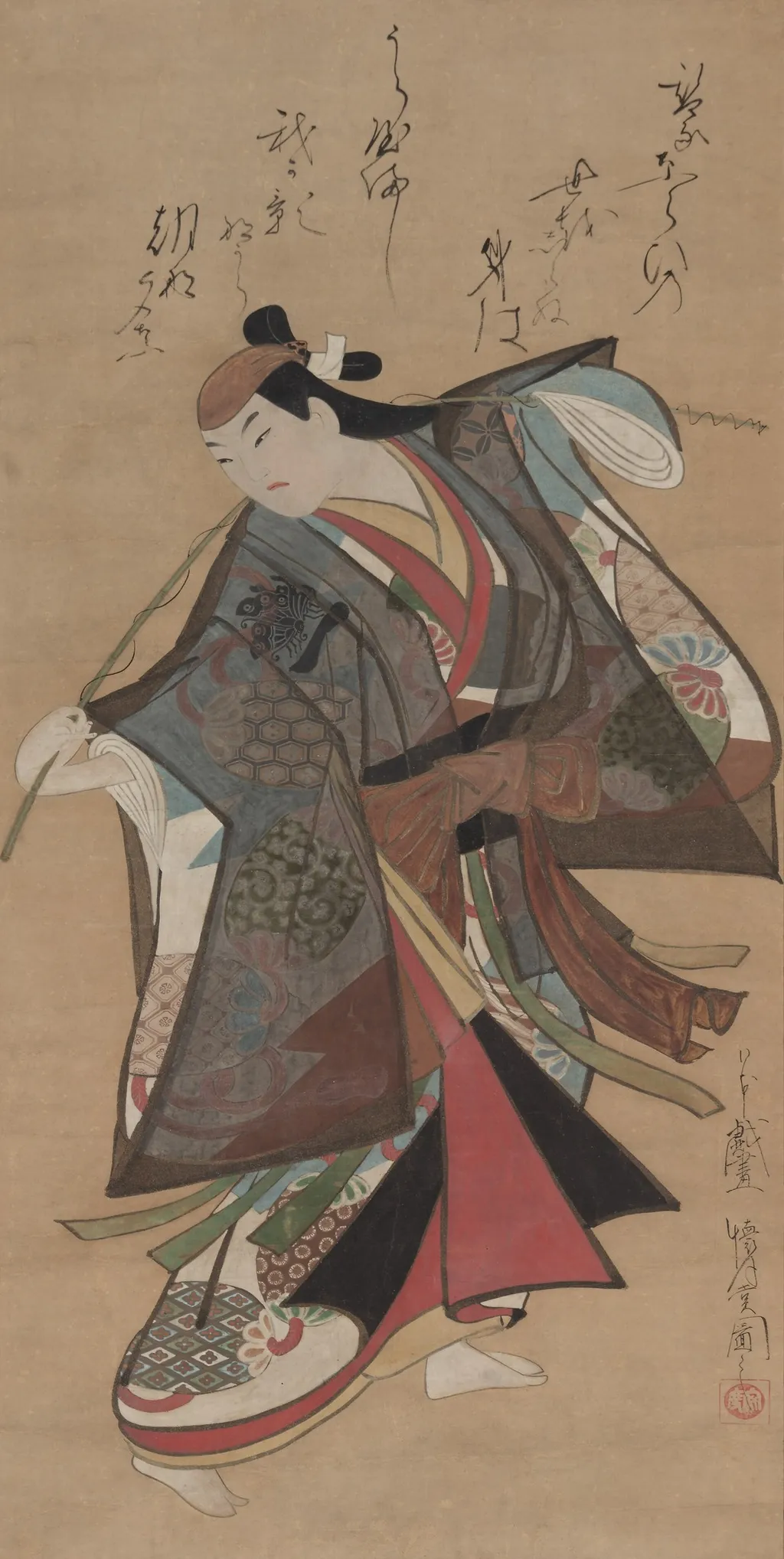
Sanjo Kantaro II in the Role of Urashima Taro is an unspecified painting by the Ukiyo-e artist Kaigetsudō Ando. It dates from 1710 and is held in the collection of the Cleveland Museum of Art.
About this work
Subject & Meaning
Urashima Taro is a fisherman from Japanese folklore who rescues a turtle and is later granted an enchanted bag that, when opened, releases the passage of time.
Urashima Taro is a fisherman from Japanese folklore who rescues a turtle and is later granted an enchanted bag that, when opened, releases the passage of time. In this depiction, Sanjo Kantaro II embodies the hero at the moment he opens the bag, symbolizing the irreversible loss of youth and the bittersweet transition from worldly adventure to inevitable aging. The work functions as a visual allegory for the tension between desire and resignation, a theme often explored in Edo-period narrative paintings.
History & Provenance
The painting Sanjo Kantaro II in the Role of Urashima Taro was created in 1710 by Kaigetsudō Ando, as indicated by the artist’s inscription on the work.
It entered the Cleveland Museum of Art in 1961 as accession number 1961.41, where it remains in the institution’s holdings. The work’s creation aligns with the early Edo-period ukiyo-e tradition, depicting a kabuki actor in a specific role, and reflects the artist’s mature style during this period.
Legacy
Sanjo Kantaro II in the Role of Urashima Taro has been recognized as a significant example of early 18th-century ukiyo-e painting, influencing subsequent artists through its dynamic composition and narrative depth. The work remains part of the permanent collection at the Cleveland Museum of Art, where it is studied and exhibited as a representative piece of the period.
Its scholarly documentation contributes to ongoing research into Japanese woodblock traditions and their cross-cultural impact.
Overview
Created in 1710, this work is attributed to Kaigetsudō Ando, the founder of the Kaigetsudō school within the ukiyo‑e tradition. Unlike many of his contemporaries, Ando focused on painted works rather than woodblock prints. The composition presents a theatrical figure dressed in a vivid costume, set against a muted, light‑brown backdrop that emphasizes the central figure.
Technique & Style
Executed in the delicate brushwork characteristic of early eighteenth‑century ukiyo‑e painting, the piece combines bold color blocks with fine patterning on the kimono. The actor’s calm expression and poised stance are rendered with subtle gradations, while the white fan in his right hand provides a focal point that balances the composition.
Artist & collection
Artist
Kaigetsudō Ando (壊月堂安度, c. 1671–1743), also known as Ando Yasunori, was a Japanese painter and the founder of the Kaigetsudō school of ukiyo-e art. Though influential and prolific, it is probable that many of the works…

 The Poetess Ono no Komachi
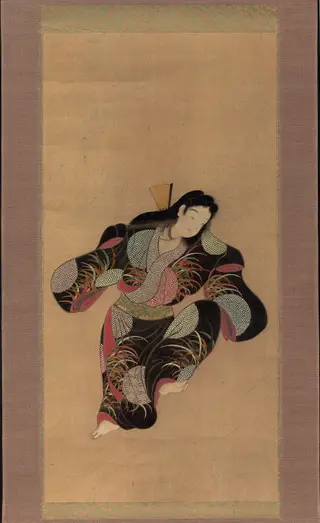 Female Dancer
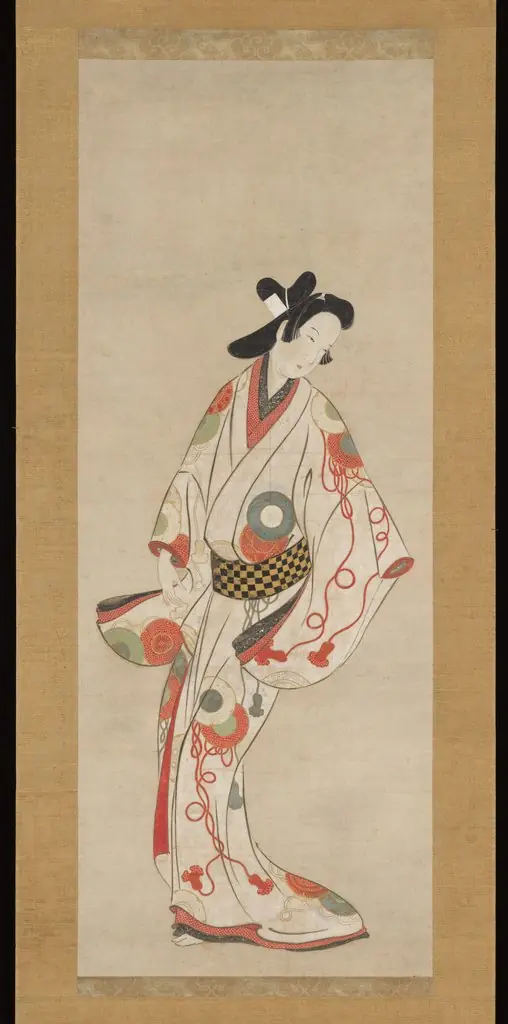 Elegantly Garbed Male Youth
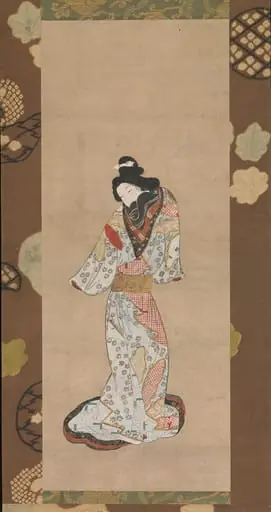 寛文美人図|Beauty of the Kanbun Era
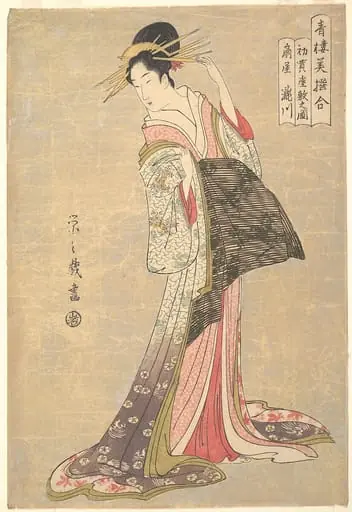 鳥文斎栄之画 「青楼美撰合 初売座敷之図 扇屋滝川」|Takigawa of the Ōgiya Brothel: The First Reception Room Appointment of the New Year (Hatsu-uri zashiki no zu: Ōgiya Takigawa), from the series A Comparison of Selected Beauties of the Pleasure Quarters (Seirō bisen awase)
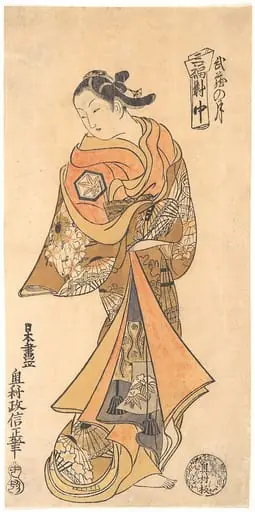 Sanpuku Tsui|Moon in Musashi Province
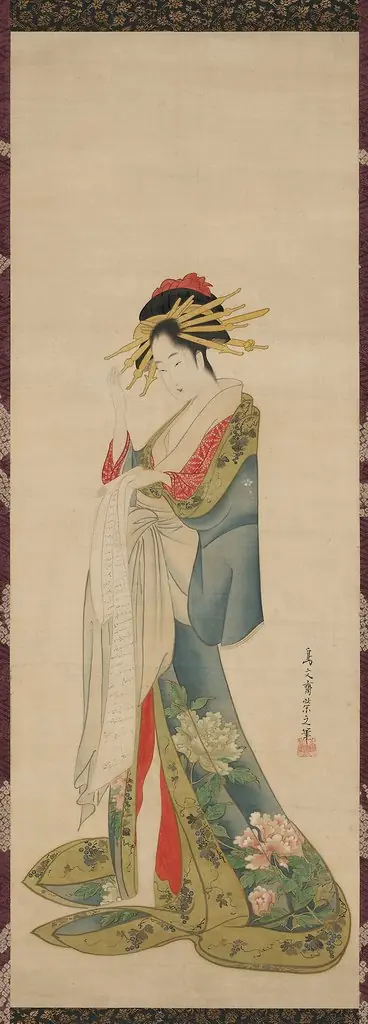 A Courtesan Reading a Letter
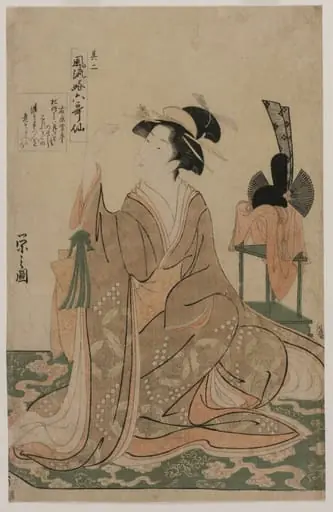 Young Woman Kneeling by a Stand with a Ceremonial Cap (from the series The Six Immortal Poets in Elegant Modern Dress)