Artwork
元禄歌仙貝合|Ashi Clam, from the series "Genroku Kasen Kai-awase"
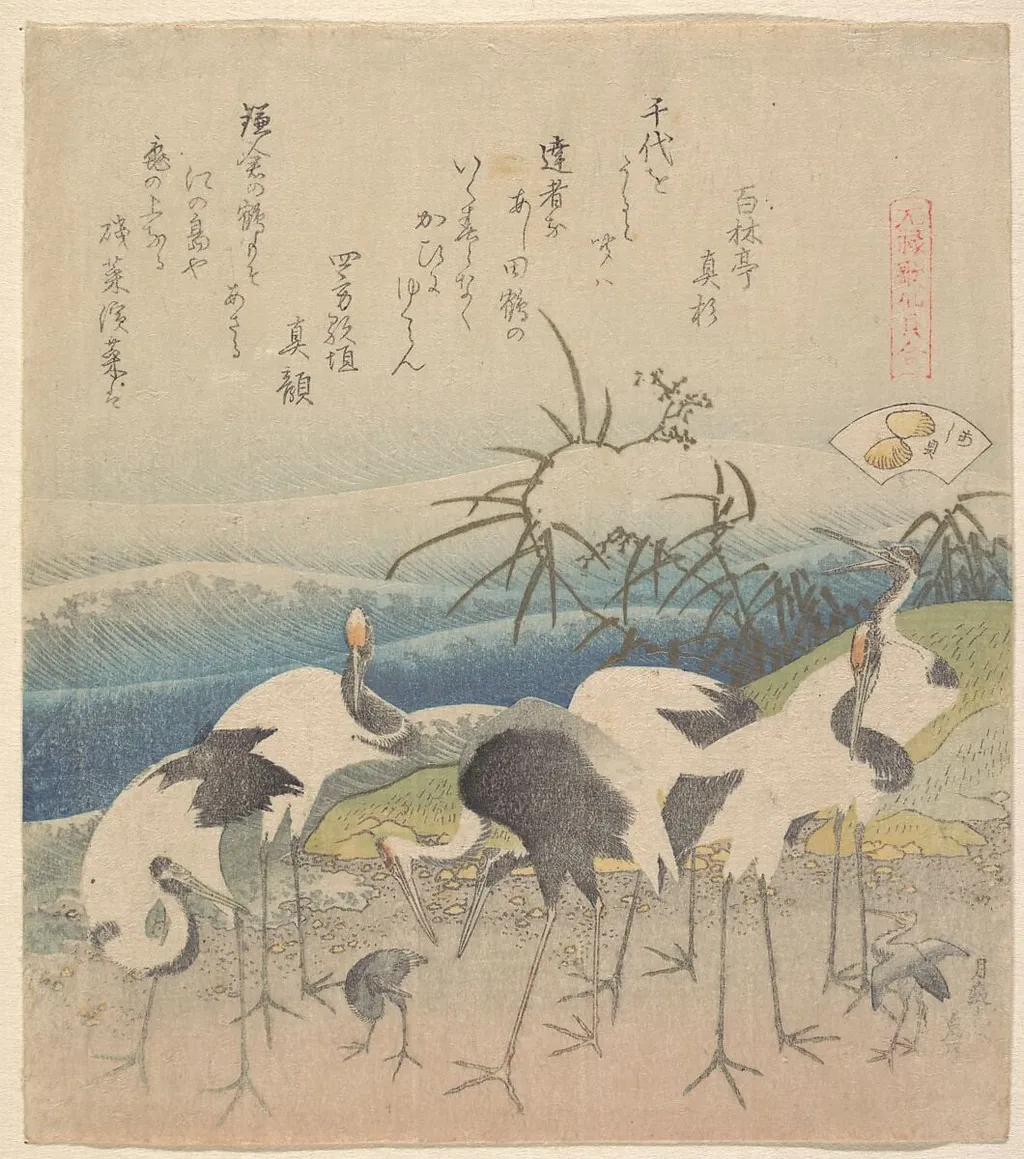
元禄歌仙貝合|Ashi Clam, from the series "Genroku Kasen Kai-awase" is an ink print by the Japonisme artist Katsushika Hokusai. It dates from 1821 and is held in the collection of the Metropolitan Museum of Art.
- Accession no.
- JP1873
- Credit line
- H. O. Havemeyer Collection, Bequest of Mrs. H. O. Havemeyer, 1929
About this work
Subject & Meaning
The work depicts a single ash clam shell, serving as the visual component of a shell-matching game paired with a crane.
The work depicts a single ash clam shell, serving as the visual component of a shell-matching game paired with a crane. This pairing references the traditional Japanese custom of kai-awase, where clam shells must be matched by their unique interior shapes, often accompanied by poetic allusions. In this specific iconography, the crab or crane motif frequently symbolizes longevity and good fortune, creating a thematic link between the marine object and the bird.
As a surimono print from 1821, the image functions as both a decorative arts object and a cultural artifact celebrating the Genroku era's poetic heritage through the lens of Edo-period pastimes.
Technique & Style
The print is a woodblock work executed in ink and color on paper, typical of ukiyo-e production. Hokusai carved the design onto a wooden block, printed it using multiple blocks to achieve layered pigments, and applied hand-coloring to enhance depth. The composition depicts a crane rendered in stylized line and flat washes, reflecting the formal conventions of Edo-period still-life imagery.
The work’s handling is conventional for nishiki-e, with careful registration to align color impressions, preserving the crisp outlines and vibrant tonal contrasts characteristic of the medium.
History & Provenance
Created in 1821, this woodblock print by Katsushika Hokusai depicts a crane and is part of the "Genroku Kasen Kai-awase" series, originally titled "元禄歌仙貝合|Ashi Clam". It was printed using ink and color on paper and classified as a still-life within the ukiyo-e tradition. The work entered the collection of the Metropolitan Museum of Art, where it remains today.
Overview
This woodblock print, 'Ashi Clam, from the series Genroku Kasen Kai-awase', was created by Katsushika Hokusai in 1821. It is a still life print featuring a shell and its contents.
Context
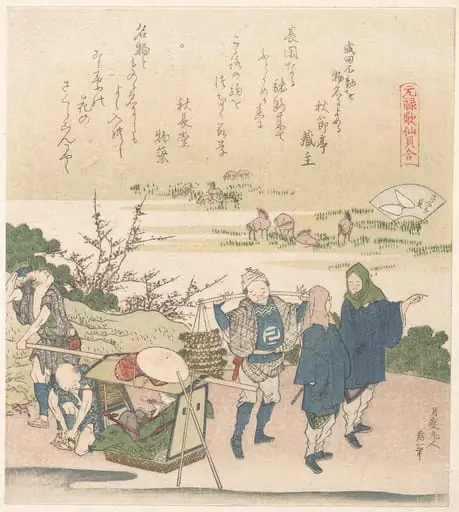
This print is part of the 'Genroku Kasen Kai-awase' series, where shell illustrations are paired with poets' names, evoking a memory game or matching exercise that links visual and literary elements.
Artist & collection

Artist
Katsushika Hokusai spent his life in Edo, now Tokyo, where he drew and carved prints for a living.

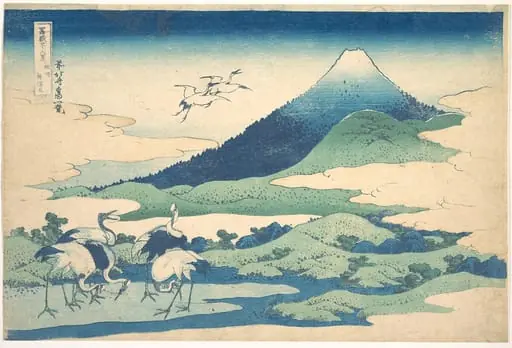 冨嶽三十六景 相州梅沢左|Umezawa Manor in Sagami Province (Sōshū Umezawa zai), from the series Thirty-six Views of Mount Fuji (Fugaku sanjūrokkei)
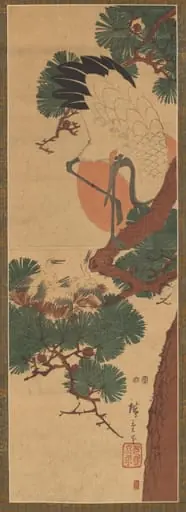 Stork, Sun, and Pine
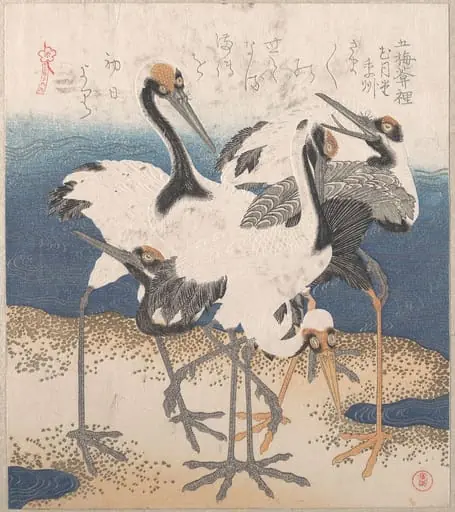 「三ひらの内」汀五羽の鶴|Five Cranes by the Water’s Edge, from the series Three Sheets (Mihira no uchi)
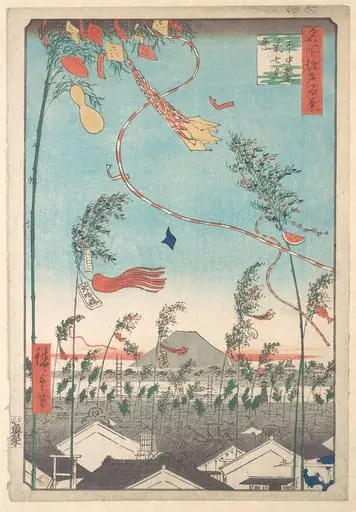 名所江戸百景 市中繁栄七夕祭|The Tanabata Festival, from the series One Hundred Famous Views of Edo
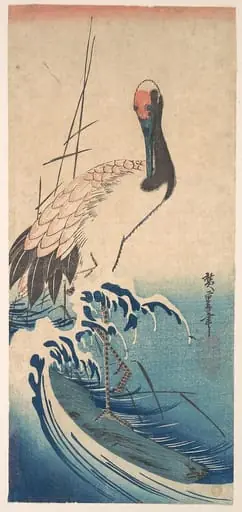 波に丹頂鶴|Crane and Surf
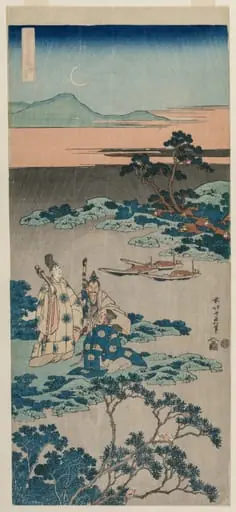 The Minister Toru Daijin Standing by a Lake Beneath a Crescent Moon, from the series A True Mirror of Chinese and Japanese Poetry
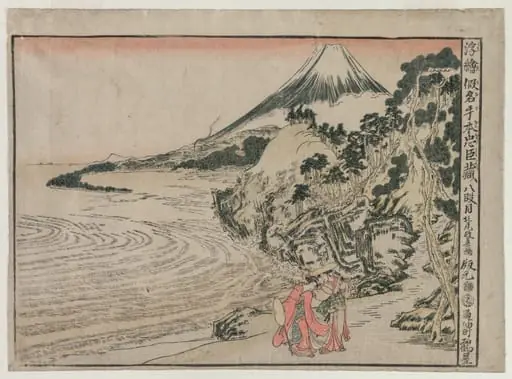 Chushingura: Act VIII (from the series Perspective Pictures for The Treasure House of Loyalty)
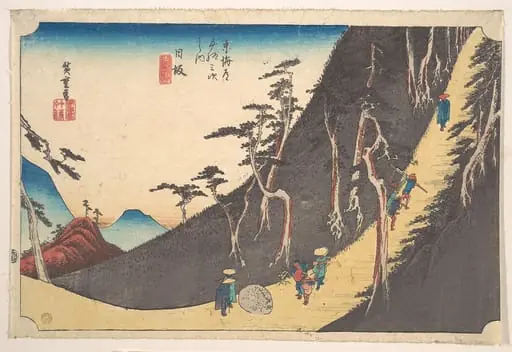 東海道五十三次之内 日坂 佐夜の中山|Nissaka, Sayo Nakayama
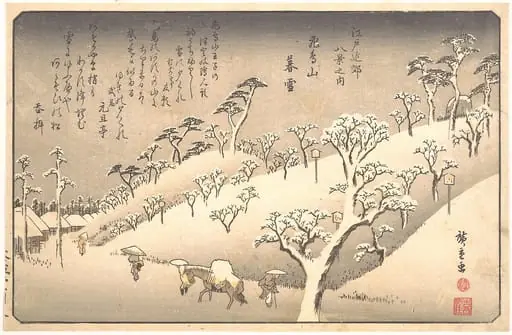 Asukayama Bosetsu|江戸近郊八景之内 飛鳥山暮雪|Asukayama in the Snow at Evening
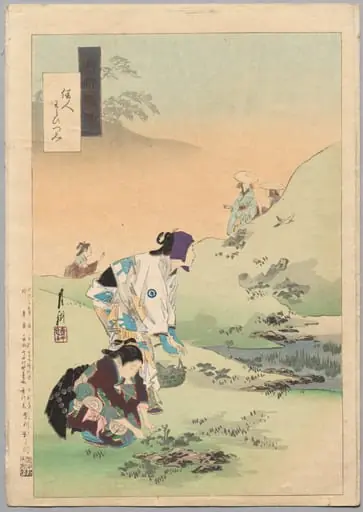 Beauties Harvesting Bracken, from the series Gekkō’s Miscellaney