Artwork
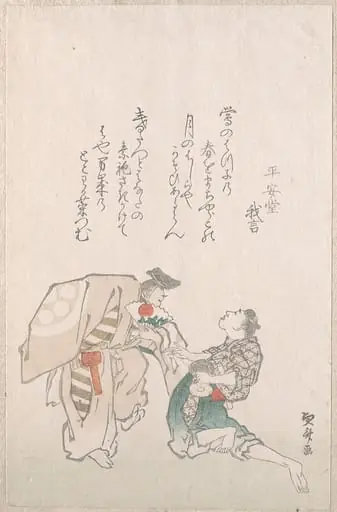
Sakura-gai|元禄歌仙貝合|Cherry Shell, from the series Genroku Poetry Shell Games
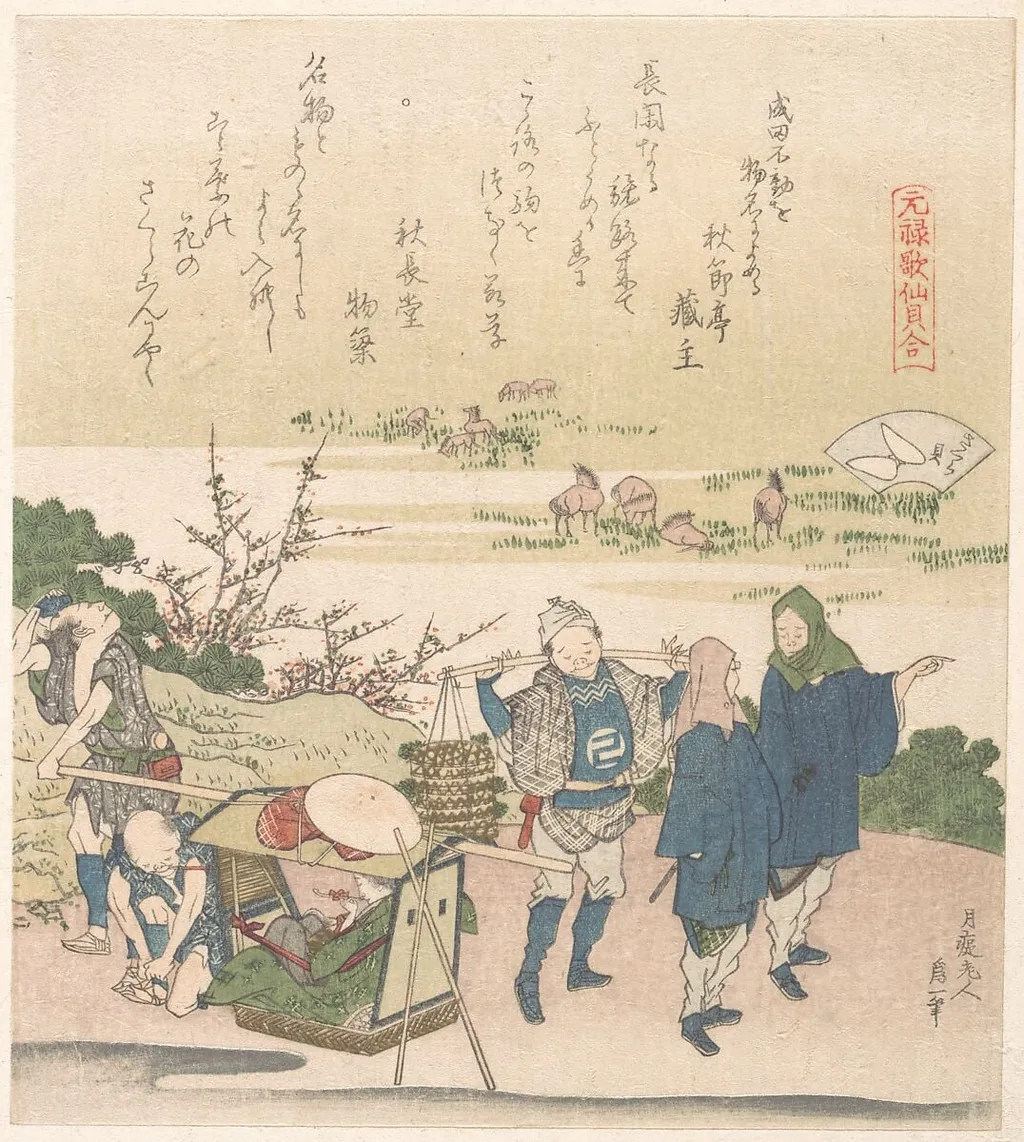
Sakura-gai|元禄歌仙貝合|Cherry Shell, from the series Genroku Poetry Shell Games is an ink print by the Japonisme artist Katsushika Hokusai. It dates from 1821 and is held in the collection of the Metropolitan Museum of Art.
About this work
History & Provenance
This surimono, executed in ink and color on paper, belongs to the ukiyo-e and nishiki-e genres and depicts figures including a man, a woman, and a horse.
The woodblock print titled Sakura-gai (Cherry Shell), part of the series Genroku Poetry Shell Games, was created by Katsushika Hokusai in 1821. This surimono, executed in ink and color on paper, belongs to the ukiyo-e and nishiki-e genres and depicts figures including a man, a woman, and a horse. The work is currently held in the collection of the Metropolitan Museum of Art.
No specific details regarding the original commission, the patron who ordered the print, or the subsequent chain of ownership prior to its museum acquisition are provided in the available records.
The work is held by the Metropolitan Museum of Art in New York, where it is recorded as accession number 2011.103.
It has been exhibited at the museum under the title Cherry Shell (元禄歌仙貝合) as part of the series Genroku Poetry Shell Games.
Overview
Created around 1821, this surimono woodblock print by Katsushika Hokusi presents a quiet domestic scene titled “Sakura‑gai” or “Cherry Shell.” Executed in ink and color on paper, the work belongs to the Genroku Poetry Shell Games series, a set of prints produced for a popular parlor pastime that combined poetry with decorative shells.
Subject & Meaning
The composition shows a woman in a blue robe lifting a shell to catch the light while a man observes her. Behind them, two horses stand beneath blooming cherry trees, linking the activity of the game to the seasonal motif of spring. The presence of the shell, a vessel for tiny poems, underscores the interplay of visual and literary art in the game.
Technique & Style
Hokusai employs the fine line work and subtle coloration typical of surimono, allowing the delicate script inside the shells to remain legible upon close inspection. Soft, muted hues contrast with sharply defined outlines, giving the scene a sense of immediacy while preserving the elegance expected of a printed poetry accessory.
Context
During the late Edo period, surimono prints often served as prizes or decorative items for literary gatherings. Hokusai’s contribution reflects his broader interest in portraying ordinary moments, such as men, women, and horses, in a refined, decorative format that bridges popular pastime and high art.
Artist & collection

Artist
Katsushika Hokusai spent his life in Edo, now Tokyo, where he drew and carved prints for a living.

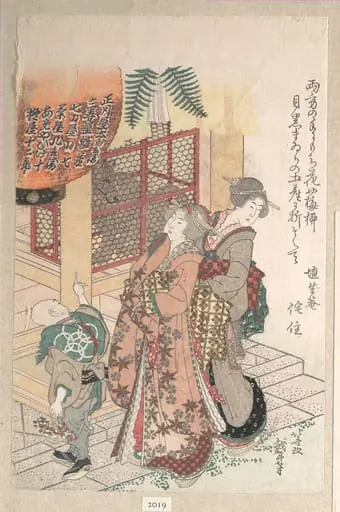 初詣|Young Women Visiting a Shinto Shrine
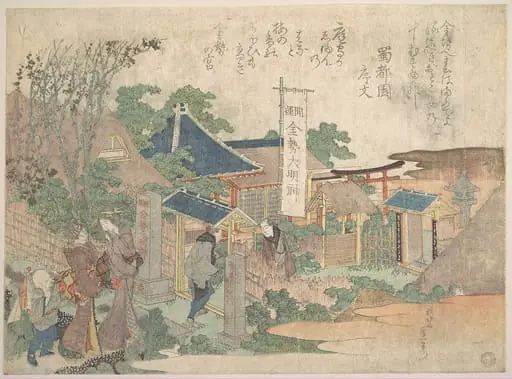 Untitled
 Untitled
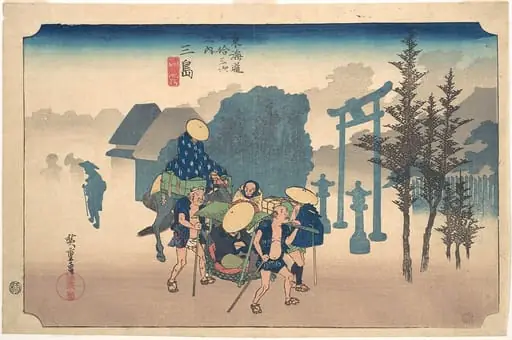 東海道五十三次 三島 朝霧|Morning Mist at Mishima
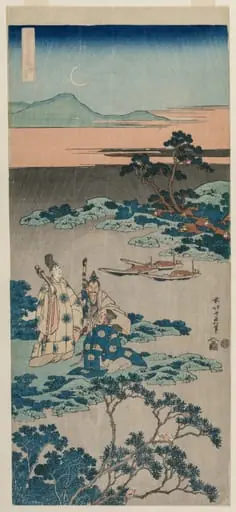 The Minister Toru Daijin Standing by a Lake Beneath a Crescent Moon, from the series A True Mirror of Chinese and Japanese Poetry
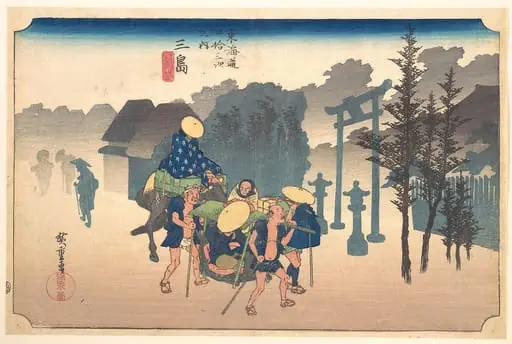 Mishima Asa-Giri|東海道五十三次之内 三島 朝霧|Morning Mist
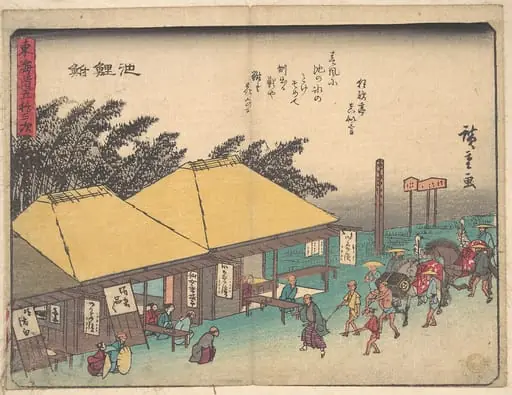 東海道五十三次 池鯉鮒|Chiryu
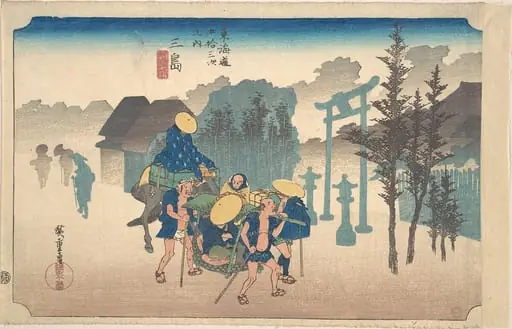 東海道五十三次之内 三島 朝霧|Mishima, Asa Kiri