Artwork
琉球八景 粂村竹籬|Bamboo Hedge at Kumemura (Kumemura chikuri), from the series Eight Views of the Ryūkyū Islands (Ryūkyū hakkei)
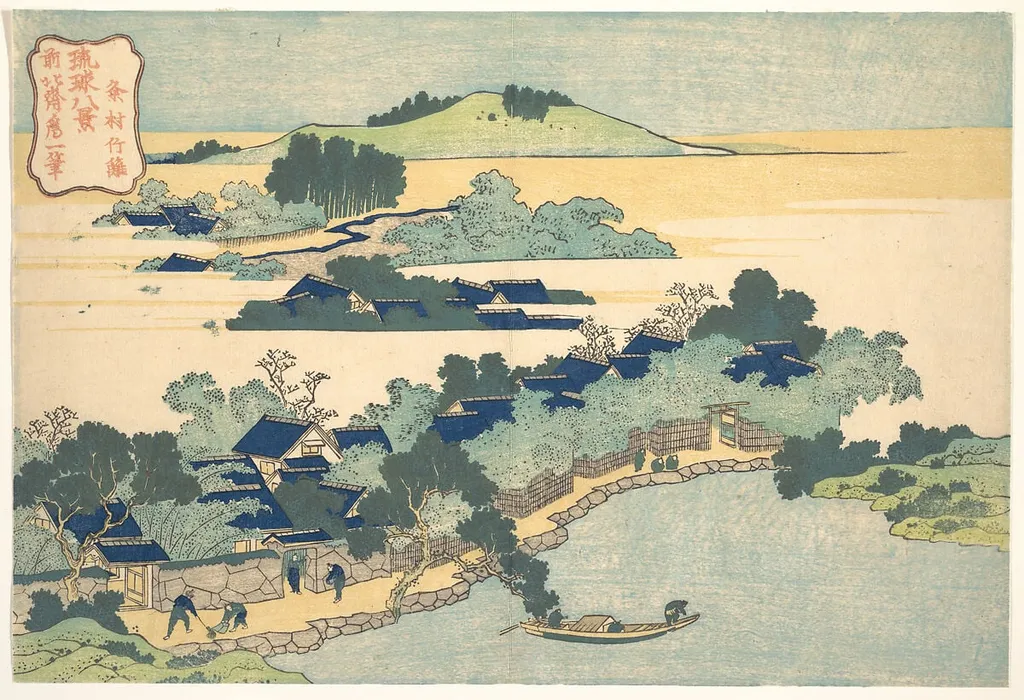
琉球八景 粂村竹籬|Bamboo Hedge at Kumemura (Kumemura chikuri), from the series Eight Views of the Ryūkyū Islands (Ryūkyū hakkei) is an ink print by the Japonisme artist Katsushika Hokusai. It dates from 1832 and is held in the collection of the Metropolitan Museum of Art.
About this work
Technique & Style
The work is a woodblock print created with ink and color on paper, employing the traditional ukiyo-e technique of layered color application.
The work is a woodblock print created with ink and color on paper, employing the traditional ukiyo-e technique of layered color application. The composition features a bamboo hedge framing a modest dwelling, reflecting Hokusai's characteristic emphasis on natural motifs and balanced spatial arrangement. The print is executed on a flat support suitable for handling without additional framing, and its condition is noted as stable within the Metropolitan Museum of Art's collection.
Formally, the piece utilizes muted color gradients and precise line work to evoke a tranquil landscape, aligning with the stylistic conventions of early nineteenth-century Japanese printmaking.
History & Provenance
The print titled 琉球八景 粂村竹籬|Bamboo Hedge at Kumemura (Kumemura chikuri), from the series Eight Views of the Ryūkyū Islands (Ryūkyū hakkei) was created by Katsushika Hokusai in 1832 as a woodblock print on paper. It forms part of the series Eight Views of the Ryūkyū Islands and depicts a boat and a house. The work is held in the collection of the Metropolitan Museum of Art, which records its inception as 1832.
The woodblock print is held in the collection of the Metropolitan Museum of Art, as recorded in the Wikidata entry for the work. Beyond this institutional attribution, the available sources do not provide a specific accession number, credit line, or details of any past exhibitions in which the print has been displayed.
The sources confirm only that the work belongs to the Metropolitan Museum of Art's holdings and was produced in 1832; no further provenance, acquisition history, or exhibition chronology is documented in the materials provided.
Legacy
Katsushika Hokusai’s Bamboo Hedge at Kumemura (1832) from the Eight Views of the Ryūkyū Islands series has endured as a touchstone in the study of ukiyo-e landscapes, particularly for its fusion of Japanese and Ryūkyūan motifs. The print is held by the Metropolitan Museum of Art, where it has been exhibited as part of broader surveys of Hokusai’s work and Edo-period meisho-e (famous places) traditions, reinforcing its canonical status among scholars of Japanese printmaking.
Its inclusion in major collections and exhibitions has cemented its reputation as an exemplar of Hokusai’s late-career exploration of regional landscapes, distinct from his more celebrated Thirty-Six Views of Mount Fuji. The work’s depiction of Ryūkyūan subject matter, rare in mainland Japanese art, has also drawn attention from historians examining cultural exchange between Okinawa and the Tokugawa shogunate.
Overview
Bamboo Hedge at Kumemura is a woodblock print from Katsushika Hokusai's series Eight Views of the Ryūkyū Islands, created around 1832. The work captures a serene village scene in the Ryūkyū Islands (now Okinawa), featuring a quiet lane, bamboo fences, thatched roofs, and a moored boat.
Subject & Meaning
The print portrays everyday life in a Ryūkyū village, emphasizing tranquility. Despite the boat's readiness to sail, the absence of urgency among the unseen inhabitants conveys a sense of peacefulness, potentially reflecting Hokusai's imagining of a distant, inaccessible region during Japan's period of isolation.
Context
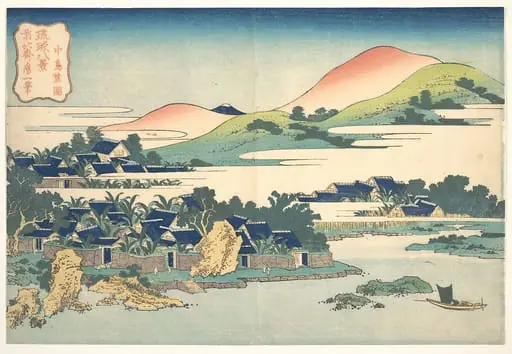
Part of the Eight Views of the Ryūkyū Islands series, this print is one of Hokusai's lesser-known works compared to his more famous series, Thirty-six Views of Mount Fuji. It showcases his interest in capturing the beauty of diverse Japanese landscapes, even those beyond mainland Japan.
Artist & collection

Artist
Katsushika Hokusai spent his life in Edo, now Tokyo, where he drew and carved prints for a living.

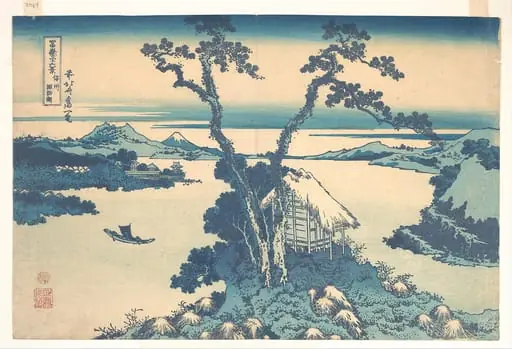 冨嶽三十六景 信州諏訪湖|Lake Suwa in Shinano Province (Shinshū Suwako), from the series Thirty-six Views of Mount Fuji (Fugaku sanjūrokkei)
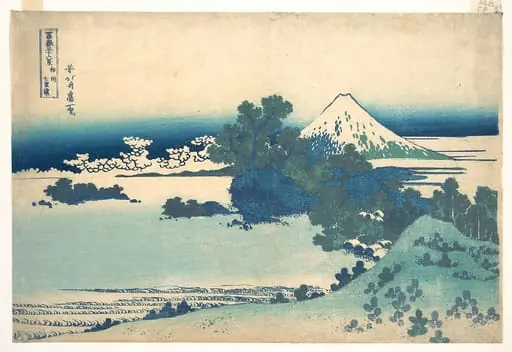 冨嶽三十六景 相州七里浜|Shichirigahama in Sagami Province (Sōshū Shichirigahama), from the series Thirty-six Views of Mount Fuji (Fugaku sanjūrokkei)
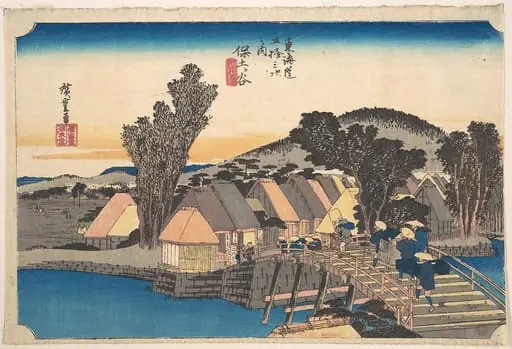 東海道五十三次之内 保土ヶ谷 新町橋|Hodogaya Station and Shinkame Bridge
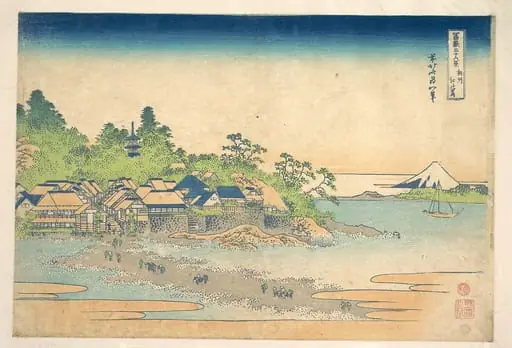 冨嶽三十六景 相州江の島|Enoshima in Sagami Province (Sōshū Enoshima), from the series Thirty-six Views of Mount Fuji (Fugaku sanjūrokkei)
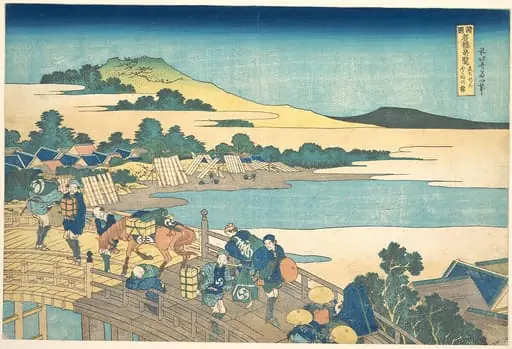 諸國名橋奇覧 ゑちぜんふくゐの橋|Fukui Bridge in Echizen Province (Echizen Fukui no hashi), from the series Remarkable Views of Bridges in Various Provinces (Shokoku meikyō kiran)
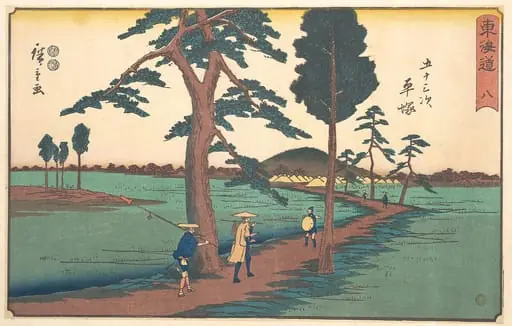 東海道五十三次 平塚|Hiratsuka
![Cherry Blossoms in Full Bloom Along the Sumida River [Sumida-gawa hana-zakari], by Andō Hiroshige](https://artifactworldgallery.com/img/ando-hiroshige--cherry-blossoms-in-full-bloom-along-the-sumida-river-sumida--c06e3457a18e2f1e-w320.webp) Cherry Blossoms in Full Bloom Along the Sumida River [Sumida-gawa hana-zakari]
Cherry Blossoms in Full Bloom Along the Sumida River [Sumida-gawa hana-zakari]