Artwork
千絵の海 下総登戸|Noboto at Shimōsa (Shimōsa Noboto), from the series One Thousand Pictures of the Sea (Chie no umi)
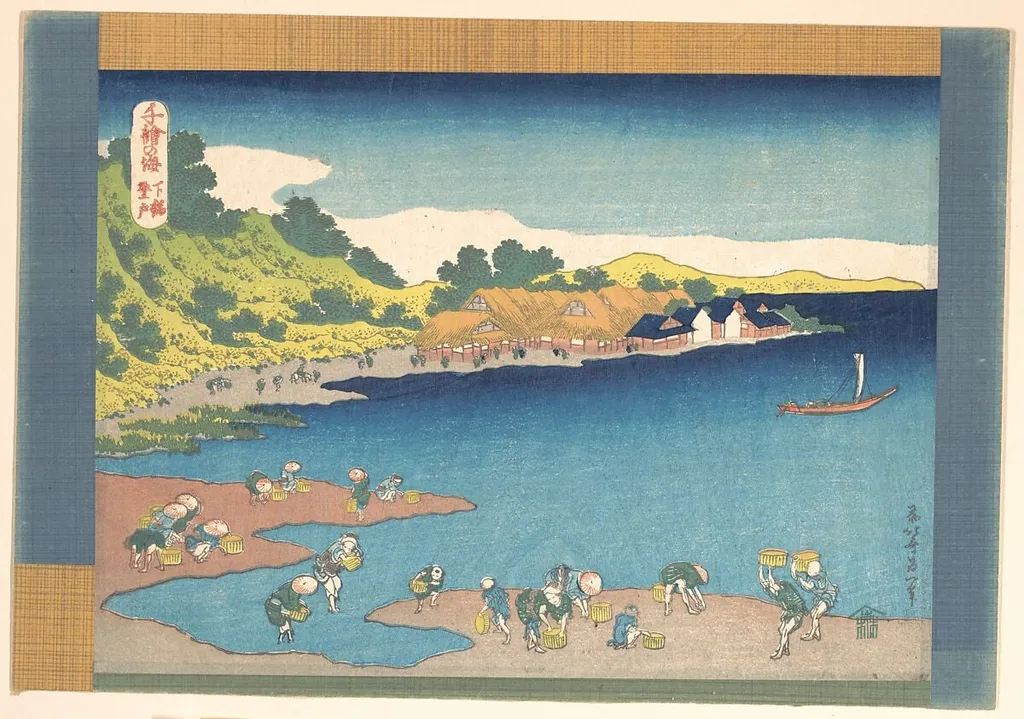
千絵の海 下総登戸|Noboto at Shimōsa (Shimōsa Noboto), from the series One Thousand Pictures of the Sea (Chie no umi) is an ink print by the Japonisme artist Katsushika Hokusai. It dates from 1832 and is held in the collection of the Metropolitan Museum of Art.
About this work
Subject & Meaning
The composition centers on the everyday activity of clam digging along the shore, with a boat and a house anchoring the scene in a working maritime setting.
Noboto at Shimōsa belongs to Hokusai's landscape series One Thousand Pictures of the Sea, which catalogued coastal views around Japan. The composition centers on the everyday activity of clam digging along the shore, with a boat and a house anchoring the scene in a working maritime setting. As a meisho-e, or famous-place picture, the print functions less as a topographical record than as an evocation of local character, linking the specific site of Shimōsa Noboto to the rhythms of coastal labor and daily life.
The modest scale of the figures and dwellings against the open water emphasizes the relationship between the inhabitants and the tidal flats that sustain them, transforming a routine harvesting scene into a meditation on place, livelihood, and the sea as both resource and defining feature of the region.
Technique & Style
The work is a woodblock print executed in ink and color on paper, a standard technique for Japanese ukiyo-e landscapes of the early nineteenth century. It belongs to the ukiyo-e tradition, and more specifically to the meisho-e sub-genre of famous-place prints, depicting the coastal scene of Noboto at Shimōsa with boats, clam digging, and a house.
The sheet measures 18.4 cm in height by 25.4 cm in width, a modest format consistent with standalone prints from Hokusai's series One Thousand Pictures of the Sea (Chie no umi), produced in 1833. The composition reflects the artist's characteristic approach to landscape prints, integrating human activity within a defined coastal setting.
History & Provenance
Designed by the Japanese artist Katsushika Hokusai, this woodblock print was created in 1833 as part of the series One Thousand Pictures of the Sea (Chie no umi). The work, which depicts a landscape scene featuring clam digging, a boat, and a house, is currently held in the collection of the Metropolitan Museum of Art. Physical records indicate the sheet measures 18.4 cm in height and 25.4 cm in width.
No further details regarding specific commissions, previous owners, or the intermediate chain of custody are provided in the available documentation.
Overview
Created in 1832, this woodblock print by Katsushika Hokusai belongs to his series One Thousand Pictures of the Sea. Executed with ink and color on paper, the image presents a modest coastal scene that includes a small boat, a figure engaged in clam digging, and a solitary dwelling along the shoreline.
Context
During the early 1830s Hokusage was exploring the theme of the sea’s many faces, complementing his better‑known landscape series such as Thirty‑Six Views of Mount Fuji. This piece illustrates his focus on ordinary coastal life rather than dramatic scenery, aligning with contemporary ukiyo‑e trends toward everyday subjects.
Artist & collection

Artist
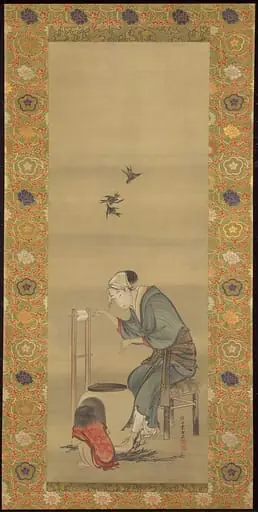
Katsushika Hokusai spent his life in Edo, now Tokyo, where he drew and carved prints for a living.

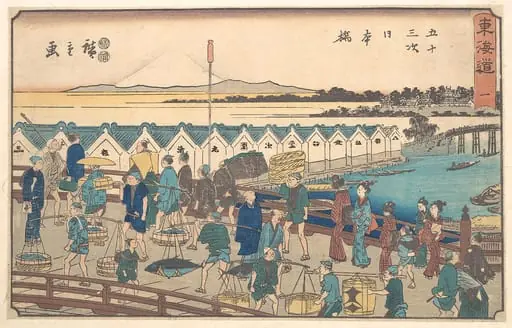
- 東海道五十三次 日本橋|Nihon bashi
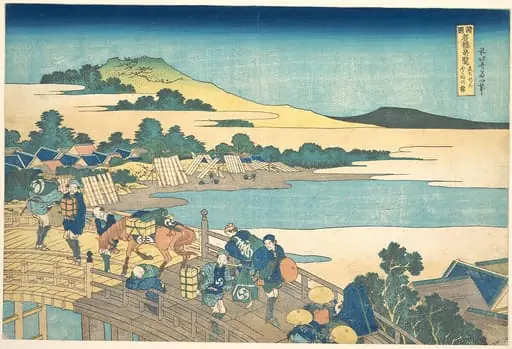 諸國名橋奇覧 ゑちぜんふくゐの橋|Fukui Bridge in Echizen Province (Echizen Fukui no hashi), from the series Remarkable Views of Bridges in Various Provinces (Shokoku meikyō kiran)
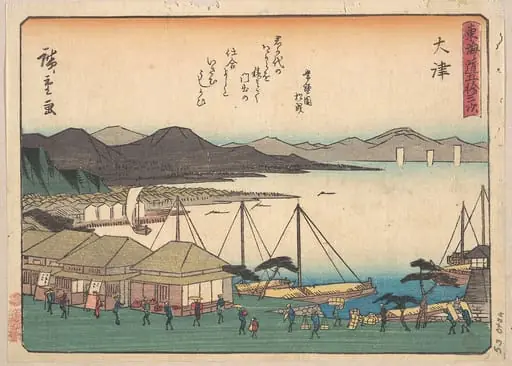 東海道五十三次 大津|Otsu
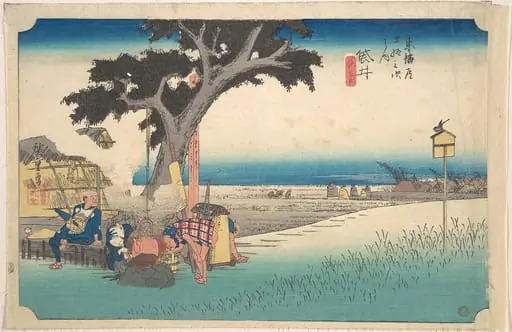 東海道五十三次之内 袋井 出茶屋の図|Fukuroi; De Chaya
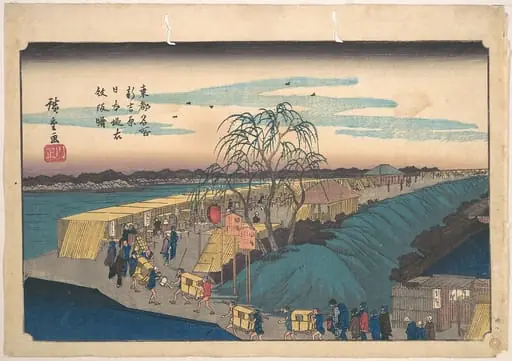 東都名所 新吉原日本堤衣紋坂曙|Shin Yoshiwara Nihon Tsutsumi Emonzaka Akatsuki
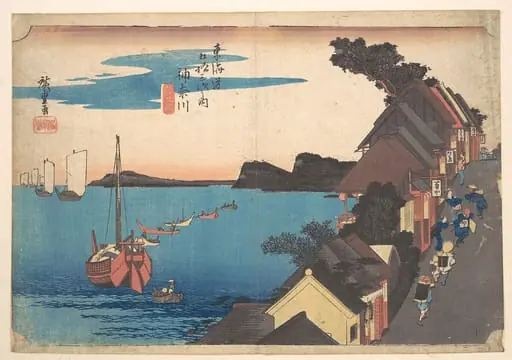 東海道五十三次之内 神奈川 台之景|View of Kangawa at Sunset
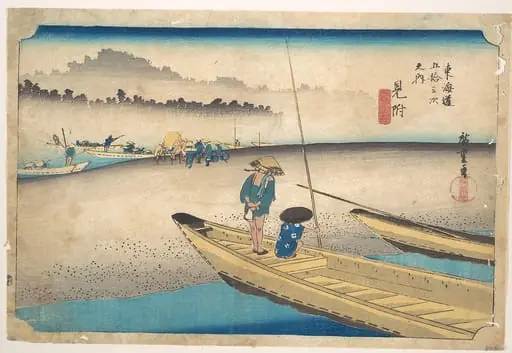 東海道五十三次 見附 天竜川図|Mitsuke; Tenryugawa Ferry, Station No. 29
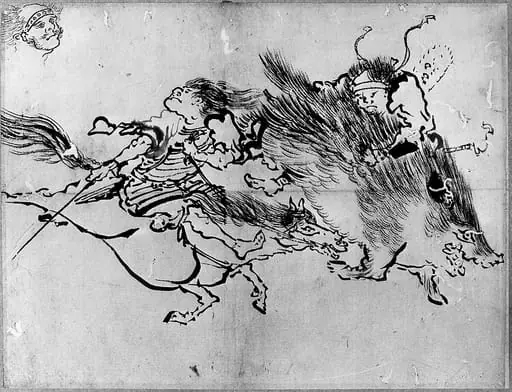
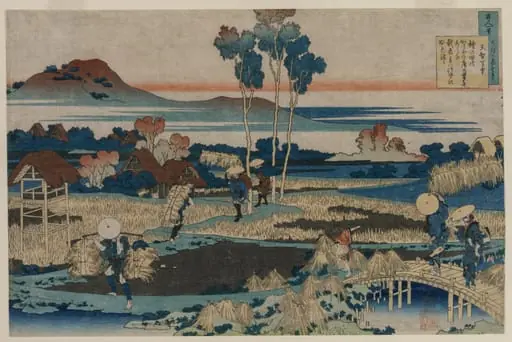 Poem by Emperor Tenchi, from the series One Hundred Poems by One Hundred Poets Explained by the Nurse