Artwork
Poem by Emperor Tenchi, from the series One Hundred Poems by One Hundred Poets Explained by the Nurse
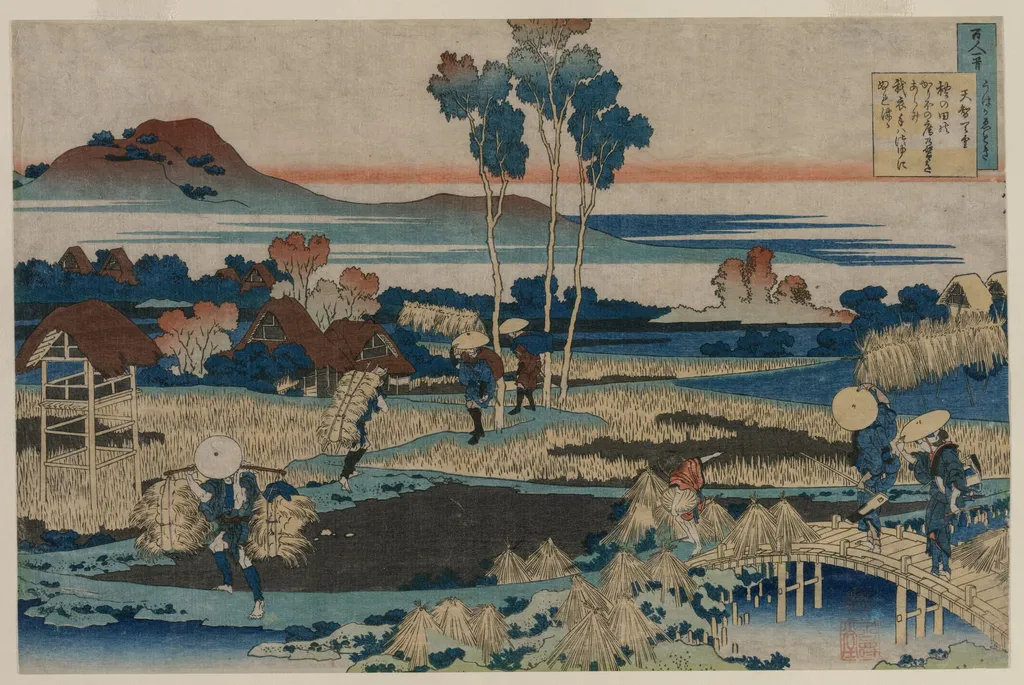
Poem by Emperor Tenchi, from the series One Hundred Poems by One Hundred Poets Explained by the Nurse is a print by the Romanticist artist Katsushika Hokusai. It dates from 1836 and is held in the collection of the Cleveland Museum of Art.
- Accession no.
- 1916.1164
- Credit line
- Gift of Mr. and Mrs. J. H. Wade
About this work
This painting shows a serene autumn landscape with rice farmers and travelers. The story behind it is interesting: it's based on a poem by Emperor Tenchi. The poem tells of the emperor taking shelter in a rice farmer's hut during a storm, feeling sympathy for the common people.
You can learn more about this style by looking at the work of artist: Katsushika Hokusai (Japanese, 1760–1849).
Overview
The print depicts an autumnal countryside scene where rice fields stretch beneath a cloudy sky, punctuated by a modest farmer’s hut and two travelers moving through the landscape. The composition is drawn from a poem attributed to Emperor Tenchi (r. 661–672), illustrating his brief refuge from a sudden storm among the laborers.
Subject & Meaning
The narrative centers on the emperor’s unexpected stay in a farmer’s shelter, evoking his empathy for peasants who endure harsh weather and precarious dwellings. The poem’s imagery, wet sleeves, heavy dew, and the rough mats of harvest guards, underscores the shared vulnerability of ruler and subjects during the season’s labor.
Technique & Style
Executed in the ukiyo-e woodblock tradition, the work employs delicate line work and muted pigments to render the autumn foliage and thatched roof. Hokusai’s characteristic balance of foreground activity and distant hills creates depth, while the subtle gradations of ink suggest the looming storm.
History & Provenance
Part of Hokusai’s series inspired by the Hyakunin Isshu anthology, the print was produced in the early 19th century for a popular audience familiar with classical poetry. It circulated as a single sheet within the larger collection, which paired visual interpretations with the corresponding verses.
Context
The Hyakunin Isshu, a medieval compilation of one hundred poems by one hundred poets, was a common source for Edo‑period artists seeking literary themes. By illustrating Emperor Tenchi’s poem, Hokusa i linked contemporary visual culture with a revered imperial text, reflecting the era’s interest in historic nostalgia.
Own this work as a print
Artist & collection

Artist
Katsushika Hokusai spent his life in Edo, now Tokyo, where he drew and carved prints for a living.

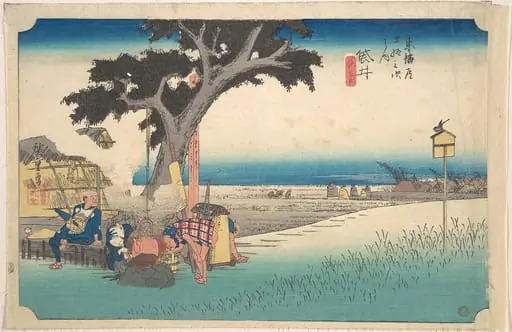 東海道五十三次之内 袋井 出茶屋の図|Fukuroi; De Chaya
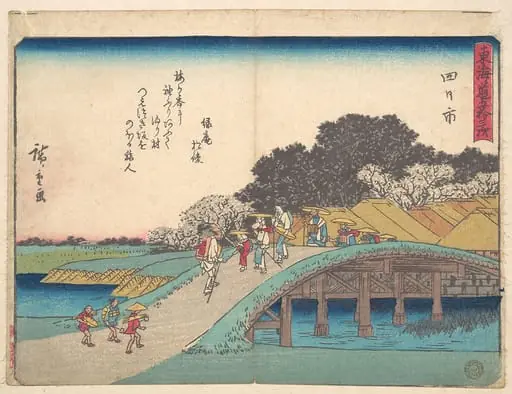 東海道五十三次 四日市|Yokkaichi
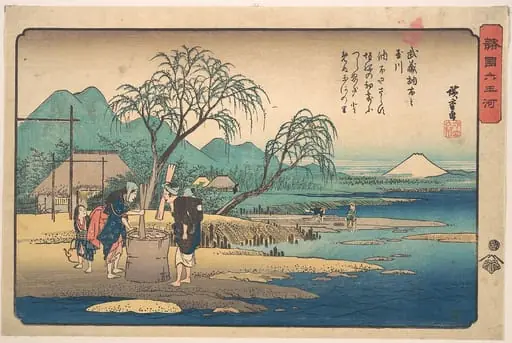 諸国六玉河 武蔵 調布の玉川|Musashi: Chōfu no Tamagawa
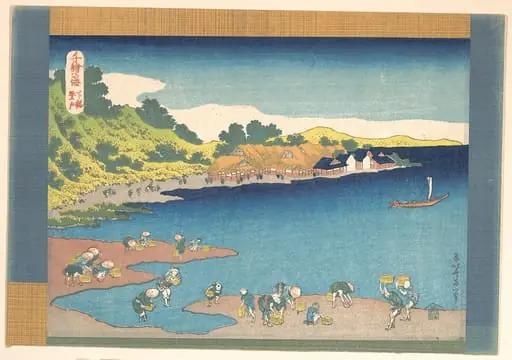 千絵の海 下総登戸|Noboto at Shimōsa (Shimōsa Noboto), from the series One Thousand Pictures of the Sea (Chie no umi)
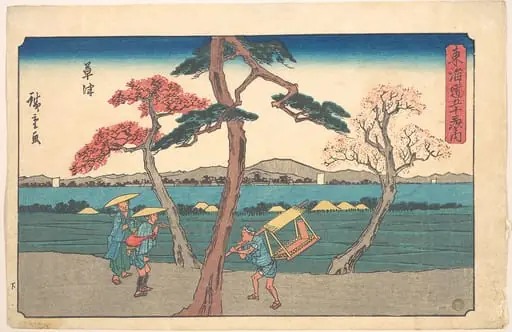 東海道五十三次之内 草津|Kusatsu Station
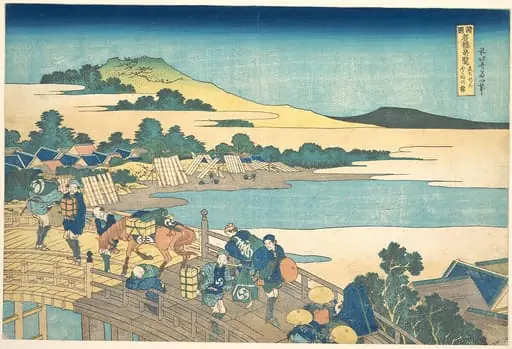 諸國名橋奇覧 ゑちぜんふくゐの橋|Fukui Bridge in Echizen Province (Echizen Fukui no hashi), from the series Remarkable Views of Bridges in Various Provinces (Shokoku meikyō kiran)
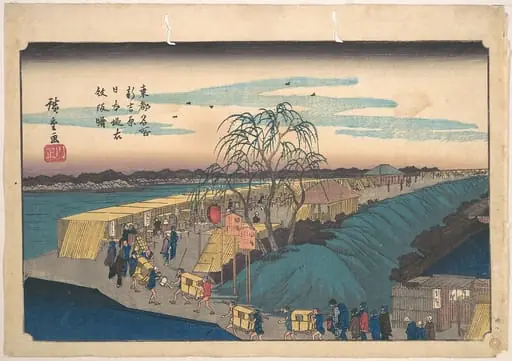 東都名所 新吉原日本堤衣紋坂曙|Shin Yoshiwara Nihon Tsutsumi Emonzaka Akatsuki
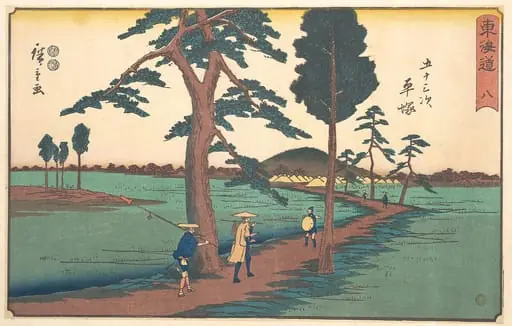 東海道五十三次 平塚|Hiratsuka
![Cherry Blossoms in Full Bloom Along the Sumida River [Sumida-gawa hana-zakari], by Andō Hiroshige](https://artifactworldgallery.com/img/ando-hiroshige--cherry-blossoms-in-full-bloom-along-the-sumida-river-sumida--c06e3457a18e2f1e-w320.webp) Cherry Blossoms in Full Bloom Along the Sumida River [Sumida-gawa hana-zakari]
Cherry Blossoms in Full Bloom Along the Sumida River [Sumida-gawa hana-zakari]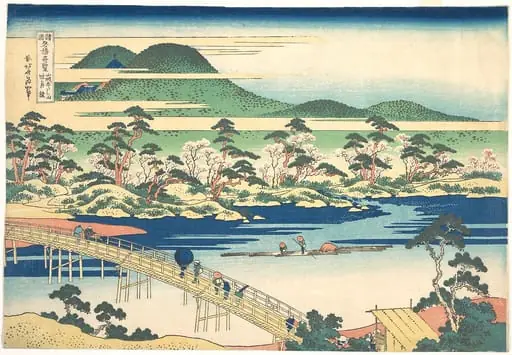 諸國名橋奇覧 山城あらし山吐月橋 |Togetsu Bridge at Arashiyama in Yamashiro, from the series Remarkable Views of Bridges in Various Provinces (Shokoku meikyō kiran)