Artwork
百人一首 宇波か縁説 藤原道信朝臣|Poem by Fujiwara no Michinobu Ason, from the series One Hundred Poems Explained by the Nurse (Hyakunin isshu uba ga etoki)
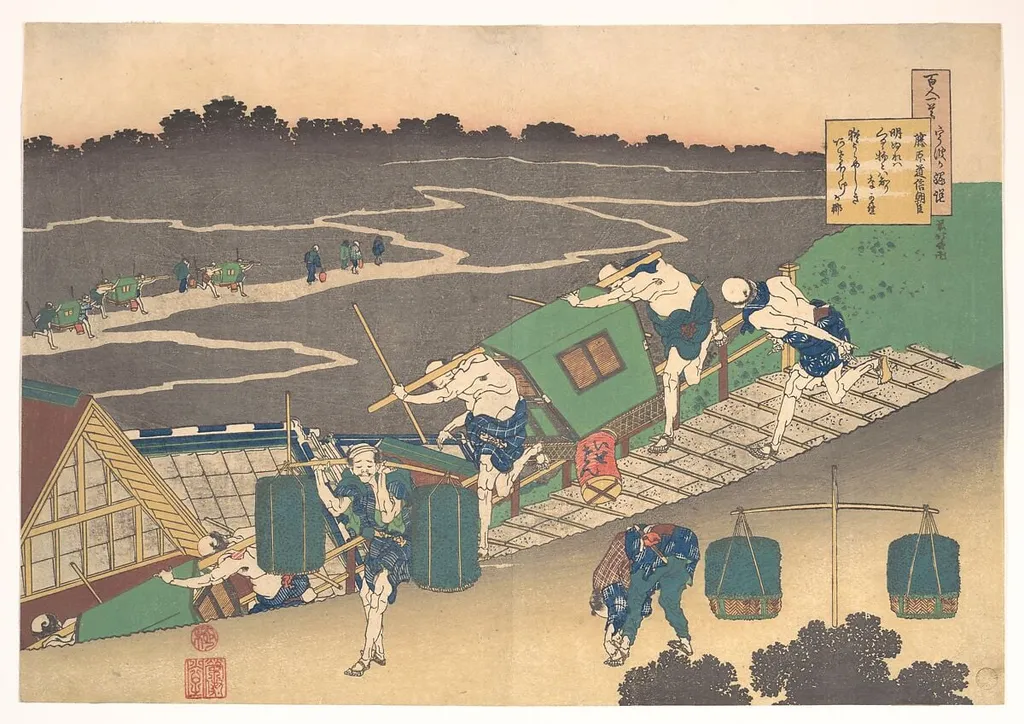
百人一首 宇波か縁説 藤原道信朝臣|Poem by Fujiwara no Michinobu Ason, from the series One Hundred Poems Explained by the Nurse (Hyakunin isshu uba ga etoki) is an ink print by the Japonisme artist Katsushika Hokusai. It dates from 1839 and is held in the collection of the Metropolitan Museum of Art.
About this work
The people in the print are dressed in traditional Japanese clothing and are shown in various poses, some bending and others standing upright.
This woodblock print shows a group of people working together to move a large object, possibly a house or a boat. They are using long poles to push and pull the object up a ramp. In the background, there are trees and a body of water.
The people in the print are dressed in traditional Japanese clothing and are shown in various poses, some bending and others standing upright. The object they are moving is green and has a sloping roof.
The print is done in a romantic style, with bold lines and bright colors. It is a beautiful example of Japanese art from the 19th century. Check out more works by Katsushika Hokusai.
Overview
This woodblock print is part of Katsushika Hokusai's series 'One Hundred Poems Explained by the Nurse'. Created in 1839, it depicts a scene related to a poem by Fujiwara no Michinobu Ason.
Subject & Meaning
The print shows a group of people in traditional Japanese clothing working together to move a large green object, possibly a house or boat, using long poles and a ramp, set against a backdrop of trees and water.
Technique & Style
Executed in ink and color on paper, the print features bold lines and bright colors, characteristic of Hokusai's romantic style.
History & Provenance
The print is now held at The Metropolitan Museum of Art.
Artist & collection

Artist
Katsushika Hokusai spent his life in Edo, now Tokyo, where he drew and carved prints for a living.

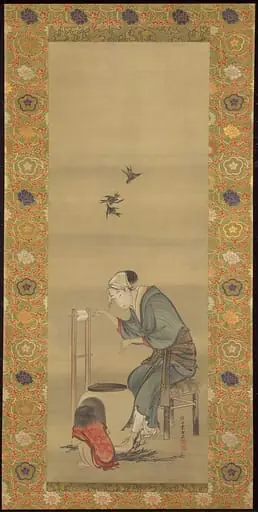
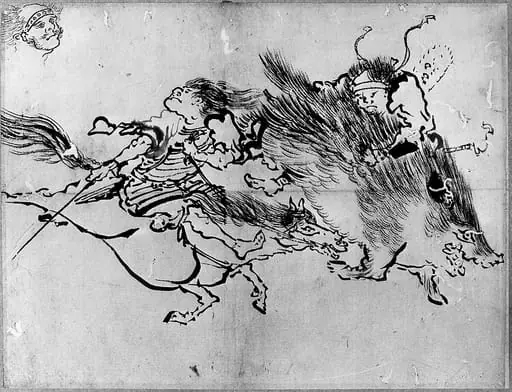
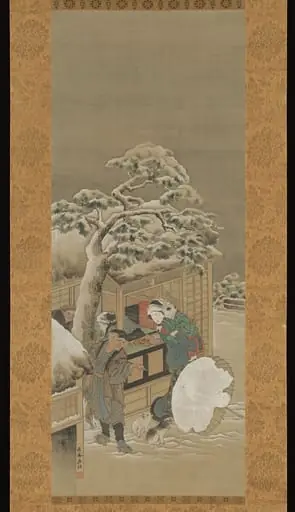
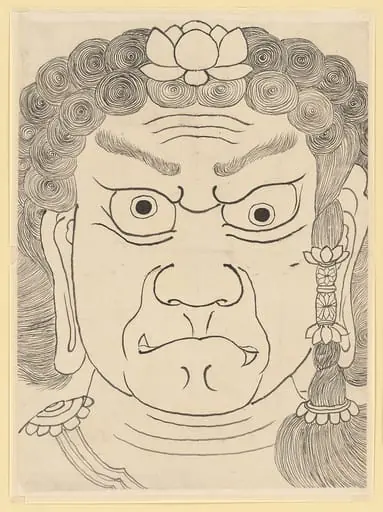
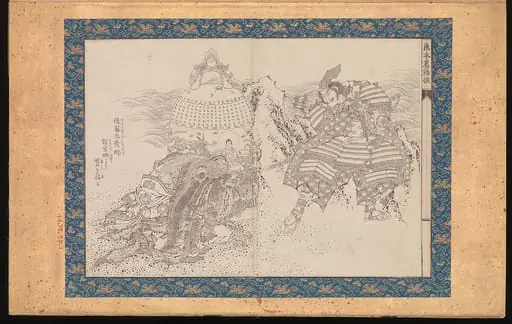
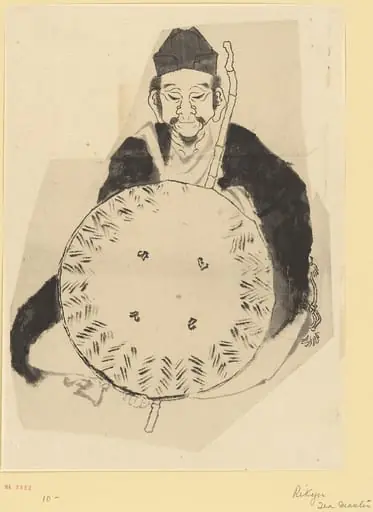
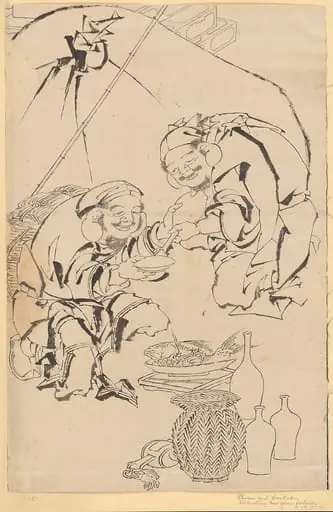
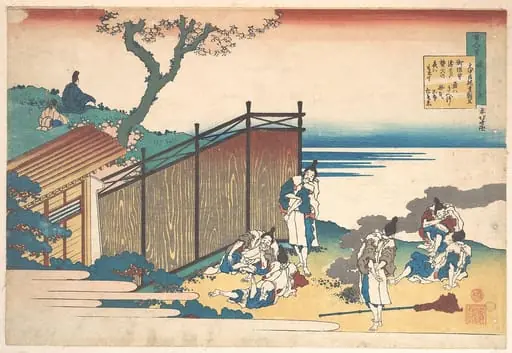 百人一首 姥か恵と起 大中臣能宣朝臣|Poem by Ōnakatomi no Yoshinobu Ason, from the series One Hundred Poems Explained by the Nurse (Hyakunin isshu uba ga etoki)
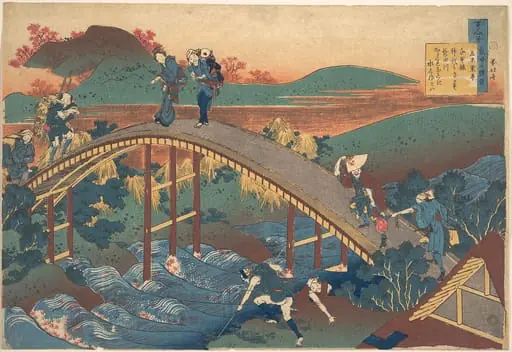 百人一首 乳母か縁説 在原業平|Poem by Ariwara no Narihira, from the series One Hundred Poems Explained by the Nurse (Hyakunin isshu uba ga etoki)
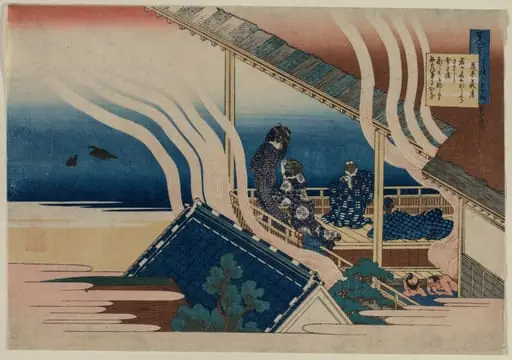 Poem by Fujiwara no Yoshitaka, from the series One Hundred Poems by One Hundred Poets Explained by an Old Nurse
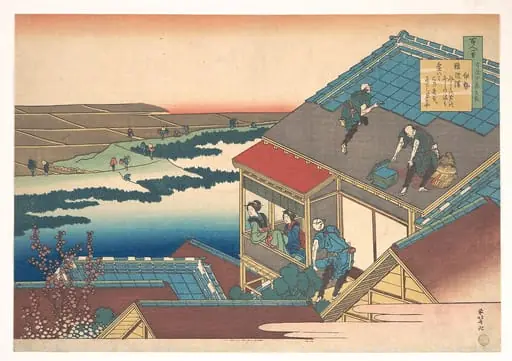 百人一首 うばがゑとき 伊勢|Poem by Ise, from the series One Hundred Poems Explained by the Nurse (Hyakunin isshu uba ga etoki)
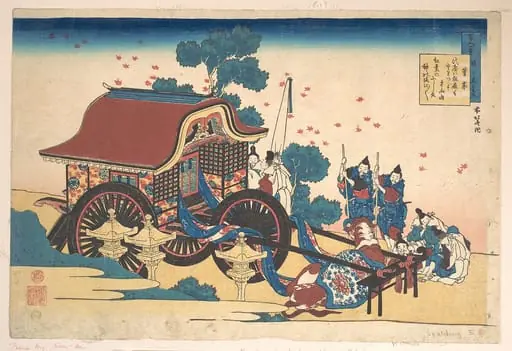 百人一首 うはかゑとき 菅家|Poem by Kanke (Sugawara Michizane), from the series One Hundred Poems Explained by the Nurse (Hyakunin isshu uba ga etoki)
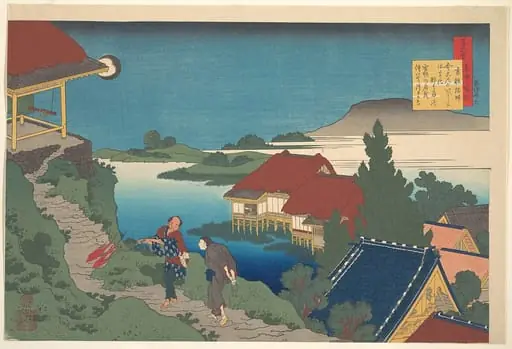 百人一首 乳母か縁説 素胜法師|Poem by Sōsei Hōshi, from the series One Hundred Poems Explained by the Nurse (Hyakunin isshu uba ga etoki)