Artwork
新柳橋の白雨|Shower at the New Yanagi Bridge
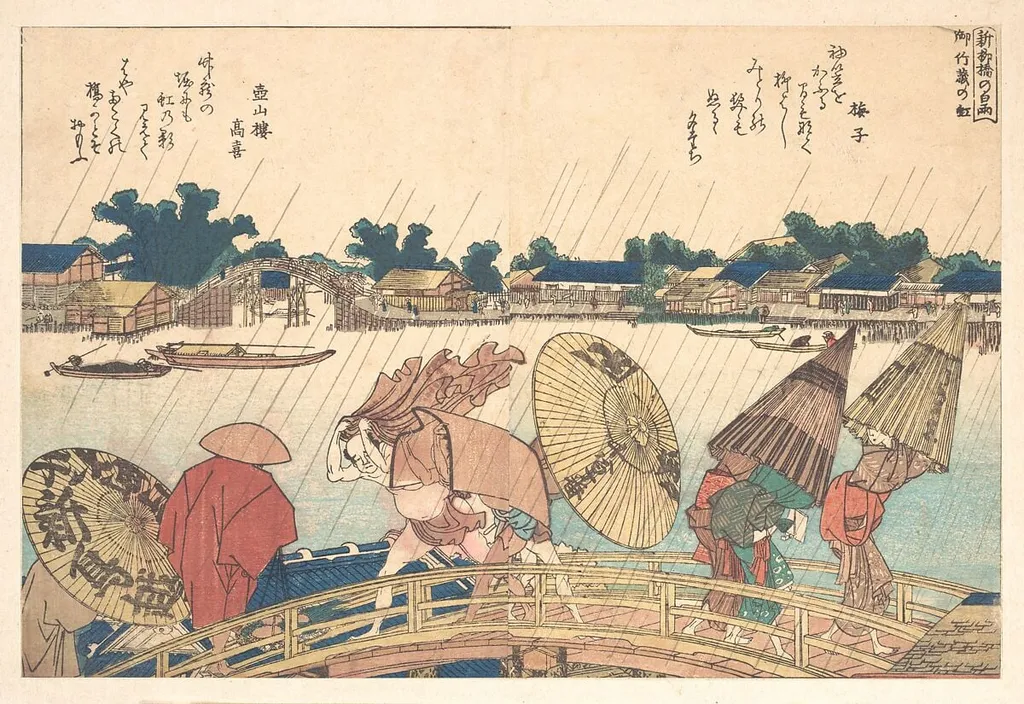
新柳橋の白雨|Shower at the New Yanagi Bridge is an ink print by the Japonisme artist Katsushika Hokusai. It dates from 1806 and is held in the collection of the Metropolitan Museum of Art.
About this work
Overview
Created in 1806, this woodblock print by Katsushika Hokusai captures a sudden rain shower over the New Yanagi Bridge in Edo.
Created in 1806, this woodblock print by Katsushika Hokusai captures a sudden rain shower over the New Yanagi Bridge in Edo. Executed in ink and color on paper, it belongs to a series of landscape prints that reflect the artist’s interest in everyday scenes transformed by natural forces. The work is now part of the collection at The Metropolitan Museum of Art, where it is recognized as an early example of his evolving approach to nature and urban life.
Subject & Meaning
The scene portrays pedestrians navigating the bridge during a downpour, their figures rendered with minimal detail to emphasize motion and vulnerability against the elements. The arched structure of the bridge anchors the composition, while distant buildings, likely homes and a shrine, suggest the quiet persistence of daily life amid weather. Rain is not merely atmospheric but a unifying force, binding human activity to the rhythm of nature.
Technique & Style
Hokusai employs fine, vertical lines to suggest falling rain, contrasting with the horizontal sweep of the bridge and rooftops. Subtle gradations of gray and pale blue convey the damp sky, while touches of indigo and ochre define structures and figures. The print’s flat planes and deliberate lack of perspective reflect ukiyo-e conventions, yet the dynamic arrangement of forms introduces a sense of immediacy and transient energy.
History & Provenance
The print was produced during Hokusai’s early period, before his famous Thirty-Six Views of Mount Fuji. It likely circulated as part of a commercial print series aimed at urban audiences in Edo. Its survival and eventual acquisition by The Metropolitan Museum of Art reflect its enduring value as a document of early 19th-century Japanese print culture and Hokusai’s developing artistic voice.
Context
In early 1800s Edo, woodblock prints were popular among the merchant class, offering affordable glimpses into seasonal life and urban landscapes. Rain scenes like this one resonated with audiences familiar with the city’s humid summers and sudden storms. Hokusai’s focus on ordinary people in transit aligns with ukiyo-e’s broader interest in fleeting moments, or 'the floating world,' rather than idealized or mythological subjects.
Legacy
This print exemplifies Hokusai’s early mastery of composition and atmospheric effect, foreshadowing his later innovations. While not as widely known as his mature works, it contributed to the evolution of landscape printing in Japan. Its quiet observation of weather and movement influenced later artists in both Japan and the West, particularly those drawn to the poetic potential of everyday scenes.
Artist & collection

Artist
Katsushika Hokusai spent his life in Edo, now Tokyo, where he drew and carved prints for a living.

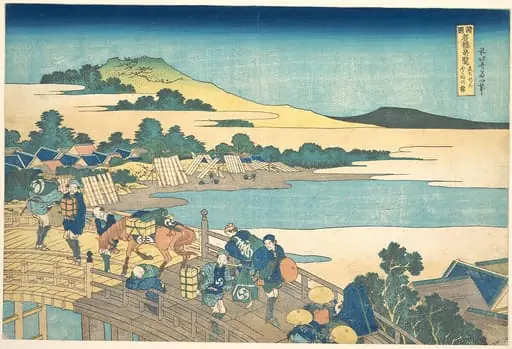 諸國名橋奇覧 ゑちぜんふくゐの橋|Fukui Bridge in Echizen Province (Echizen Fukui no hashi), from the series Remarkable Views of Bridges in Various Provinces (Shokoku meikyō kiran)
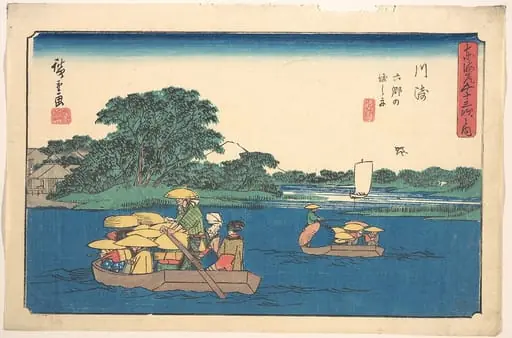 東海道五十三次之内 川崎 六郷の渡し舟|Kawasaki
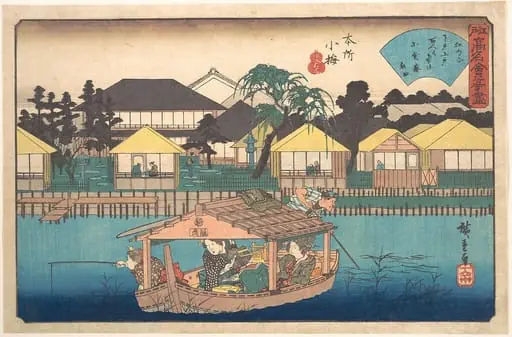 江戸高名会亭尽 本所小梅 小倉庵|Honjo Komme (Ogura-an)
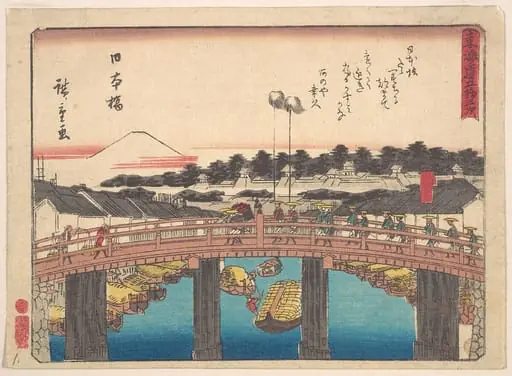 東海道五十三次 日本橋|Nihon Bashi
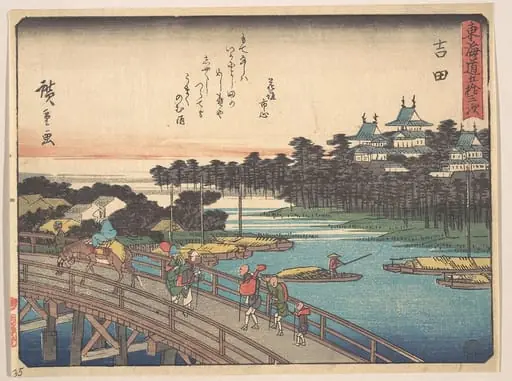 東海道五十三次 吉田|Yoshida; Toyokawa-Bashi, Toyokawa Bridge
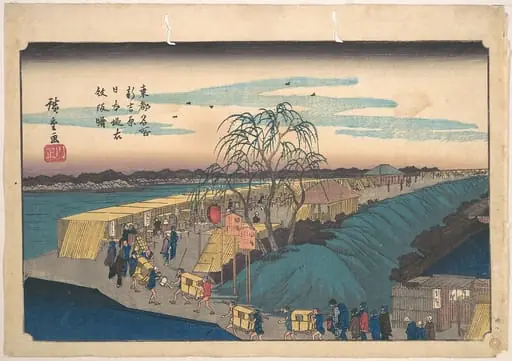 東都名所 新吉原日本堤衣紋坂曙|Shin Yoshiwara Nihon Tsutsumi Emonzaka Akatsuki
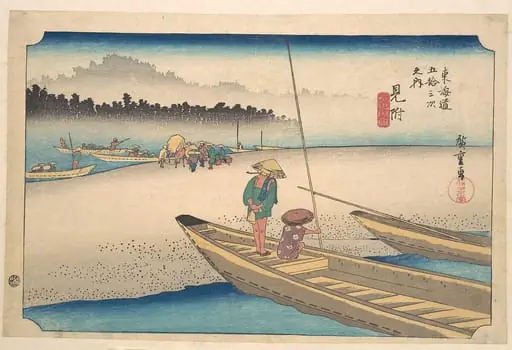 東海道五十三次 見附 天竜川|Mitsukei Tenryugawa
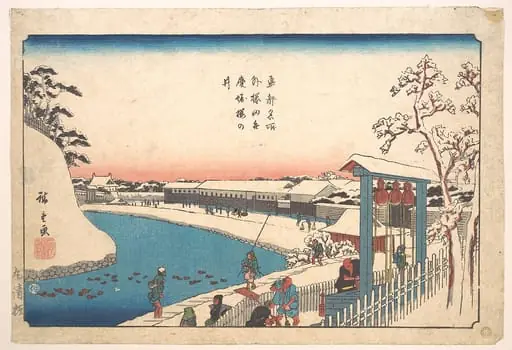 東都名所 外桜田弁慶桜の井|Soto Sakurada, Benkei Bori, Sakura-no-i