Artwork
雪月花 隅田|Snow on the Sumida River (Sumida), from the series, Snow, Moon, and Flowers (Setsugekka)
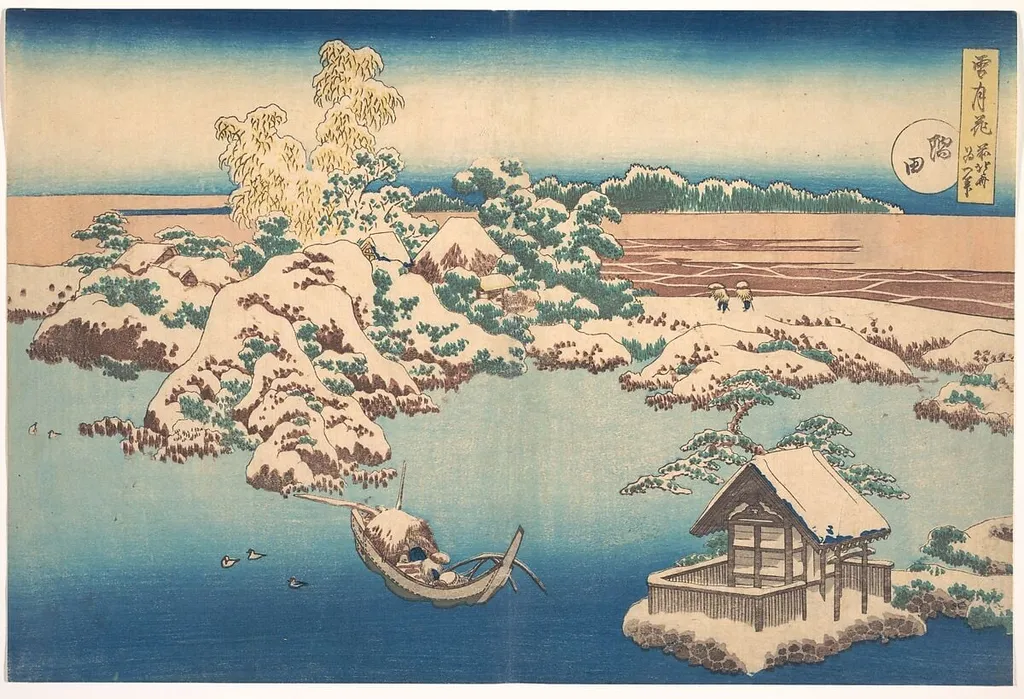
雪月花 隅田|Snow on the Sumida River (Sumida), from the series, Snow, Moon, and Flowers (Setsugekka) is an ink print by the Japonisme artist Katsushika Hokusai. It dates from 1833 and is held in the collection of the Metropolitan Museum of Art.
About this work
Subject & Meaning
As a meisho-e, or picture of a famous place, the work captures a specific geographic location rather than an imaginary scene.
This woodblock print presents a winter landscape centered on the Sumida River, blanketed in snow. As a meisho-e, or picture of a famous place, the work captures a specific geographic location rather than an imaginary scene. The title and visual content explicitly identify the subject as snow falling over the river, aligning with the series theme of Snow, Moon, and Flowers (Setsugekka).
Within this tripartite motif, this sheet represents the element of snow, utilizing the stark white of the unprinted paper or light pigment to convey the quiet atmosphere of a snowy day along the waterway. The composition functions as a seasonal marker, celebrating the natural beauty of the Sumida River under winter conditions.
Technique & Style
The work is a woodblock print using ink and color on paper, characteristic of ukiyo-e and nishiki-e styles. It portrays a snow-covered Sumida River landscape from Hokusai’s series Snow, Moon, and Flowers, reflecting the genre’s focus on seasonal themes and everyday scenery. The print was created in 1833 and is part of the Metropolitan Museum of Art’s collection.
Formally, the composition emphasizes atmospheric perspective and delicate line work to convey the quiet stillness of winter, while the use of muted tones and subtle gradations enhances the ethereal quality of snowfall over the river.
The handling of space and detail demonstrates Hokusai’s mastery of perspective within the constraints of woodblock printing, balancing naturalistic depiction with stylized elegance typical of Edo-period landscape prints.
History & Provenance
Katsushika Hokusai created Snow on the Sumida River (Sumida), from the series Snow, Moon, and Flowers (Setsugekka) in 1833 as a woodblock print using ink and color on paper. The work was issued as part of the artist's celebrated series of seasonal landscapes and depicts the Sumida River blanketed in snow. It is held in the collection of the Metropolitan Museum of Art, where it remains in the museum's ukiyo-e holdings.
The print originates from the series commonly known by its poetic title Setsugekka, and its creation date of 1833 is confirmed by both the artist's dated output and the inception record associated with the work.
Provenance details indicate that the piece entered the Metropolitan Museum of Art's collection through a formal acquisition, establishing a clear chain of ownership from the artist to the institution.
The woodblock print Snow on the Sumida River is held in the collection of the Metropolitan Museum of Art. The museum acquired this work, which dates to 1833, as part of its holdings of ukiyo-e prints. No specific inventory or accession number is provided in the available records, nor is there any documented exhibition history for this particular impression within the provided sources.
The work remains part of the museum's permanent collection, categorized under prints depicting landscapes of the Sumida River in winter.
Context
The print Snow on the Sumida River, part of Hokusai's famed Snow, Moon, and Flowers series, was produced in 1833 and exemplifies his mastery of ukiyo-e landscape composition. Scholars have noted its delicate rendering of snowfall over the river as a subtle meditation on transience, situating it within the broader tradition of Japanese seasonal imagery. The work is housed in the Metropolitan Museum of Art, which documents its inclusion in collections emphasizing Edo-period print culture.
Its reception during the artist's lifetime remains sparsely recorded, though modern criticism highlights its technical innovation and poetic atmosphere. The piece continues to inform studies of Hokusai's synthesis of natural observation and expressive line, reinforcing his legacy as a pivotal figure in global art history.
Overview
Created around 1833, this woodblock print by Katsushika Hokusai belongs to his Snow, Moon, and Flowers series. Executed in ink and color on paper, it portrays a winter scene on the Sumida River, where a lone boat drifts beneath a muted sky, its solitary occupant wrapped against the chill.
Artist & collection

Artist
Katsushika Hokusai spent his life in Edo, now Tokyo, where he drew and carved prints for a living.

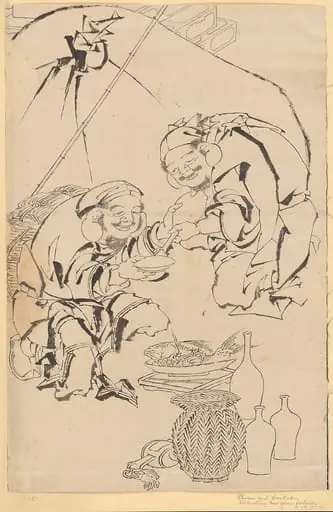
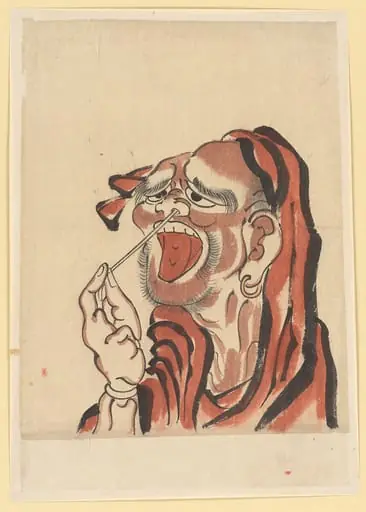
- 六十余州名所図会 武蔵 隅田川 雪の朝|Morning after a Snowfall, the Sumida River, Musashi Province, from the series Views of Famous Places in the Sixty-Odd Provinces
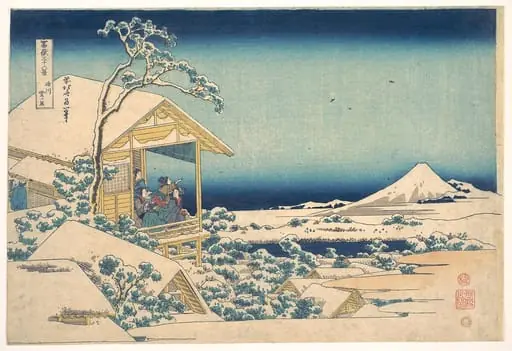 冨嶽三十六景 礫川雪の旦|Morning after the Snow at Koishikawa in Edo (Koishikawa yuki no ashita), from the series Thirty-six Views of Mount Fuji (Fugaku sanjūrokkei)
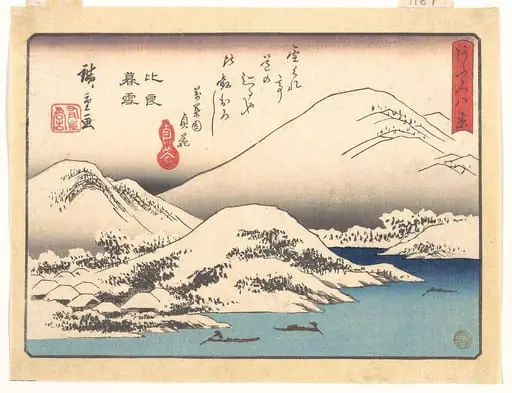 歌川広重画 「あふみ八景 比良暮雪」|Evening Snow at Mount Hira, from the series Eight Views of Ōmi (Ōmi hakkei)
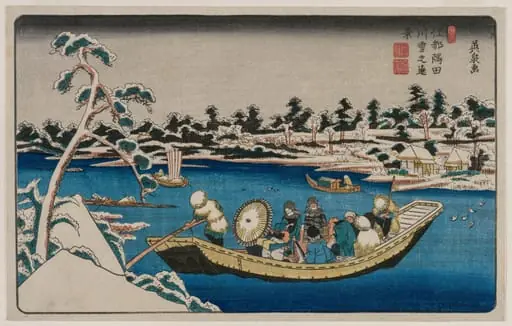 A Distant View of Snow on the Sumida River in Edo
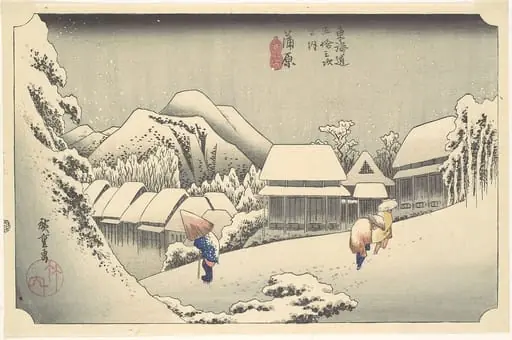 東海道五十三次之内 蒲原 夜の雪|Evening Snow at Kanbara, from the series "Fifty-three Stations of the Tōkaidō"
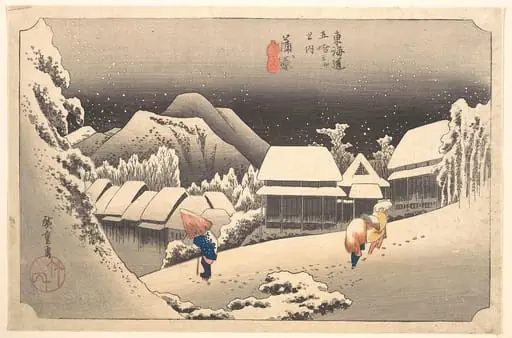 東海道五十三次之内 蒲原 夜の雪|Evening Snow
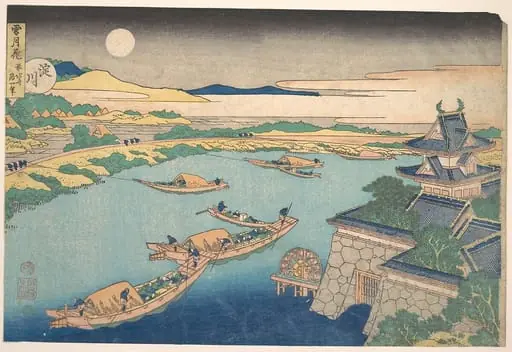 雪月花 淀川|Moonlight on the Yodo River (Yodogawa), from the series Snow, Moon, and Flowers (Setsugekka)
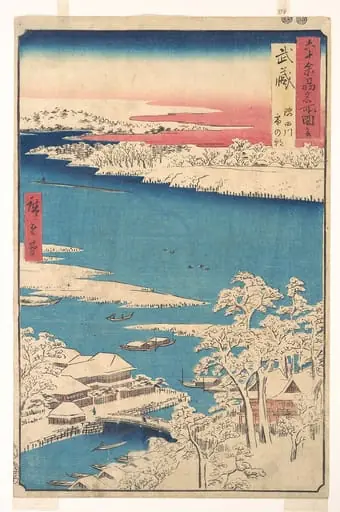
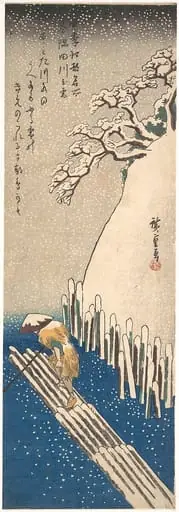 四季江都名所 冬 隅田川之雪|Snow on the Sumida River
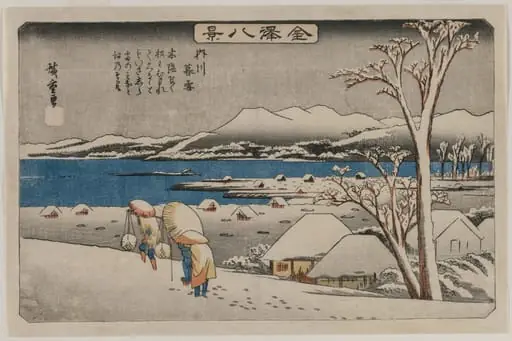 Evening Snow at Uchikawa, from the series Eight Views of Kanazawa