Artwork
Autumn
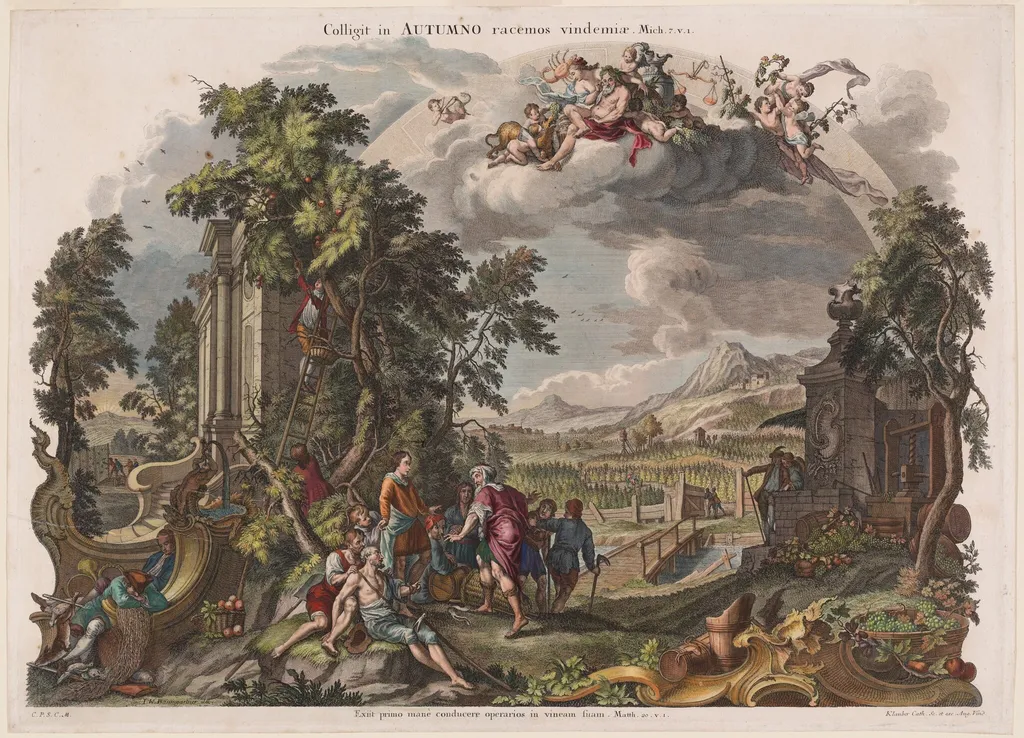
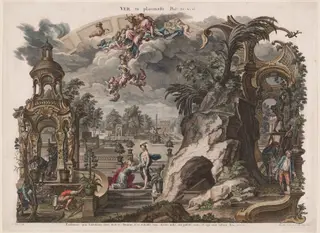
Autumn is an ink print by the Baroque artist Joseph Sebastian Klauber. It dates from 1701 and is held in the collection of the National Gallery of Art.
- Inscription
- Inscribed:across top in plate: Colligit in AUTUMNO racemos vindemiae. Mich. 7.v.1.; lower left in plate [in grass]: I.W. Baumgartner del.; lower left in plate: C.P.S.C.M.; bottom margin in plate: exiit primo manè conducere operarios in viream suam. Matth. 20.v.1.; lower right in plate: Klauber Cath. sc. et exc. Aug. Vind.
About this work
Overview
Created in 1701, this print by Joseph Sebastian Klauber combines engraving and etching on laid paper, subsequently enriched with extensive hand‑coloring. The work depicts a bustling harvest scene, rendered in a palette of muted greens, browns, blues and occasional reds, and is framed by a dramatic sky punctuated with floating figures.
Subject & Meaning
The composition centers on a vineyard at work: laborers carry baskets of grapes, a figure climbs a tree to gather fruit, and a stone pavilion with columns anchors the left side. The ethereal silhouettes in the upper right suggest allegorical references to abundance or the passage of time, aligning the image with the seasonal theme of autumn.
Technique & Style
Klauber employed both engraving and etching to outline the intricate figures and architectural elements, then applied hand‑color to enhance depth and texture. The interplay of precise line work with soft, varied coloration reflects Baroque sensibilities, emphasizing drama, movement, and a rich visual narrative.
History & Provenance
The print was produced in the early eighteenth century, a period when German printmakers frequently blended technical precision with decorative coloring. While specific ownership records are scarce, the work is catalogued among Klauber’s known prints and remains a representative example of his output during the Baroque era.
Own this work as a print
Artist & collection

 Mars's Revenge on Adonis
 May and June
 Landscape with Men Fishing by Moonlight
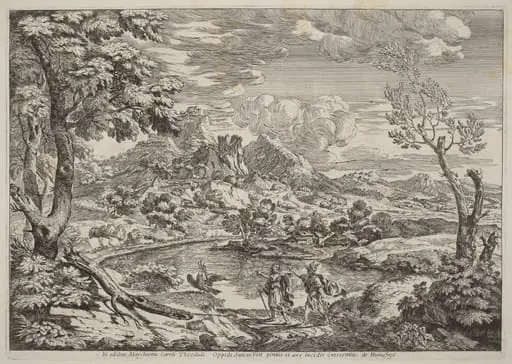 A Man Showing Mercury the Eagle of Jupiter
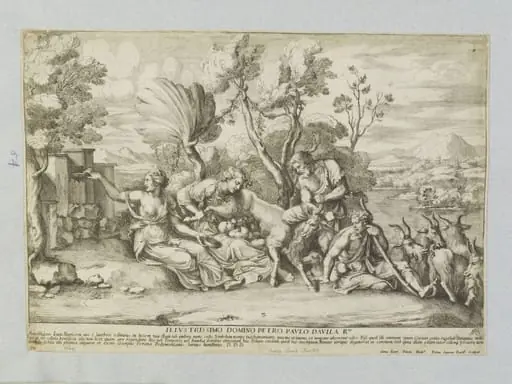 Untitled
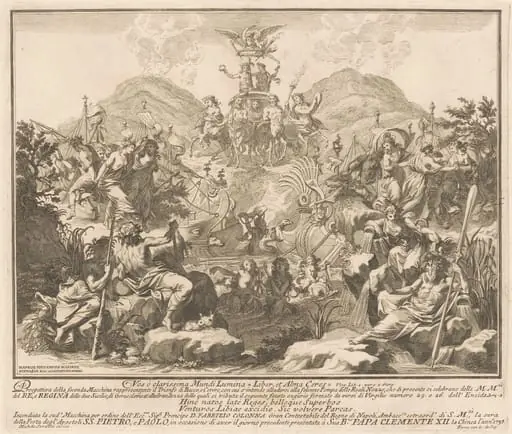 The Seconda Macchina for the Chinea of 1738: The Triumph of Bacchus and Ceres
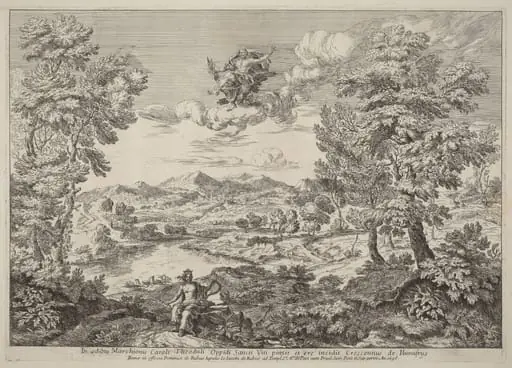 Jupiter in a Landscape
 Jesus and the Samaritan
 The Baptism of Christ, Set in a Mountainous Landscape