Artwork
Victor Hugo
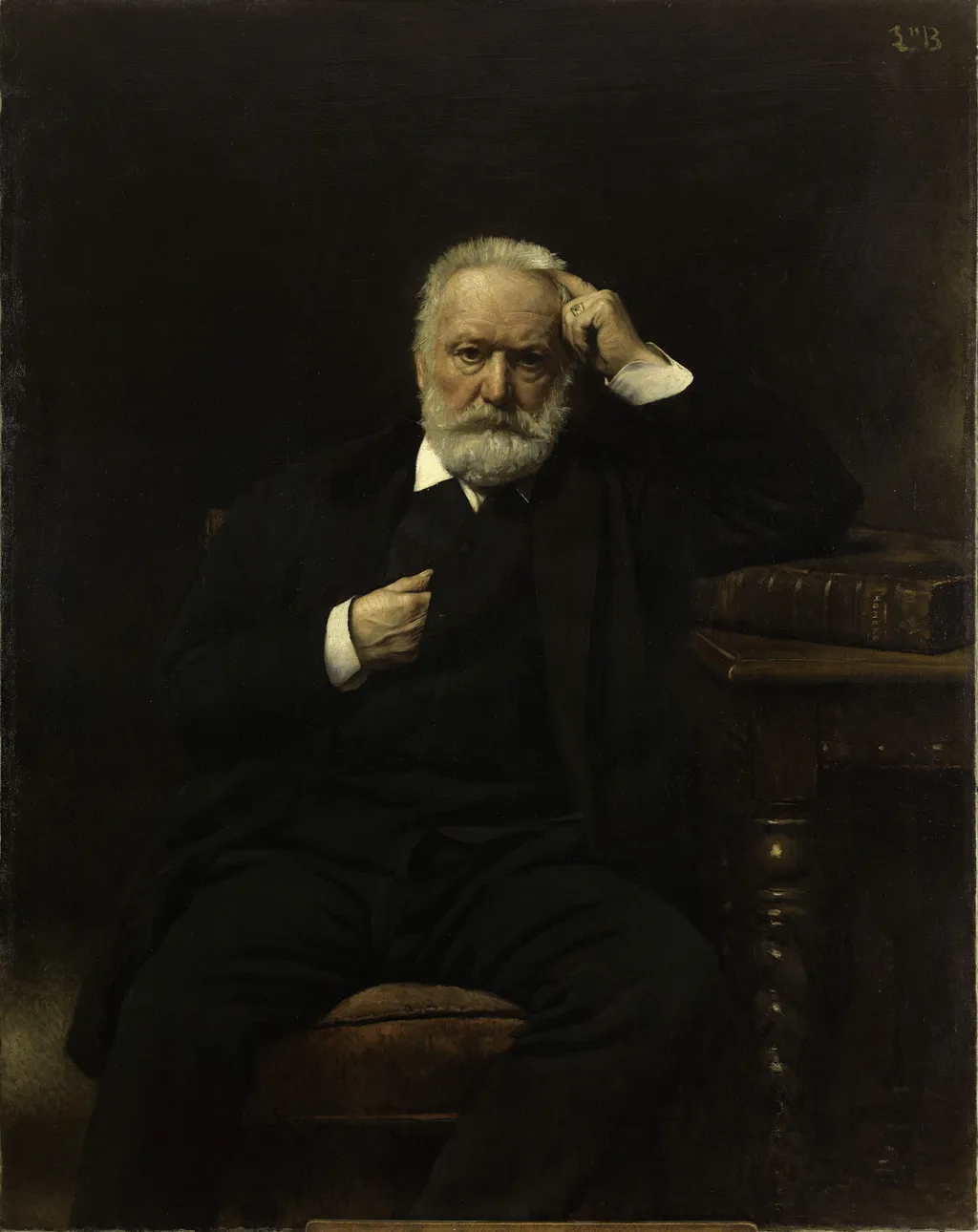
Victor Hugo is an oil painting by the Academic Art artist Léon Bonnat. It dates from 1890 and is held in the collection of the Palace of Versailles.
About this work
Overview
Measuring 137 by 109 centimetres and executed in a vertical format, the work depicts the celebrated writer Victor Hugo at the age of 77.
Victor Hugo is an oil-on-canvas portrait painted by the French artist Léon Bonnat in 1879. Measuring 137 by 109 centimetres and executed in a vertical format, the work depicts the celebrated writer Victor Hugo at the age of 77. The painting is currently held by the Musée d'Orsay but has been on long-term deposit at the Palace of Versailles since 1948. It is a significant example of late nineteenth-century French academic portraiture, combining psychological intensity with a dramatic use of light and shadow to memorialise one of France's most revered literary figures.
Subject & Meaning
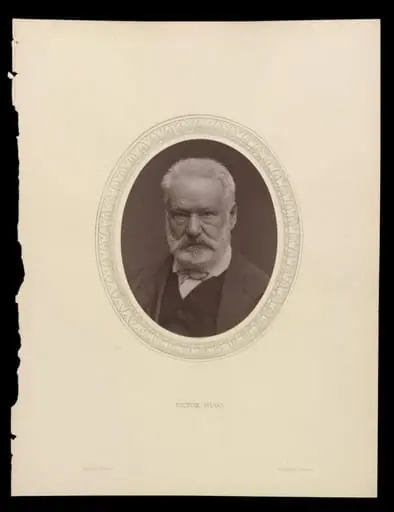
The portrait presents Victor Hugo seated in contemplation, his white hair and full gray beard emerging from a dark, undefined background. He wears a dark suit with a white shirt visible at collar and cuffs, his left hand pressed against his temple in a gesture of deep thought, while his right hand grips his lapel. To his right stands a small wooden table bearing a large book with "HOMERE" visible on its spine, an allusion to Homeric epic that connects the aging writer to the classical tradition of poetic greatness. The composition isolates Hugo's face and hands as the sole illuminated elements, using chiaroscuro to create a meditative, almost spiritual atmosphere. The book functions as both attribute and symbol, asserting Hugo's place within a lineage of monumental authors while the somber palette and withdrawn posture suggest mortality and the weight of a lifetime's creative labor.
Technique & Style
Bonnat employed oil paint on canvas, working in the smooth, highly finished manner characteristic of academic painting. The facial features are rendered with meticulous precision, capturing the texture of aging skin and the penetrating gaze of the sitter, while the dark clothing and background are handled with comparatively looser brushwork. Dramatic frontal lighting emerges from the upper left, concentrating warm illumination on the face and hands and casting subtle shadows that model the forms. The palette is restricted to blacks, deep browns, and muted whites, creating a tonal unity that emphasizes the psychological over the decorative. The artist's small signature appears in the upper right corner. This restrained color range and focused lighting demonstrate Bonnat's mastery of tenebrism, a technique he refined across his portrait practice to convey interiority and gravitas.
History & Provenance
The painting was exhibited at the Paris Salon in 1879, the year of its creation. It entered public collections in 1919 through a donation by Jeanne Hugo, the writer's granddaughter, who retained a life interest in the work. Following her death in 1941, the painting was transferred to the Musée du Louvre, where it remained from 1943 to 1948. In 1948 it was placed on deposit at the Palace of Versailles, where it remains physically located, though administratively it is assigned to the Musée d'Orsay. Its inventory numbers are MV 7383 and RF 2247. A copy by Daniel Saubès, signed by Bonnat, has been held at the Maison de Victor Hugo since 1903.
Context
Léon Bonnat, born in Bayonne in 1833 and died in 1922, was a leading figure of French academic art and one of the most sought-after portraitists of the Third Republic. His practice centered on penetrating character studies of prominent contemporaries, and his portrait of Victor Hugo belongs to a series of depictions of the aging writer by various artists during Hugo's final years. The work exemplifies the academic movement's emphasis on technical virtuosity and dignified representation of notable subjects. Critical reception at the 1879 Salon would have situated the painting within contemporary debates about the proper representation of literary celebrity, with Bonnat's sober approach offering an alternative to more flamboyant Romantic portraits of Hugo from earlier decades. The painting's subsequent donation by family descendants underscores its role as a national monument to French cultural heritage.
Legacy
The portrait has maintained its status as a definitive visual record of Victor Hugo in old age, circulating in reproductions and scholarly literature as an icon of French literary history. Its physical location at Versailles, rather than at a dedicated literary museum, reflects the broader institutional distribution of nineteenth-century French painting across national collections. The existence of the Saubès copy at the Maison de Victor Hugo indicates early recognition of the composition's significance and ensured its accessibility to Hugo's public. As part of the Musée d'Orsay's holdings, the work continues to be studied within the context of Bonnat's career and the broader history of academic portraiture, representing a moment when traditional painterly technique was deployed to capture the psychological complexity of a living legend.
Own this work as a print
Artist & collection
Artist
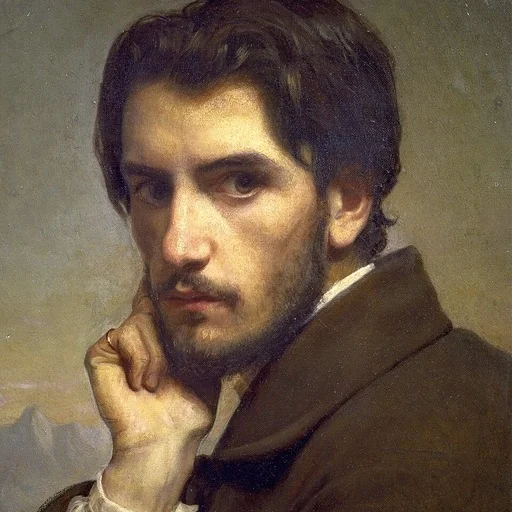
Léon Joseph Florentin Bonnat (French pronunciation:; 20 June 1833 – 8 September 1922) was a French painter, Grand Officer of the Légion d'honneur, art collector and professor at the Ecole des Beaux Arts.