Artwork
Achilles doodt Hector
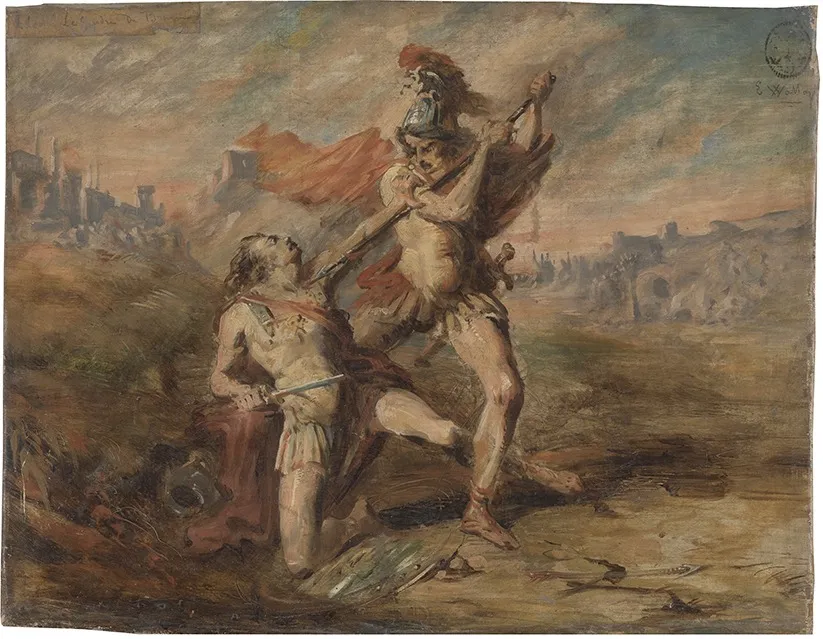
Achilles doodt Hector is an oil painting by the French Romanticist artist Léonce Legendre. It dates from 1831 and is held in the collection of the Groeningemuseum.
About this work
Overview
Achilles doodt Hector is an oil painting by the Belgian artist Léonce Legendre, dated 1831, depicting the climactic duel from Homer's Iliad.
Achilles doodt Hector is an oil painting by the Belgian artist Léonce Legendre, dated 1831, depicting the climactic duel from Homer's Iliad. The work measures 43 by 55 centimetres and is executed in oil paint with a loose, sketch-like handling that suggests it may have a preparatory or unfinished character. It is held in the collection of the Groeningemuseum in Bruges, part of the Musea Brugge network, under the accession number 0000_GRO0648_I. The painting represents a significant moment in Greek mythology and exemplifies the Romantic-era fascination with classical heroic subjects, rendered here with an informal, energetic brushwork that distinguishes it from more polished academic treatments of the same theme.
Subject & Meaning
The painting illustrates the fatal confrontation between the Greek warrior Achilles and the Trojan prince Hector, the pivotal episode in Homer's Iliad. The standing figure, identified as Achilles by his plumed helmet and armour, raises a long spear or staff above his head to deliver the killing blow. Hector kneels before him, body tilted backward, head thrown back in defeat, grasping a short blade in his right hand. A shield lies discarded on the barren ground between them. The distant background suggests the besieged city of Troy through indistinct architectural forms and smoky atmospheric effects. A billowing red cloak behind Achilles adds dramatic movement and chromatic intensity. A piece of paper with writing appears in the upper left corner, its purpose unexplained. The composition captures the precise moment of triumph and mortality, embodying themes of heroism, vengeance, and the transience of martial glory that permeate the Iliad narrative.
Technique & Style
Legendre employed oil paint on an unstated support, working with loose, visible brushwork that gives the surface an informal, sketch-like quality. The palette is restrained: earthy browns, muted ochres, and dusty reds dominate, set against a pale blue-gray sky. Light falls unevenly across the figures, modelling their musculature without sharp definition, while shadows are broadly painted. The overall finish is notably informal, suggesting either a preparatory study or a deliberately rapid execution. This handling contrasts with the polished finish typical of academic history painting in the early nineteenth century and aligns the work with emerging Romantic sensibilities that valued immediacy and emotional impact over classical refinement. A circular stamp mark in the upper right indicates some form of collection or studio marking.
History & Provenance
The painting is dated 1831, placing it early in Legendre's career, though the precise circumstances of its commission remain unrecorded in available sources. It entered the collection of the Groeningemuseum in Bruges, where it is now held as part of the Musea Brugge network. The museum's online database records it under the accession number 0000_GRO0648_I. A photographic reproduction was made by Hugo Maertens on 13 April 2012, and the image was subsequently made available through the LUKAS - Art in Flanders digital platform under a CC0 public domain dedication. The work's presence in a major Flemish municipal museum indicates its recognition within the regional artistic heritage, though specific exhibition history prior to its current housing is not documented in the available sources.
Legacy
The painting's afterlife has been primarily institutional rather than cultural. Its digitisation and dissemination through the LUKAS platform and Wikimedia Commons have made it accessible for study and comparison with other treatments of the Achilles and Hector narrative, most notably the engraved composition by Crispijn van de Passe the Elder from 1613, which presents the same subject with very different formal conventions. The work has not, on available evidence, generated significant scholarly literature or influenced subsequent artistic practice in a traceable way. Its current public domain status facilitates educational use and reproduction. As a document of early nineteenth-century Belgian engagement with classical mythology, it contributes to understanding the diffusion of academic and Romantic themes beyond major metropolitan centres, even as Legendre himself remains a marginal figure in standard art-historical narratives.
Artist & collection

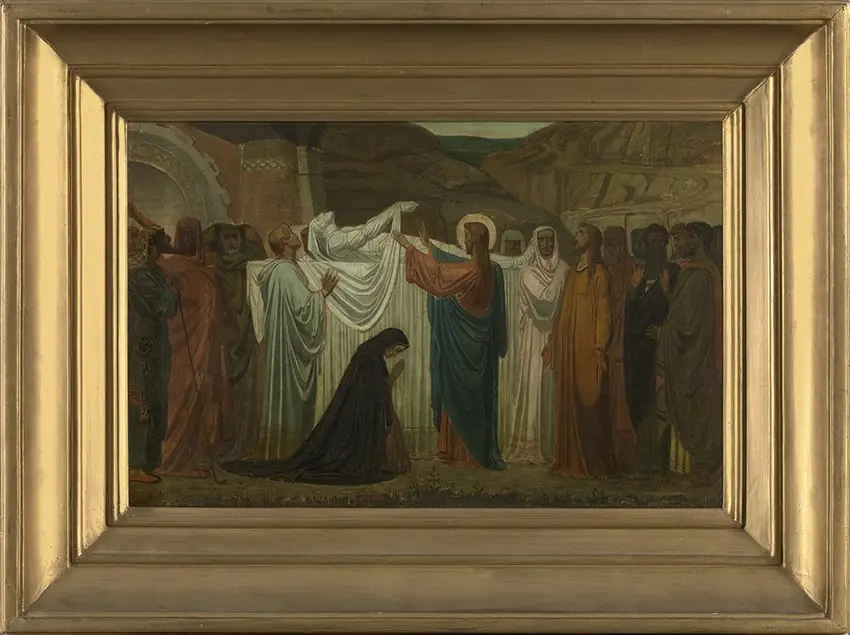
- Killer of Darius before Alexander (King Porus and Alexander the Great)
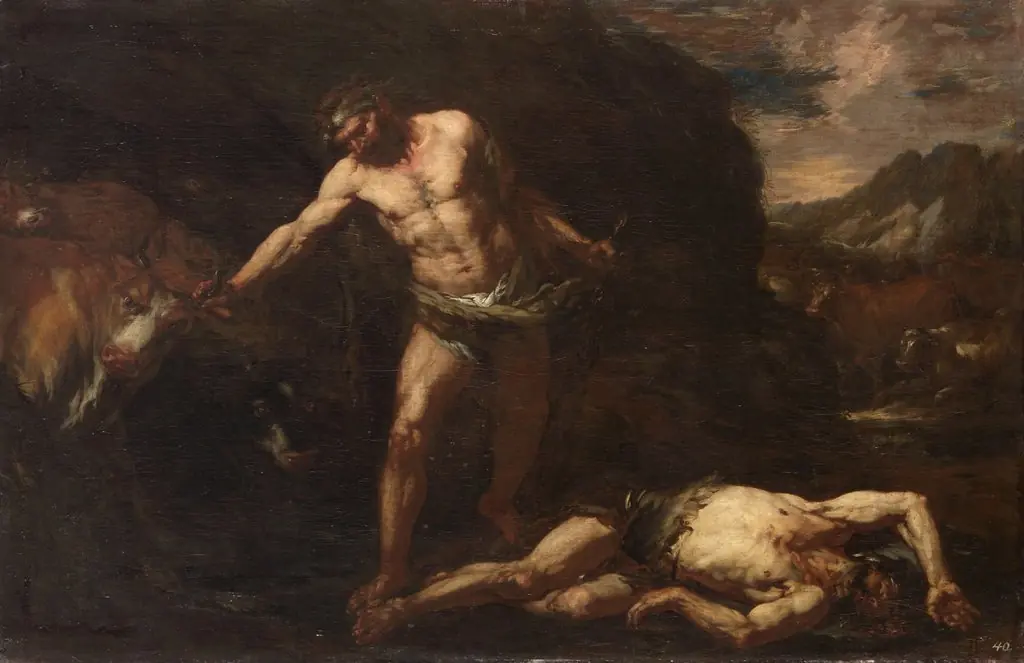 Hercules tötet den Riesen Cacus und raubt die Rinder des Geryoneus
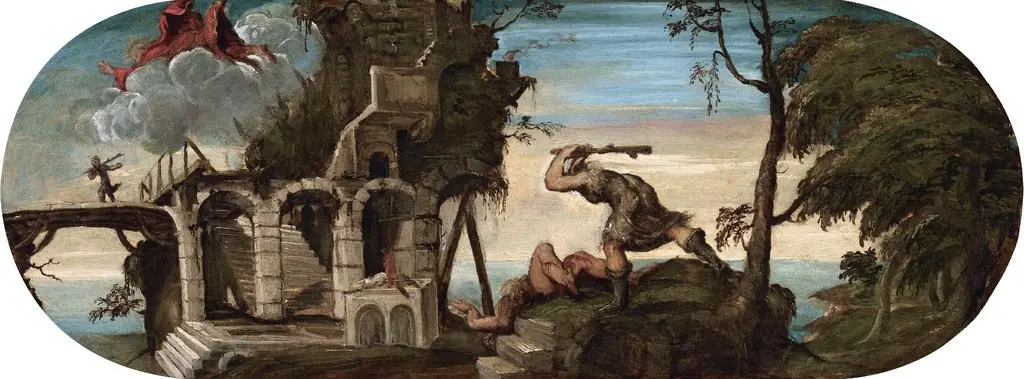 Cain Slaying Abel
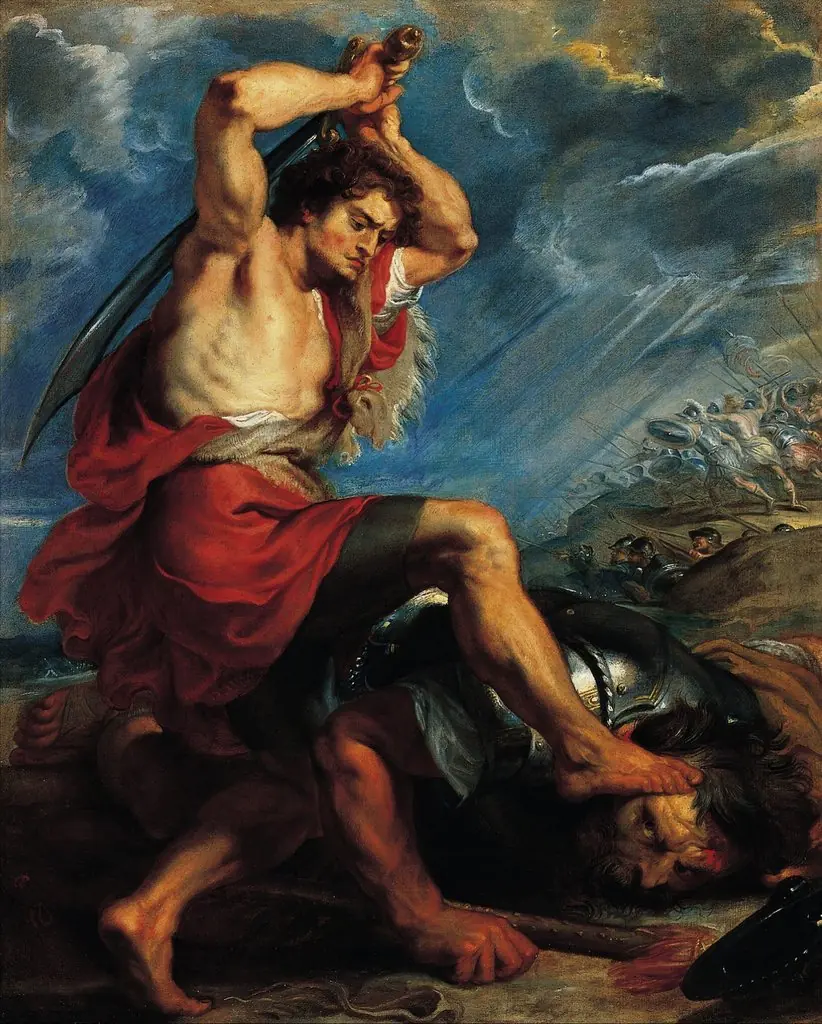 David Slaying Goliath
 Saint Martin Sharing his Coat with a Beggar
 Mercury and Argus
 Death of Epaminondas
 Killing an Enemy
 Virtue Overcoming Avarice
 The Sack of Jerusalem by the Romans
 Alexander the Great and Diogenes
 Martelaren in het circus