Artwork
Old Roxbury
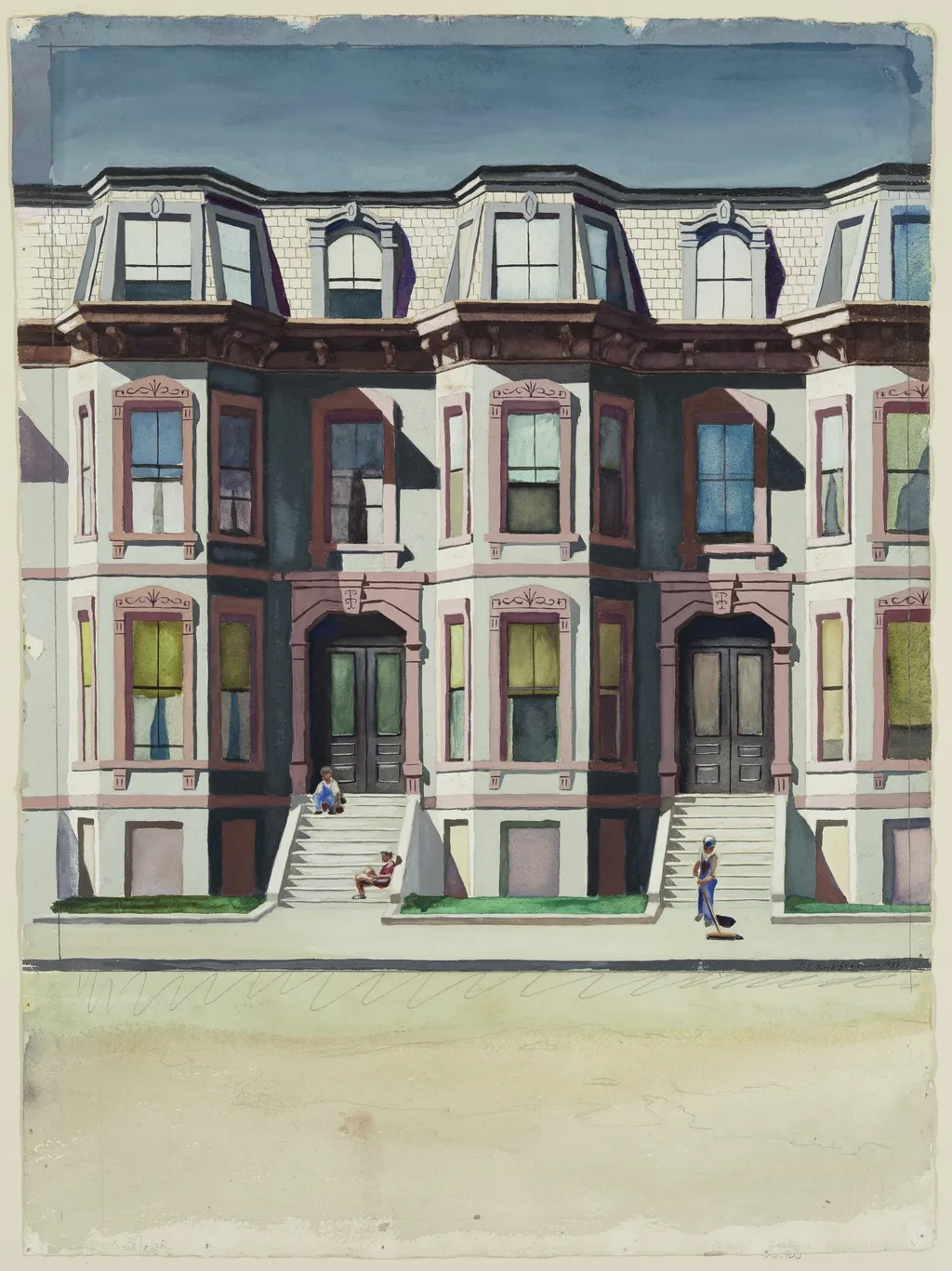
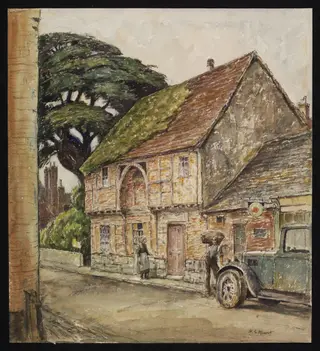
Old Roxbury is a gouache painting by the Regionalist artist Lawrence Kupferman. It dates from 1938 and is held in the collection of the Detroit Institute of Arts.
About this work
Overview
Old Roxbury is a 1938 gouache painting by American artist Lawrence Kupferman. It captures a modest urban streetscape in Boston’s Roxbury neighborhood, rendered with opaque watercolor that emphasizes solid forms and muted chromatic harmony. The work is part of the permanent collection at the Detroit Institute of Arts, where it remains accessible to the public.
Subject & Meaning
The painting portrays a row of three-story residential buildings with brown doors and windows, accented by soft pink trim against pale walls. Figures on the stoops and sidewalk suggest quiet daily life, avoiding dramatic narrative. Kupferman’s focus on ordinary architecture reflects an interest in the dignity of everyday urban environments, rather than idealized or monumental subjects.
Technique & Style
Gouache was chosen for its opacity and capacity to build layered color with crisp edges. Kupferman used the medium to define architectural planes with clarity, while subtle tonal shifts suggest light and shadow without relying on traditional perspective. The texture of the paint enhances the tactile quality of brick, wood, and stone, grounding the scene in physical reality.
History & Provenance
Created in 1938 during Kupferman’s early career, the painting emerged from his engagement with American Scene painting and regionalist themes. It entered the Detroit Institute of Arts’ collection shortly after completion, likely through acquisition or donation. Its preservation reflects institutional interest in mid-century American realist works from the Depression era.
Context
In the late 1930s, many American artists turned to local environments as subjects, responding to New Deal cultural initiatives and a broader interest in national identity. Kupferman’s depiction of Roxbury aligns with this trend, offering a quiet counterpoint to urban grandeur or rural nostalgia, instead honoring the texture of working-class neighborhoods.
Legacy
Though not widely exhibited, Old Roxbury remains a representative example of Kupferman’s commitment to observational realism. It contributes to the understanding of how regional architecture and ordinary life were documented by artists during a period of social and economic transformation in the United States.
Artist & collection
Artist
Lawrence Kupferman painted scenes of New England in gouache, a water-based paint that stays flat and bright on paper.

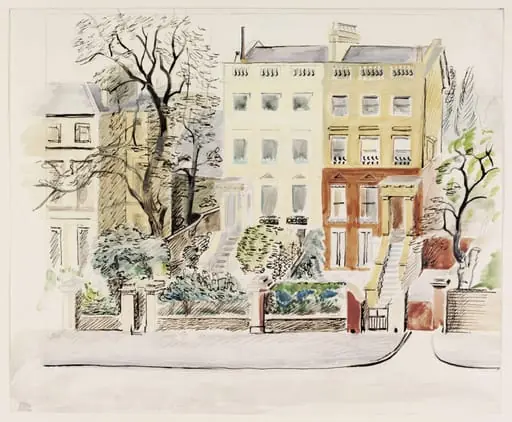
- Houses in Marlborough Hill, St. John's Wood
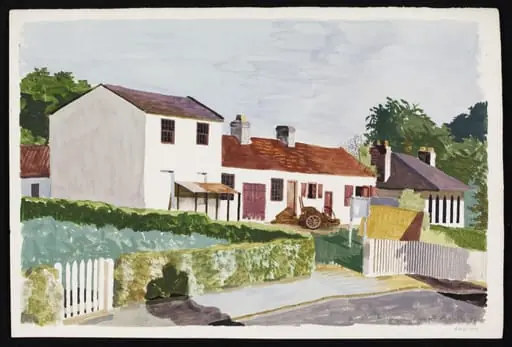 The Smithy, Crathorne
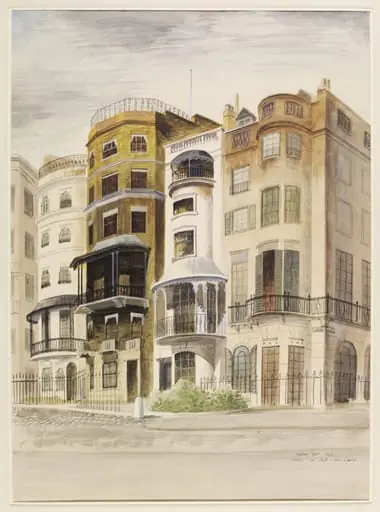 93 to 97 Park Lane, W.1.
 Water Tower #4
 39 & 40 Curzon Street, Mayfair
 Provincetown Having Its Morning Fog
 The Service Flag
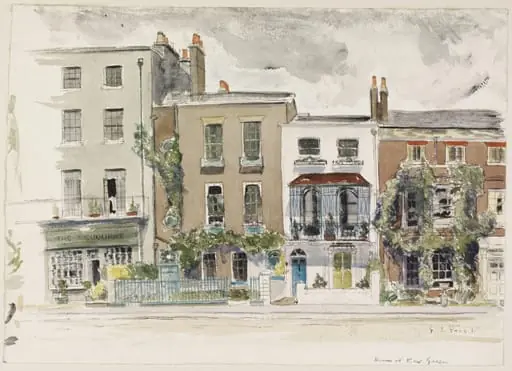 Houses on the Green, Kew
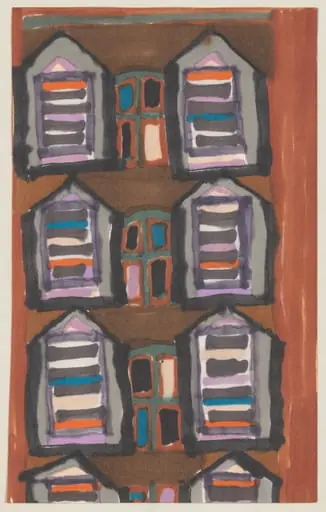 Untitled
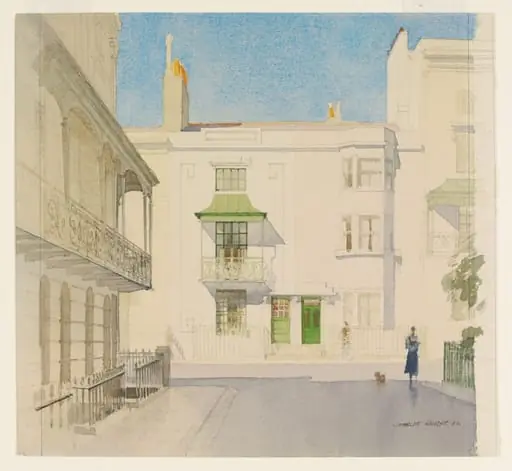 Regency Brighton: Houses in Russell Square, Sussex
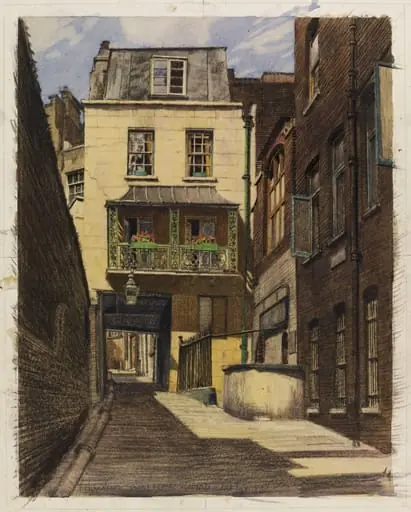 The Watch House, Strand Lane, W.C.2.
 Old House, Wilton