Artwork
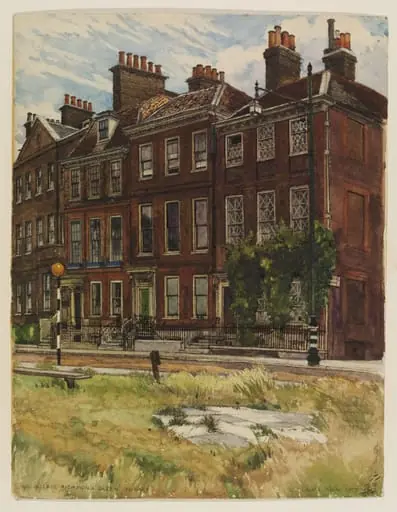
The Watch House, Strand Lane, W.C.2.
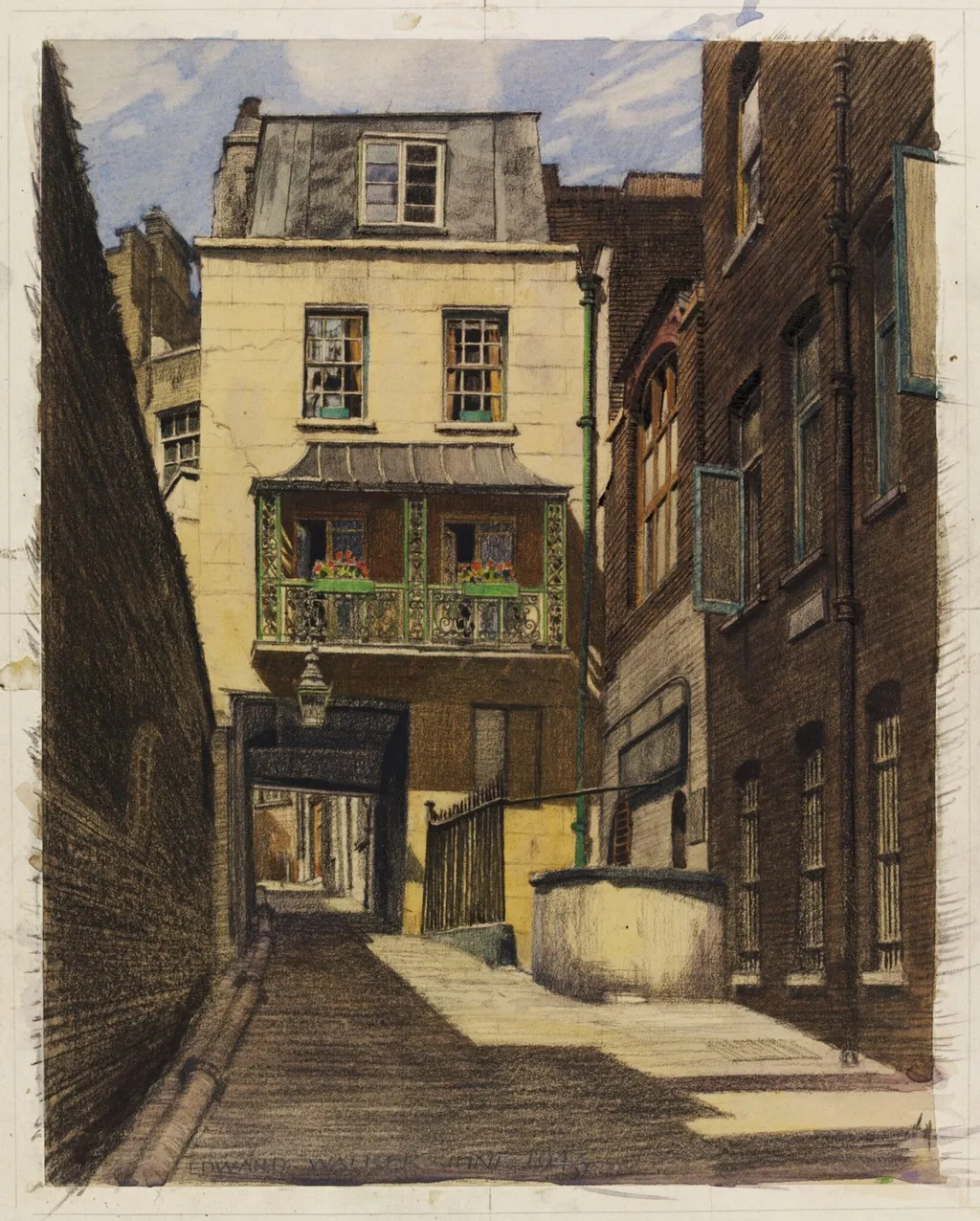
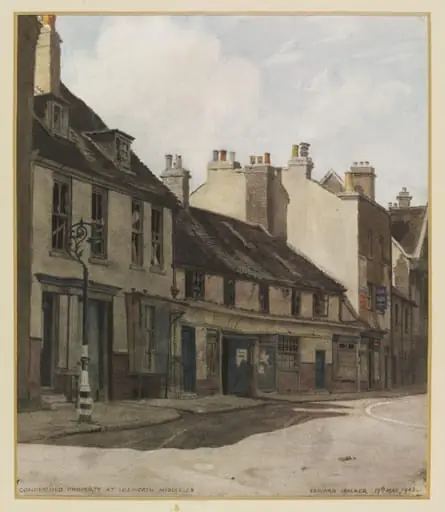
The Watch House, Strand Lane, W.C.2. is a watercolor work on paper by the Social Realist artist Walker. It dates from 1943 and is held in the collection of the Victoria and Albert Museum.
About this work
The artist used soft colors and loose brushstrokes to show the quiet, damp feel of the place.
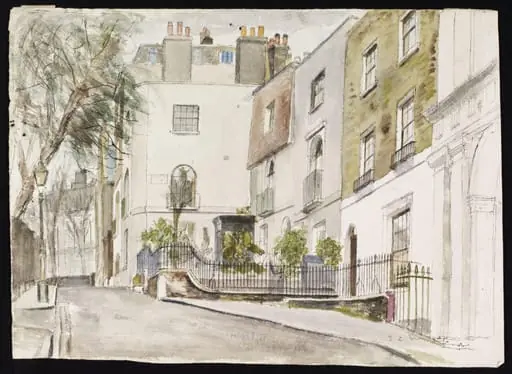
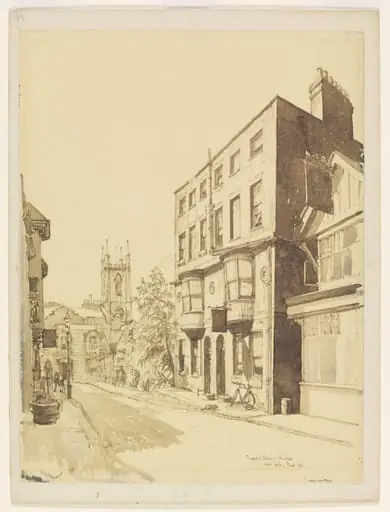
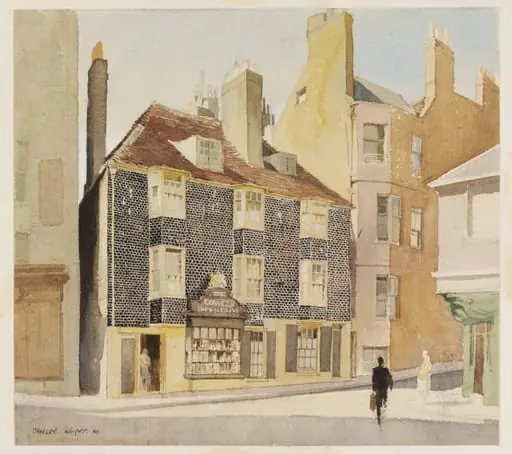
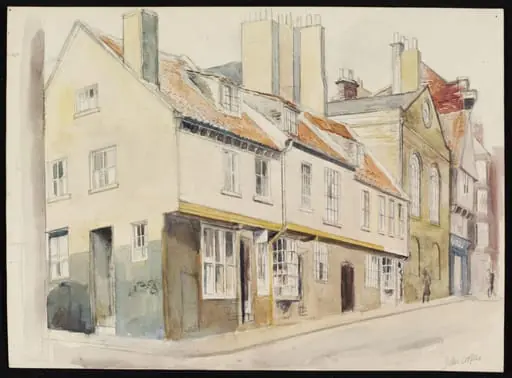
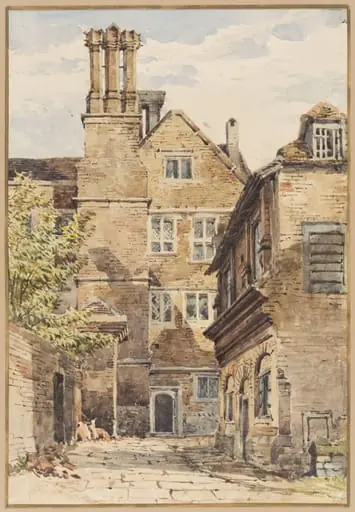
This painting shows a narrow alley between old brick buildings. One side has a small balcony with green railings and a few potted flowers. The alley floor is wet, and a large stone basin sits near the center. The buildings look worn, with dark roofs and small windows.
The title says this is Strand Lane in London, painted in 1943. The artist used soft colors and loose brushstrokes to show the quiet, damp feel of the place.
Check out the Victoria and Albert Museum to see more works like this.
Overview
Painted in 1943, this watercolour by Walker captures a modest urban niche in central London: the Watch House on Strand Lane. Created during the Second World War, it belongs to the Recording Britain project, a government-backed effort to visually archive architectural and cultural scenes deemed vulnerable to wartime destruction or postwar change. The work is one of more than 1,500 produced by nearly 100 artists under the initiative, each contributing a quiet testament to everyday British environments.
Subject & Meaning
The scene portrays a narrow, damp alleyway flanked by weathered brick buildings, centered by a large stone basin. A small balcony with green railings and potted plants suggests private life within the urban fabric. The Watch House, once a guard post for the nearby Thames, now functions as a quiet relic.
Its depiction emphasizes endurance and overlooked detail, reflecting the project’s aim to honor ordinary spaces that embodied continuity amid national upheaval.
Technique & Style
Walker employed loose, fluid brushwork and muted tones to evoke the damp, subdued atmosphere of the lane. Watercolour’s transparency allows the paper’s texture to suggest aged brick and wet stone, while soft washes convey the diffused light of an overcast day. The absence of sharp detail and the gentle handling of shadows reinforce the scene’s stillness, aligning with the project’s preference for atmospheric realism over dramatic effect.
History & Provenance
Commissioned by the Recording Britain project under Sir Kenneth Clark, the painting was acquired by the Victoria and Albert Museum as part of its core collection. The initiative, active between 1939 and 1945, systematically gathered works from artists across England to create a visual archive. Walker’s contribution, like others, was preserved not for aesthetic novelty but as a documentary record of places whose survival was uncertain during wartime.
Context
The Recording Britain project emerged as a cultural response to the threat of wartime destruction and rapid modernization. Urban alleyways like Strand Lane, often dismissed as obsolete, were valued for their historical resonance. Artists were directed to capture vernacular architecture and quiet corners, framing them as symbols of national identity. The effort subtly countered wartime despair by affirming the persistence of place and memory.
Legacy
The watercolour remains part of the V&A’s permanent collection, serving as a reference for historians studying wartime cultural policy and urban preservation. While not widely exhibited, it contributes to a broader understanding of how art was mobilized to document the mundane as historically significant. Its quiet presence continues to inform how postwar Britain remembered its prewar landscape.
Artist & collection
Artist
An English watercolorist active in the early 1940s, this artist painted the spires, bridges, and inns of small-town England in quick, transparent washes.