Artwork
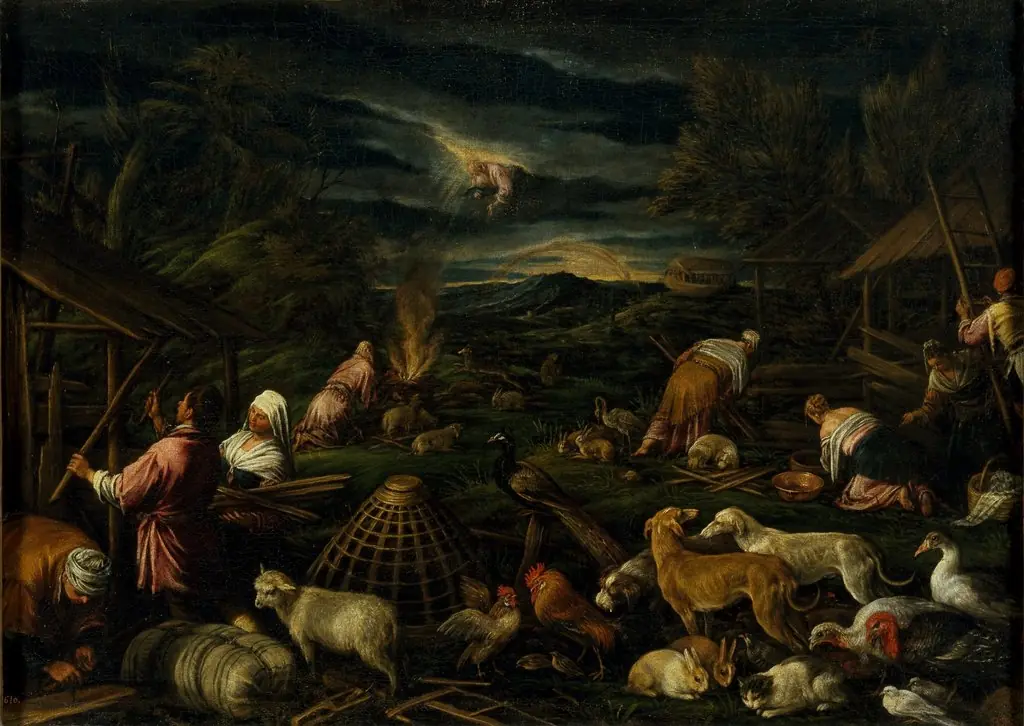
Noahs Dankopfer (Werkstatt)
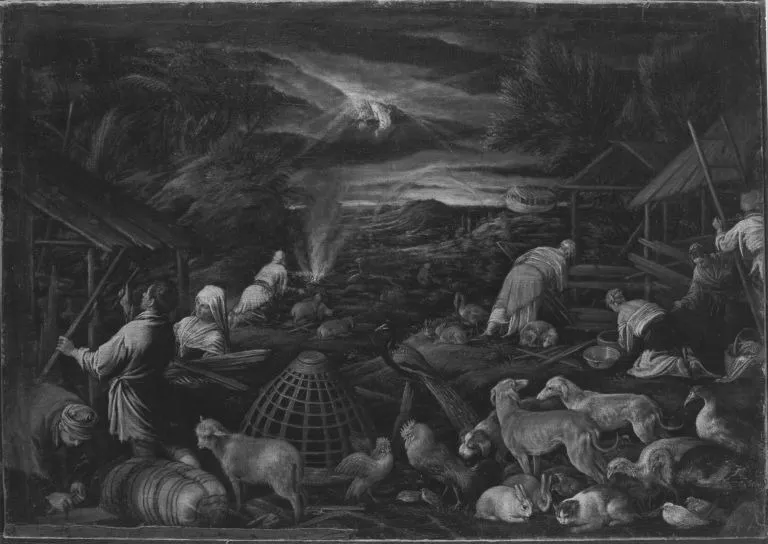
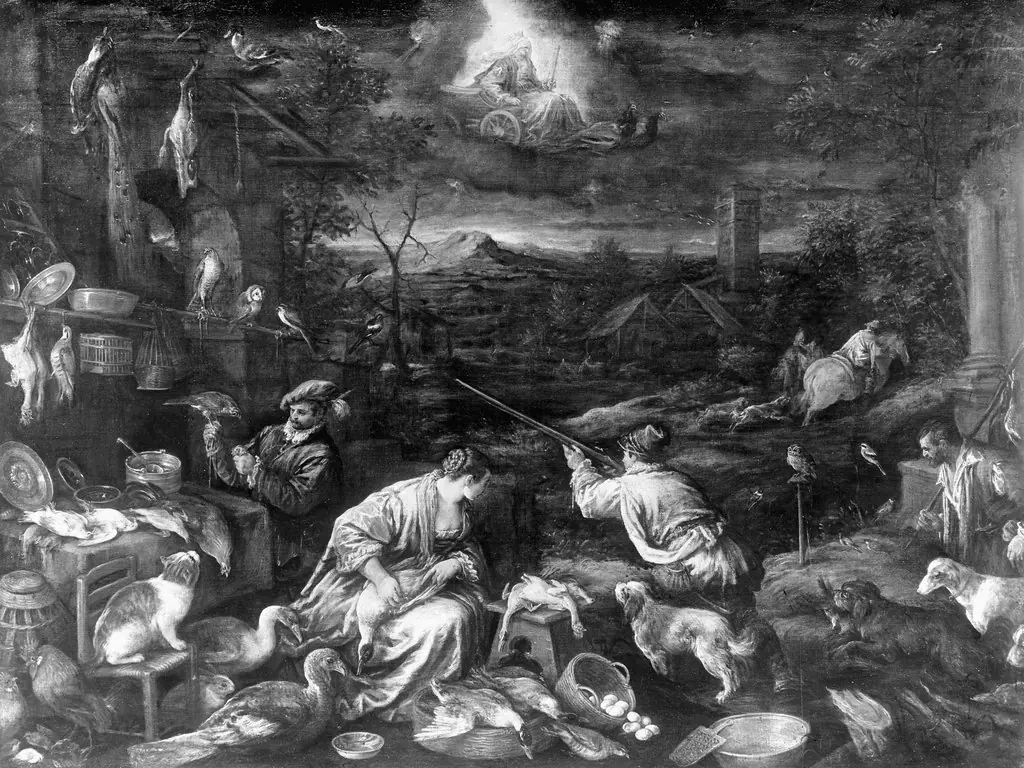
Noahs Dankopfer (Werkstatt) is an unspecified painting by the Venetian Renaissance artist Leandro Bassano. It dates from 1599 and is held in the collection of the Bavarian State Painting Collections.
About this work
Overview
It now belongs to the collection of the Alte Pinakothek in Munich and exemplifies the Venetian Renaissance’s approach to narrative scenes.
Leandro Bassano, a late‑sixteenth‑century painter from the Bassano family of Bassano del Grappa, executed the work known as Noah’s Dankopfer (Werkstatt) around 1599. Created within the family’s collaborative workshop, the painting reflects the religious genre that dominated their output. It now belongs to the collection of the Alte Pinakothek in Munich and exemplifies the Venetian Renaissance’s approach to narrative scenes.
Subject & Meaning
The composition depicts the biblical moment after the flood when Noah offers a sacrifice of animals and produce. A cramped interior filled with figures, livestock and a central fire conveys the communal act of thanksgiving. The presence of sheep, chickens and cooking vessels emphasizes the abundance offered, while the storm‑darkened sky visible beyond the doorway hints at the recent divine judgment.
Technique & Style
Bassano employs a pronounced chiaroscuro, allowing the fire’s orange glow to pierce deep shadows that envelop the wooden walls and surrounding figures. This contrast heightens the three‑dimensionality of the scene and draws attention to the ritual actions of the participants. The painter’s handling of texture, rough timber, furred animals and flickering light, demonstrates the Venetian tradition’s focus on colour and atmospheric effects.
History & Provenance
After its completion, the painting remained within the Bassano workshop’s inventory before entering private collections in the eighteenth century. It was acquired by the Bavarian state in the early nineteenth century and subsequently assigned to the Alte Pinakothek, where it has been displayed as part of the museum’s holdings of Venetian Renaissance art.
Context
Leandro Bassano worked closely with his brothers under the guidance of their father, Jacopo Bassano, a leading figure in the Veneto’s artistic scene. The family workshop specialized in large‑scale religious narratives intended for churches and private devotion. Noah’s Dankopfer reflects both the collaborative studio practice and the broader Counter‑Reformation demand for vivid, didactic imagery.
Artist & collection
Artist
Leandro Bassano (10 June 1557 – 15 April 1622), also called Leandro dal Ponte, was an Italian Renaissance painter from Bassano del Grappa who was awarded a knighthood by the Doge of Venice.

- Der Sommer (Boas und Ruth)
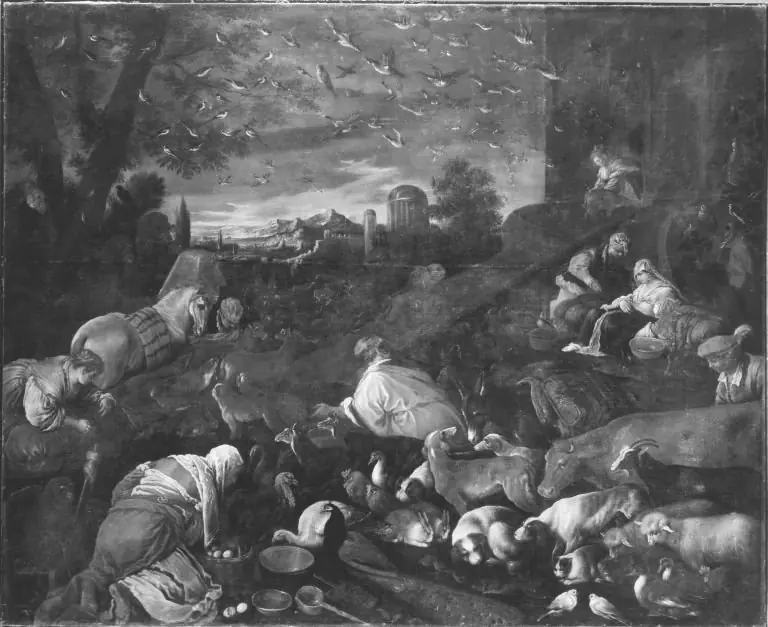 Einzug der Tiere in die Arche Noah (Kopie nach)
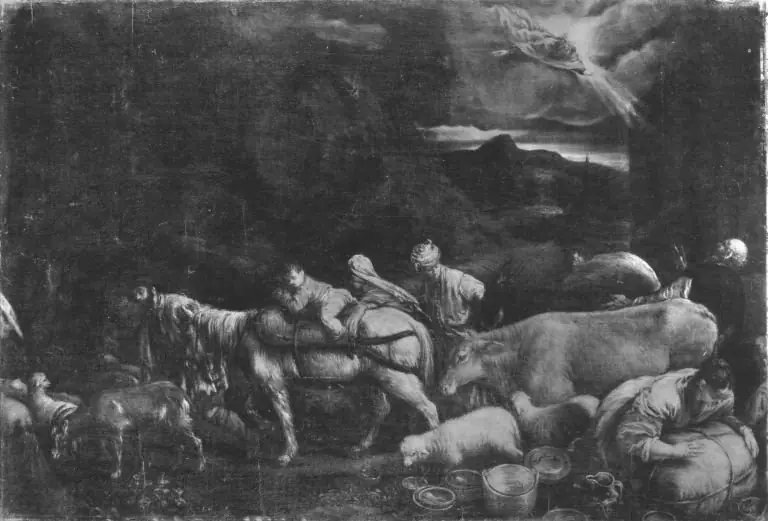 Abrahams Auszug nach Kanaan (Werkstattkopie)
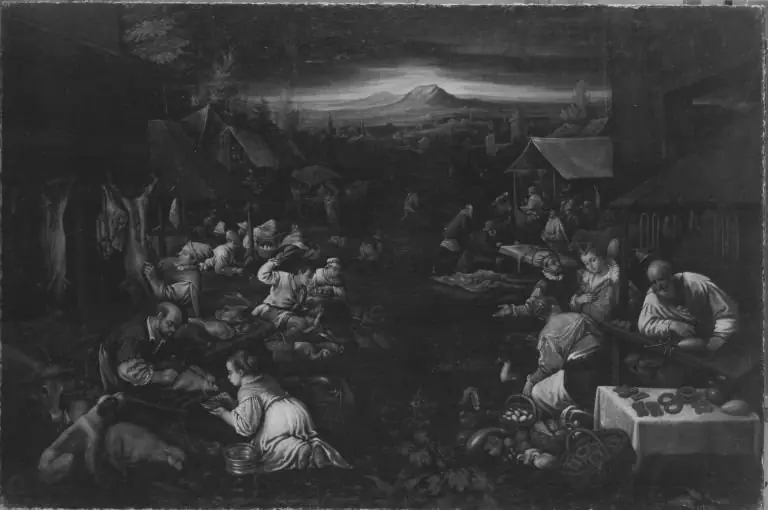 Der Markt
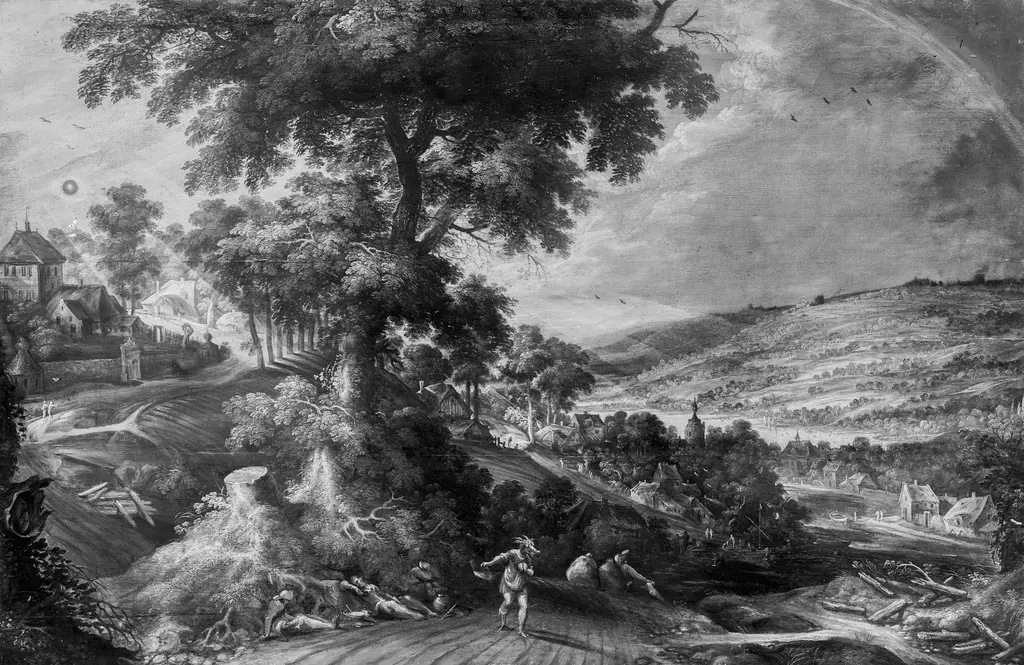 Landscape with the devil who sows weeds
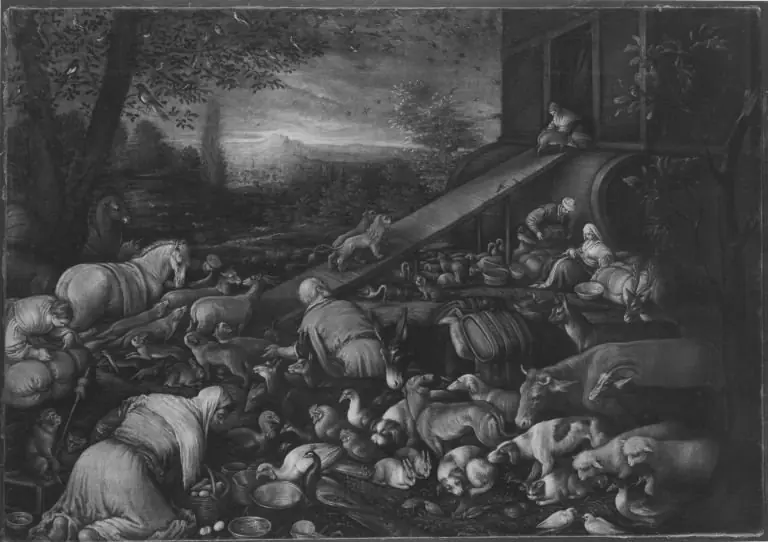 Der Einzug der Tiere in die Arche (Werkstattkopie)
 Allegory of autumn
 Noahs Aufbruch
 Noah after the Flood
 Cattle Piece
 Allegory of the Air
 Landschaft mit Vieh und Hirten