Artwork
五代 雷延美 木刻大慈大悲救苦觀世音菩薩圖|The Greatly Merciful, Greatly Compassionate Rescuer from Suffering, Bodhisattva Guanyin
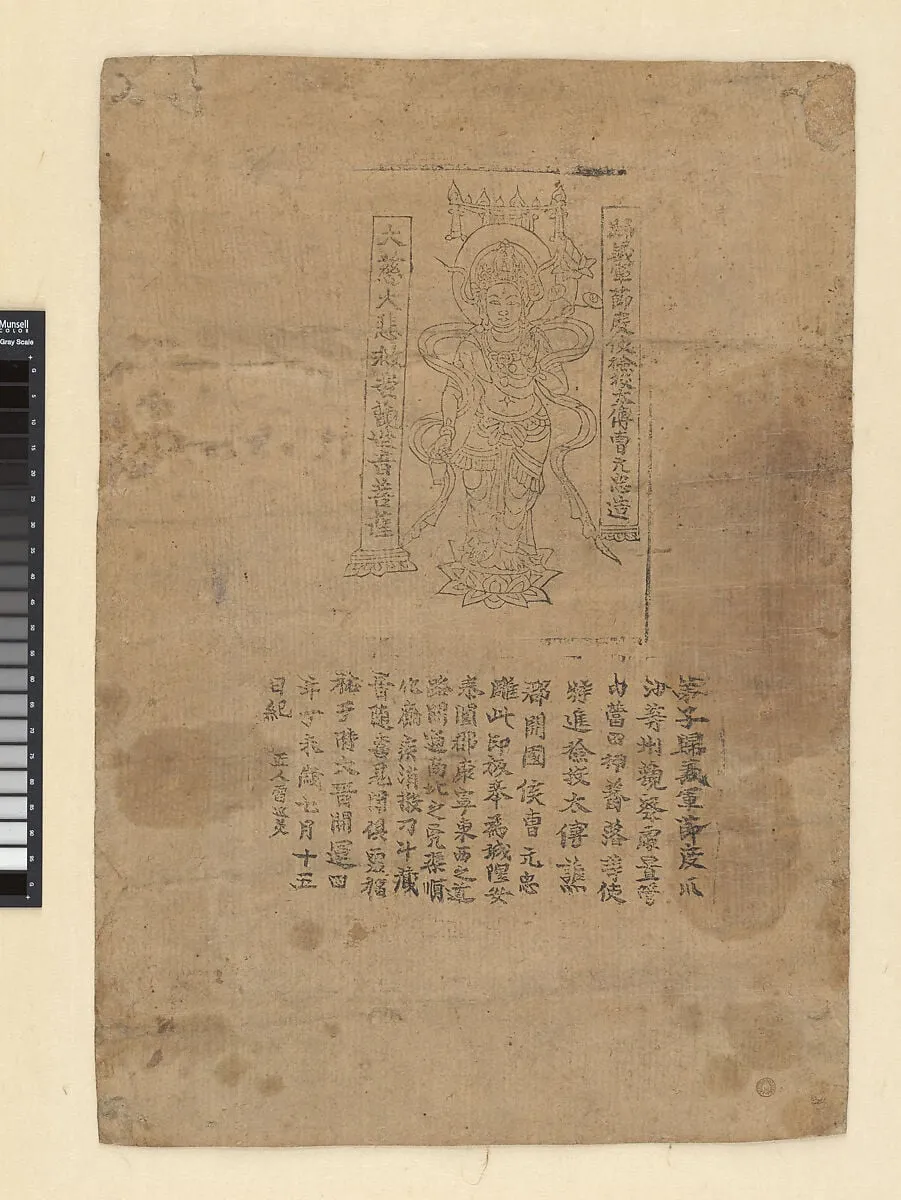
五代 雷延美 木刻大慈大悲救苦觀世音菩薩圖|The Greatly Merciful, Greatly Compassionate Rescuer from Suffering, Bodhisattva Guanyin is an ink print by Lei Yanmei. It dates from 947 and is held in the collection of the Metropolitan Museum of Art.
About this work
Overview
Executed in ink and color on paper, it was produced using carved wooden blocks, a common method for reproducing religious imagery in medieval China.
Created in 947 during the Five Dynasties period, this woodblock print by Lei Yanmei depicts the Bodhisattva Guanyin in a devotional format. Executed in ink and color on paper, it was produced using carved wooden blocks, a common method for reproducing religious imagery in medieval China. The work is now part of the Metropolitan Museum of Art’s collection, preserved as an early example of Buddhist printmaking in East Asia.
Subject & Meaning
The image portrays Guanyin, the Bodhisattva of compassion, standing atop a lotus, symbolizing purity and spiritual emergence. Multiple arms, each holding ritual objects, signify the deity’s boundless capacity to aid suffering beings. The serene facial expression and ornate, pointed crown reflect traditional iconography of enlightened compassion.
Surrounding inscriptions in classical Chinese script invoke protective and salvific powers, reinforcing the image’s function as a focus for prayer and devotion.
Technique & Style
The print was made using woodblock carving, with fine lines defining the figure’s drapery and attributes. Ink and subtle color washes were applied by hand after printing, enhancing details without obscuring the block’s precision. The composition is symmetrical and tightly framed by calligraphic text, which encircles the central figure like a sacred border. The architectural backdrop, with tiered towers, suggests a celestial realm, reinforcing the divine presence.
History & Provenance
The print originates from the Five Dynasties era, a time of political fragmentation but active Buddhist patronage in northern China. Lei Yanmei, a known artisan of the period, produced devotional prints for private and communal use. This example survived through monastic or lay collections, likely preserved due to its religious significance.
It entered the Metropolitan Museum of Art’s holdings in the 20th century, among early Chinese prints acquired for their historical and artistic value.
Context
During the 10th century, woodblock printing expanded rapidly for Buddhist texts and images, enabling wider access to religious imagery beyond elite circles. Guanyin worship grew in popularity, especially among lay devotees seeking protection and mercy. This print reflects the fusion of textual devotion and visual representation, where the printed image itself was considered a vessel of spiritual power, not merely an illustration.
Legacy
As one of the earliest dated Buddhist prints from China, it illustrates the transition from manuscript culture to mass-produced religious art. Its survival offers insight into the technical capabilities and devotional priorities of its time. Later East Asian Buddhist print traditions, including Japanese and Korean variants, built upon this model, making it a foundational reference in the history of religious printmaking.
Artist & collection
Artist
This Chinese artist carved and printed a woodblock image of Guanyin in 947. The print shows the bodhisattva in flowing robes holding a vase and willow branch, surrounded by details that tell a story of mercy. Look for…

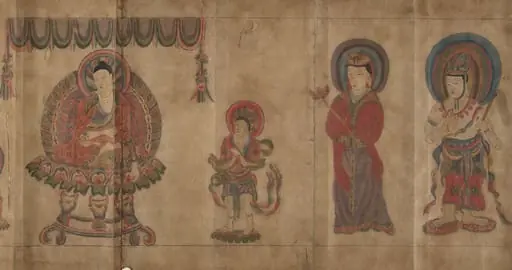 Untitled
 耕織圖
耕織圖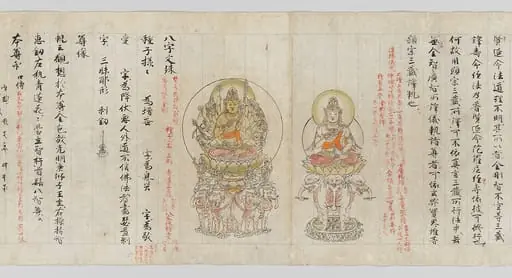 真言諸尊図像抄|Scroll from the Compendium of Iconographic Drawings (Zuzōshō)
 天下名山圖(元) 冊 漢蔡邕模古
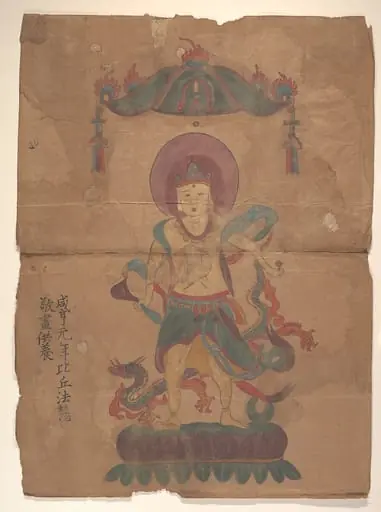 唐 法慧等 菩薩像二幅|Two Buddhist Paintings
 Muni Shri Sukdevji Preaching to the Raja Parikshit
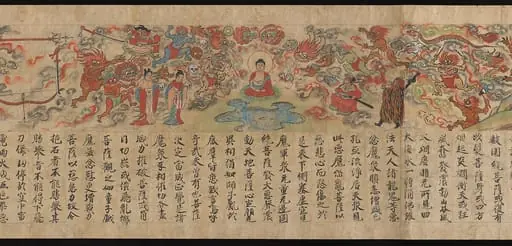 『過去現在絵因果経』 断簡 (松永本)|Scene from The Illustrated Sutra of Past and Present Karma (Kako genzai e-inga-kyō; Matsunaga Version)
 Album of Seasonal Landscapes
 Untitled