Artwork
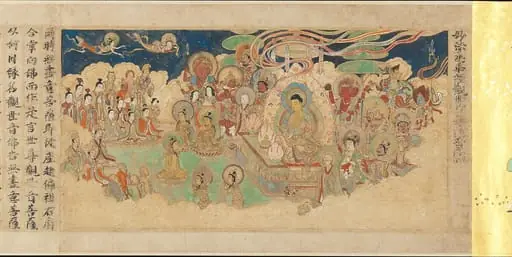
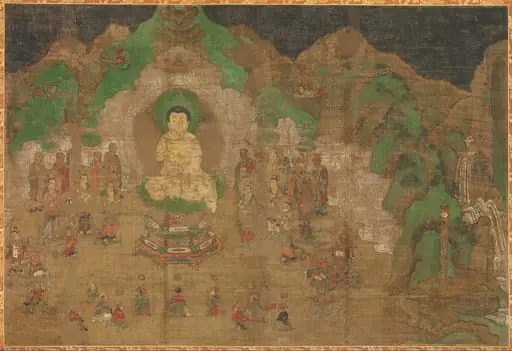
『過去現在絵因果経』 断簡 (松永本)|Scene from The Illustrated Sutra of Past and Present Karma (Kako genzai e-inga-kyō; Matsunaga Version)
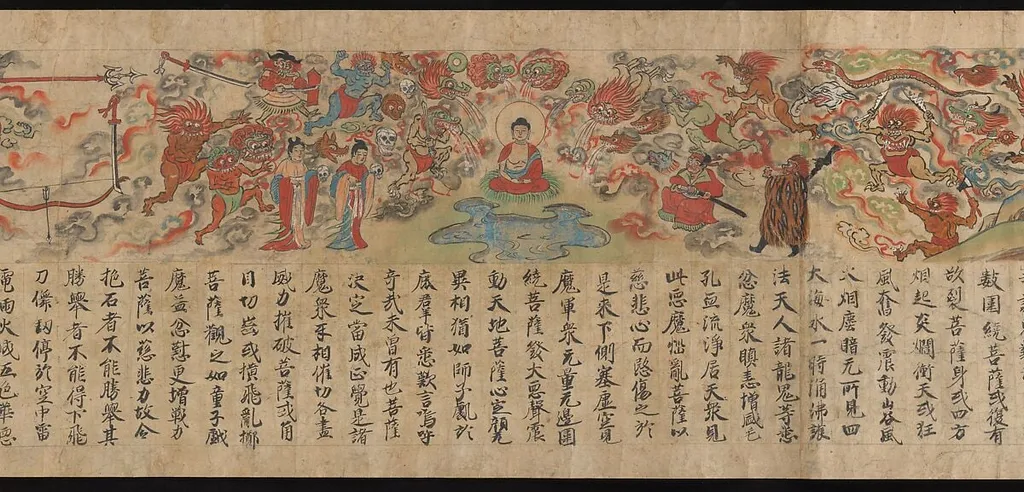
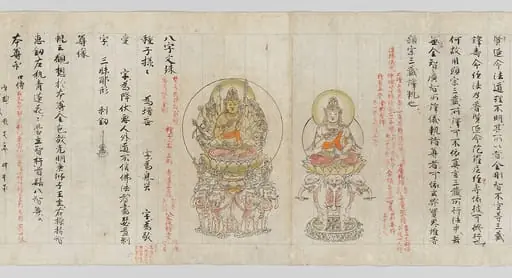
『過去現在絵因果経』 断簡 (松永本)|Scene from The Illustrated Sutra of Past and Present Karma (Kako genzai e-inga-kyō; Matsunaga Version) is an ink painting. It dates from 1250 and is held in the collection of the Metropolitan Museum of Art. The work is a hand‑scroll painting executed in ink and color on paper, forming a fragment of a larger illustrated sutra.
- Accession no.
- 2015.300.7
- Credit line
- Mary Griggs Burke Collection, Gift of the Mary and Jackson Burke Foundation, 2015
About this work
Subject & Meaning
The handscroll 『過去現在絵因果経』 断簡 (松永本) portrays a scene from the Illustrated Sutra of Past and Present Karma, showing the historical Buddha accompanied by a demon.
The handscroll 『過去現在絵因果経』 断簡 (松永本) portrays a scene from the Illustrated Sutra of Past and Present Karma, showing the historical Buddha accompanied by a demon.
In Buddhist iconography the Buddha signifies enlightenment and the teaching of the Dharma, while the demon embodies the karmic consequences of unwholesome actions. Their juxtaposition visualizes the doctrine that present circumstances arise from past deeds and that moral accountability persists across lifetimes.
As part of a religious handscroll tradition, the work uses narrative illustration to convey the causal relationship between action and result, reinforcing the Buddhist understanding of karma as an ongoing, interwoven process.
Technique & Style
The work is a handscroll executed in ink and color on paper, characteristic of Japanese Buddhist painting of the mid‑13th century. It illustrates a scene from the Illustrated Sutra of Past and Present Karma, depicting the historical Buddha alongside a demonic figure, rendered in typical narrative composition for a religious handscroll. The painting was produced in Japan around 1250 and is presently held by the Metropolitan Museum of Art.
Formal qualities include linear outlines, muted washes of pigment, and a sequential layout that guides the viewer through the karmic narrative. Documentation does not specify its physical condition beyond its status as a preserved handscroll.
History & Provenance
The Matsunaga version of the Illustrated Sutra of Past and Present Karma is dated to 1250 and is attributed to an anonymous Japanese painter of the Kamakura period.
It entered the collection of the Metropolitan Museum of Art, where it remains housed as part of its holdings of Japanese Buddhist painting. The work’s early provenance beyond Japan is not recorded in the sources cited here.
The work is held by the Metropolitan Museum of Art, New York, where it is catalogued as an anonymous Japanese painting of 1250.
It has been exhibited publicly at least once: in 2007 the scroll was shown in the exhibition “Art in Japan, 1600–1900: Selections from the Metropolitan Museum of Art,” held at the museum’s Fifth Avenue building.
Overview
The work is a hand‑scroll painting executed in ink and color on paper, forming a fragment of a larger illustrated sutra. It depicts a succession of miniature scenes in which the Buddha delivers teachings while a host of demons hover over the audience, serving as visual cautions about the consequences of moral conduct.
Artist & collection

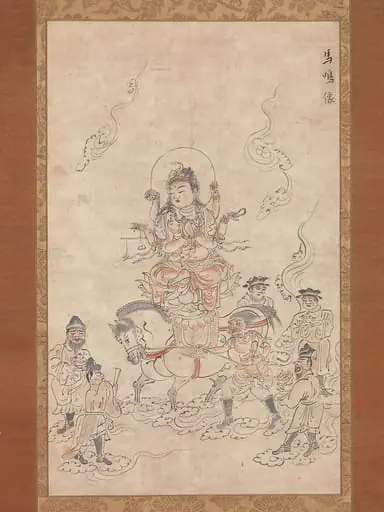
- 集一切福徳三昧経.|Illustrated Frontispiece to the Sutra of Enlightenment through the Accumulation of Merit and Virtue, the So-called Jingoji Sutra
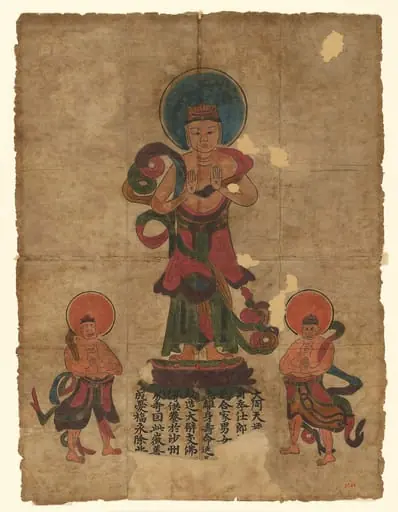
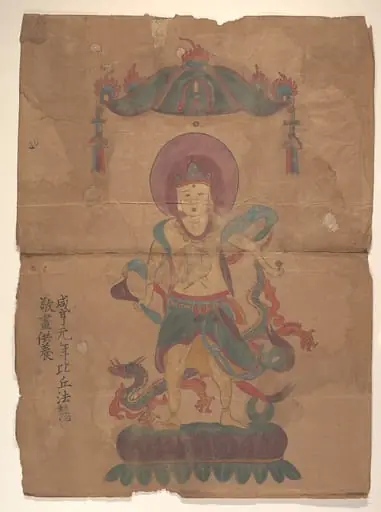
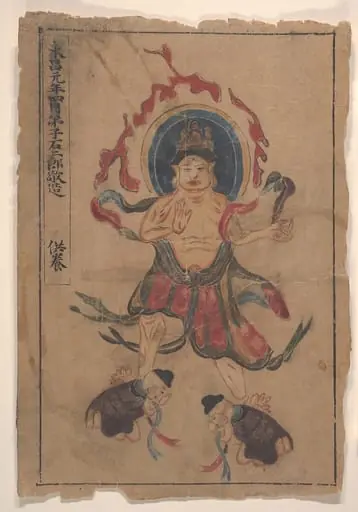 唐(?) 佚名 佛畫八幅 散頁|Eight Buddhist Paintings
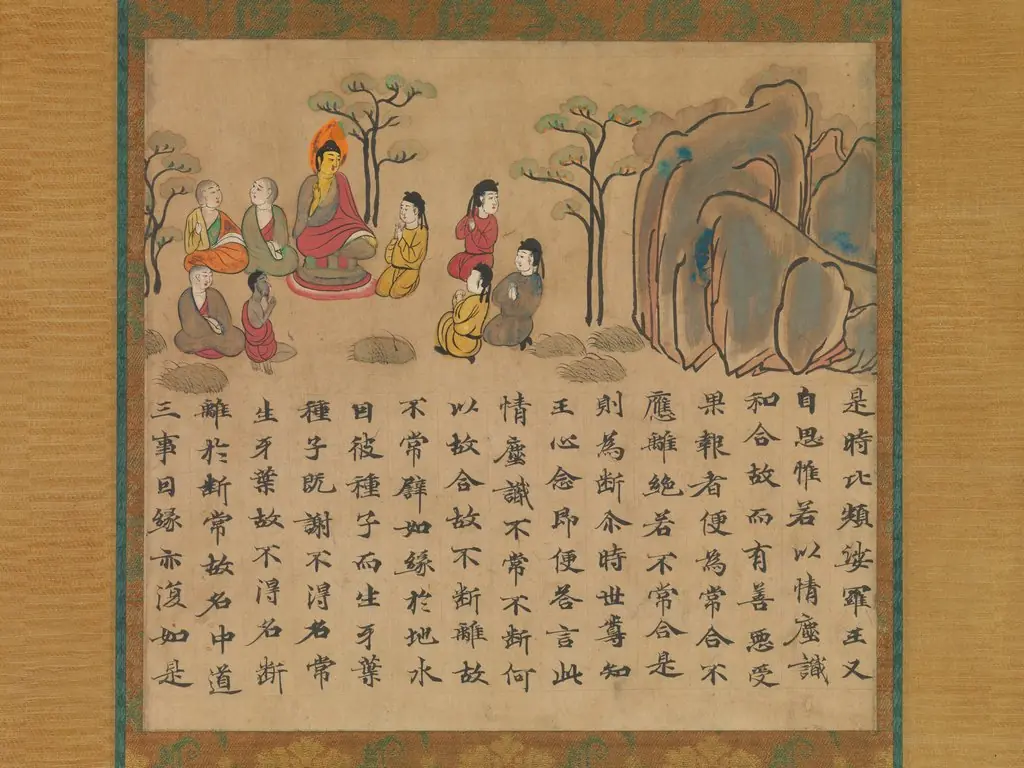 Buddha Preaching, a section from the Illustrated Sutra of Past and Present Karma (Kako genzai inga kyō emaki)
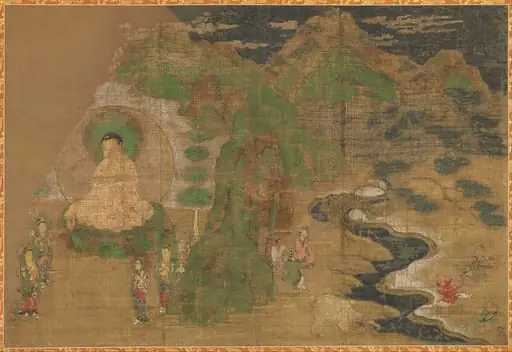 仏伝図|Scene from the Life of the Buddha
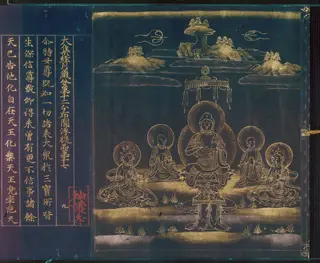 Jingoji Sutra
 仏伝図|Scene from the Life of the Buddha