Artwork
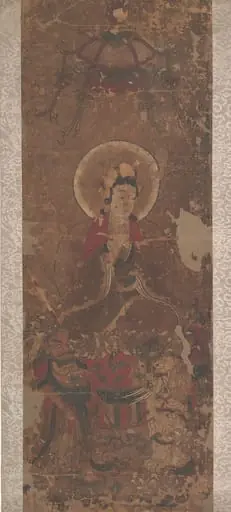
五髻文殊菩薩像|The Bodhisattva Monju (Manjushri) with Five Topknots
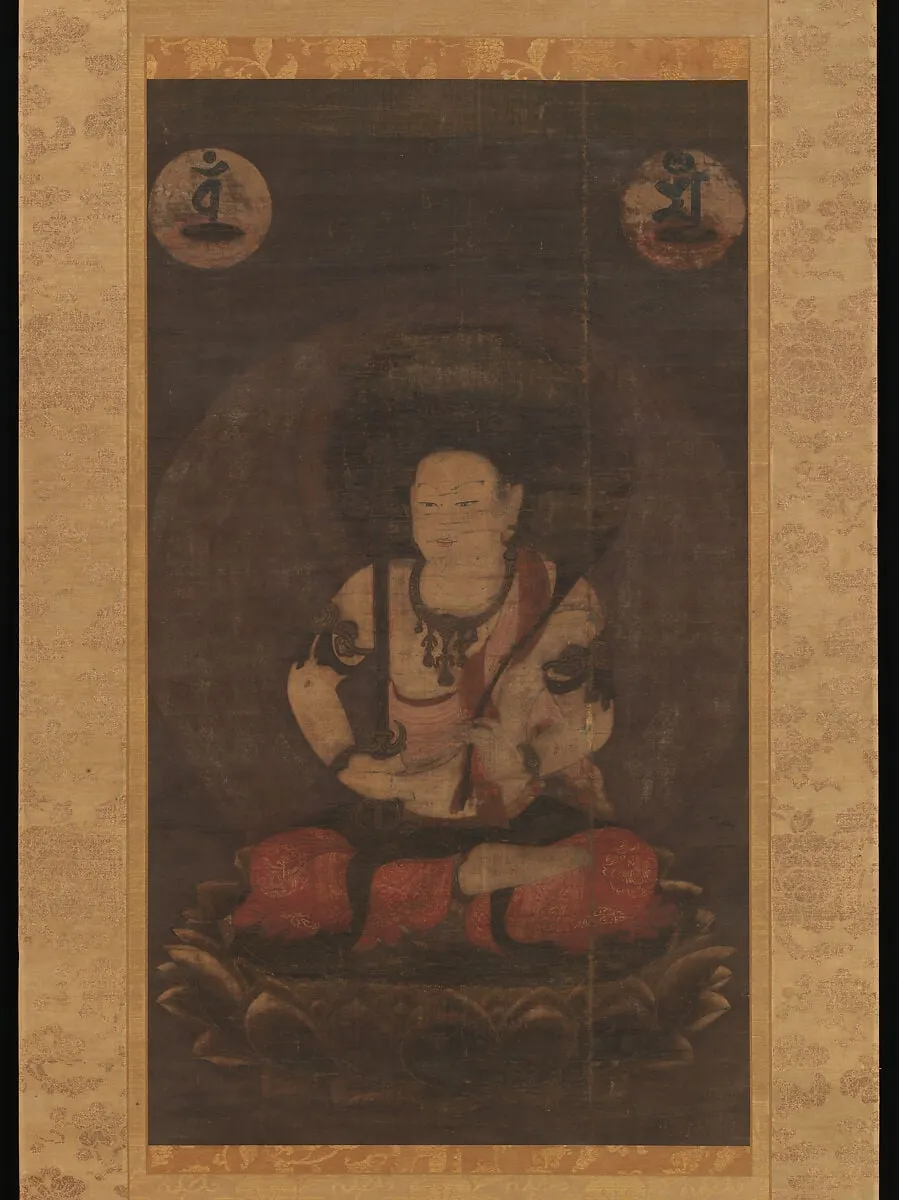
五髻文殊菩薩像|The Bodhisattva Monju (Manjushri) with Five Topknots is an ink painting. It dates from 1249 and is held in the collection of the Metropolitan Museum of Art.
About this work
Subject & Meaning
Created in Japan in 1249, the painting represents the deity within the context of Buddhist religious tradition.
The hanging scroll depicts the Buddhist Bodhisattva Mañjuśrī, identifiable by his distinctive five topknots, a key iconographic feature that gives the work its title. Created in Japan in 1249, the painting represents the deity within the context of Buddhist religious tradition. The figure embodies the bodhisattva ideal, symbolizing wisdom and enlightenment.
As a religious painting executed in ink and color on silk, the work serves as a visual representation of Mañjuśrī, a central figure in Buddhism known for presiding over wisdom. The specific inclusion of the five topknots distinguishes this particular manifestation of the deity within the artistic and theological framework of 13th-century Japan.
Technique & Style
This hanging scroll is executed in ink and color on silk, a traditional East Asian pictorial support that allows for layered washes and fine linear detail. The painting measures 93.4 cm in height by 52.7 cm in width, a vertical format suited to devotional hanging display. Produced in Japan in 1249, it belongs to a category of religious Buddhist paintings characterized by meticulous brushwork and mineral-based pigments applied to a silk ground.
The medium and support reflect the technical conventions of Kamakura-period Buddhist icon painting, in which silk scrolls served as portable devotional objects. No specific condition notes or handling history are recorded in the available documentation.
History & Provenance
The work titled 五髻文殊菩薩像|The Bodhisattva Monju (Manjushri) with Five Topknots is an anonymous Japanese hanging scroll painted in ink and color on silk, classified as a religious painting. It was created in 1249 in Japan and portrays the Bodhisattva Mañjuśrī. The piece entered the collection of the Metropolitan Museum of Art, where it remains on display.
Its provenance traces from contemporary creation to acquisition by the museum, with no recorded earlier owners. The work is documented in scholarly catalogues and the museum's online record, confirming its dating, medium, and iconography.
Overview
This hanging scroll, titled The Bodhisattva Monju (Manjushri) with Five Topknots, depicts a central figure rendered in ink and color on silk. The artwork portrays Manjushri, a significant Buddhist deity associated with wisdom, seated upon a lion. A soft halo encircles his head, emphasizing his divine nature. The painting originates from 13th-century Japan, representing a common form of devotional art from the period.
Artist & collection

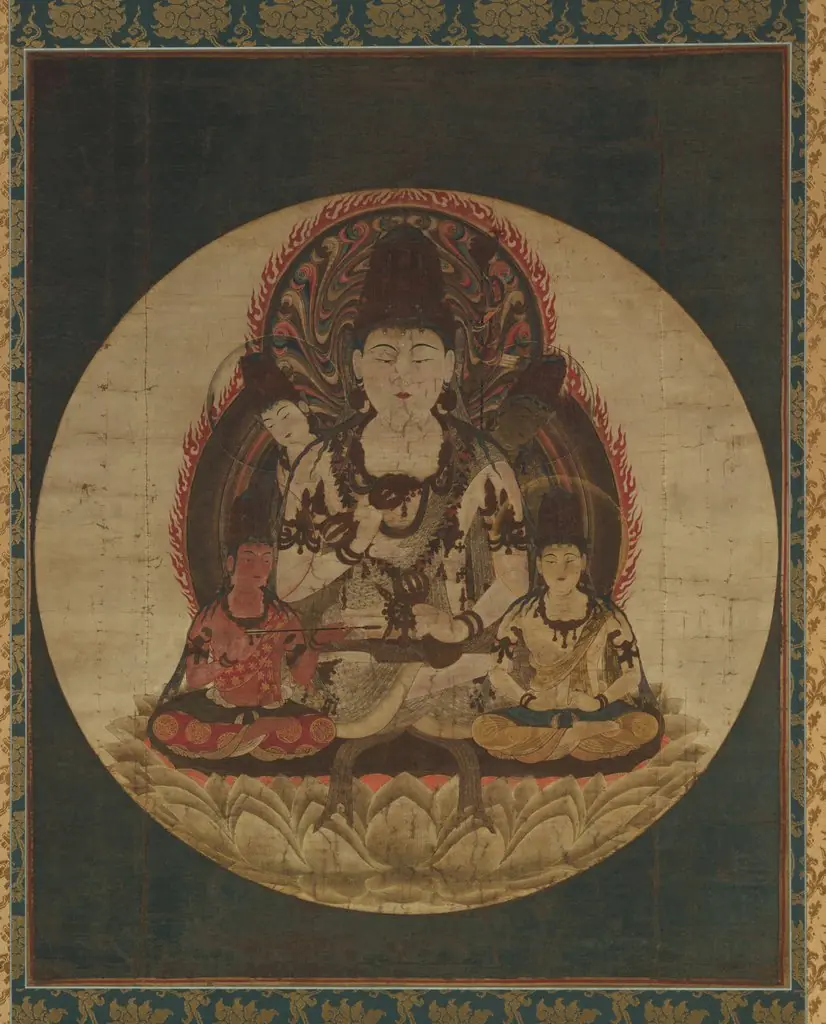
- The Secret Five Bodhisattvas (Gohimitsu Bosatsu)
 Monju with Five Hair Knots
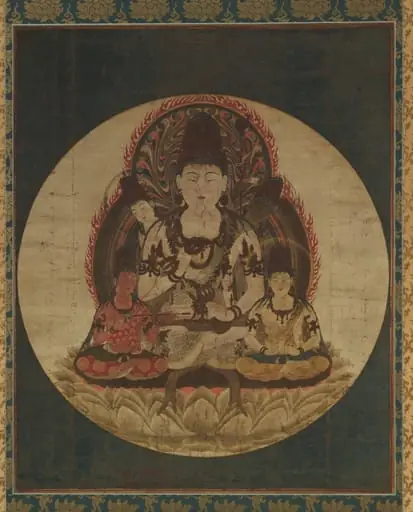 The Secret Five Bodhisattvas (Gohimitsu Bosatsu)
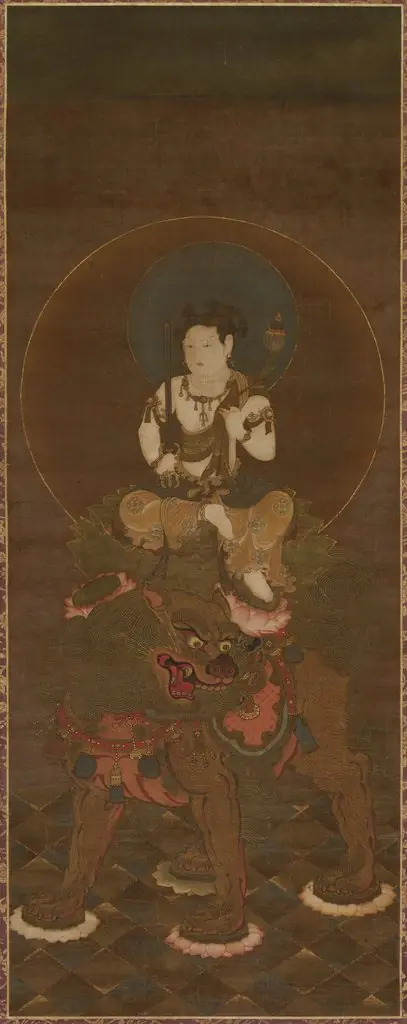 Monju with Five Hair Knots
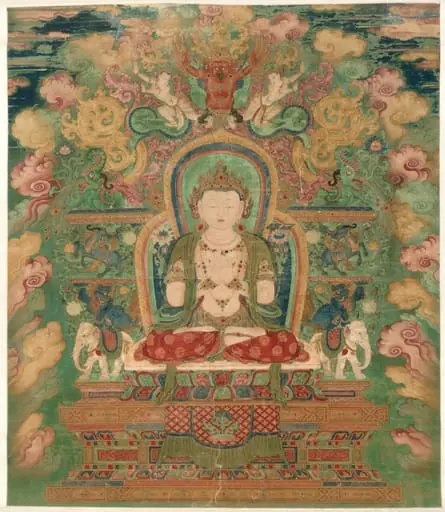 Manjushri
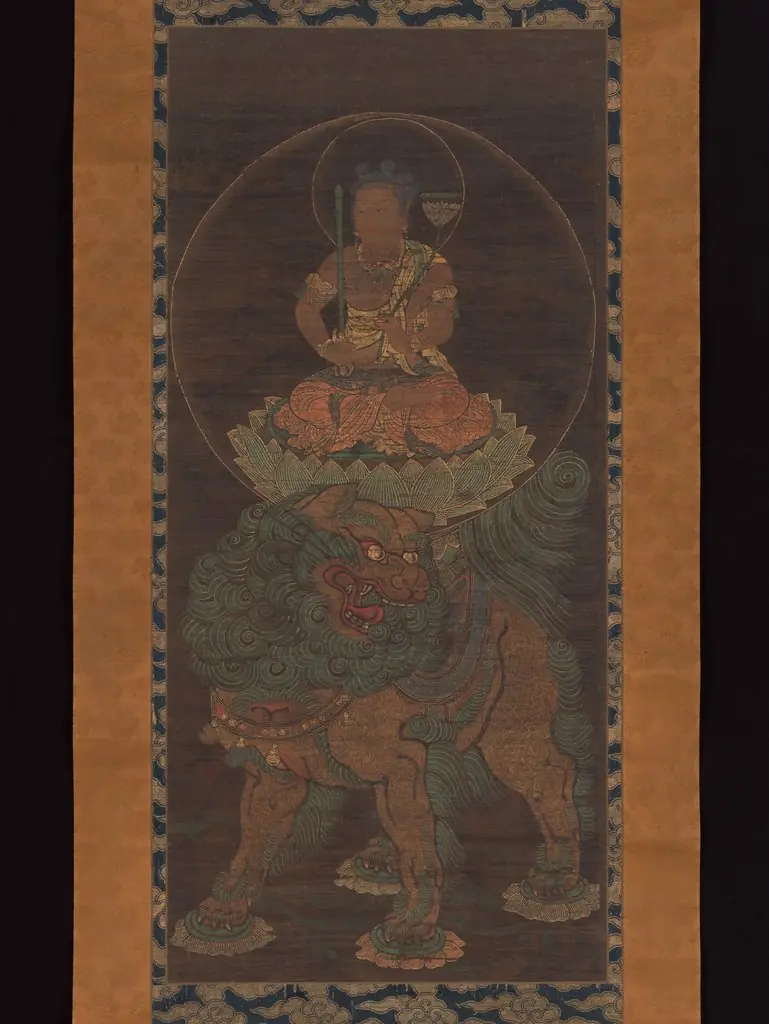 The Bodhisattva Monju (Manjushri) with Five Topknots
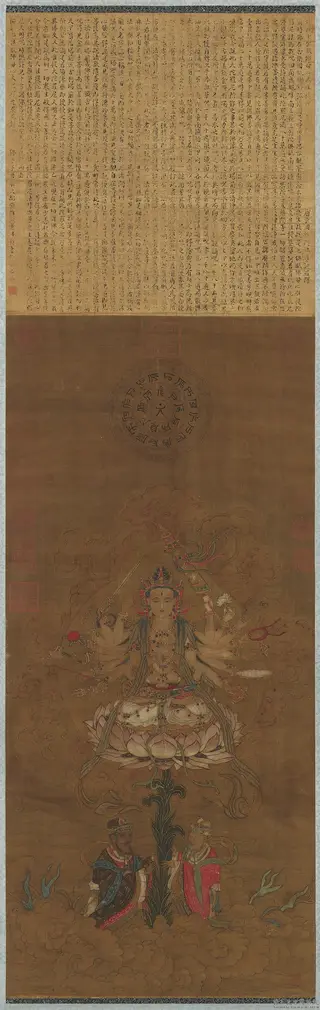 Cundi Bodhisattva
 地蔵菩薩来迎図|Welcoming Descent of the Bodhisattva Jizō
 Manjushri
 Bodhisattva Padmapani
 Shakyamuni Triad: Buddha Attended by Manjushri and Samantabhadra
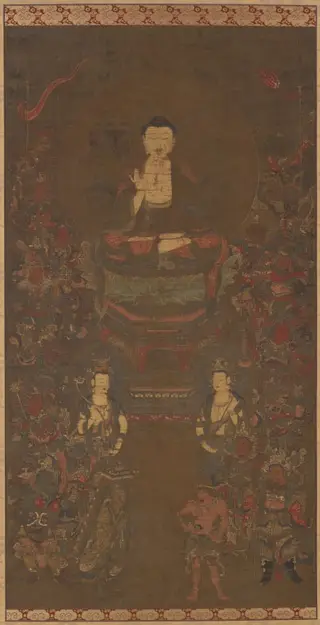 Shakyamuni with the Sixteen Benevolent Deities
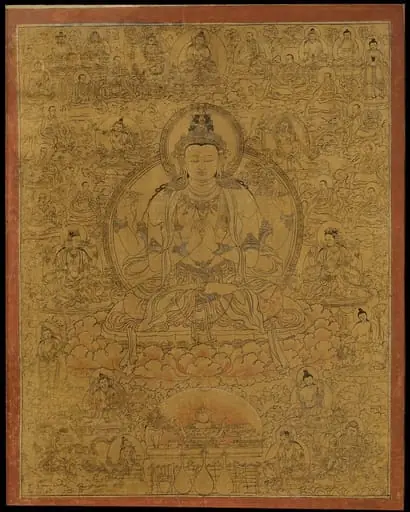 Untitled
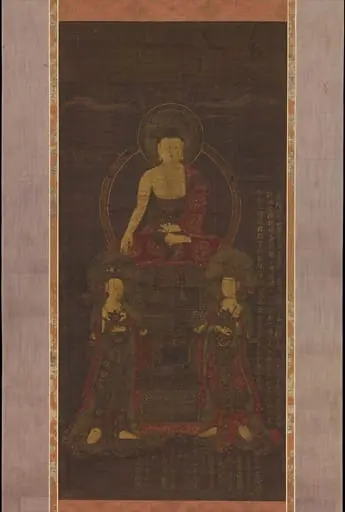 석가삼존도 조선|釋迦三尊圖 朝鮮|Shakyamuni triad
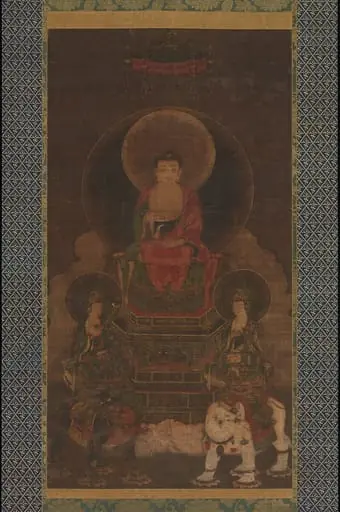 釈迦三尊像|Shaka (Shakyamuni) Triad
 Untitled
 南宋 佚名 阿彌陀佛圖 軸|Buddha Amitabha Descending from his Pure Land
 Triad of the Medicine Master Buddha Yakushi (Bhaisajya Buddha)
 十一面観音影向図|Eleven-Headed Kannon on Mount Fudaraku
 Untitled