Artwork
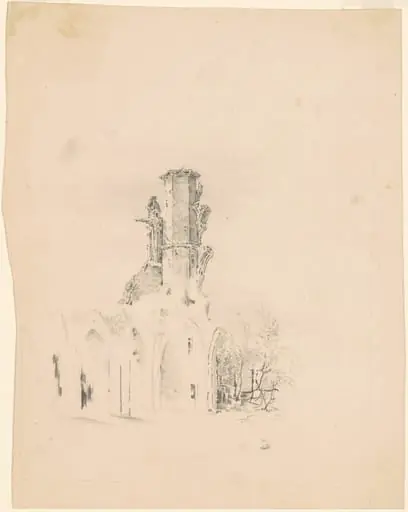
Cathedral Ruins, Bacharach
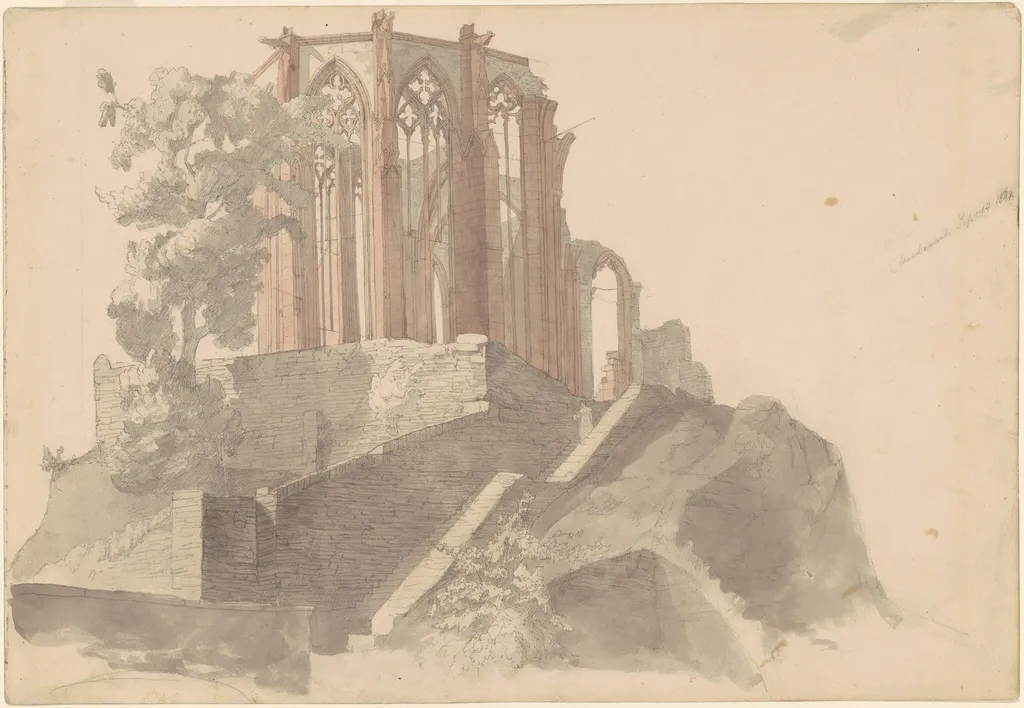
Cathedral Ruins, Bacharach is a graphite drawing by the Romanticist artist Emanuel Gottlieb Leutze. It dates from 1841 and is held in the collection of the National Gallery of Art.
- Inscription
- Inscribed:upper right in graphite: E. Leutze [erased] / Bacharach Sept. 14 1841
About this work
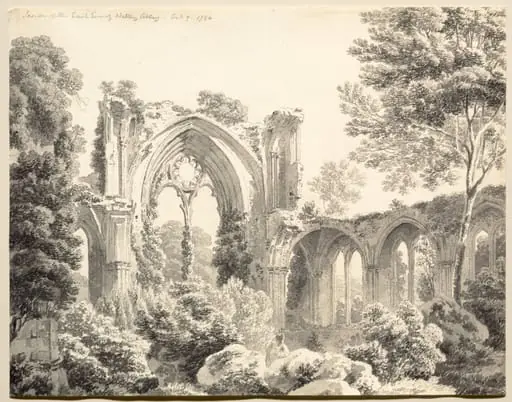
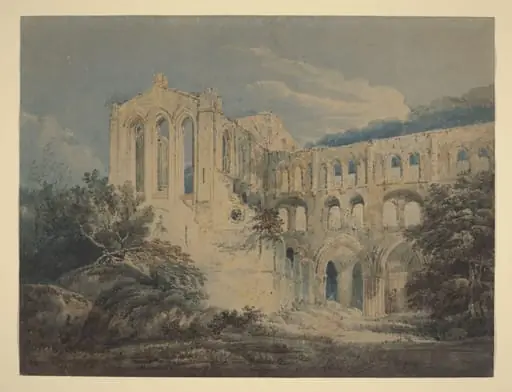
Leutze shows old stone arches and towers of a ruined church in Bacharach. Moonlight hits the broken walls. A single candle glows inside a window.
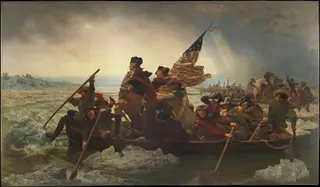
This was drawn in 1841, before Leutze moved to the U.S. He later painted Washington Crossing the Delaware. The ruins feel lonely and grand at the same time.
See it at the National Gallery of Art, Washington.
Overview
Created in 1841, Cathedral Ruins, Bacharach is a small-scale drawing executed in watercolor and graphite on wove paper. The composition records the skeletal remains of a Gothic church situated in the German town of Bacharach, rendered with a muted palette that emphasizes the structure’s weathered stone and the play of light across its broken arches.
Subject & Meaning
The work presents a solitary, moonlit scene in which the fractured walls of the cathedral are illuminated by a lone candle glowing from an interior window. This juxtaposition of natural moonlight and artificial flame underscores a sense of quiet desolation, suggesting both the passage of time and the lingering spiritual presence within the ruin.
Technique & Style
Leutze combines delicate watercolor washes with precise graphite line work to model the stone architecture. The translucent layers convey atmospheric depth, while the graphite defines structural details such as arches, buttresses, and the crumbling tower tops. The overall effect balances a realistic rendering of the ruins with a lyrical, almost poetic mood.
History & Provenance
The drawing was produced while Leutze was still residing in Germany, before his emigration to the United States in the early 1850s. It entered the collection of the National Gallery of Art in Washington, D.C., where it remains on view as part of the museum’s holdings of 19th‑century European drawings.
Context
Leutze’s early career was shaped by the Düsseldorf school, which emphasized meticulous draftsmanship and historical subject matter. This piece reflects his interest in architectural motifs and the Romantic fascination with medieval ruins, themes that would later give way to his more widely known historical canvases, such as Washington Crossing the Delaware.
Own this work as a print
Artist & collection
Artist
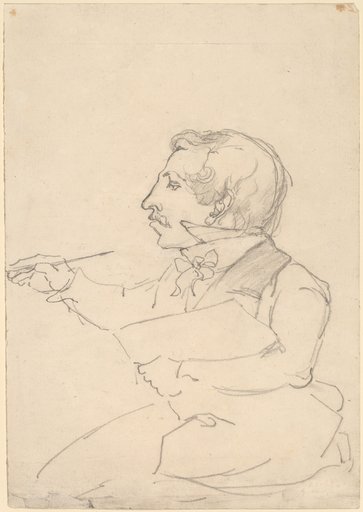
Emanuel Gottlieb Leutze (May 24, 1816 – July 18, 1868) was a German-born American history painter, best known for his 1851 painting Washington Crossing the Delaware. He is associated with the Düsseldorf school of painting.

![Study of Half-Length Figure with Pole [verso], by Emanuel Gottlieb Leutze](https://artifactworldgallery.com/img/emanuel-gottlieb-leutze--study-of-half-length-figure-with-pole-verso--13a43a492f70c459-w320.webp)