Artwork
A gateway, Exeter
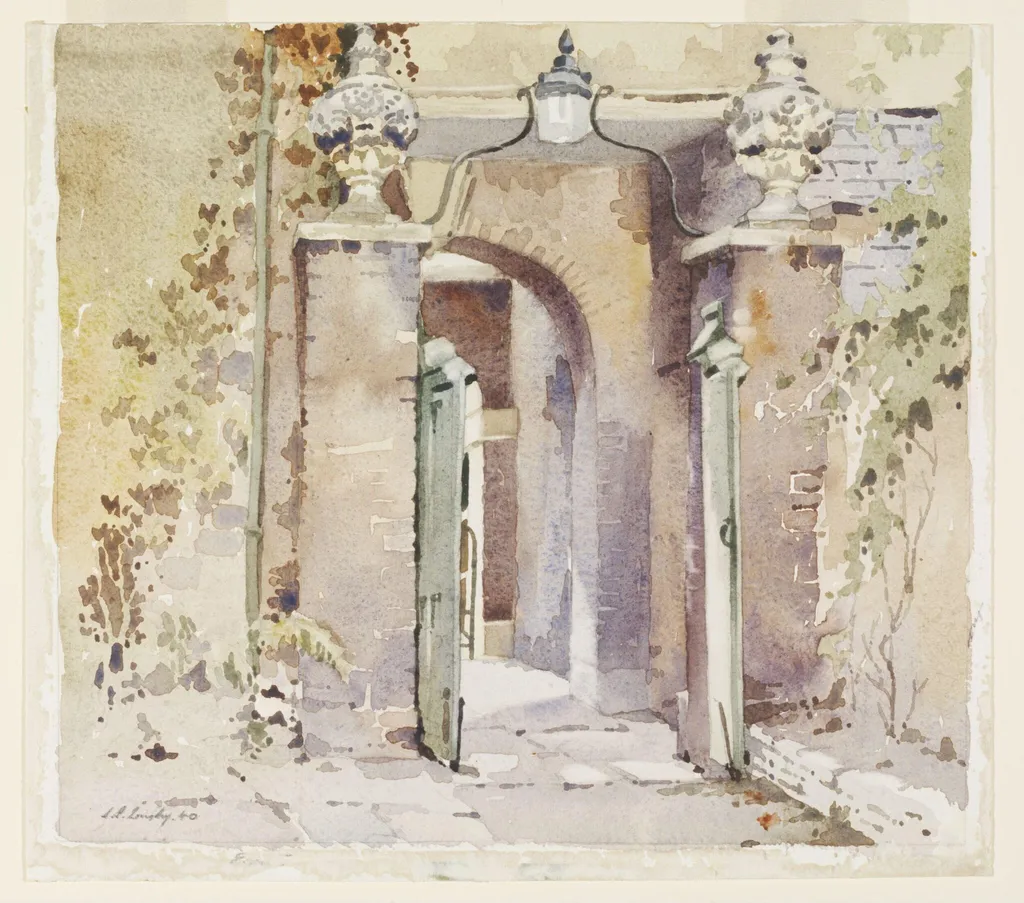
A gateway, Exeter is a watercolor work on paper by the Regionalist artist Longley. It dates from 1940 and is held in the collection of the Victoria and Albert Museum.
About this work
Overview
A Gateway, Exeter, a 1940 watercolour by Longley, captures a serene, weathered arched gateway, flanked by simple stone posts and adorned with a metal lantern bracket, conveying a sense of quiet, faded grandeur.
Subject & Meaning
The artwork documents a specific gateway in Exeter, part of the 'Recording Britain' project, which aimed to preserve visual records of nationally significant sites vulnerable to wartime destruction or gradual change, reflecting a wartime effort to capture perceived vanishing heritage.
Technique & Style
Executed in soft, watery colours, the painting features loose, expressive brushstrokes, evoking a quick sketch. This technique effectively conveys the subtle play of fading light on the rough, moss-covered stone surfaces and uneven ground.
History & Provenance
Created in 1940 under the 'Recording Britain' scheme during the Second World War, the watercolour is part of a broader wartime initiative to sustain artistic practice amidst national turmoil.
Context
The piece is contextualized within a national project to document vulnerable heritage sites across England, Wales, and Scotland, highlighting concerns over preservation during wartime.
Legacy
The artwork, along with Longley's other works, can be further explored at the Victoria and Albert Museum, contributing to the artist's documented oeuvre within British wartime art initiatives.
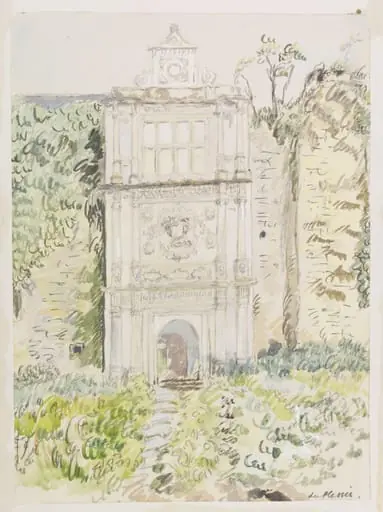
Artist & collection
Artist
A watercolour artist active around 1940, Longley painted quiet English landmarks in soft washes.

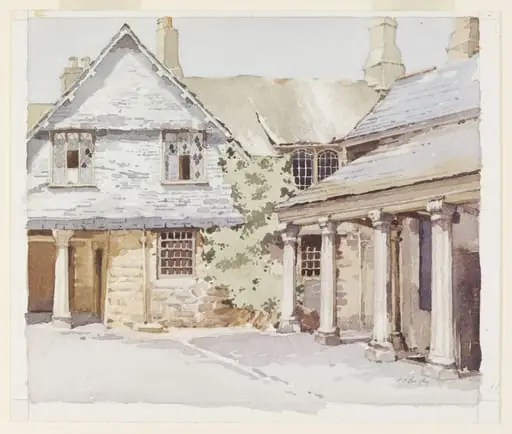
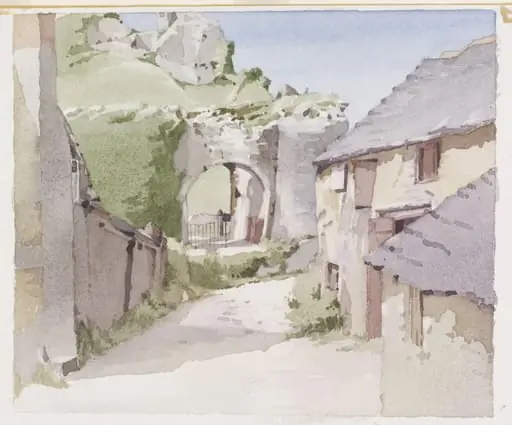
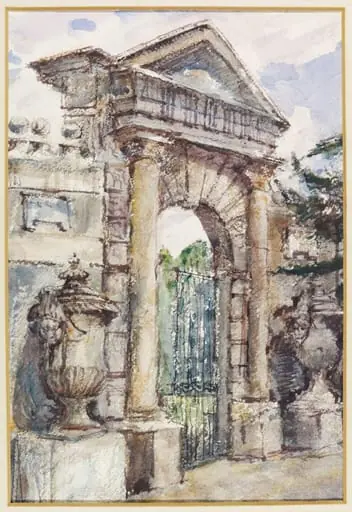 The Inigo Jones Gate, Chiswick House
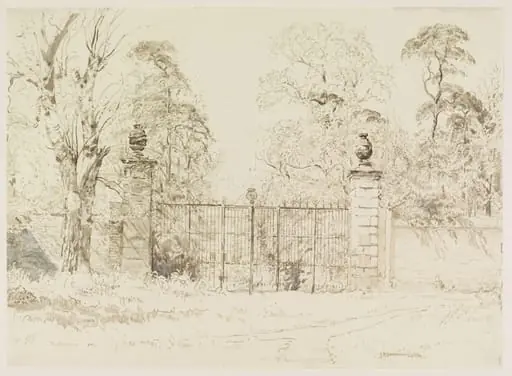 The Old Gates, Ham House
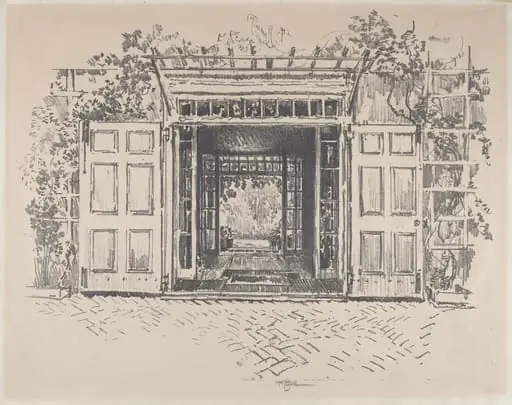 Doorway, Wyck
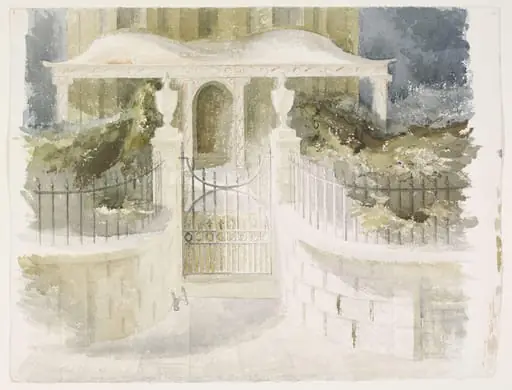 Gateway, Cedar Lodge, Lambridge, Bath
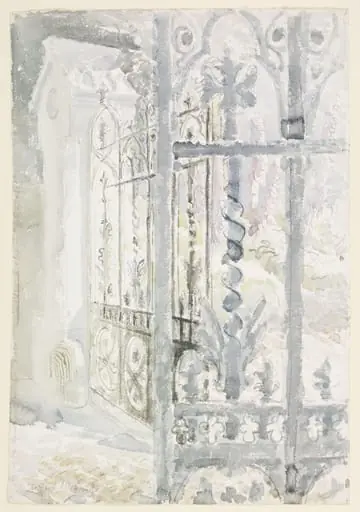 Gates at the Hermitage, Lansdown, Bath
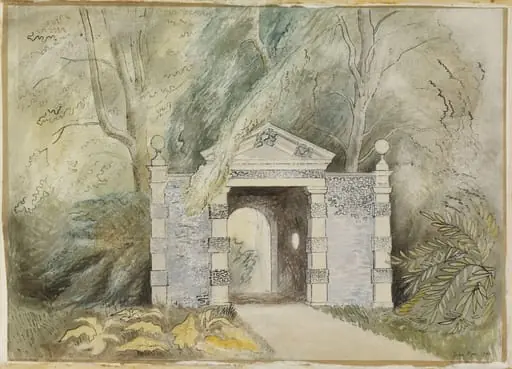 The river approach, Fawley Court
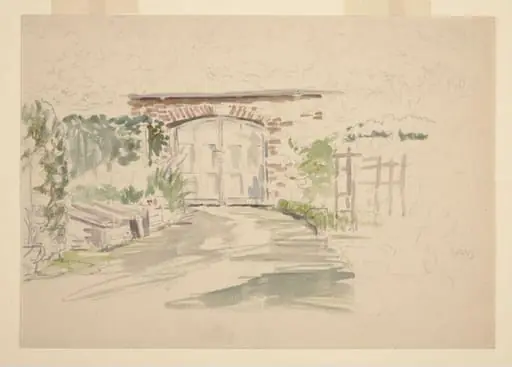 Sketch of a path and gate in the garden at Gwaynynog
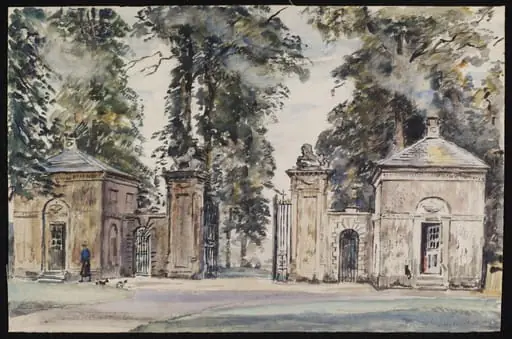 Entrance to Ramsbury Manor
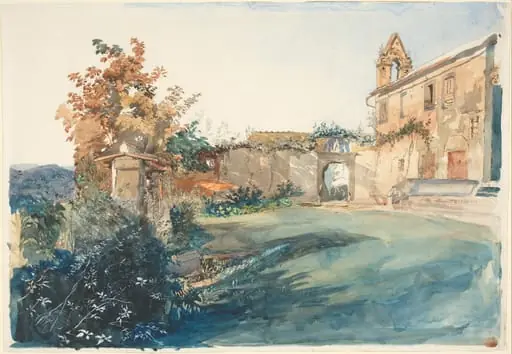 The Garden of San Miniato near Florence
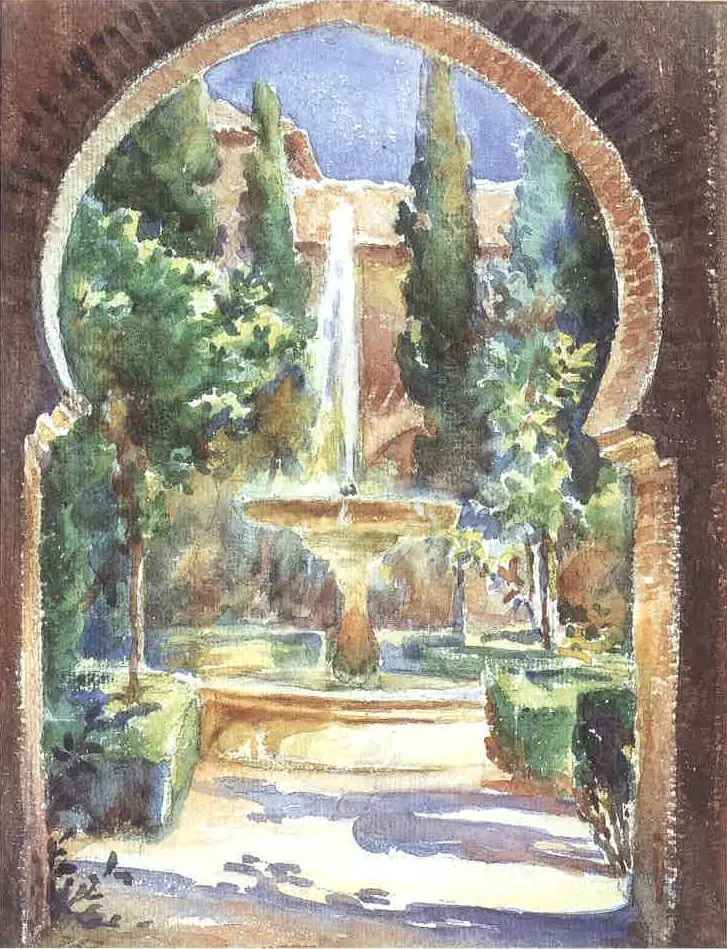 Granada. A View of Generalife
- Gateway, Beaupre, Glamorganshire