Artwork
Egypt and Nubia, Volume III, No. 26, Cairo, Looking West
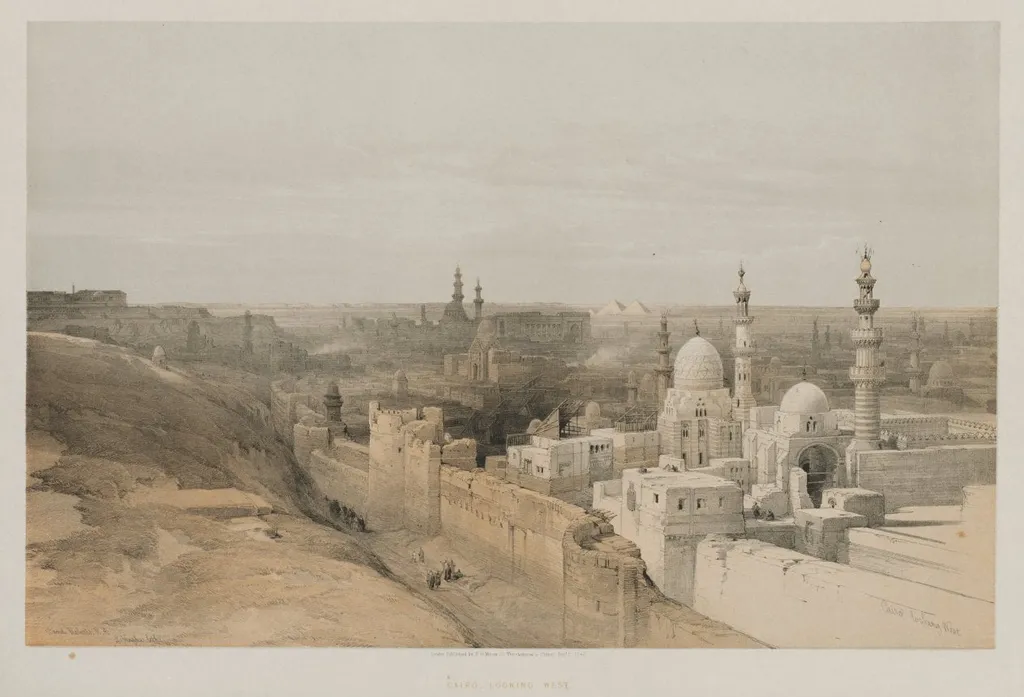
Egypt and Nubia, Volume III, No. 26, Cairo, Looking West is a print by the Romanticist artist Louis Haghe. It dates from 1848 and is held in the collection of the Cleveland Museum of Art. Egypt and Nubia, Volume III, No.
- Accession no.
- 2012.164
- Credit line
- Bequest of John Bonebrake
About this work
Overview
Egypt and Nubia, Volume III, No. 26, Cairo, Looking West is a lithograph print created in the 1840s by David Roberts, depicting a panoramic view of Cairo.
Subject & Meaning
The print shows a sprawling cityscape of Cairo, viewed from the west, with numerous minarets, domes, and small figures engaged in daily activities under a pale sky.
Technique & Style
The work is a lithograph, a printmaking technique involving drawing on stone, which was then used to produce multiple copies. Roberts' original sketches, made during his travels to Egypt, were translated into lithographs by Louis Haghe.
History & Provenance
David Roberts traveled to the Middle East in 1838–39, producing over 250 drawings of Egypt and the Holy Land. His works were later rendered into lithographs to reach a broader audience in Europe.
Artist & collection

Artist
Louis Haghe (17 March 1806 – 9 March 1885) was a lithographer and watercolourist from the Netherlands and then the United Kingdom.

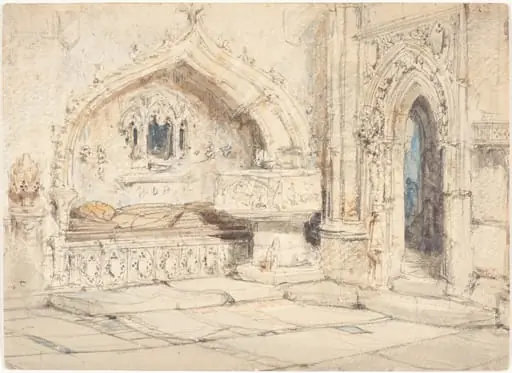 Interior of a Church with a Wall Tomb and Medieval Font
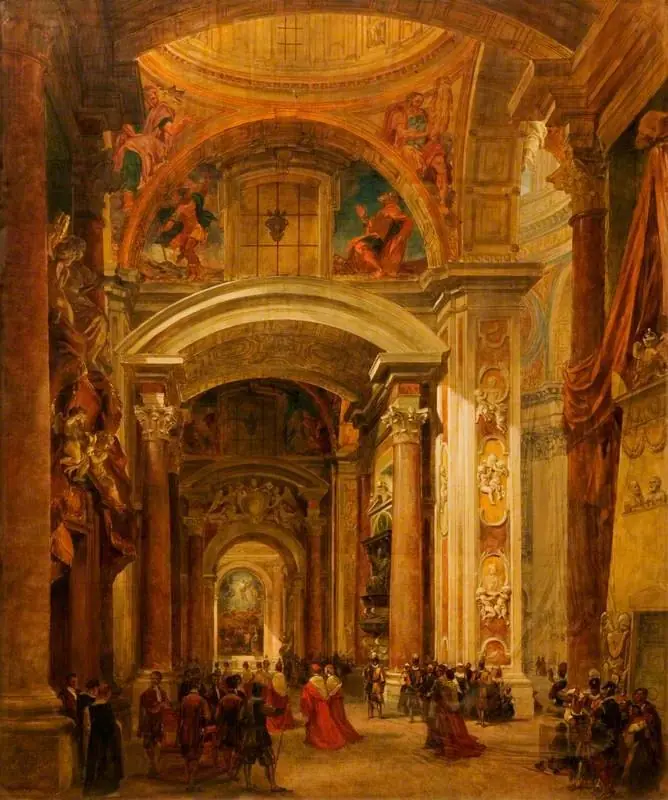 Interior of St Peter's, Rome
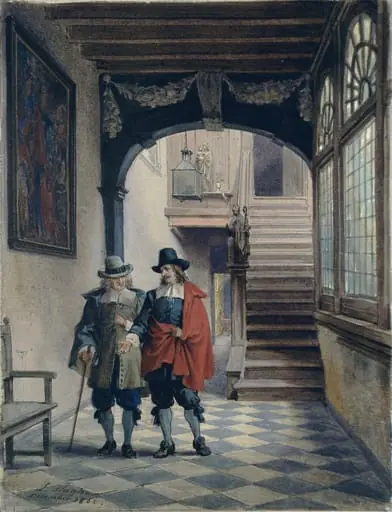 The Corridor, Brewer's Hall, Antwerp
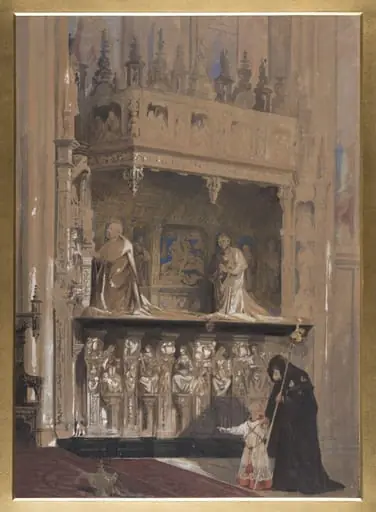 Monument of the Cardinald D'Amboise in Rouen Cathedral
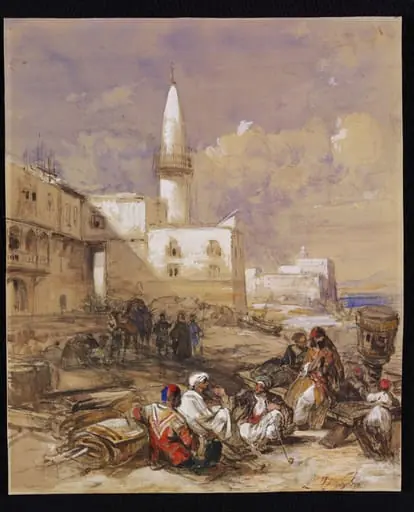 The Quay at Suez
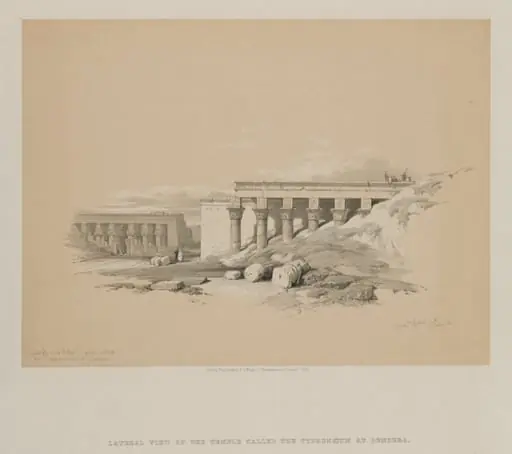 Egypt and Nubia, Volume II: Lateral View of the Temple called The Typhonoeum at Dendera
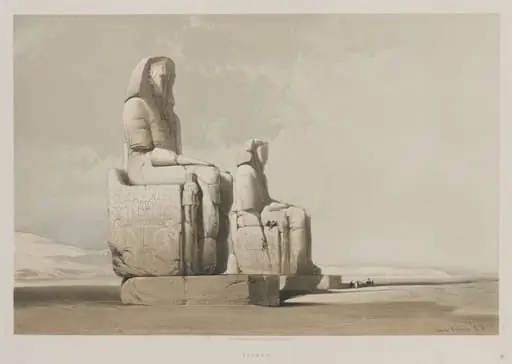 Egypt and Nubia, Volume I: Thebes
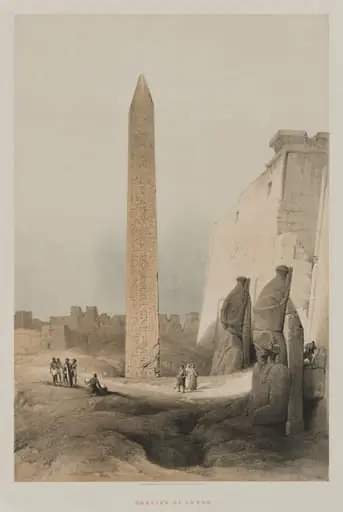 Egypt and Nubia, Volume I: Luxor
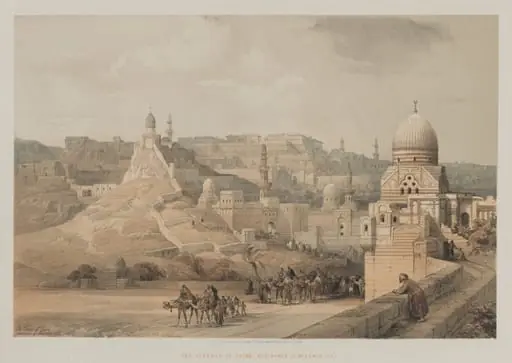 Egypt and Nubia, Volume III: The Citadel of Cairo, Residence of Mehemet Ali
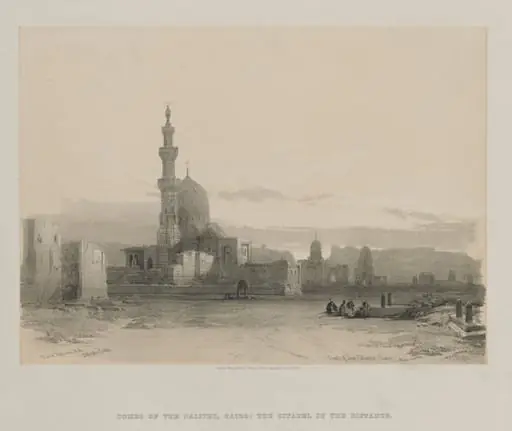 Egypt and Nubia, Volume III: Tombs of the Caliph's, Cairo
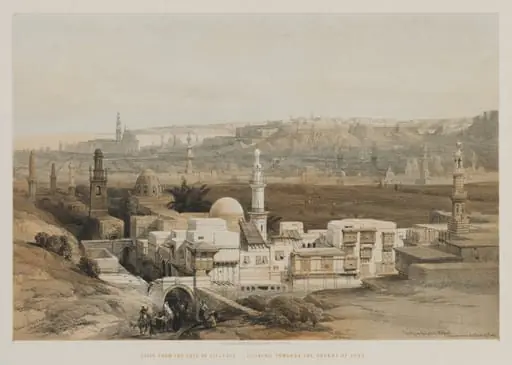 Egypt and Nubia, Volume III: Cairo from the Gate of Citzenib, Looking towards the Desert of Suez
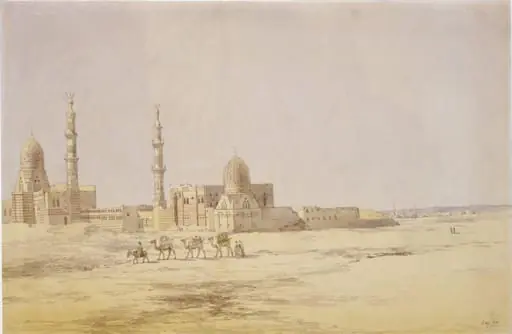 Tombs of the Khalifs, Cairo
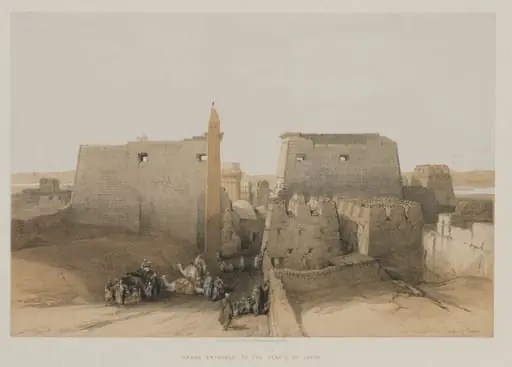 Egypt and Nubia, Volume II: Grand Entrance to the Temple of Luxor
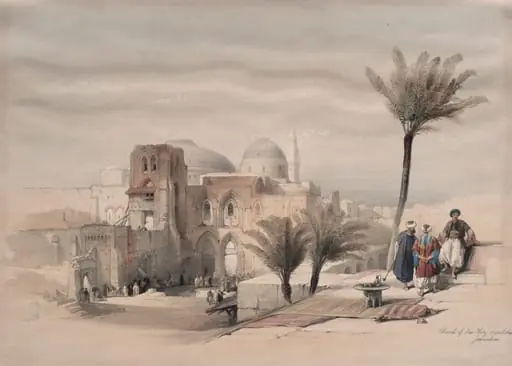 Church of the Holy Sepulchre, Jerusalem
![Egypt and Nubia, Volume III: Tombs of the Caliphs-Cairo. Mosque of Ayed Be[y], by Louis Haghe](https://artifactworldgallery.com/img/louis-haghe--egypt-and-nubia-volume-iii-tombs-of-the-caliphs-cairo-mosque--9062e89e981f8684-w320.webp) Egypt and Nubia, Volume III: Tombs of the Caliphs-Cairo. Mosque of Ayed Be[y]
Egypt and Nubia, Volume III: Tombs of the Caliphs-Cairo. Mosque of Ayed Be[y]