Artwork
Philip II
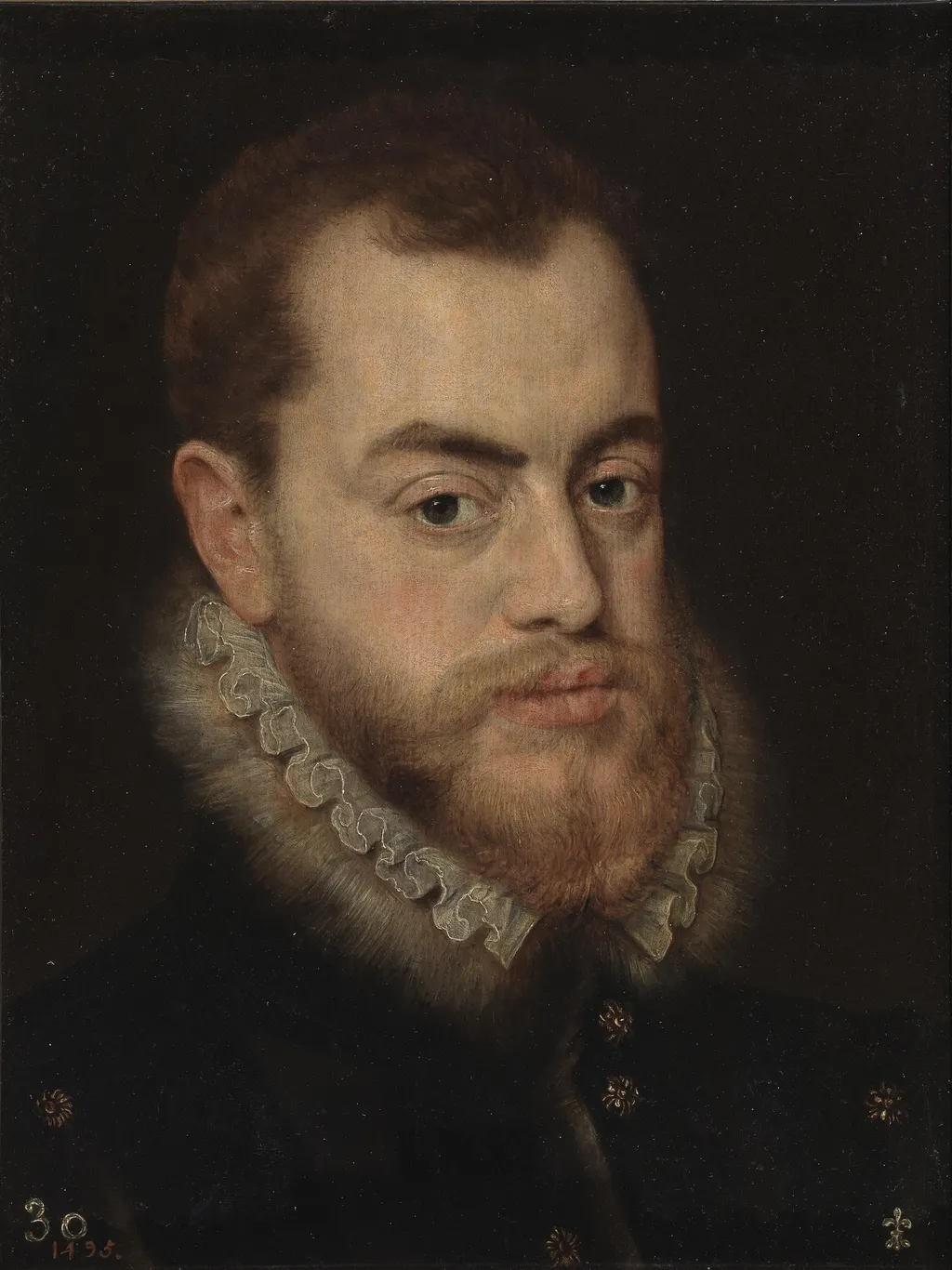
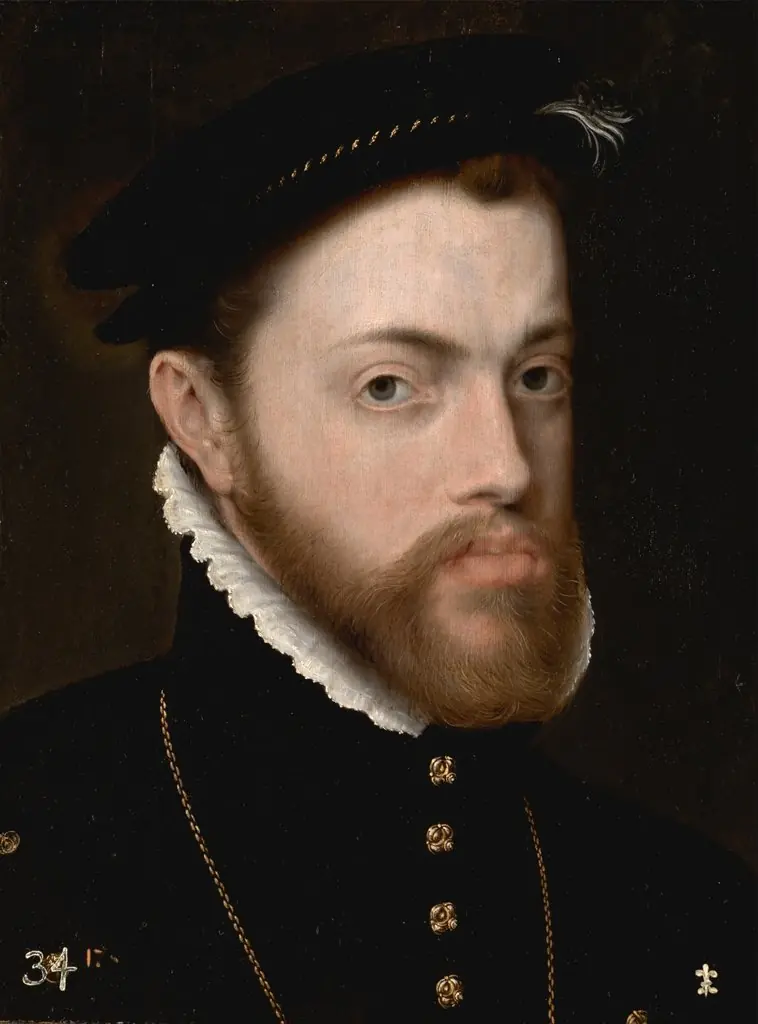
Philip II is an oil painting by the Northern Renaissance artist Lucas de Heere. It dates from 1550 and is held in the collection of the Museo del Prado.
About this work
Subject & Meaning
As the main subject, the work functions as a royal likeness intended to capture the monarch's appearance during the mid-sixteenth century.
This 1550 oil painting by Lucas de Heere presents a portrait of Philip II of Spain. As the main subject, the work functions as a royal likeness intended to capture the monarch's appearance during the mid-sixteenth century. The piece is classified within the portrait genre, focusing entirely on the depiction of the king rather than incorporating complex allegorical scenes or additional symbolic figures.
Historically, the painting entered the Spanish royal collection, passing through the ownership of Elisabeth Farnese and Ferdinand VII before residing in the Museo del Prado.
History & Provenance
The portrait of Philip II was painted by Lucas de Heere in 1550, created as an oil painting on panel. It entered the collection of Ferdinand VII of Spain and subsequently passed to his consort, Empress Elisabeth Farnese, before being acquired by the Museo del Prado, where it remains on display in the Royal Palace of Madrid. The work was commissioned as a formal state portrait, reflecting the monarch's authority during the mid‑sixteenth century.
Its dimensions measure 41 cm by 32 cm, and it is classified as a portrait genre work, depicting the Spanish king in regal attire.
The portrait of Philip II, painted by Lucas de Heere in 1550, remains in the collection of the Museo del Prado in Madrid. It was acquired by Ferdinand VII of Spain and later inherited by his wife, Elisabeth Farnese, before entering the royal palace collection. The work has been part of the museum's exhibition displays, including its permanent portrait gallery, though specific exhibition dates are not detailed in the source.
Overview
Around 1550 Lucas de Heere, a Flemish painter noted for his portraiture, created an oil on canvas depiction of Philip II of Spain. Executed in the Northern Renaissance idiom, the work presents the monarch in the fashion of his time and is presently part of the Museo del Prado’s collection in Madrid.
Technique & Style
Heere employs a restrained chiaroscuro, allowing the illuminated features of the head to emerge from the surrounding darkness. The meticulous rendering of the lace collar demonstrates a keen attention to texture, while the overall composition reflects the Northern Renaissance focus on detailed surface treatment and realistic portrayal.
Context
During Philip II’s reign, portraiture served both diplomatic and propagandistic purposes, presenting the monarch as a dignified ruler. Heere’s Flemish background brought a distinct visual language to the Spanish court, merging Northern detail with the emerging tastes of the Habsburg monarchy.
Own this work as a print
Artist & collection
Artist
Lucas de Heere or Lucas d'Heere (Ghent, 1534 – possibly Paris, 29 August 1584) was a Flemish painter, watercolorist, print artist, biographer, playwright, poet and writer.

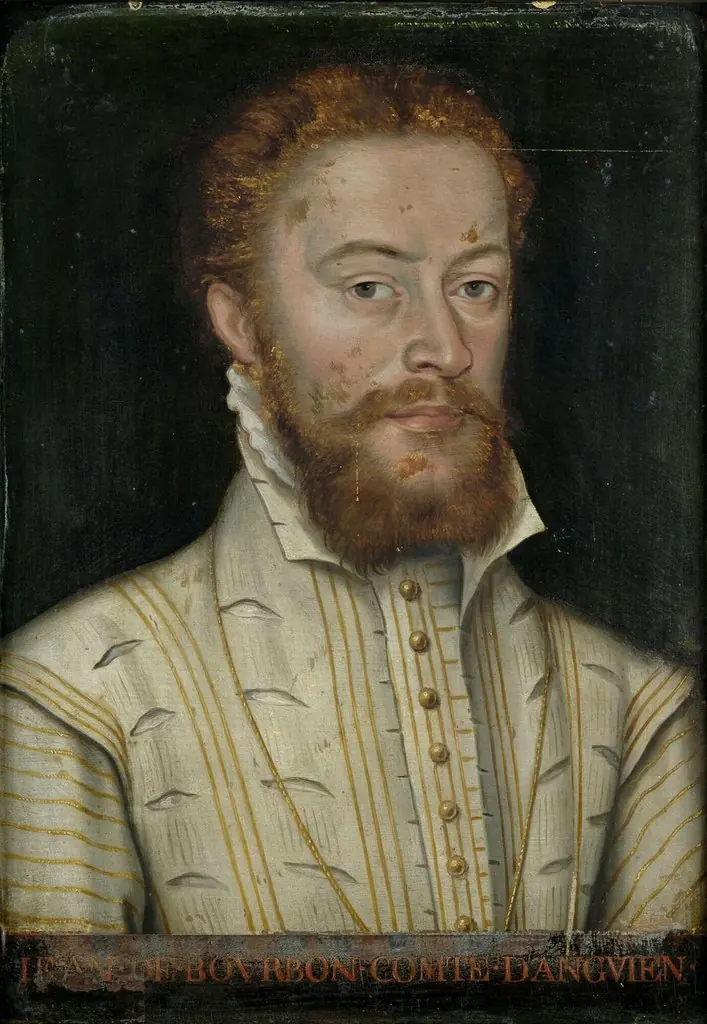 Jean de Bourbon, comte de Soissons et d'Enghien
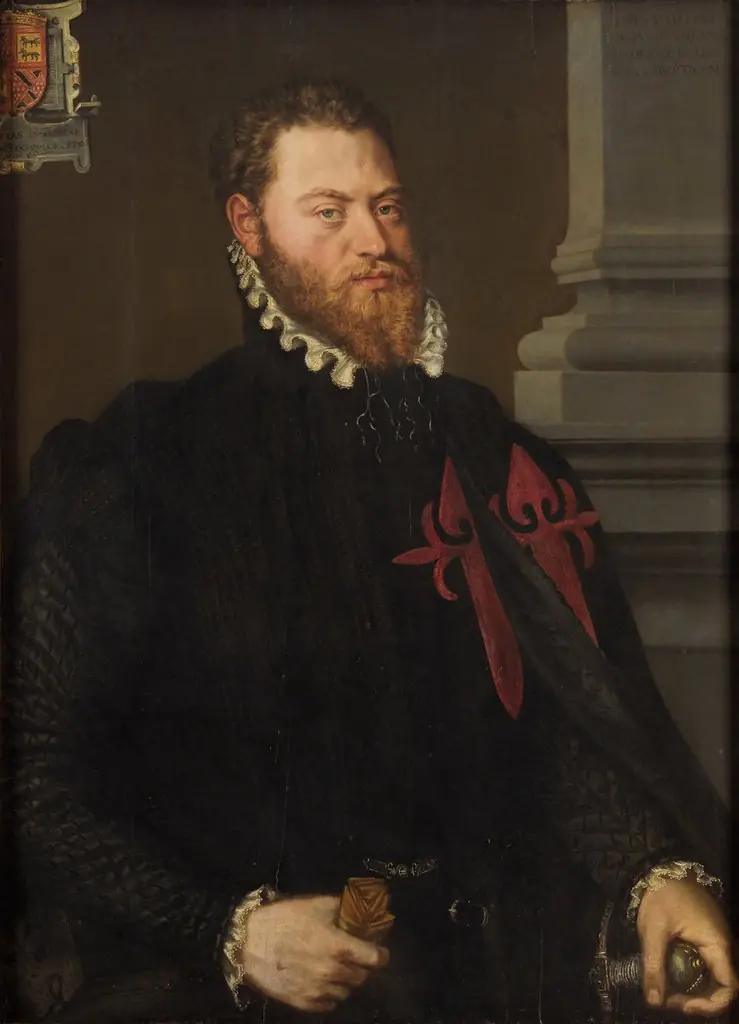 Don Inigo López de Mendoza y Zuniga
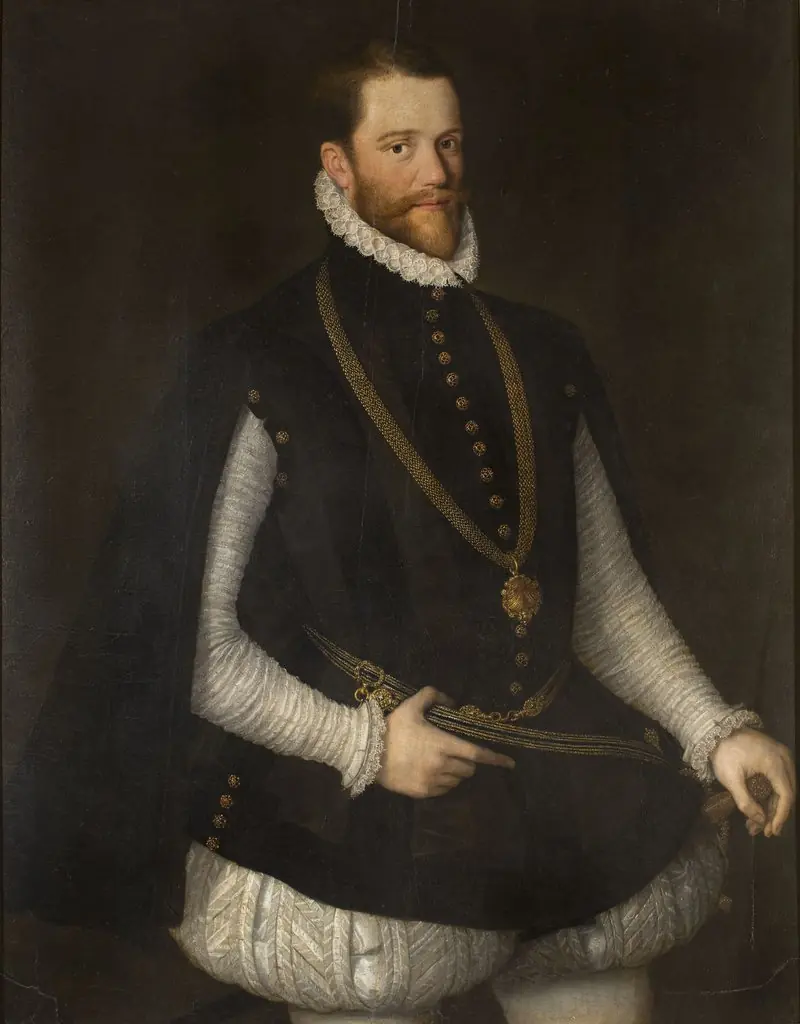 Portrait of a Gentleman of the order of Saint James
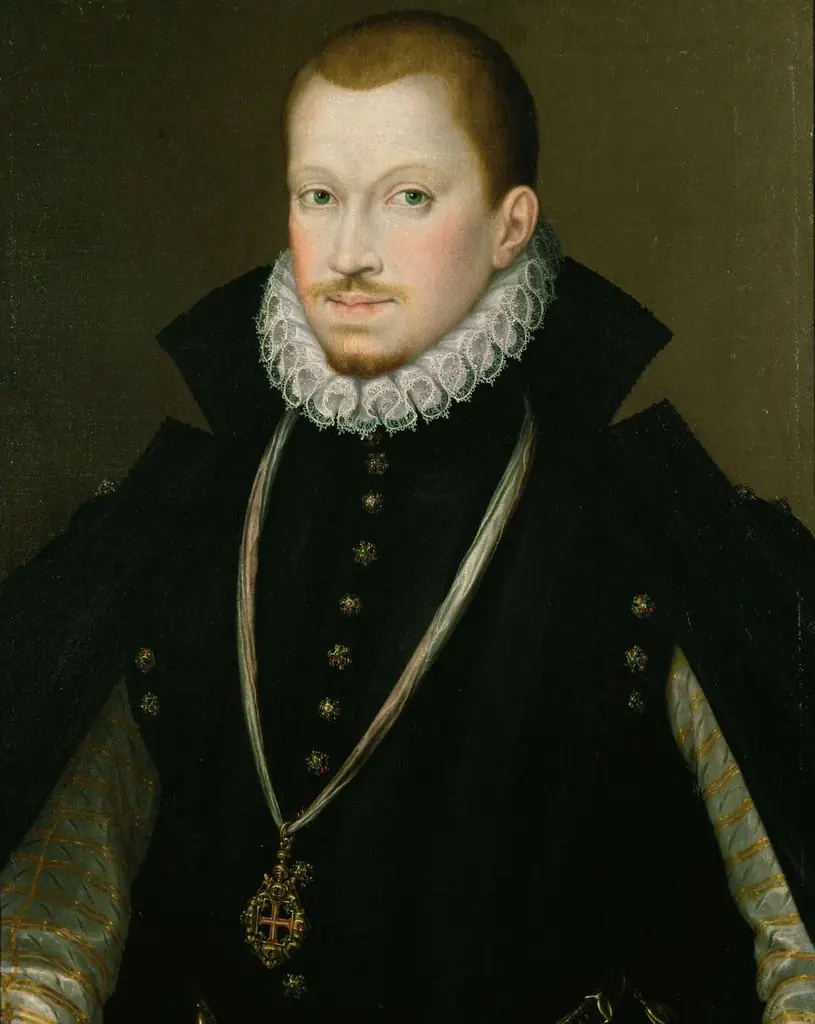 Don Sebastian (1554-nach 1578), König von Portugal, mit dem Kreuz des Christusordens, Halbfigur (beschnitten)
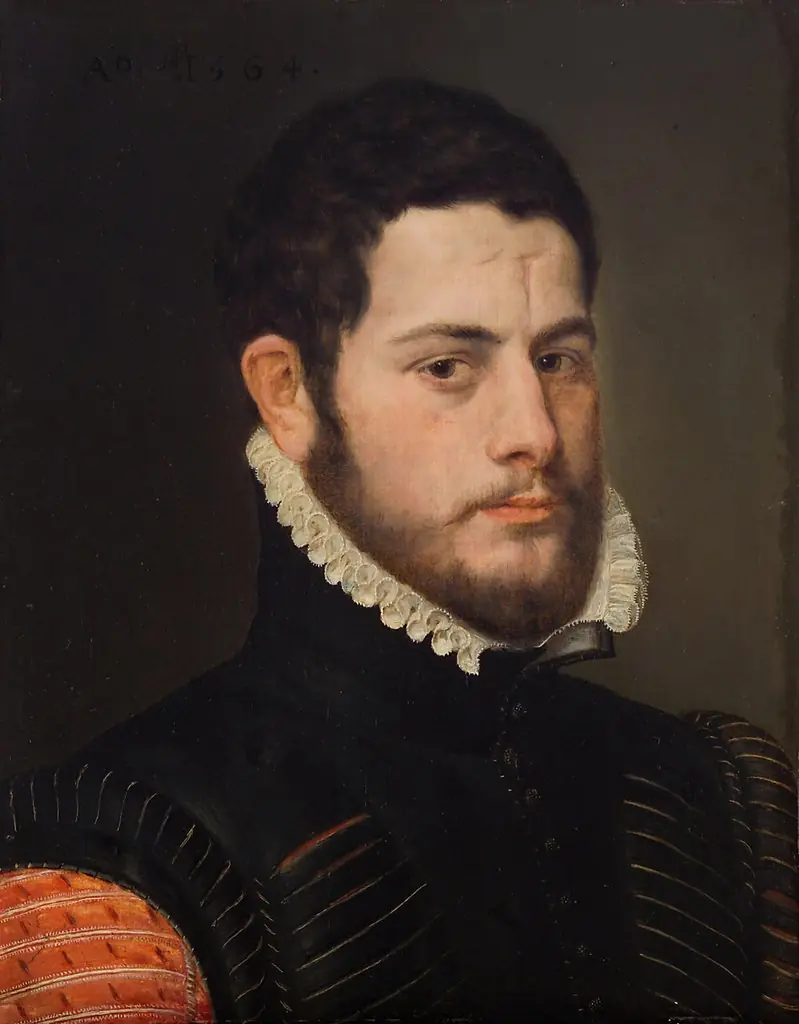 Portrait of a Man with Brow
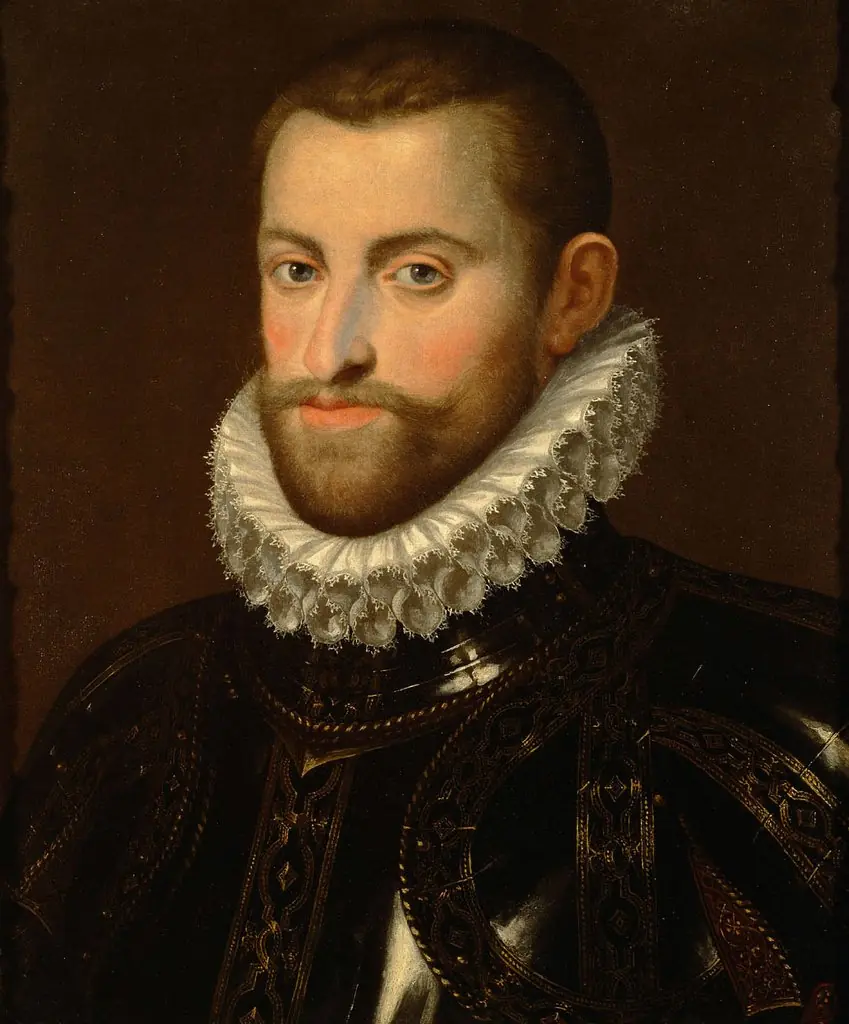 Erzherzog Ernst im Harnisch, Brustbild
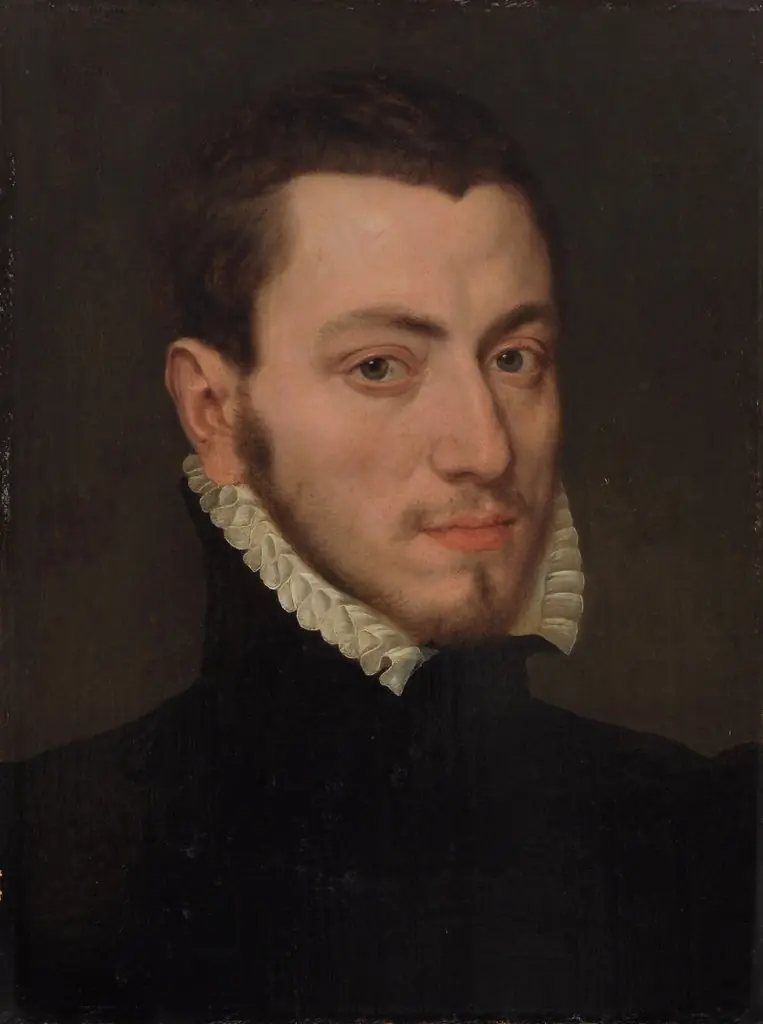 Male Portrait
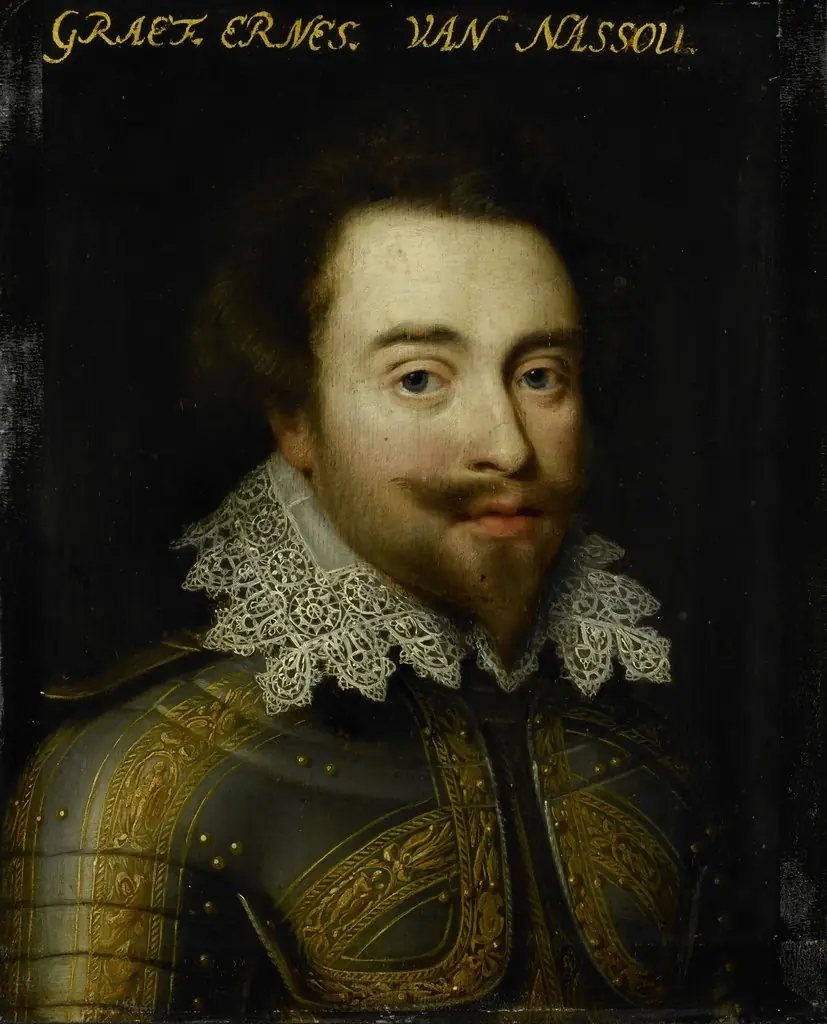 Portrait of Johan Ernst I (1582-1617), Count of Nassau-Siegen