Artwork
Philip II
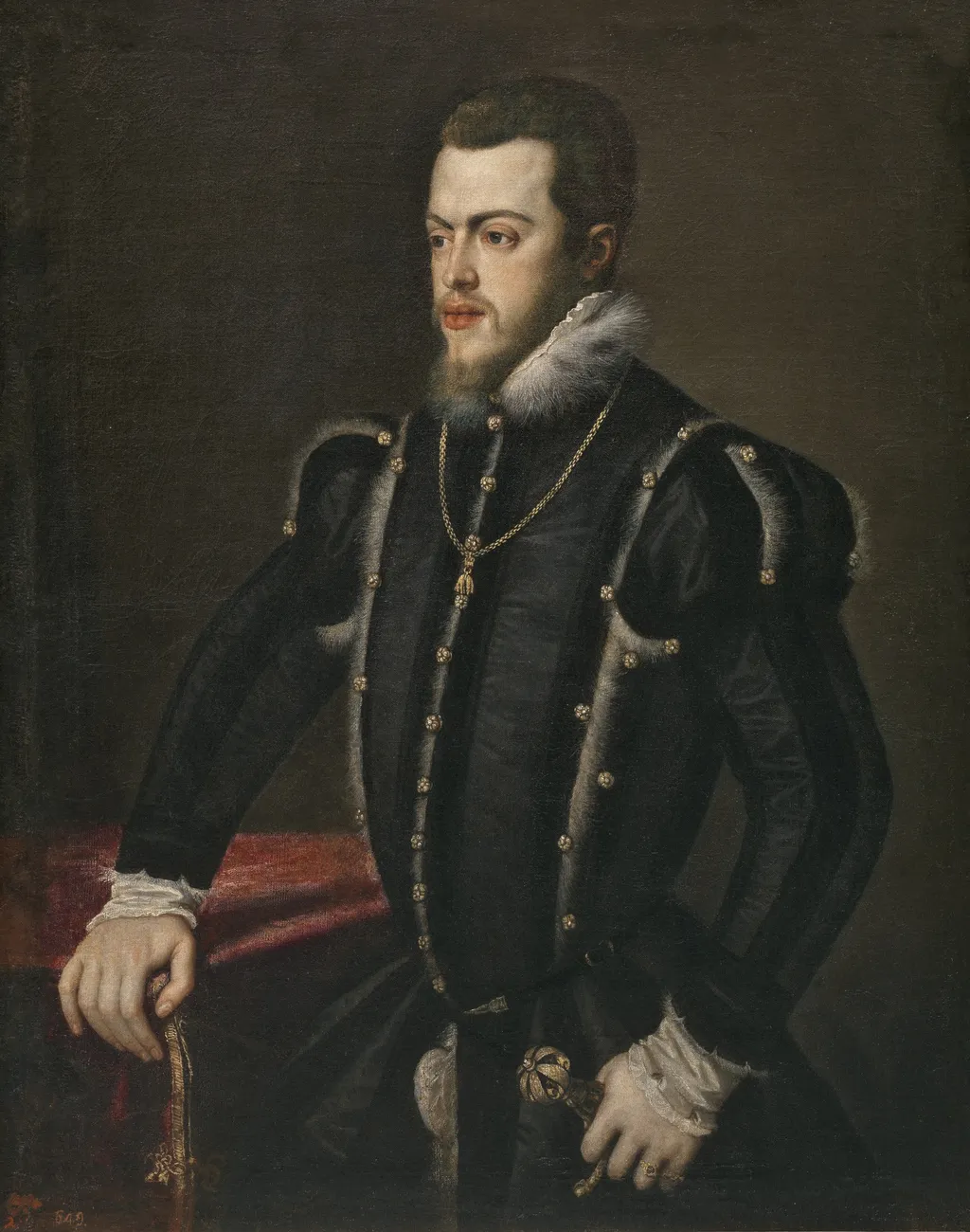
Philip II is an oil painting by the Early Baroque Italian artist Unknown. It dates from 1549 and is held in the collection of the Museo del Prado.
About this work
Subject & Meaning
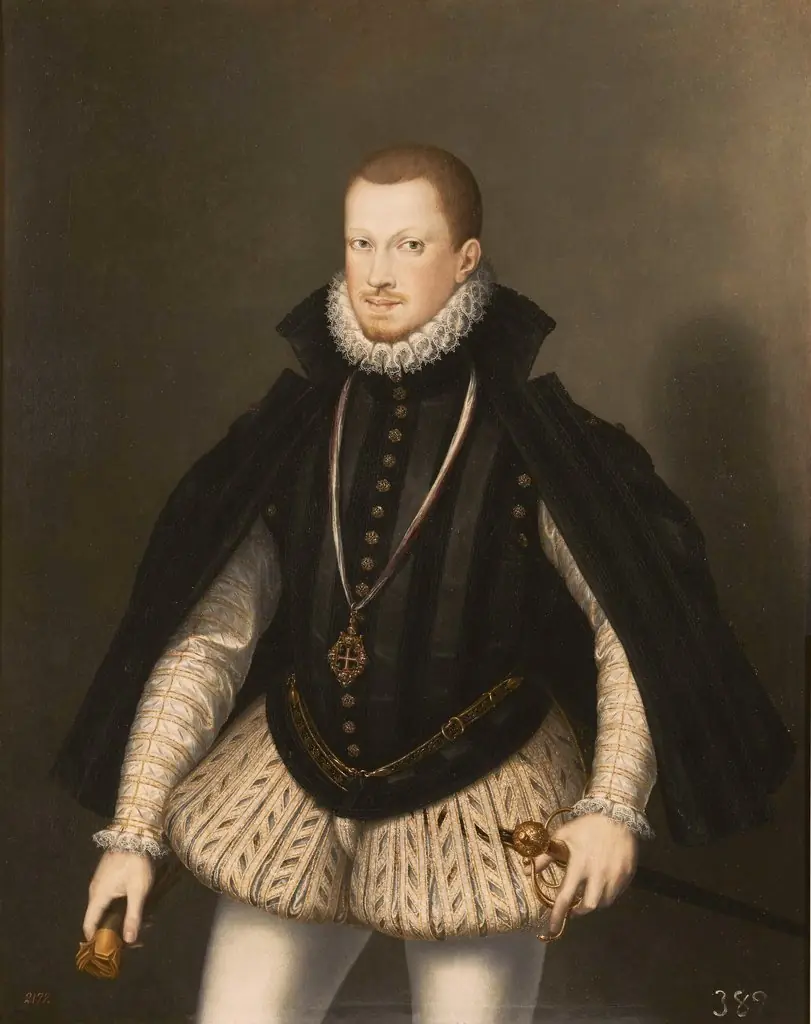
A key element of the iconography is the inclusion of a sword, which serves as a symbol of military authority and sovereign power.
This 1549 oil painting on canvas portrays Philip II of Spain as its central subject. The work functions as a formal royal portrait, capturing the monarch during his early reign. A key element of the iconography is the inclusion of a sword, which serves as a symbol of military authority and sovereign power.
By depicting the king with this attribute, the artwork represents his role as a commander and defender of the realm. The piece is currently held in the collection of the Museo del Prado.
Technique & Style
The work is an oil painting on canvas, executed in the workshop of Titian and housed in the Museo del Prado, where it remains on display. Its composition portrays Philip II of Spain holding a sword, reflecting the formal portraiture conventions of mid‑sixteenth‑century Spanish court art. The canvas measures 103 cm by 82 cm, and the handling of oil paint yields a richly layered surface with restrained modeling of the figure’s flesh, characteristic of Titian’s influence on workshop production.
History & Provenance
The work was created in 1549, as indicated by the inception date recorded for the painting in the Museo del Prado’s records.
The painting is attributed to the workshop of Titian, reflecting the collaborative practice common in Titian’s studio during this period. It entered the Museo del Prado’s collection, where it remains held today. The canvas measures 103 cm in height and 82 cm in width, and depicts Philip II of Spain alongside a sword, consistent with the portrait genre of the period.
The work is held by the Museo del Prado, Madrid, where it is inventoried as oil on canvas, measuring 103 cm in height and 82 cm in width.
It has been exhibited at the Museo del Prado in Madrid, as documented by the collection’s records.
Legacy
Philip II's later influence and legacy are anchored in its status as a portrait by the workshop of Titian, housed in the Museo del Prado, where it remains on public view. The work's depiction of the monarch with symbolic attributes such as a sword has contributed to enduring representations of Philip II's authority in Spanish cultural memory. Its technical execution in oil on canvas, measuring 103 cm by 82 cm, exemplifies High Renaissance portraiture and has informed scholarly studies of courtly imagery.
The painting's inclusion in major exhibitions and academic discourse underscores its role in shaping perceptions of Habsburg visual culture.
Research on the portrait frequently references its compositional innovations and the workshop's role in disseminating Titian's stylistic influence across Iberian courts.
Overview
The work is an oil painting portraying a solitary male figure dressed in a dark, fur‑trimmed coat adorned with gold buttons and a chain necklace. He wears a crisp white ruff and displays a neatly trimmed beard. One hand rests on the hilt of a sword, while the other holds a small object, possibly a glove or a ring, set against a deep, unlit background.
Artist & collection









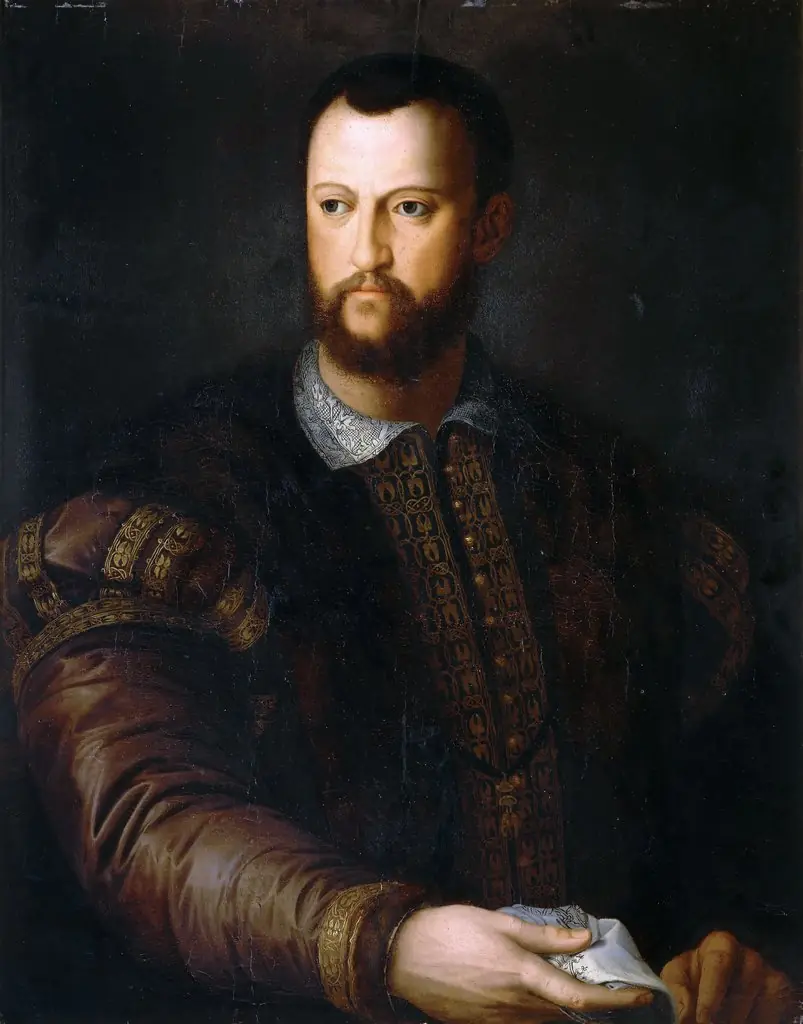 Portrait of Cosimo I de' Medici
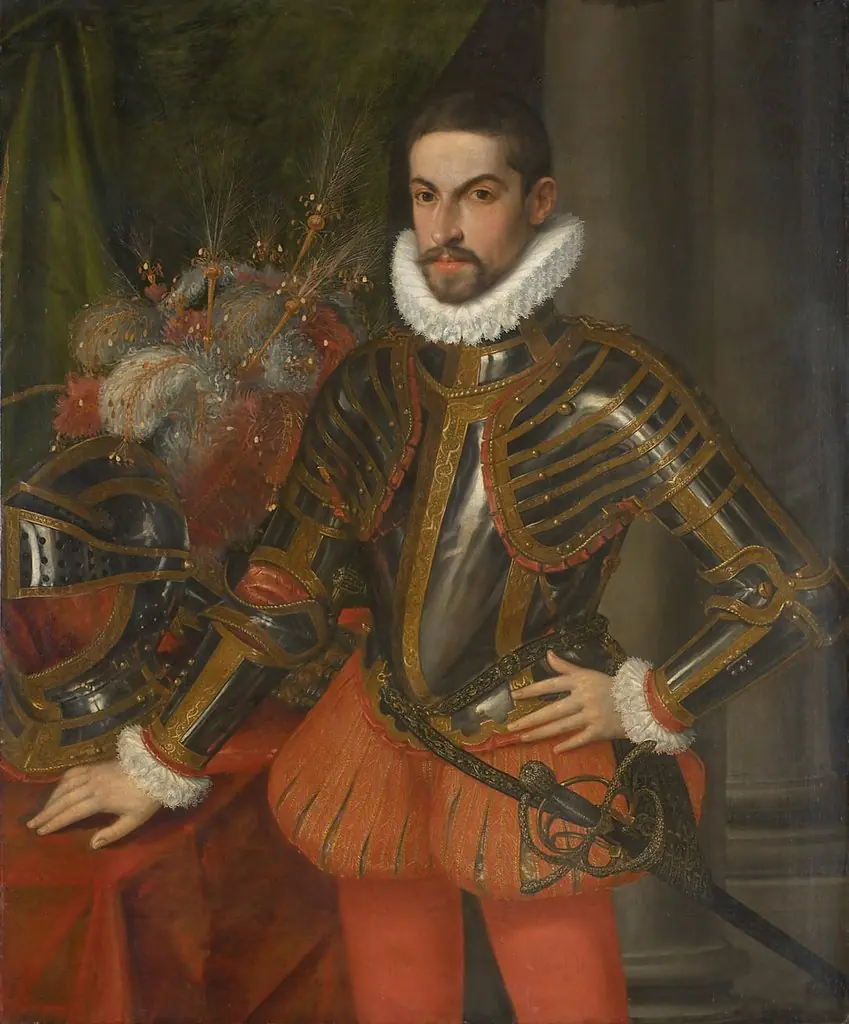 Erzherzog Maximilian III. (1558-1618) im Harnisch, Kniestück
 Don Sebastián rey de Portugal
 Portrait of a Gentleman of the order of Saint James
 Fernando de Aragón y Borja duque de Villahermosa y conde de Ribagorza (copia)
 El archiduque Diego Ernesto de Austria
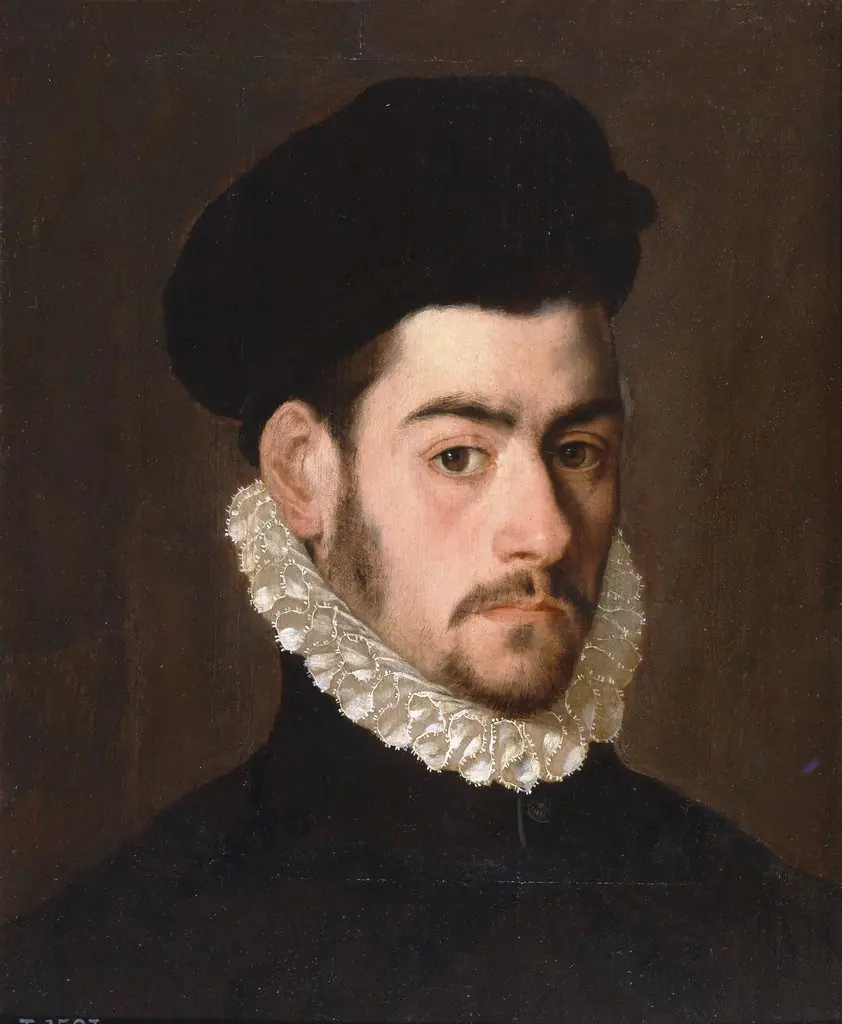 Self-portrait (?)
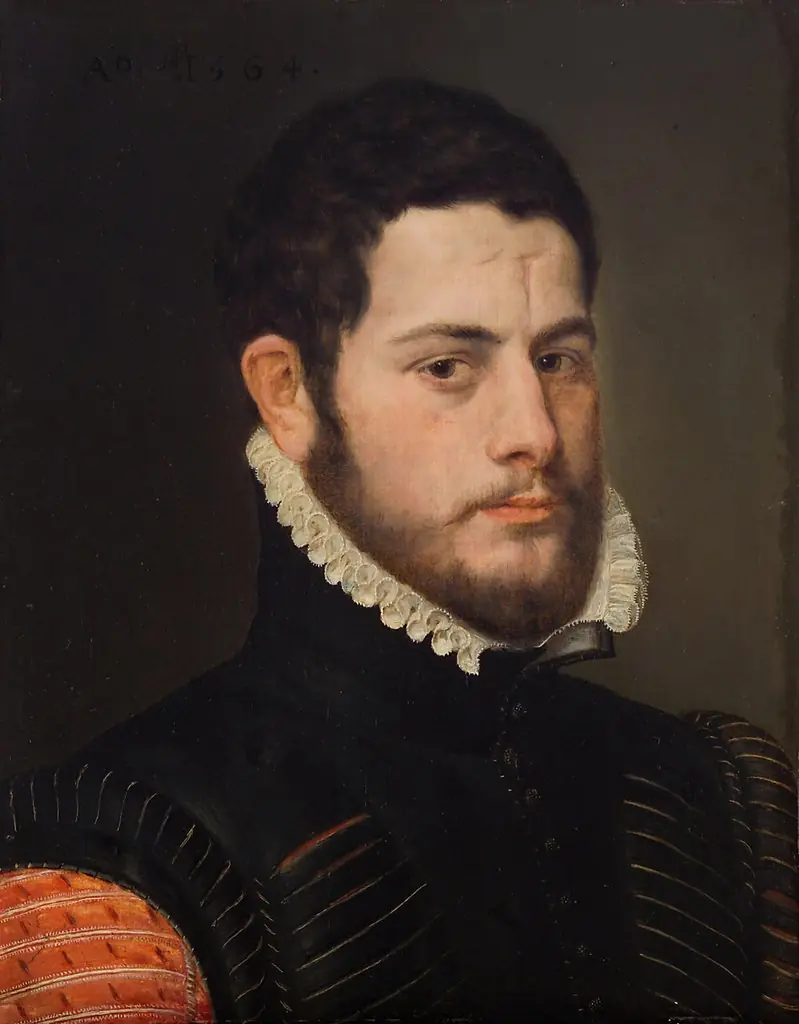 Portrait of a Man with Brow