Artwork
Flori, bujori și maci
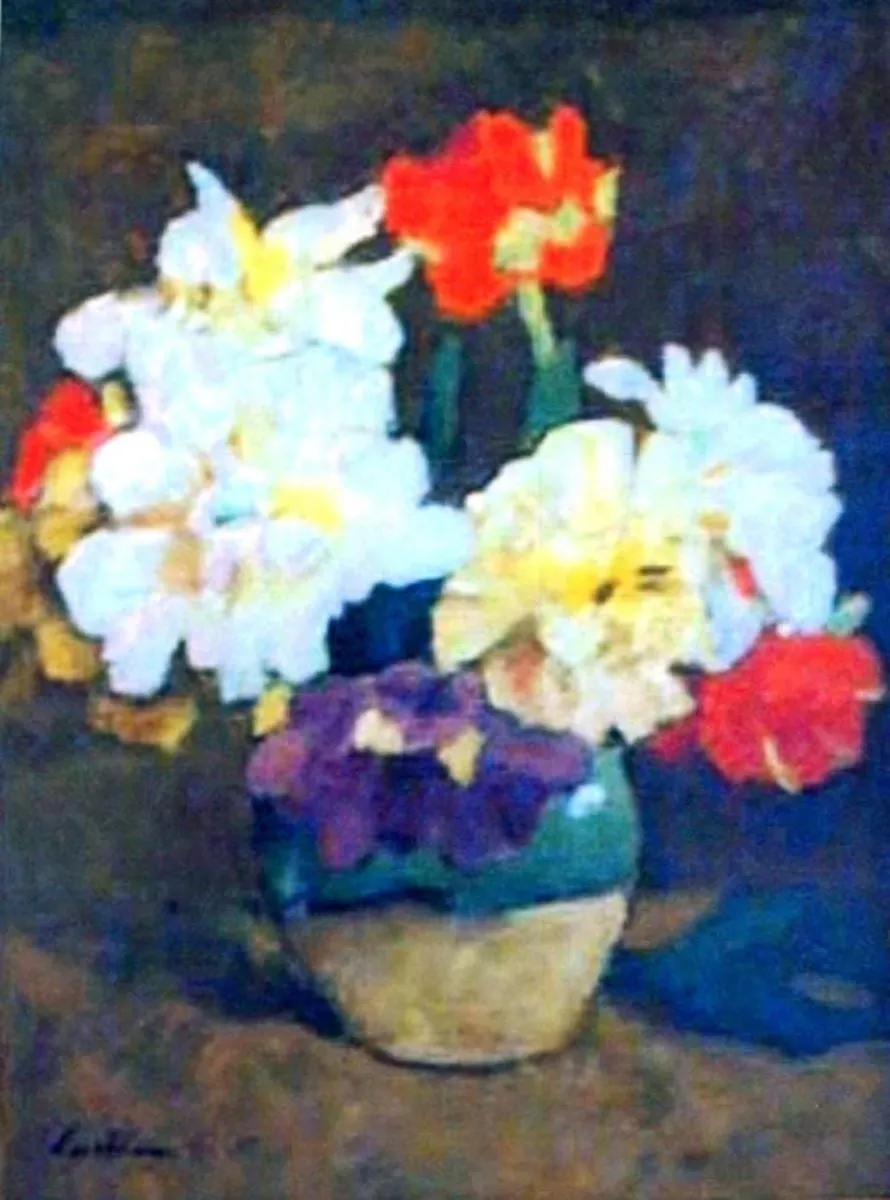
Flori, bujori și maci is an unspecified painting by the Art Nouveau artist Ștefan Luchian. It dates from 1902 and is held in the collection of the Museum of Art Cluj-Napoca.
About this work
Overview
Flori, bujori și maci is a still life painting by Romanian artist Ștefan Luchian, dating to circa 1902. It is part of the collection at the Museum of Ethnography.
Subject & Meaning
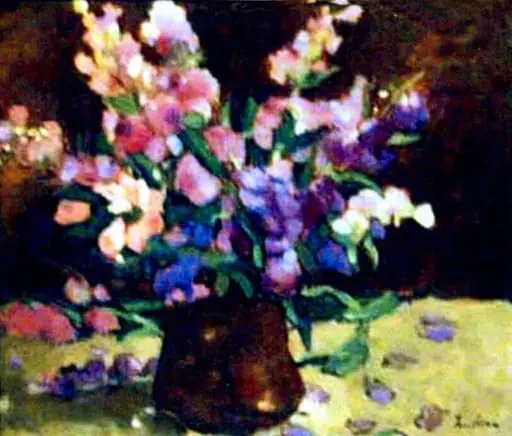
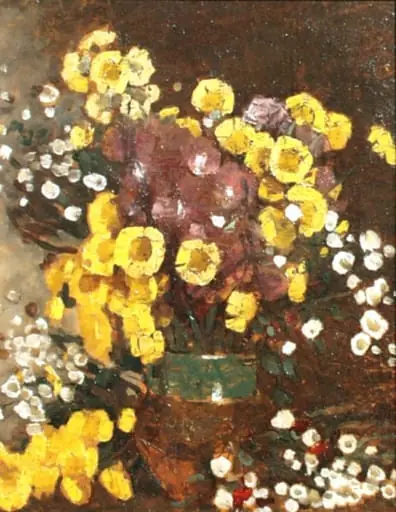
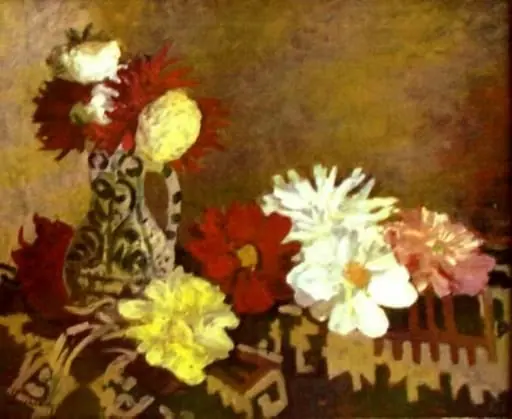
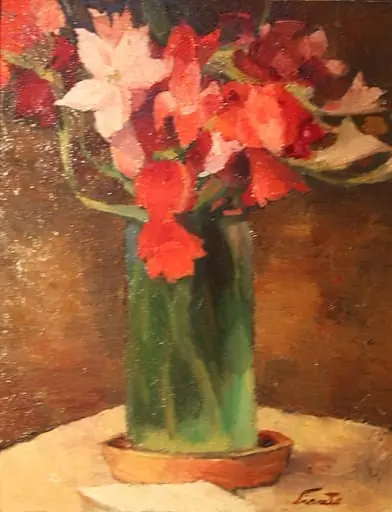
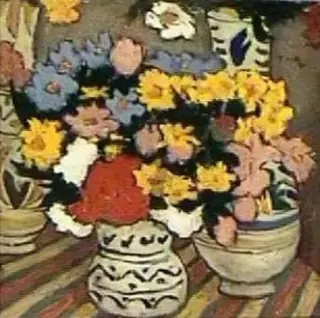
The painting depicts a vase containing a mixed bouquet of predominantly white and red flowers, accented with purple and yellow, set against a dark background. The subject is straightforward, focusing on the floral arrangement.
Technique & Style
The work features thick, heavy brushstrokes characteristic of impasto, where paint is applied in thick layers. This technique enhances color vibrancy and imbues the floral subject with a sense of liveliness and texture. The vase is rendered with a rough, multi-tonal surface in greens and blues.
History & Provenance
Created around 1902, the painting is now housed at the Museum of Ethnography, though specific details of its acquisition or earlier ownership are not provided here.
Context
While specific contextual influences are not detailed, the piece reflects early 20th-century still life traditions, with Luchian's expressive brushwork and color choices potentially aligning with emerging modernist tendencies in European art at the time.
Legacy
The legacy of Flori, bujori și maci is not extensively outlined in the provided information, suggesting its significance may lie more within Luchian's body of work or the collection of the Museum of Ethnography rather than broader, widely recognized artistic movements.
Artist & collection

Artist
Ștefan Luchian was a Romanian painter, famous for his landscapes and still life works.