Artwork
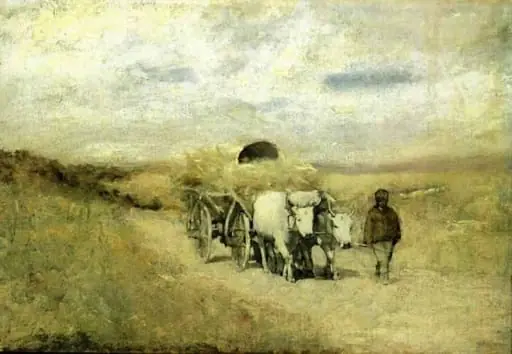
Peisaj cu boi
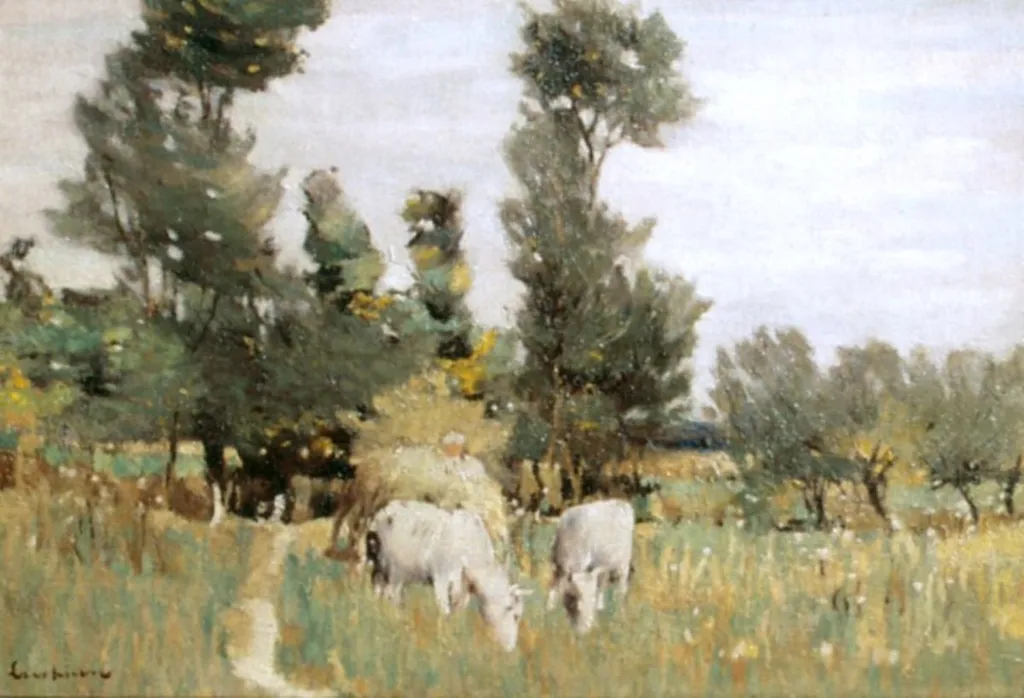
Peisaj cu boi is an unspecified painting by the Art Nouveau artist Ștefan Luchian. It dates from 1902 and is held in the collection of the National Museum of Art of Romania.
About this work
Overview
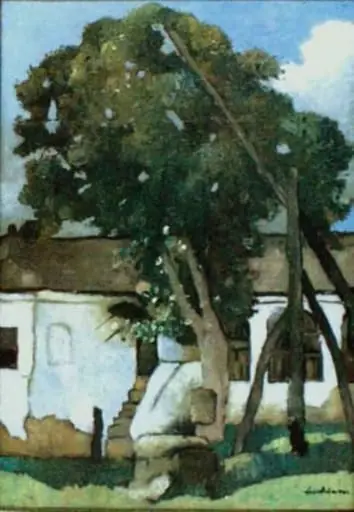
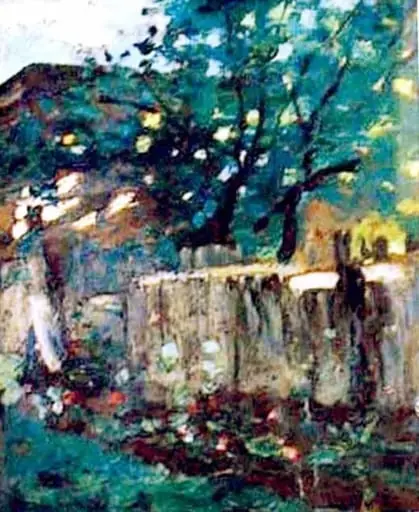
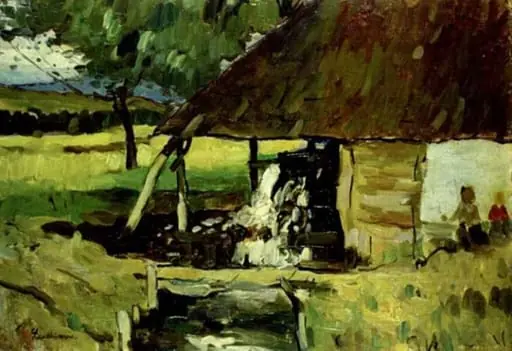
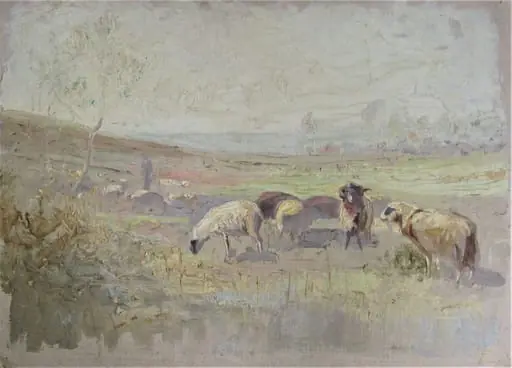
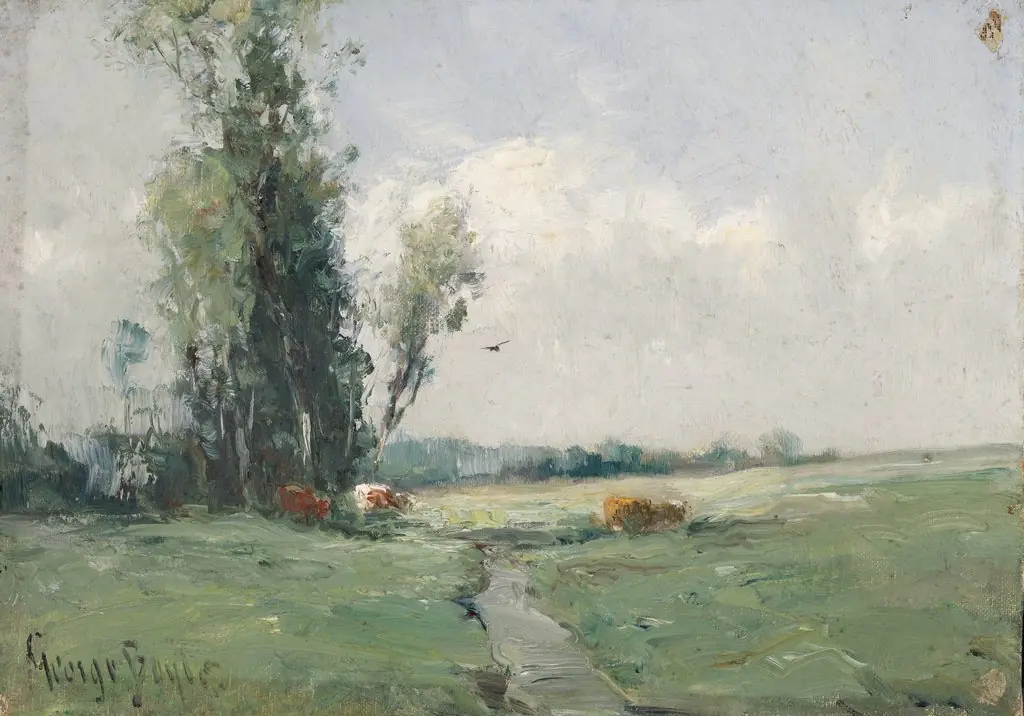
Ștefan Luchian’s Peisaj cu boi, executed around 1902, presents a modest rural tableau. The composition centers on a verdant meadow where three sheep graze beneath a line of tall trees, while a faint line, interpreted as a path or fence, traces the right edge of the canvas. The sky above is rendered in a soft, hazy tone, lending the scene a tranquil atmosphere.
Subject & Meaning
The work captures a moment of everyday pastoral life, emphasizing the quiet coexistence of livestock and landscape. By focusing on ordinary animals and a simple field, Luchian underscores the enduring relationship between humans, their animals, and the natural environment, reflecting a broader interest in Romanian rural themes at the turn of the twentieth century.
Technique & Style
Luchian applies paint in thick, textured strokes, a technique known as impasto, which gives the foliage and woolen coats a palpable sense of volume. Loose brushwork allows greens, yellows, and whites to merge subtly, while the light appears to strike the leaves and sheep, creating a gentle, luminous effect across the surface.
History & Provenance
Created circa 1902, the painting belongs to the period when Luchian was transitioning toward a more expressive handling of color and form. Details of its early ownership are scarce, but the work has been documented in several catalogues of the artist’s oeuvre and is held in a Romanian public collection.
Artist & collection

Artist
Ștefan Luchian was a Romanian painter, famous for his landscapes and still life works.