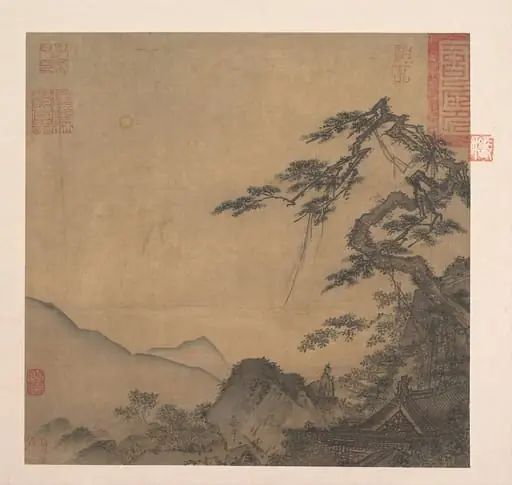
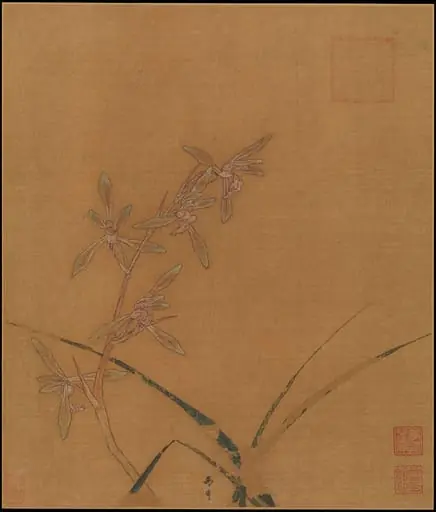
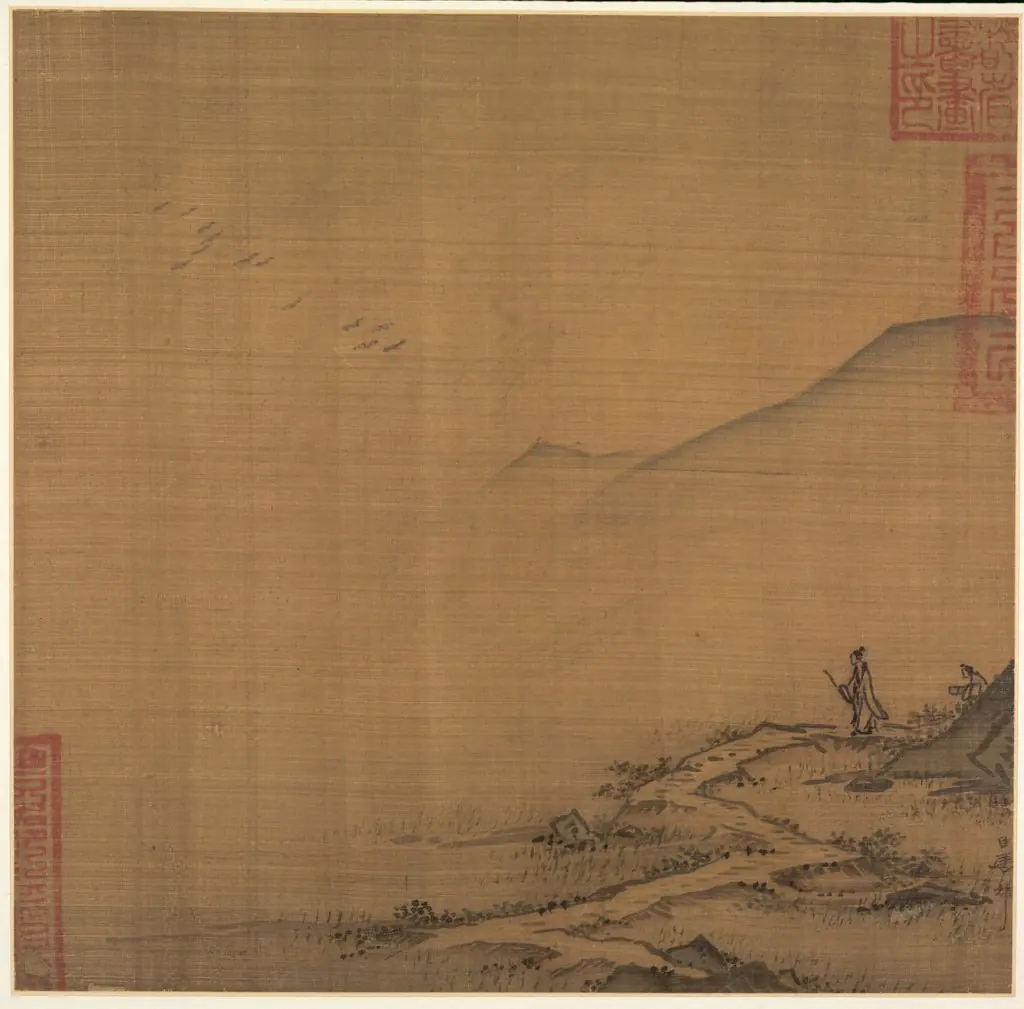
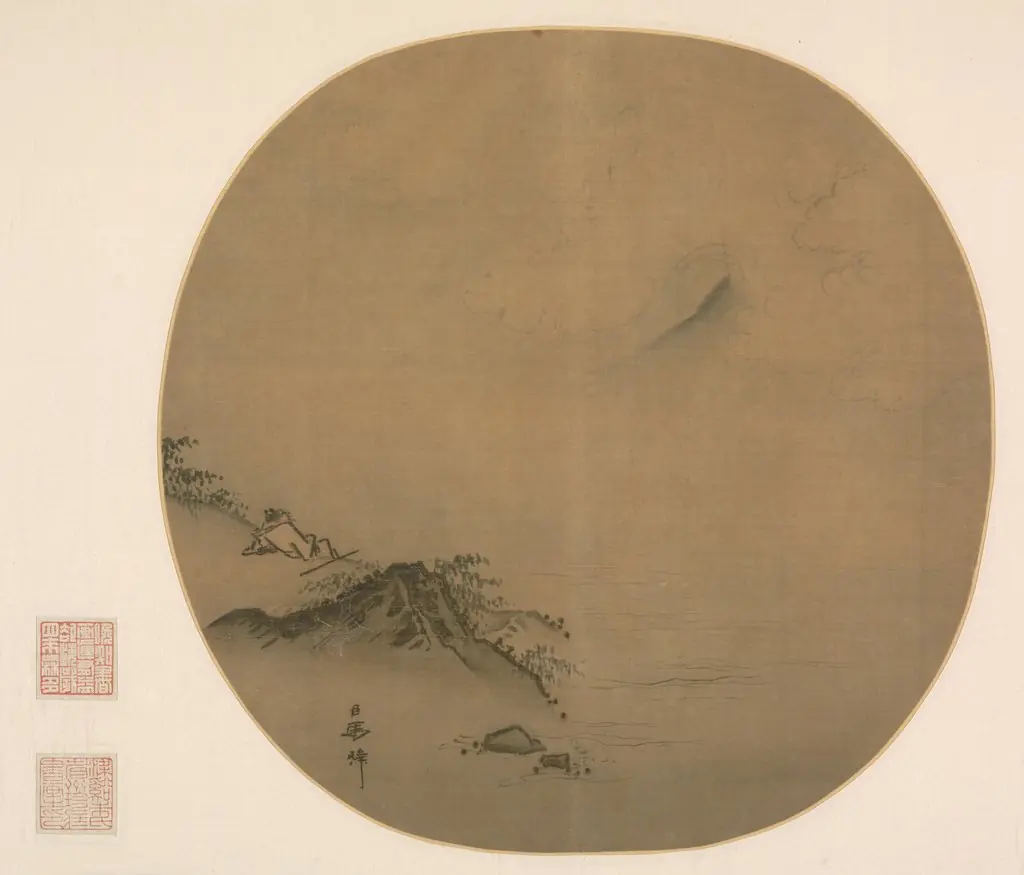
Artwork
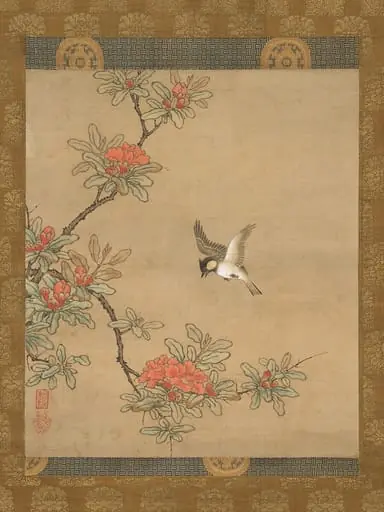
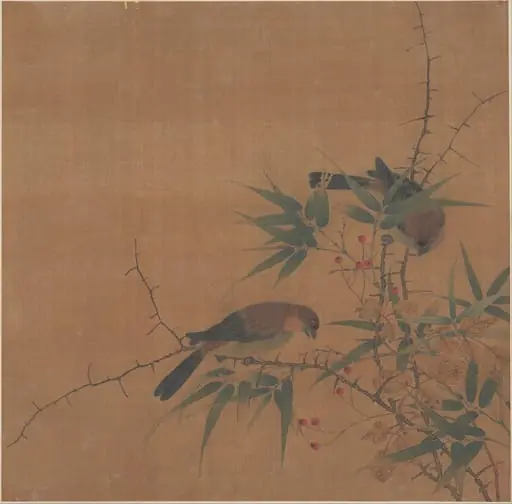
明/清 佚名 傳馬麟 石榴白鳥圖 冊頁 |Pomegranates after Ma Lin
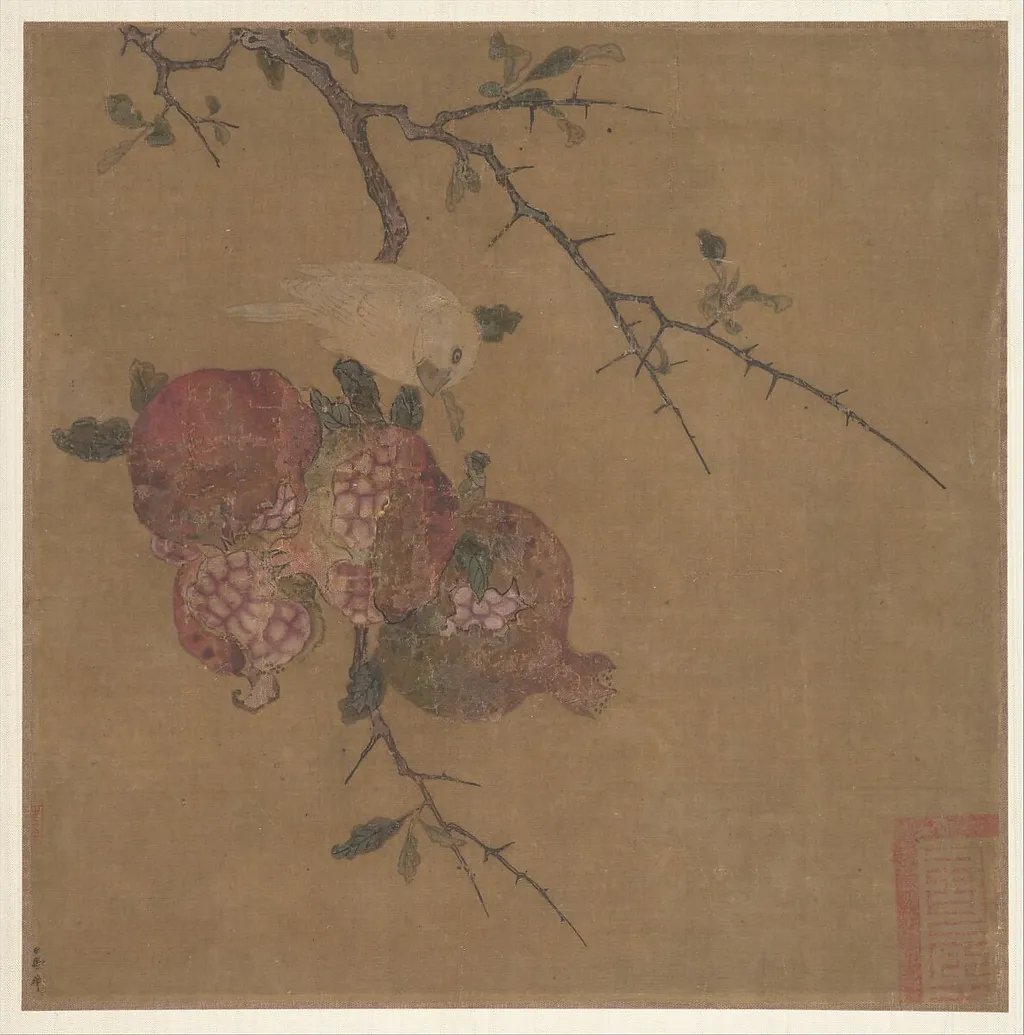
明/清 佚名 傳馬麟 石榴白鳥圖 冊頁 |Pomegranates after Ma Lin is an ink painting by the Ming dynasty painting artist Ma Lin. It is held in the collection of the Metropolitan Museum of Art.
About this work
Subject & Meaning
The album leaf titled "Pomegranates after Ma Lin" portrays a bird alongside a pomegranate, elements that together constitute a Chinese still-life composition from 1639. The bird and the pomegranate are rendered in ink and color on silk, a medium typical of the period, and the work is classified as a still-life within the broader corpus of Chinese painting. The piece was created in China and entered the Metropolitan Museum of Art's holdings, representing an example of anonymous court-style art from the late Ming or early Qing era.
Technique & Style
The work is an album leaf painted with ink and polychrome pigments on silk, a format typical of Ming-Qing album paintings.
The work is an album leaf painted with ink and polychrome pigments on silk, a format typical of Ming-Qing album paintings. It portrays a bird and a pomegranate in a still-life arrangement, reflecting a decorative motif. The piece measures approximately 27.3 × 27.3 cm and was created in China around 1639.
Executed by an anonymous hand, the composition combines delicate brushwork with subtle color washes, producing a balanced, ornamental style characteristic of the period.
History & Provenance
The album leaf is dated to 1639 and was produced in China. Although the painter remains anonymous, the work has been traditionally transmitted as after Ma Lin. It is executed in ink and color on silk as a still-life depicting a pomegranate and a bird.
The piece is presently held in the collection of the Metropolitan Museum of Art. No earlier owners or commission details are recorded in the available sources.
Overview
This album leaf, titled Pomegranates after Ma Lin, is an ink and color painting on silk from 1639. It depicts a small white bird perched alongside two ripe pomegranates. The work is a later rendition, created in the style of the 13th-century artist Ma Lin, whose original composition it emulates. This piece exemplifies a tradition of reinterpreting earlier masterworks in Chinese painting.
Context
The depiction of pomegranates holds a long-standing tradition within Chinese art, often carrying auspicious meanings related to prosperity and numerous offspring. This particular work, with its understated palette and focus on natural forms, aligns with a broader aesthetic preference for quiet contemplation in certain genres of Chinese painting. It invites viewers to explore similar themes and stylistic approaches in other historical works.
Artist & collection

Artist
Ma Lin (simplified Chinese: 马麟; traditional Chinese: 馬麟; pinyin: Mǎ Lín; Wade–Giles: Ma Lin) (c.