Artwork
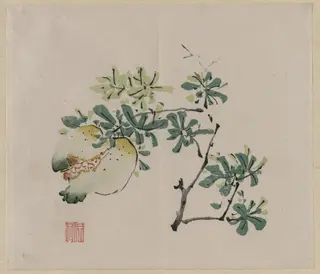
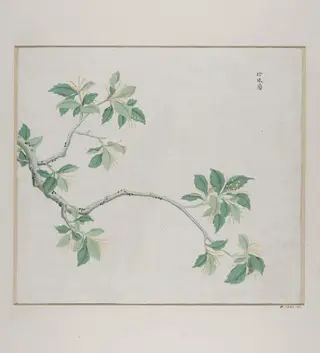
清 佚名 秋梨圖 冊頁|Branch of Tree with Fruit
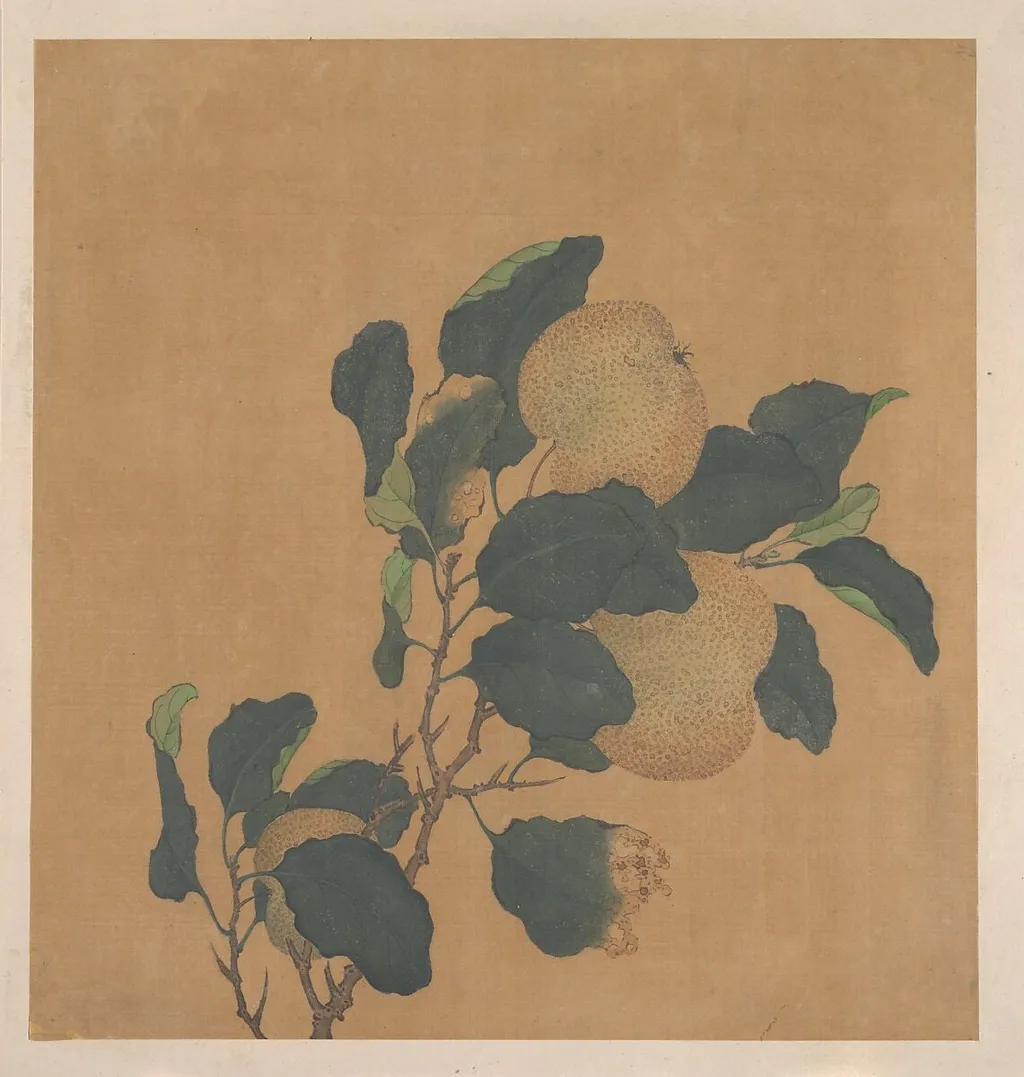
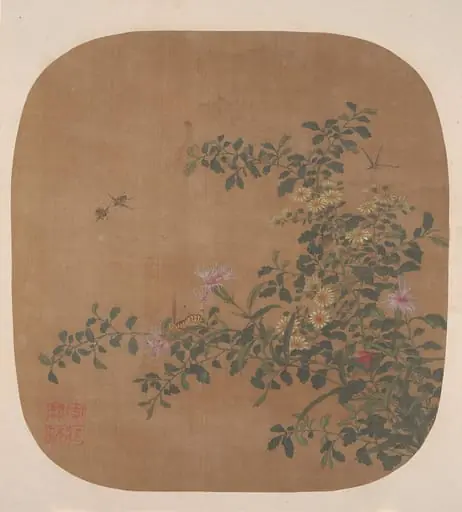
清 佚名 秋梨圖 冊頁|Branch of Tree with Fruit is an ink painting. It dates from 1777 and is held in the collection of the Metropolitan Museum of Art. The work, titled “秋梨圖” (Autumn Pear Tree), is an anonymous painting executed on silk album leaves with ink and color.
- Accession no.
- 13.100.136
- Credit line
- John Stewart Kennedy Fund, 1913
About this work
Subject & Meaning
The painting shows a single branch laden with ripe fruit, a motif that symbolizes abundance and fertility in Chinese visual culture. The work is catalogued as a still‑life and is part of the Metropolitan Museum of Art’s collection, reflecting its significance within the study of Qing dynasty album leaf paintings.
Technique & Style
Branch of Tree with Fruit is an album leaf executed in ink and color on silk, a traditional East Asian format suited to small-scale botanical subjects.
Branch of Tree with Fruit is an album leaf executed in ink and color on silk, a traditional East Asian format suited to small-scale botanical subjects. The support measures 27.9 cm in height by 26.4 cm in width, giving the composition a nearly square field that frames the fruiting branch intimately. Painted in 1777 by an anonymous Qing-dynasty artist, the work belongs to the still-life genre, treating the fruit as the sole pictorial subject.
The combination of silk support with ink and color handling is consistent with refined album-leaf practice of the period, allowing for delicate tonal modulation and precise rendering of surface texture.
History & Provenance
Created in 1777, the album leaf titled Branch of Tree with Fruit (also known as Qiu Li Tu) is a work of Chinese painting from the Qing dynasty. The piece was executed by an anonymous artist using ink and color on silk. It currently forms part of the collection of the Metropolitan Museum of Art, where it is housed in New York. The work depicts fruit, consistent with the still-life genre typical of such album leaves from this period.
Legacy
The work's compositional treatment of fruit has been cited as an influence on later album leaf painters who emphasized botanical detail within intimate formats, particularly within the Canton Famille export tradition that flourished in the late 18th century. The painting's emphasis on naturalistic rendering of seasonal produce contributed to a visual vocabulary later adopted by artists working for the European porcelain and lacquerware markets.
The piece is held in the collection of the Metropolitan Museum of Art, where it is catalogued as part of the museum's holdings of Qing dynasty album leaves.
Overview
The work, titled “秋梨圖” (Autumn Pear Tree), is an anonymous painting executed on silk album leaves with ink and color. It depicts a solitary branch laden with fruit, rendered in a restrained palette that emphasizes form and spatial recession.
Context
The painting exemplifies the genre of seasonal botanical studies that were popular among scholar-artists, who often used such subjects to convey moral or poetic associations with the passage of time. The emphasis on a single branch mirrors the contemplative practice of focusing on a single element of nature.
Artist & collection