Artwork
The Baptism of Christ
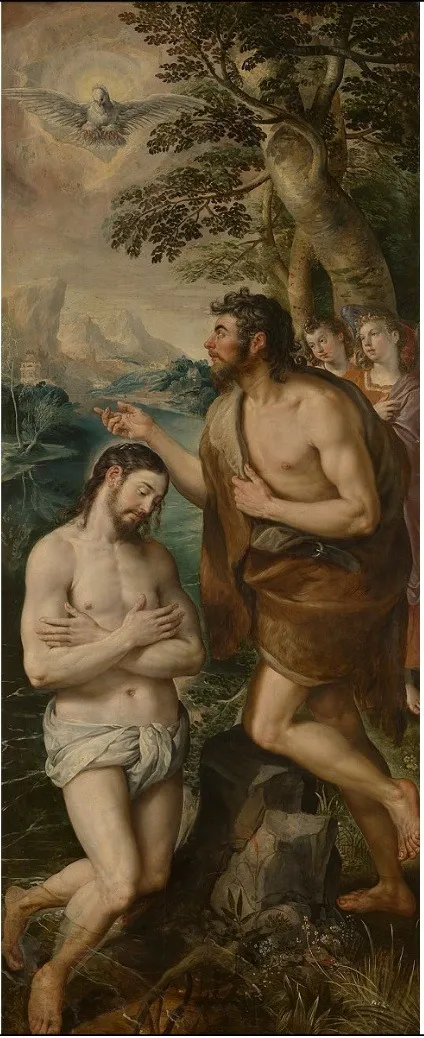
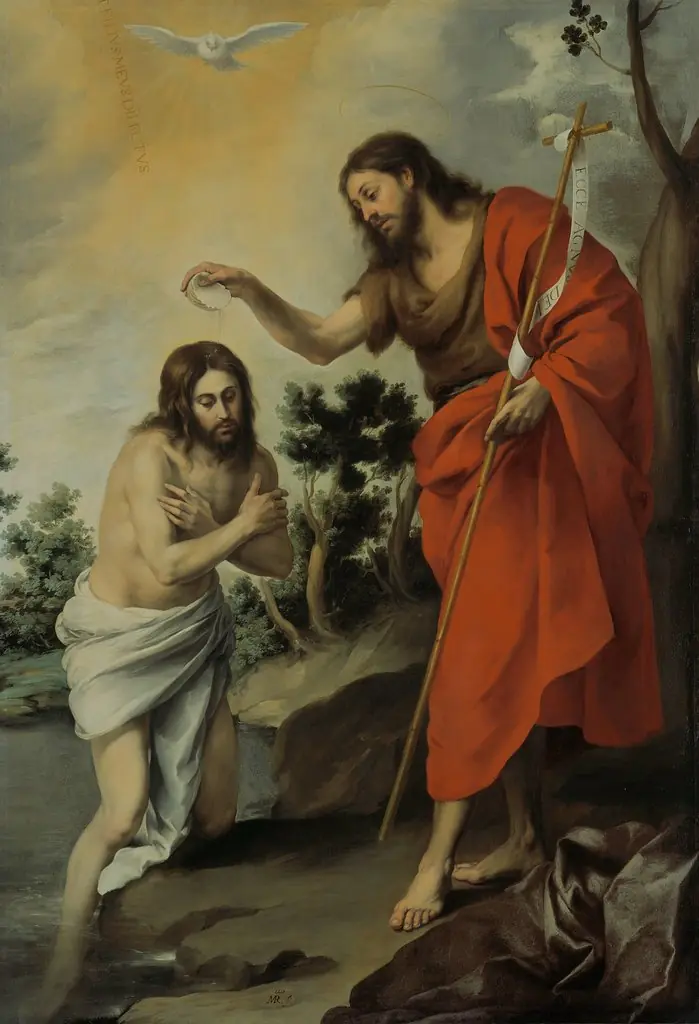
The Baptism of Christ is an oil painting by the Flemish Baroque painting artist Maarten de Vos. It dates from 1574 and is held in the collection of the Onze-Lieve-Vrouwekathedraal.
About this work
Subject & Meaning
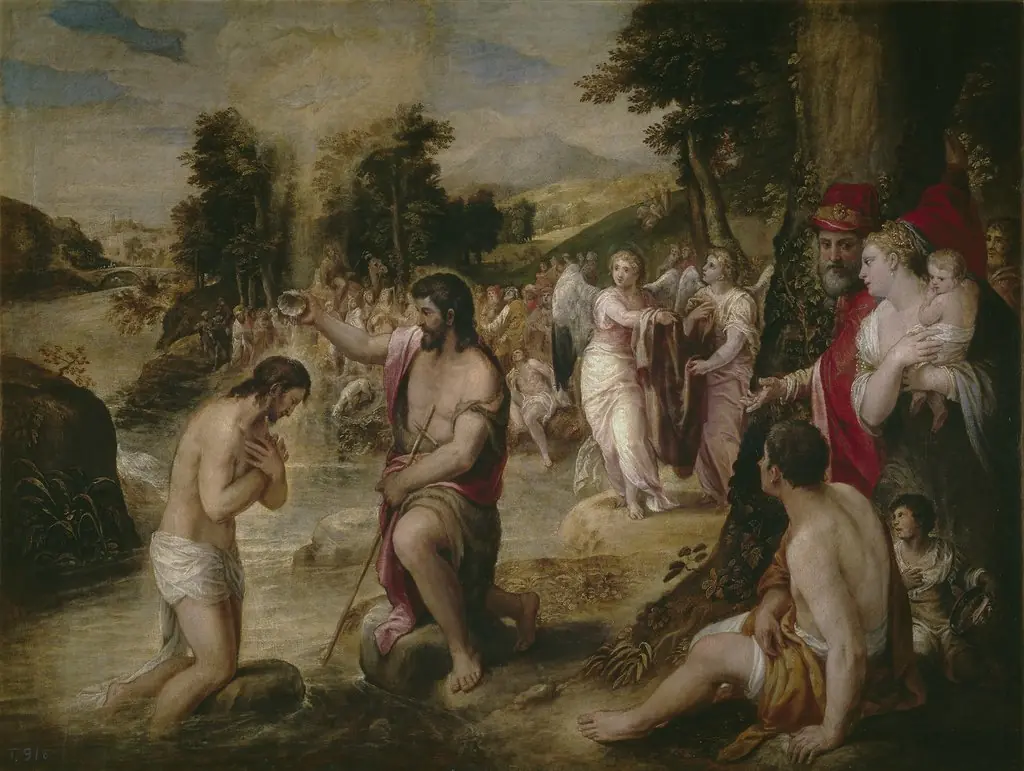
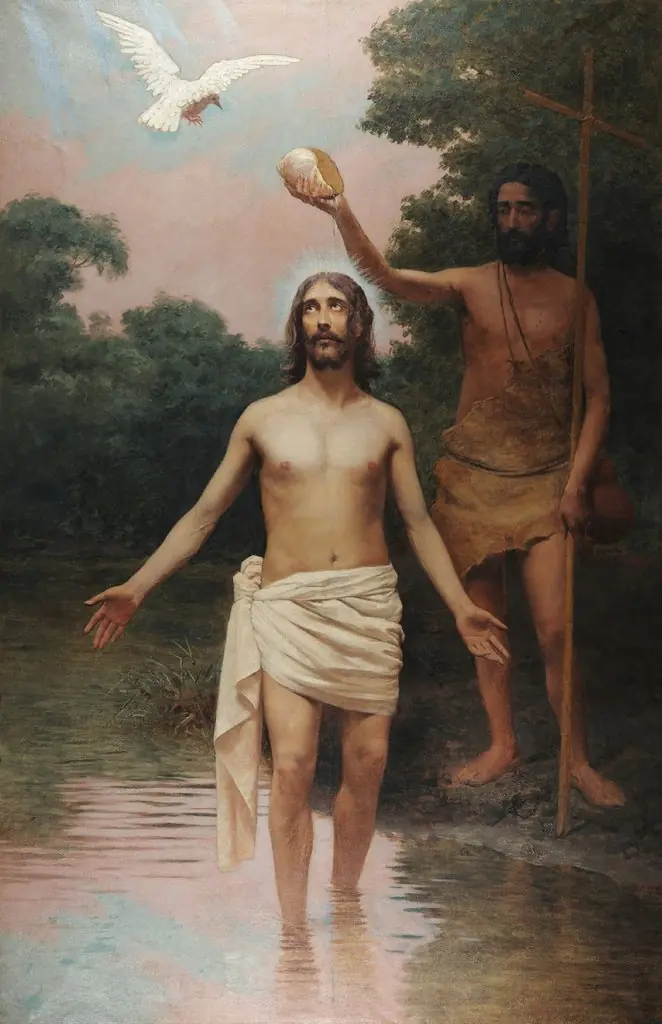
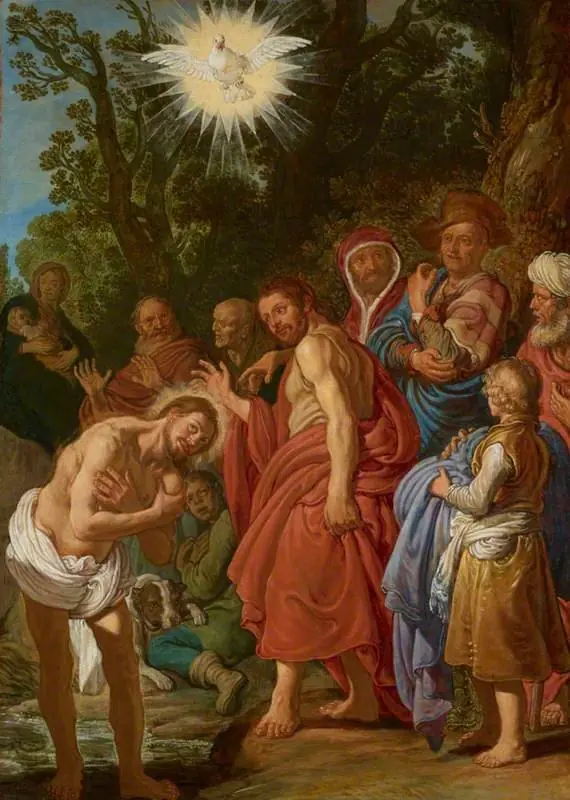
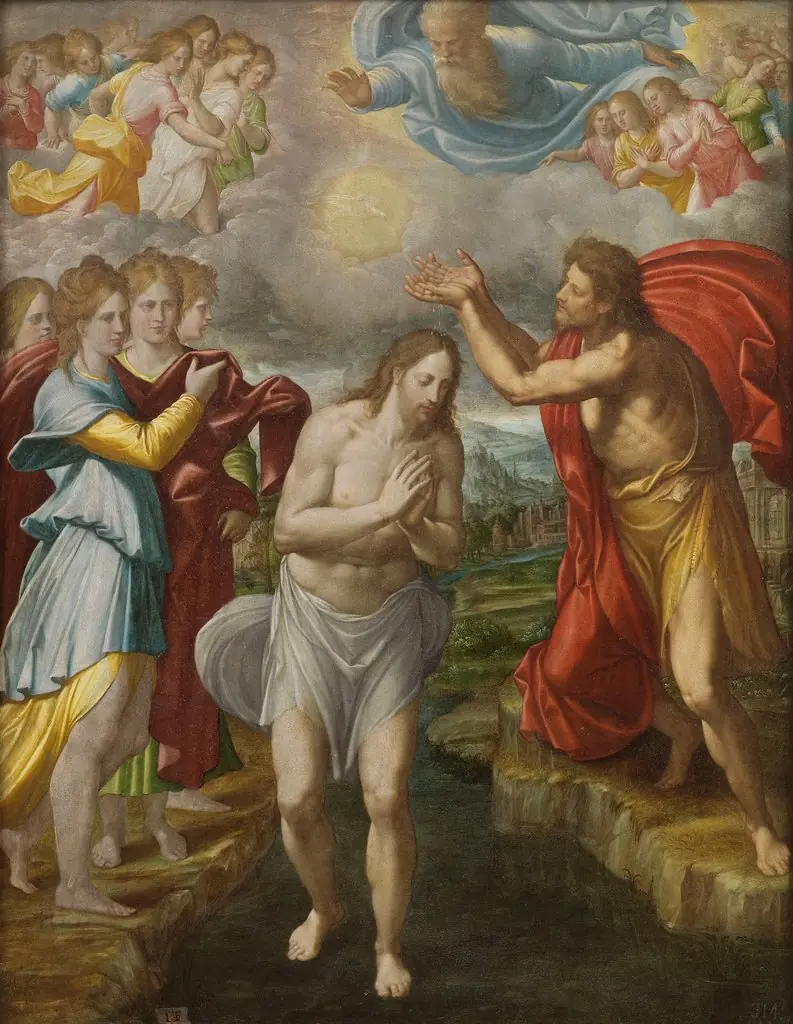
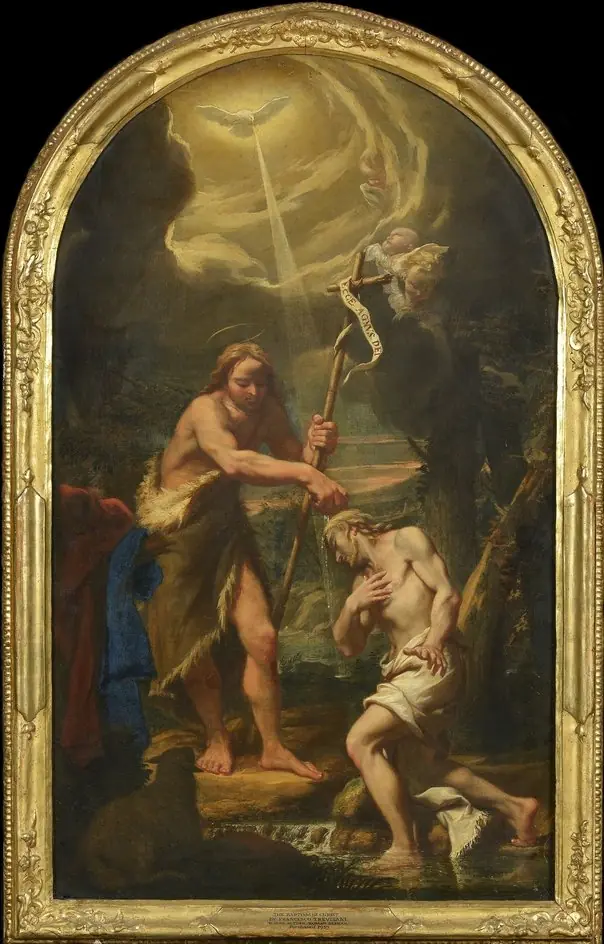
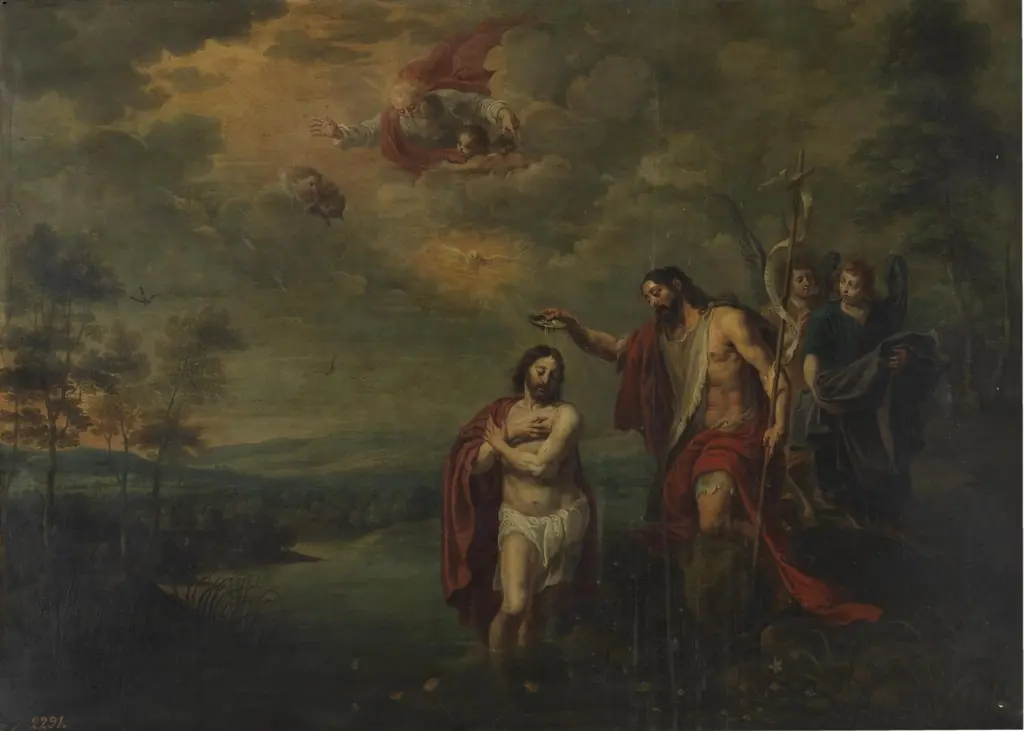
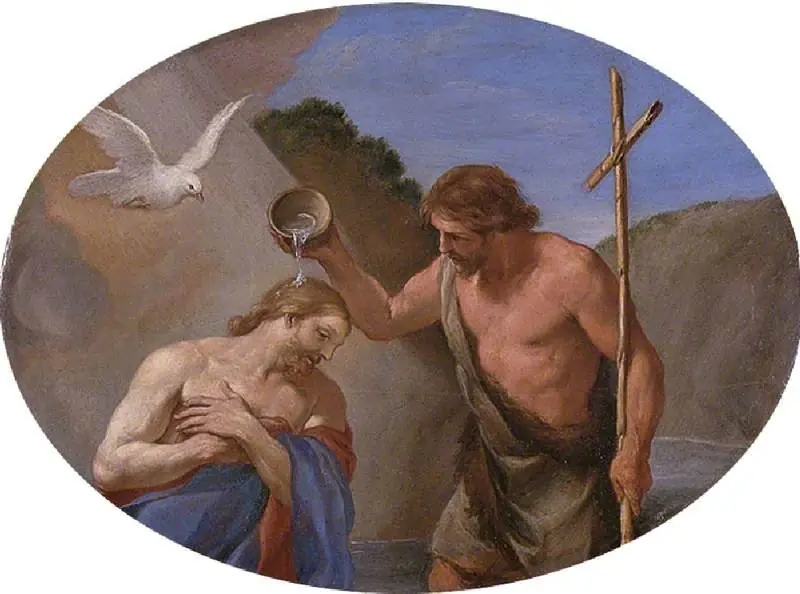
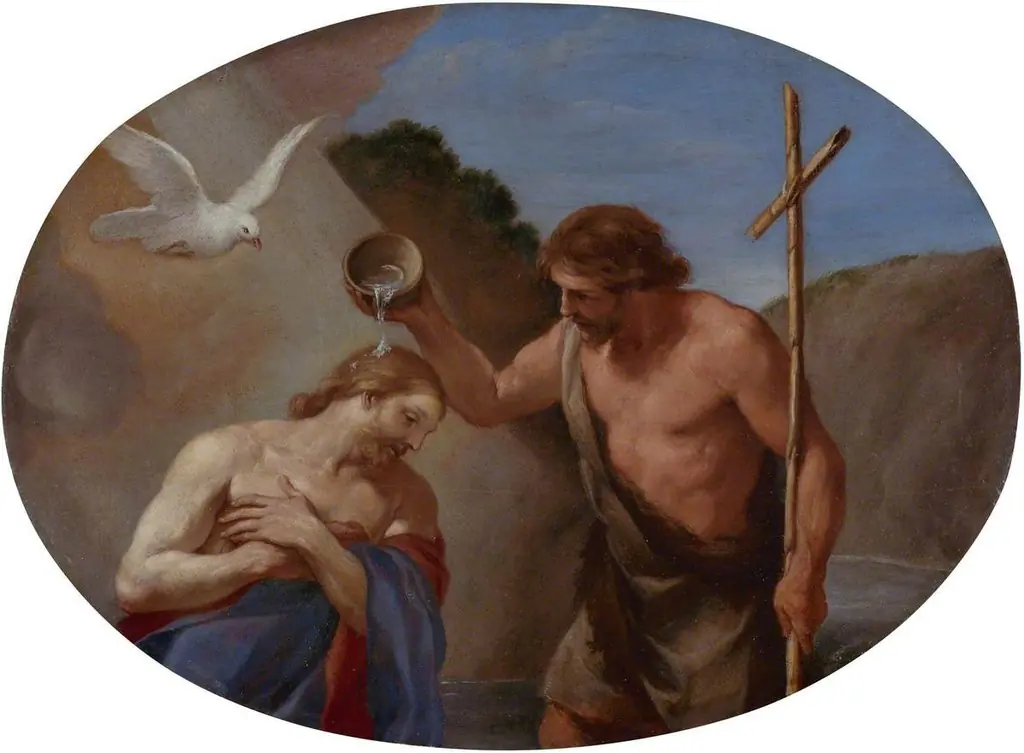
Christ stands in the Jordan River as John the Baptist performs the baptism, a scene set against a backdrop of mountains and the river landscape.
The painting depicts the Baptism of Jesus, a foundational event in Christian theology. Christ stands in the Jordan River as John the Baptist performs the baptism, a scene set against a backdrop of mountains and the river landscape. The work belongs to the religious genre and represents the moment of Christ's divine revelation, when the Holy Spirit descended and the voice of God declared Jesus as his Son.
The iconography follows traditional Christian narrative: the central sacramental act of baptism, the presence of the two primary figures, and the natural setting of the Jordan River all serve to locate the sacred event within a recognizable geography while emphasizing its spiritual significance as an initiation into public ministry and divine sonship.
Technique & Style
Executed in 1574, this religious work by Maarten de Vos utilizes oil paint applied to a wooden panel support. The composition vertically arranges its figures within a narrow format, measuring 220.5 cm in height and 89 cm in width. The imagery depicts the Baptism of Jesus within the Jordan River, featuring John the Baptist alongside Christ, set against a backdrop that includes mountainous terrain.
As an oil painting on panel from the late sixteenth century, the work reflects the material conventions of Flemish religious art of the period.
History & Provenance
Maarten de Vos created The Baptism of Christ in 1574. Executed in oil paint on a panel measuring 220.5 cm in height and 89 cm in width, the work depicts the biblical scene of Jesus's baptism by John the Baptist in the Jordan River. The painting is currently held in the collection of the Royal Museum of Fine Arts Antwerp, which manages the piece as part of the Vlaamse Kunstcollectie and in association with the Onze-Lieve-Vrouwekathedraal.
The Baptism of Christ by Maerten de Vos, dated 1574, is held by the Royal Museum of Fine Arts Antwerp, according to the Wikidata record. The same source associates the work with the Vlaamse Kunstcollectie and the Onze-Lieve-Vrouwekathedraal, indicating shared or related institutional ties. No inventory or accession number is provided in the available sources, and no exhibition history is documented.
Context
Maerten de Vos painted The Baptism of Christ in 1574, a religious work depicting Jesus Christ and John the Baptist on the Jordan River, part of the Flemish Baroque tradition. The painting is housed in the Royal Museum of Fine Arts Antwerp, where it is recognized as a key example of Counter-Reformation religious art emphasizing spiritual cleansing. Scholarship highlights its compositional influence on later Flemish artists and its role in shaping Baroque narrative techniques in Counter-Reformation visual culture.
The work reflects the broader context of 16th-century Antwerp painting, where artists like de Vos addressed Counter-Reformation themes through dynamic biblical scenes. Its formal qualities, including the dramatic use of light and spatial arrangement, have been studied as foundational to understanding the transition from Renaissance to Baroque visual storytelling in the Low Countries.
Legacy
The Baptism of Christ by Maerten de Vos exerted influence through its devotional intensity and compositional clarity, shaping subsequent religious paintings in the Low Countries. Its reputation persisted in 17th-century inventories as a model of narrative vividness, and the work remained on display at the Royal Museum of Fine Arts Antwerp, contributing to the institutional prestige of Flemish art. The painting's legacy is documented in museum records and scholarly surveys that cite its enduring visual impact on later artists.
Overview
Maarten de Vos painted The Baptism of Christ in 1574, employing oil on canvas within the Flemish Baroque idiom. The work portrays the biblical moment when John the Baptist immerses Jesus in the Jordan River, a subject frequently treated by the Antwerp school of the late sixteenth century. The painting now belongs to the collection of the Royal Museum of Fine Arts in Antwerp.
Artist & collection