Artwork
The Baptism of Christ
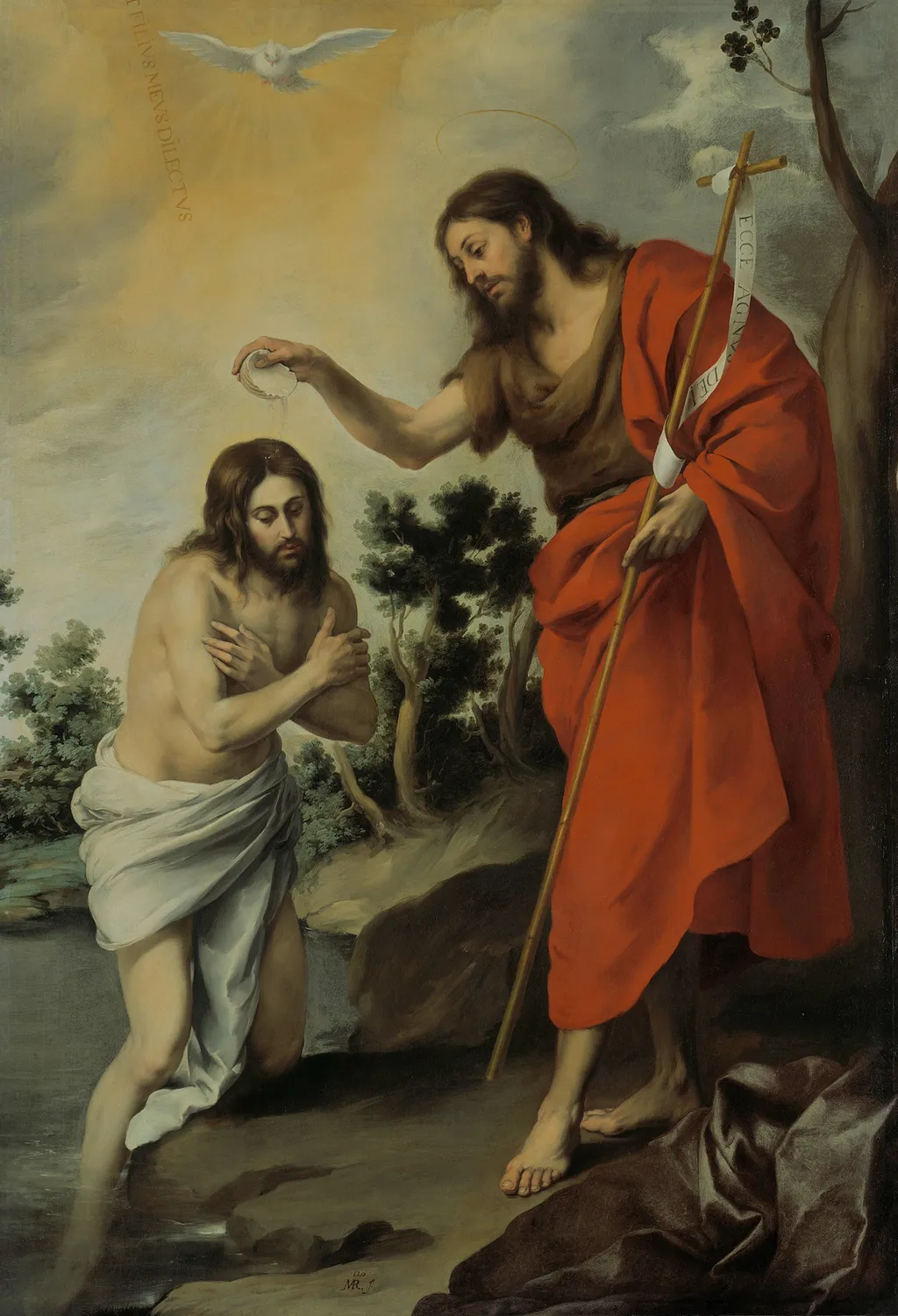
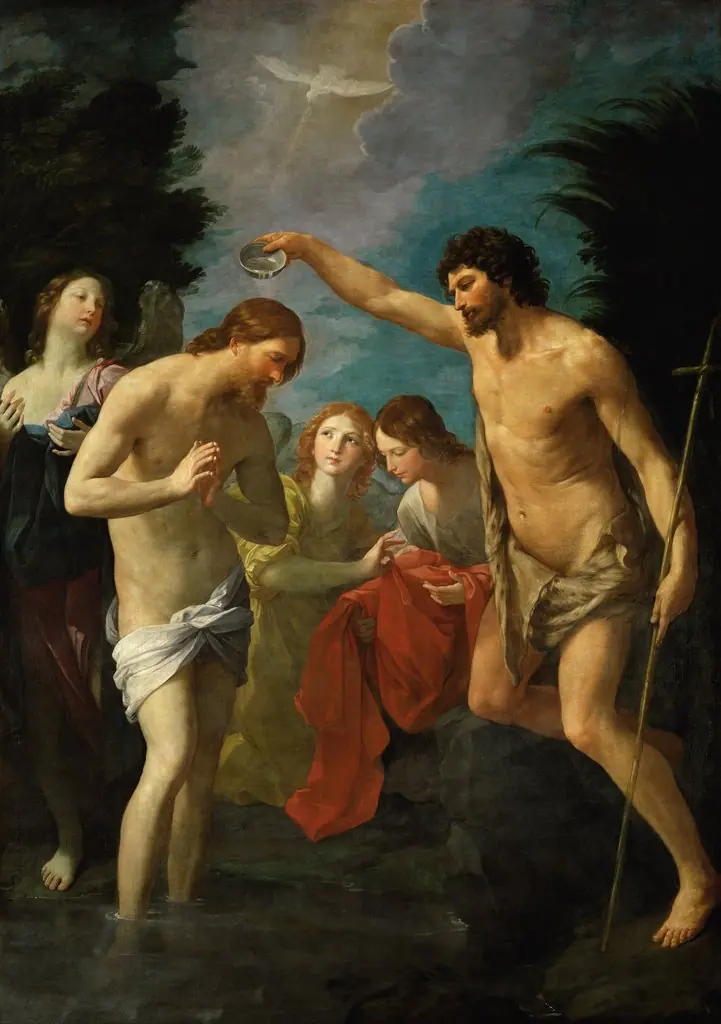
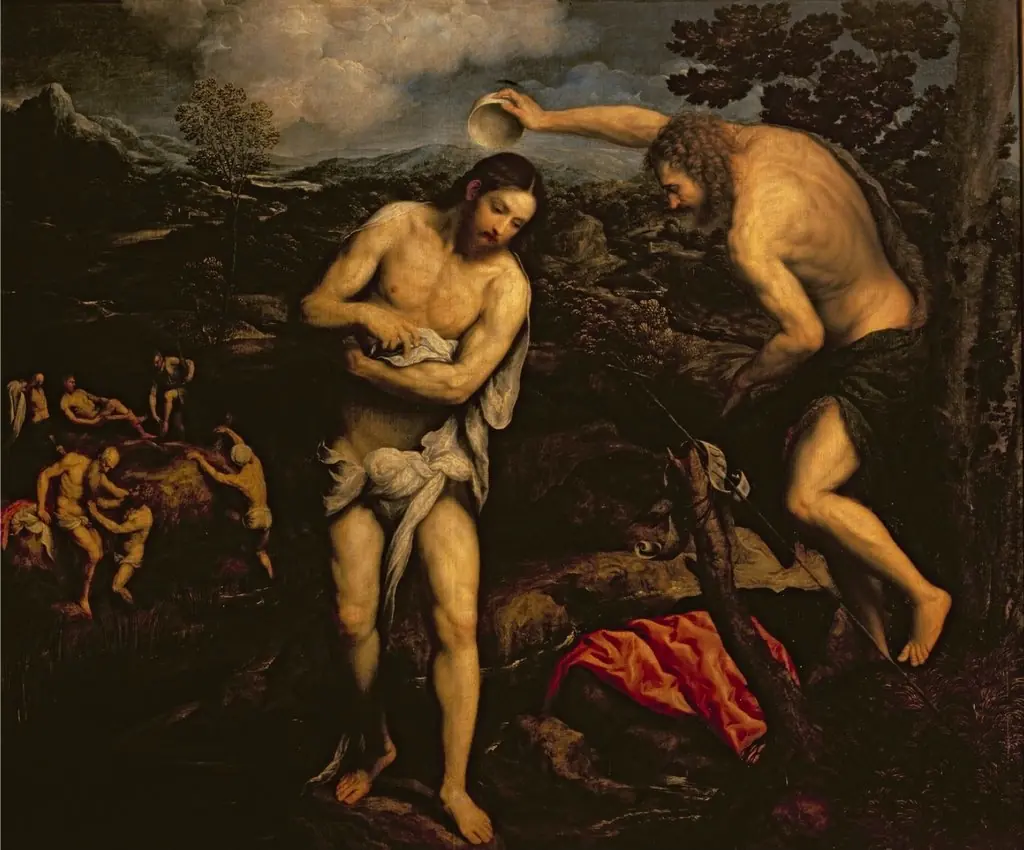
The Baptism of Christ is an oil painting by the Early Baroque Italian artist Bartolomé Esteban Murillo. It dates from 1655 and is held in the collection of the Gemäldegalerie Berlin.
About this work
Overview
The Baptism of Christ is an oil on canvas painting by the Spanish Baroque artist Bartolomé Esteban Murillo, dated to 1655.
The Baptism of Christ is an oil on canvas painting by the Spanish Baroque artist Bartolomé Esteban Murillo, dated to 1655. Measuring 233.2 cm in height and 160.1 cm in width, the work depicts the biblical baptism of Jesus by John the Baptist in the River Jordan. The painting is now held in the Gemäldegalerie, Staatliche Museen zu Berlin, where it was acquired in 1968. This work occupies a significant position in Murillo's oeuvre as part of a four-painting cycle on the life of Saint John the Baptist, marking an important step in the development of his mature style and exemplifying his ability to merge spiritual intensity with accessible human emotion.
Subject & Meaning
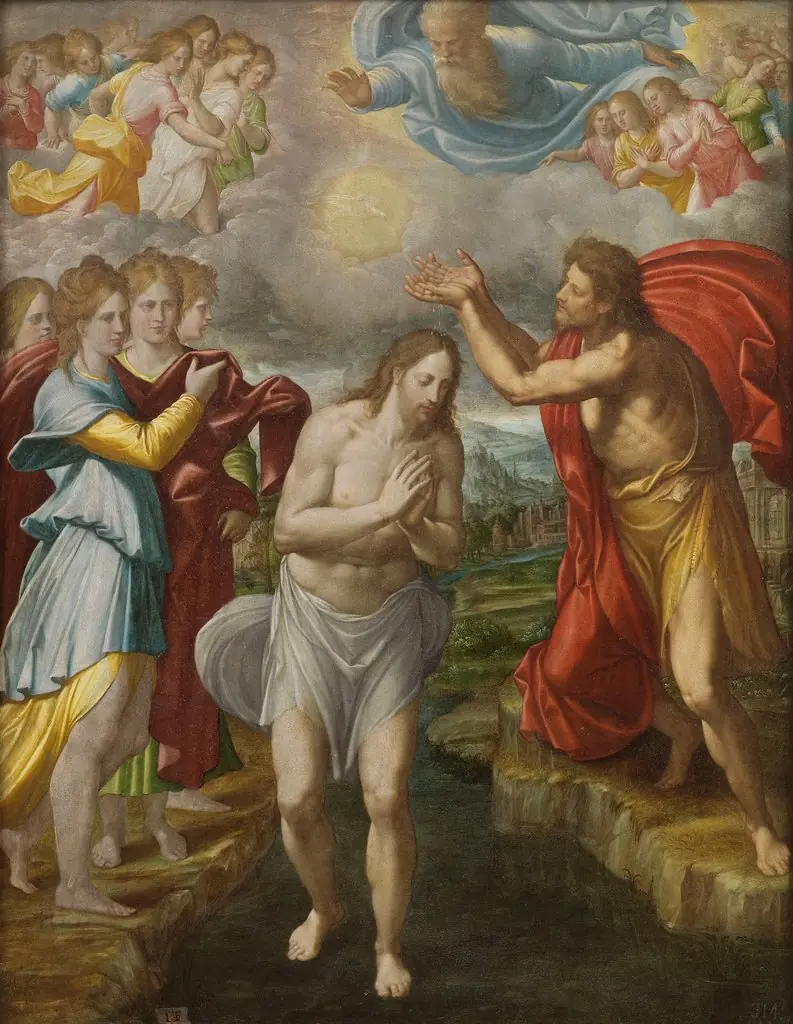
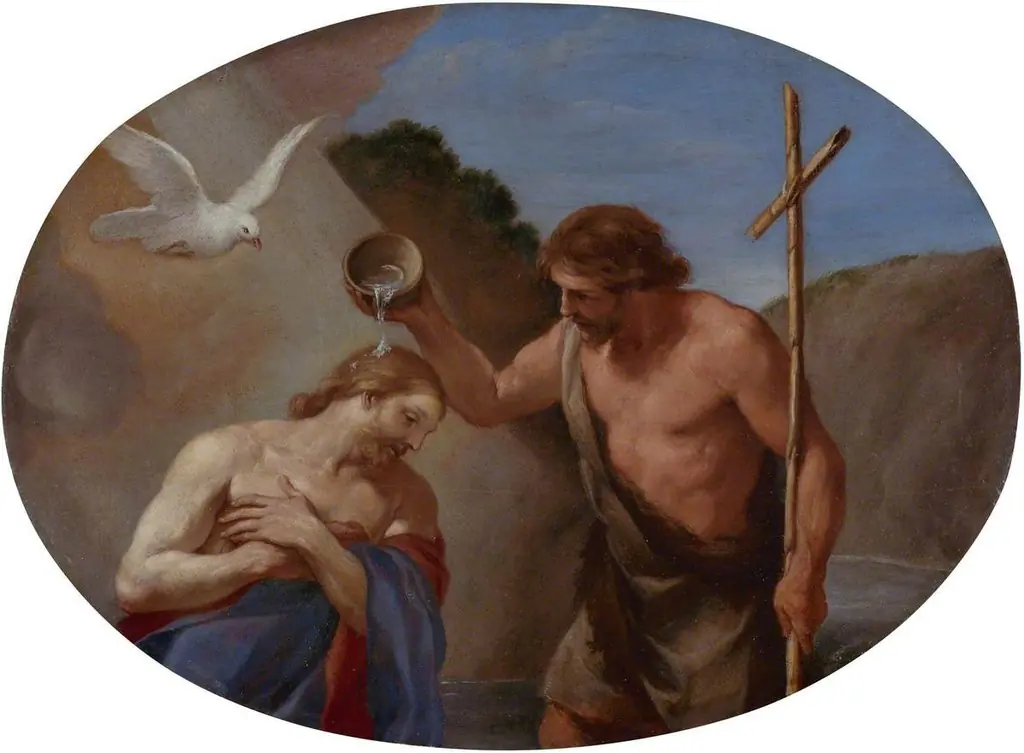
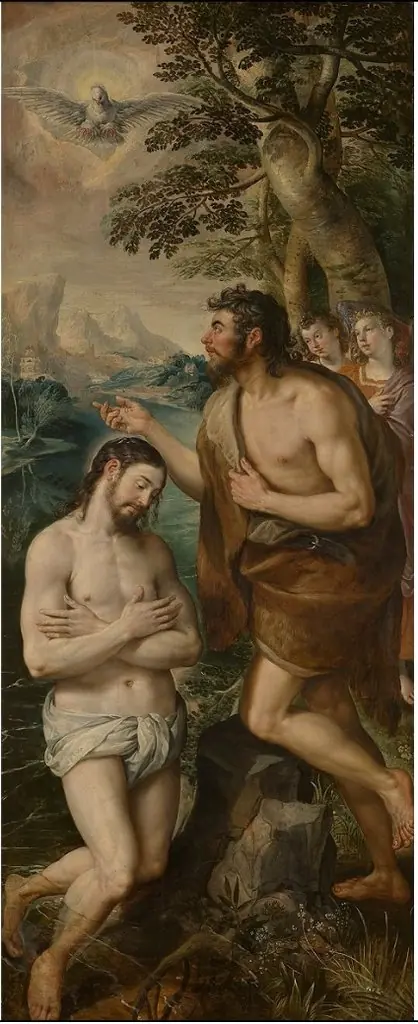
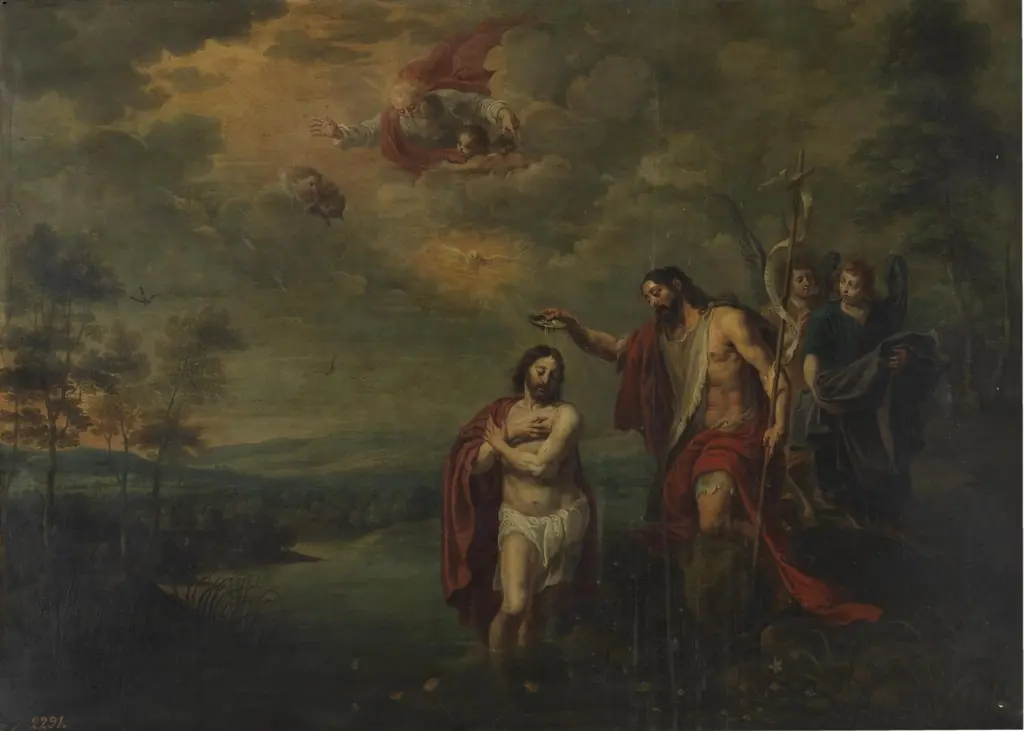
The painting represents the baptism of Jesus Christ by John the Baptist, a foundational event in Christian theology that marks the beginning of Christ's public ministry and the manifestation of the Holy Trinity. In Murillo's treatment, Christ kneels in shallow water wearing a white loincloth, his hands crossed over his chest in a gesture of humble submission. John the Baptist stands to his right, pouring water from a shell onto Christ's head while holding a tall staff topped with a small cross and a white banner. Above the figures, the Holy Spirit descends as a white dove within a golden circular glow, signifying divine presence. Latin inscriptions appear in the upper left corner and on the banner, grounding the scene in scriptural authority. The composition emphasizes the contrast between Christ's passive receptivity and John's active ministry, their faces arranged on a diagonal that conveys moral energy: John's expression tinged with emotion, Christ's marked by humble absorption in thought. The saturated red of John's cloak dominates the palette, set against Christ's subtle flesh tones and the white of his loincloth, while the serene landscape of the Jordan riverbanks softens the intense spiritual vibration between the two figures.
Technique & Style
Murillo executed the work in oil on canvas, employing the smooth, blended brushwork characteristic of his mid-1650s period. The paint surface appears smooth with particular refinement in the flesh tones and drapery, where colors are softly merged. Light falls from the upper left, illuminating the figures and creating soft shadows that model their forms with gentle naturalism. The palette centers on saturated red, warm browns, soft whites, and muted greens and blues, with the red of John's cloak serving as the compositional anchor. Murillo's handling of paint creates a serene atmosphere through gentle brushwork and chromatic harmony, while maintaining the emotional clarity and realism that distinguished his religious narratives. The work exemplifies what scholars identify as a transitional moment in Murillo's style, preceding the even softer, more vaporous manner of his later years. The canvas has been cut down from its original dimensions, though the extent of this reduction is not specified in available records.
History & Provenance
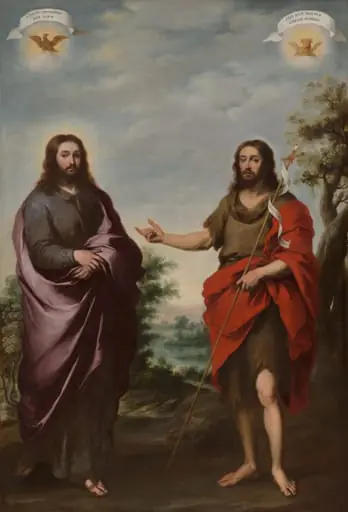
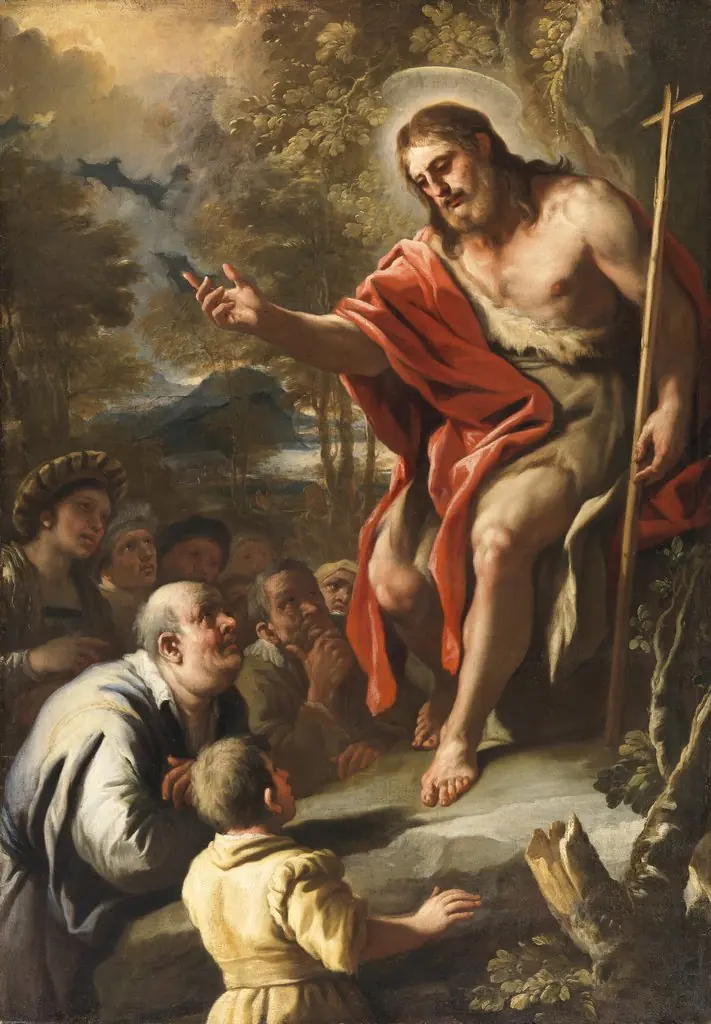
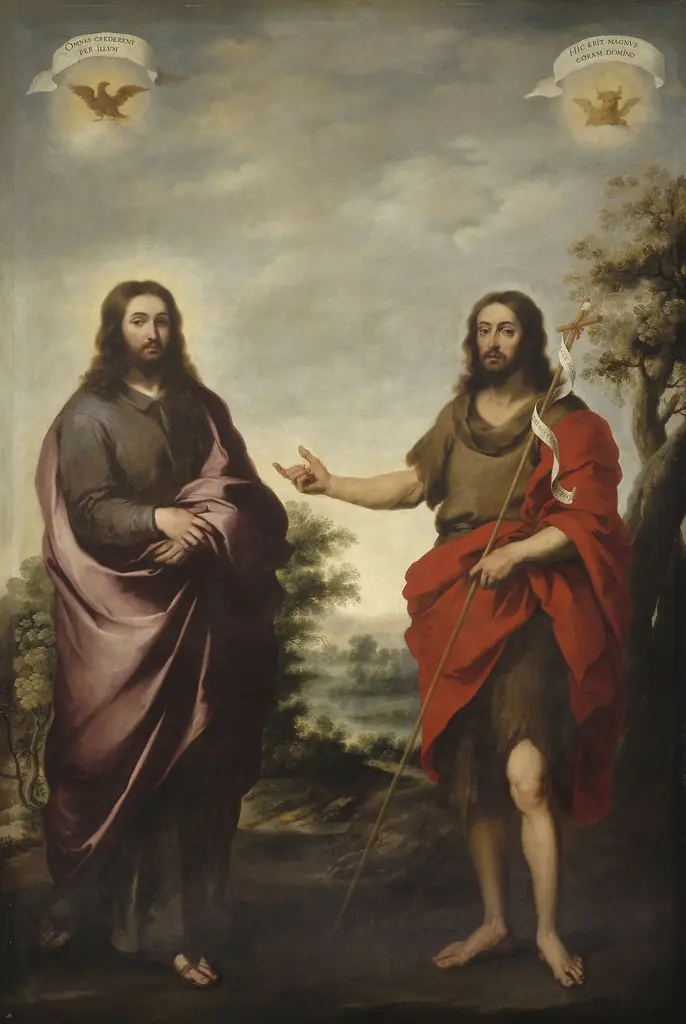
The painting was commissioned around 1655, most likely by the Augustinian nuns of the convent of San Leandro in Seville or one of their protectors, as part of a four-painting cycle on the life of Saint John the Baptist. The series may initially have formed an altarpiece in the church before being moved to decorate the convent refectory after the altarpiece was dismantled. The first historical reference to these paintings dates to 1781, noting four large canvases of the Baptist's life in the refectory. The nuns sold the paintings in the mid-nineteenth century, after which they were dispersed among various collectors. The Gemäldegalerie acquired this Baptism of Christ in 1968 specifically to replace two Murillo paintings, the Adoration of the Shepherds and Saint Anthony of Padua and the Christ Child, destroyed in the fire at the flak bunker in Berlin-Friedrichshain in May 1945. The painting was featured in the exhibition El Siglo de Oro: The Age of Velázquez. Its companion pieces are now divided: the first scene, Saint John the Baptist Pointing to Christ, belongs to the Art Institute of Chicago; the third, Saint John the Baptist with the Scribes and Pharisees, is at the Fitzwilliam Museum in Cambridge; and the fourth painting is no longer extant, its subject unknown though probably the Martyrdom of Saint John the Baptist.
Context
Murillo painted The Baptism of Christ during a period of high demand for religious works in Spain, when his ability to create soft, beautiful images that fulfilled clerical expectations had made him a celebrity both in his native Seville and across Europe. As the leading religious painter of Seville and one of the most celebrated European artists of his generation, Murillo occupied a central position in Spain's Golden Age, though his reputation would later be eclipsed by Velázquez and El Greco in the late nineteenth century. The John the Baptist series represents a pivotal moment in his career, demonstrating the qualities that earned him widespread admiration: an idealized yet emotionally accessible treatment of sacred subjects that balanced spiritual significance with human tenderness. The work has been the subject of scholarly attention through its inclusion in the Visual Commentary on Scripture film series produced in partnership with King's College London and the Staatliche Museen zu Berlin, where scholars Professor Ben Quash and Dr Jennifer Sliwka discussed its place in the narrative of Christ's life and its value for contemporary audiences seeking to understand Christian art.
Legacy
The Baptism of Christ endures as a significant example of Murillo's religious art and of Spanish Baroque painting more broadly. Its acquisition by the Gemäldegalerie in 1968 represented not merely a curatorial replacement for wartime losses but an acknowledgment of Murillo's continuing importance in the museum's narrative of European art. As part of a dispersed series, the painting has become a focal point for understanding how Murillo's commissions functioned within specific religious institutions and how those works were subsequently fragmented and redistributed through the vicissitudes of political and social change. The painting's afterlife in the twenty-first century includes its role in educational and devotional media, where it serves as a tool for engaging contemporary viewers with biblical narrative and artistic tradition. While Murillo's reputation experienced relative decline in the nineteenth century, the sustained scholarly and institutional attention to works such as The Baptism of Christ has contributed to renewed appreciation of his technical accomplishment and his distinctive synthesis of naturalism and spiritual idealism.
Own this work as a print
Artist & collection
Artist
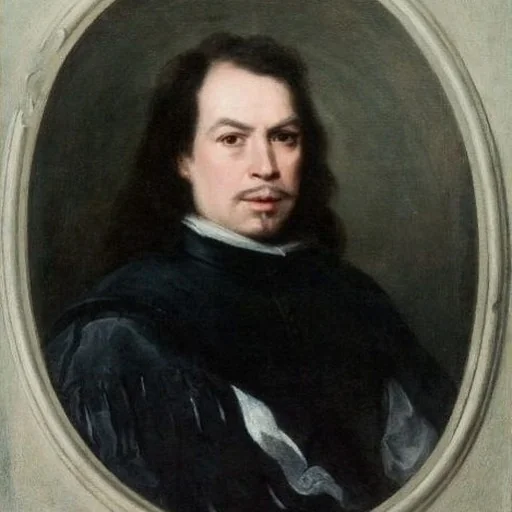
Bartolomé Esteban Murillo ( mure-IL-oh, m(y)uu-REE-oh, Spanish:; late December 1617, baptised 1 January 1618 – 3 April 1682) was a Spanish Baroque painter.